Rayagada – A Land of Tribal Heritage, Scenic Valleys & Sacred Hill Shrines
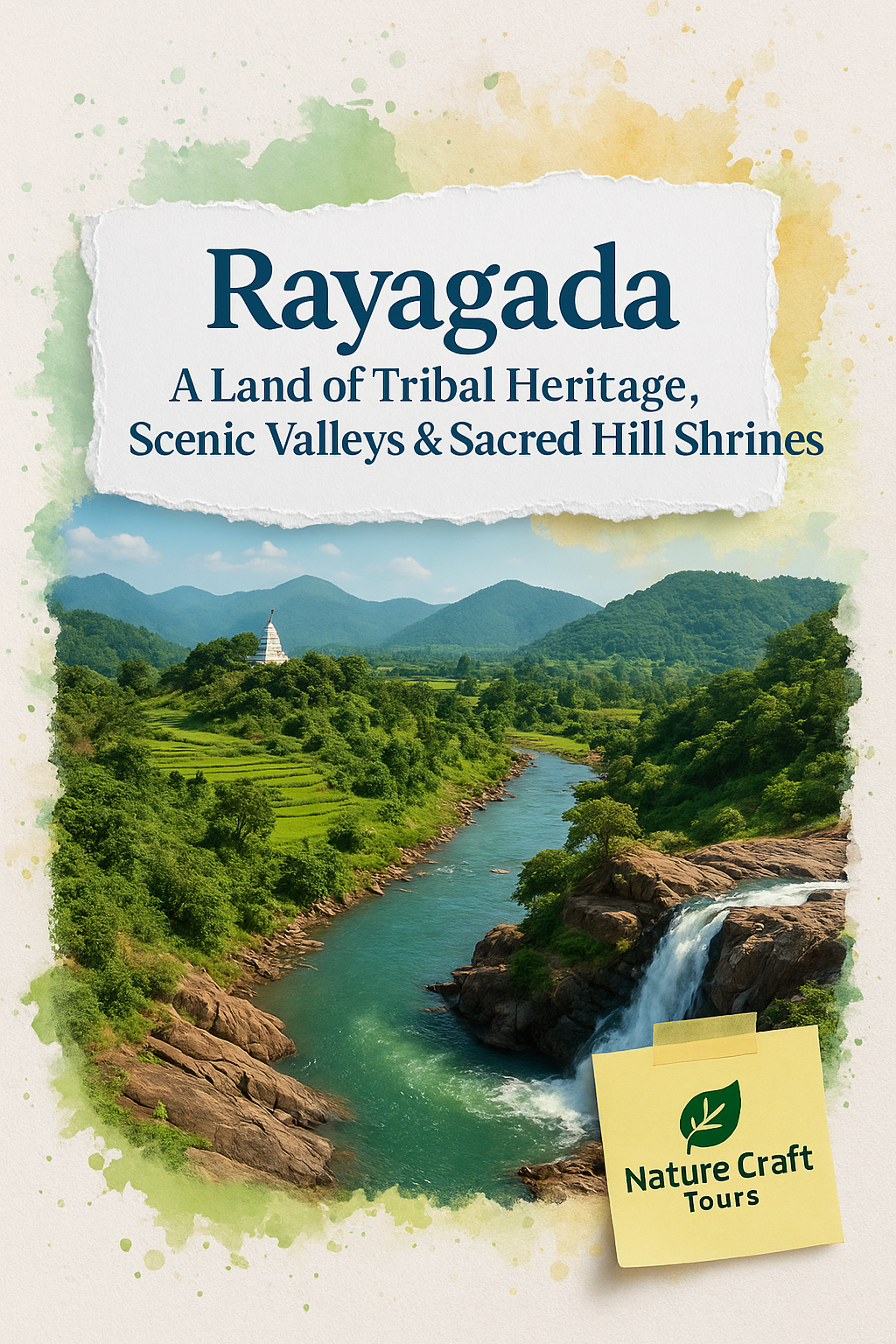
Rayagada, located in the southern part of Odisha, is a district where nature, culture, and indigenous traditions coexist in their most authentic form. Surrounded by lush Eastern Ghats, deep gorges, pristine rivers, terraced farmlands, and centuries-old tribal heritage, Rayagada stands as one of the most culturally enriched and naturally dramatic destinations in Eastern India. Far from the noise of mainstream tourism, Rayagada offers travellers a rare opportunity to witness unaltered tribal life, explore quiet forests, visit ancient temples, and walk through breathtaking landscapes sculpted by nature over millennia.
About Rayagada – A Cultural and Natural Mosaic
Rayagada district is known for its vibrant tribal communities, especially the Dongria Kondh, Desia Kondh, Soura, Jhodia, and Paraja tribes. Their colourful weekly markets, traditional jewellery, vibrant costumes, and nature-based rituals form the cultural backbone of the region. Rayagada is also an important agricultural and forest economy zone, producing turmeric, ginger, pineapple, jackfruit, bamboo crafts, and tribal paintings.
Geographically, Rayagada lies within the rugged Eastern Ghats, featuring dramatic hill slopes, winding rivers such as Nagavali, Vamsadhara, and Sai, and dense teak forests. Its unique combination of wilderness, tribal culture, and ancient temples makes it a multifaceted destination suitable for nature lovers, anthropologists, cultural enthusiasts, temple pilgrims, and those seeking offbeat travel experiences.
Major Tourist Attractions in Rayagada
Rayagada has a wide array of attractions ranging from tribal villages to waterfalls, from sacred shrines to historical viewpoints. Each destination reflects a specific layer of this region’s heritage.
1. Maa Majhighariani Temple
This revered temple is the spiritual nucleus of Rayagada. Dedicated to Goddess Majhighariani—considered a powerful form of Shakti—the temple draws pilgrims from Odisha, Andhra Pradesh, and Chhattisgarh. The deity is believed to be highly benevolent, especially toward devotees seeking spiritual protection and prosperity. The temple is situated in the heart of Rayagada town and is known for its serene ambience and ancient rituals.
2. Minajhola Waterfall
Minajhola is one of the most scenic and secluded locations in Rayagada. Nestled deep within forests at the confluence of the Vamsadhara River and two smaller streams, Minajhola is also home to a Shiva shrine partially immersed in water. During monsoon, the river swells dramatically, creating mesmerizing cascades and mist-covered surroundings. The remote jungle trail adds to the sense of wilderness and adventure.
3. Chatikona (Dongria Kondh Market)
Chatikona is one of India’s most culturally vibrant tribal markets. Held weekly at the foothills of the Niyamgiri hills, this market attracts Dongria Kondh tribes who descend from nearby highlands in their traditional attire. Vibrant shawls, silver jewellery, bamboo baskets, hand-crafted farming tools, wild honey, organically grown turmeric, and forest fruits are commonly sold. The colourful interactions between multiple tribal communities make this market a photographer’s paradise.
4. Laxminarayan Temple (Therubali)
Located near Therubali, the multi-deity Laxminarayan Temple complex is an important spiritual site showcasing beautiful architecture. Surrounded by hills and greenery, the temple attracts both devotees and tourists who appreciate its tranquil atmosphere. The nearby industrial township adds contrast to the serene temple setting.
5. Hatipathar Waterfall
Hatipathar, meaning “Elephant Rock,” is famous for its natural rock formations resembling an elephant. Although access is occasionally restricted during monsoon due to heavy water flow, Hatipathar remains a major attraction for nature enthusiasts. The Nagavali River creates large cascades over granite boulders, producing dramatic landscapes ideal for nature photography.
6. Niyamgiri Hills
Niyamgiri Hills are sacred to the Dongria Kondh tribe, who consider Niyam Raja (the mountain deity) as their protector. The rolling green hills, dense forests, mountain streams, and terraced fields create a breathtaking panorama. Trekking routes across various hill slopes provide unforgettable views of indigenous settlements and untouched wilderness.
7. Paikapada Hills & Temple
Paikapada is renowned for its ancient Shiva temple and over a thousand Shiva lingas that lie scattered across the forested hillside. It is believed that these lingas date back centuries. The location’s archaeological significance, combined with its spiritual energy and panoramic views, make it a compelling stop for history lovers and pilgrims.
8. Gunupur – Soura Tribal Art
Gunupur subdivision is closely associated with the Soura tribe, known for their unique wall paintings called Idital. These paintings, created using natural dyes, depict natural cycles, ancestral worship, hunting scenes, and community life. Visitors can explore traditional Soura settlements to witness this ancient art form and understand its symbolic meaning.
9. Bissamcuttack
Bissamcuttack is a picturesque town surrounded by mountains, plantations, and rivers. Known for its pilgrimage centres and tribal markets, the region reflects an ideal blend of divinity and natural beauty. The weekly markets here are vibrant, offering an authentic glimpse into the social and cultural fabric of the tribal communities.
Major Distances (Approximate)
To plan a smooth trip, knowing the key distances from major towns and attractions is essential.
- Rayagada to Bhubaneswar – approx. 390 km
- Rayagada to Visakhapatnam – approx. 185 km
- Rayagada to Koraput – approx. 145 km
- Rayagada to Jeypore – approx. 160 km
- Rayagada to Gunupur – approx. 70 km
- Rayagada to Chatikona – approx. 40 km
- Rayagada to Minajhola – approx. 110 km
- Rayagada to Hatipathar – approx. 3 km (near town)
How to Reach Rayagada
Rayagada is connected through roadways and railways with major cities in eastern and southern India. Though remote, it is accessible through multiple comfortable routes.
By Air
The nearest major airport is Visakhapatnam International Airport, located approximately 185 km away. Regular flights connect it to Kolkata, Delhi, Chennai, Hyderabad, Bengaluru, and Mumbai. From Visakhapatnam, travellers can hire private taxis or take trains to Rayagada.
By Train
Rayagada Railway Station is a major junction on the East Coast line. Important trains connect it with Bhubaneswar, Visakhapatnam, Howrah, Chennai, Hyderabad, and Raipur. Train travel is one of the most convenient options for reaching Rayagada.
By Road
Rayagada is well connected via National Highway corridors. Buses and private cars can access Rayagada from Bhubaneswar, Berhampur, and Visakhapatnam. The road journey offers scenic views of ghats, forests, and rural landscapes.
Staying Options in Rayagada
Rayagada offers a range of accommodations suitable for different travel needs—from business travellers to cultural explorers. These include standard hotels, premium stays, guesthouses, tribal-themed accommodations, and nature lodges.
Typical stay categories include:
- Standard hotels within Rayagada town
- Premium stays with modern amenities
- Eco-lodges near forest zones
- Heritage-style tribal cottages (limited availability)
Travellers visiting tribal markets or remote waterfalls often prefer to stay in Rayagada town due to better connectivity, while those exploring Gunupur or Chatikona may choose smaller guesthouses near the site for convenience.
Best Time to Visit Rayagada
The climate of Rayagada is heavily influenced by its highland terrain. Winters and post-monsoon months offer the most pleasant weather for sightseeing.
Winter (October to February) – Best for Travel
This is the ideal season to explore Rayagada. The temperature remains comfortable, ranging between 12°C to 24°C. Trekking, tribal market visits, and waterfall exploration are most enjoyable during this time.
Monsoon (June to September) – Scenic but Wet
Rayagada receives significant rainfall, turning its hills lush green. Waterfalls such as Minajhola and Hatipathar become spectacular. However, travel may be slower due to slippery roads and occasional forest restrictions.
Summer (March to May) – Dry and Warm
Summer can be moderately hot, especially in lower altitudes. However, morning market visits, hilltop explorations, and forest drives remain possible with proper planning.
Cultural Significance & Tribal Life
The essence of Rayagada lies in its tribal heritage. Over 70% of the population belongs to Scheduled Tribes, each with unique customs, festivals, and social structures.
Dongria Kondh – Guardians of Niyamgiri
The Dongria Kondh community practices ancient agricultural systems, cultivating millet, turmeric, and jackfruit on hill slopes through carefully managed terracing. They are known for their distinctive dress: colourful shawls, handwoven outfits, and silver jewellery. Their rituals are deeply tied to forest ecology and the Niyam Raja deity.
Soura Tribe – Masters of Idital Paintings
The Soura community from Gunupur produces one of India’s oldest indigenous art forms—Idital. Each painting narrates stories of ancestral worship, seasonal cycles, and community events. These artworks use natural pigments extracted from trees, charcoal, and minerals.
Desia Kondh & Paraja Tribes
These communities inhabit the plains and foothills, practicing cooperative agriculture and traditional crafts. Their weekly haats serve as important social and economic hubs. The rhythmic dance performances during festivals add vibrancy to their cultural landscape.
Suggested Itinerary for Rayagada (2 Nights / 3 Days)
Day 1: Arrival & Local Sightseeing
- Arrive at Rayagada
- Visit Maa Majhighariani Temple
- Explore Hatipathar viewpoints
- Evening walk in Rayagada town
Day 2: Tribal Experience & Hills
- Morning visit to Chatikona tribal market (if it is a market day)
- Drive through Niyamgiri hill slopes
- Explore Paikapada temple and forest area
- Return to Rayagada
Day 3: Waterfalls & Departure
- Drive to Minajhola Waterfall (early start recommended)
- Explore riverside shrine
- Return to Rayagada for departure
Travel Tips for Rayagada
- Carry comfortable walking shoes for hilly terrains.
- Photography in tribal villages should be done respectfully.
- Mobile networks may fluctuate in interior areas.
- Local guides greatly enhance cultural understanding.
- Weekly markets are the best places to observe authentic tribal life.
Conclusion
Rayagada offers a rare combination of pristine landscapes, ancient tribal traditions, sacred temples, and serene villages. The region is ideal for travellers seeking meaningful cultural immersion and unspoiled natural beauty. From the rhythmic footsteps of tribal communities to the echo of waterfalls hidden deep within dense forests, Rayagada remains one of Odisha’s most remarkable offbeat travel destinations.
Whether you are a nature lover, cultural enthusiast, anthropologist, or photographer, Rayagada promises a journey into a world where heritage and wilderness exist in perfect harmony.