Darjeeling Himalayan Escape
– Where the Mountains Meet the Sky
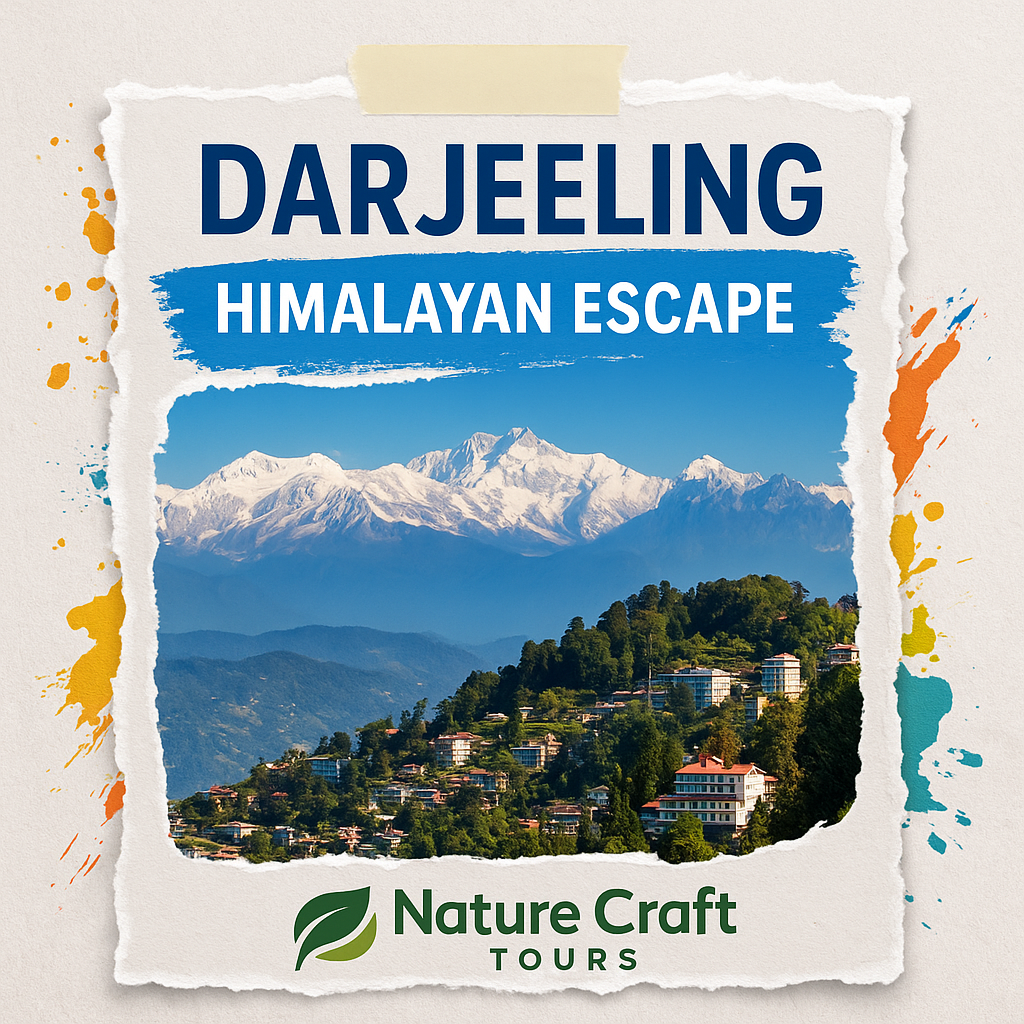
Perched on the emerald ridges of the Lesser Himalayas, Darjeeling is a hill station that has inspired poets, filmmakers, mountaineers, and travellers for more than a century. Mist-laden forests, slopes carpeted with tea gardens, the distant shimmer of Kanchenjunga, and the nostalgic whistle of the Darjeeling Himalayan Railway together create an unforgettable Himalayan escape.
A Darjeeling Himalayan Escape is not just a holiday; it is a layered experience of colonial heritage, Nepali and Tibetan culture, Buddhist monasteries, and high mountain panoramas. This detailed guide has been crafted to help you plan a well-informed journey—complete with important sights, travel distances, transport connections, staying options, and the best time to visit.
Understanding Darjeeling – The Himalayan Balcony of Bengal
Darjeeling lies at an elevation of around 2,042–2,100 metres, offering a cool temperate climate and clear views of the third-highest peak in the world, Mt. Kanchenjunga. Spread along a steep ridge, the town is surrounded by dense forests of oak, magnolia, and rhododendron on one side and neatly terraced tea gardens on the other. The destination developed as a British-era sanatorium and hill resort and has now grown into one of India’s most cherished mountain retreats.
The district’s official tourism information, including important attractions and circuits, is periodically updated on the Darjeeling District Tourism (Government) portal, which is a helpful reference point for planning and permits.
Geography and Climate – Why Darjeeling Feels So Special
Darjeeling sits in the Lesser Himalayas, bordering Sikkim to the north and the plains of North Bengal to the south. Its terraced slopes descend towards the Teesta and Balason river valleys, creating dramatic ravines and forested hillsides. The town experiences cool summers, misty monsoons, and crisp, often cloudless winters.
The two most popular tourism seasons are spring–summer (March to May) and post-monsoon autumn (September to November). During these months, the sky often opens up to reveal the full Kanchenjunga range, and the tea gardens glow an intense shade of green. The monsoon months (June to early September) bring heavy rainfall and frequent fog; while the landscape turns deeply lush, landslides and transport disruptions can occasionally occur.
For a concise background on the town’s history, elevation, and cultural importance, you may also refer to the Darjeeling article on Wikipedia, which gives a broad overview of how this small Himalayan town became globally renowned.
Highlights of a Darjeeling Himalayan Escape – Places You Must See
Tiger Hill and the Kanchenjunga Sunrise
No Darjeeling Himalayan Escape is complete without an early-morning excursion to Tiger Hill. Located roughly 11 km from the town centre, Tiger Hill stands at around 2,590 metres and is famed for sunrise views over Kanchenjunga and, on exceptionally clear days, even a distant glimpse of Mount Everest. As the first light of dawn touches the snow peaks, the entire range glows in shades of orange, pink, and gold—a spectacle that remains etched in memory.
Darjeeling Himalayan Railway – The Toy Train Experience
A UNESCO World Heritage Site, the Darjeeling Himalayan Railway (DHR) is one of the most iconic narrow-gauge lines in the world. The toy train winds its way from the plains up to Darjeeling, negotiating steep gradients with loops and zigzags. Even if you do not travel the entire route, the short joyride between Darjeeling and Ghoom offers a nostalgic journey through tunnels, tea gardens, and hillside settlements, accompanied by the rhythmic chug of vintage steam or diesel engines.
Batasia Loop and the War Memorial
Situated between Darjeeling and Ghoom, Batasia Loop is a beautifully landscaped spiral track where the toy train curves around a garden, allowing panoramic views of the town and the snow peaks. The landscaped park features seasonal flowers, manicured lawns, and a memorial dedicated to Gorkha soldiers of the Indian Armed Forces. On clear days, Kanchenjunga rises beyond the garden like an enormous painted backdrop.
Ghoom Monastery and the Buddhist Heritage
Ghoom, one of the highest railway stations in India, is home to the Yiga Choeling Monastery, popularly known as Ghoom Monastery. The monastery enshrines a majestic Maitreya (Future Buddha) statue and houses numerous old Buddhist manuscripts and thangkas. Prayer flags flutter in the mountain wind, and the sound of chanting monks adds a serene spiritual layer to the Himalayan atmosphere.
Chowrasta, Mall Road, and Colonial Charms
At the heart of Darjeeling town lies Chowrasta, an open promenade where locals and travellers mingle. Stone benches, pony rides, bookshops, heritage cafés, and curio stores line the area. From the Mall Road that loops around the ridge, one can enjoy leisurely walks, pausing at viewpoints such as Observatory Hill to admire the distant summits.
Peace Pagoda and Japanese Temple
The Buddhist Peace Pagoda and adjoining Japanese Temple form a peaceful enclave a short drive from the town centre. Built to promote global peace and non-violence, the white pagoda displays golden reliefs of various incarnations of Buddha. Visitors can participate in the rhythmic chanting sessions held at the temple, an experience that often feels deeply meditative amid the whispering pines and drifting mist.
Tea Gardens and Tea Experiences
Darjeeling’s identity is inseparable from its tea. Slopes around the town are covered with world-famous tea estates whose produce is prized in tea auctions across the globe. Visitors can walk through the undulating gardens, observe pluckers at work, and visit factories (where permitted) to learn about withering, rolling, oxidation, and firing—the delicate processes that transform fresh leaves into the celebrated “Champagne of teas”.
Many estates offer guided tours and tea-tasting sessions, allowing guests to appreciate the subtle aroma, color, and flavour differences between first flush, second flush, and autumnal teas.
Padmaja Naidu Himalayan Zoological Park and Himalayan Mountaineering Institute
Located on the same complex, these two institutions give visitors a deeper understanding of the Himalayan ecosystem and mountaineering heritage. The zoological park specializes in high-altitude fauna such as the red panda, snow leopard, Himalayan wolf, and various pheasants. The Himalayan Mountaineering Institute (HMI), founded in memory of Tenzing Norgay, showcases mountaineering equipment, photographs, and exhibits related to Everest expeditions and Himalayan exploration.
Nearby Offbeat Escapes – Lamahatta, Tinchuley, and More
For travellers who wish to step away from the town’s bustle, nearby villages provide quieter Himalayan corners. Lamahatta offers manicured gardens and dense forests with well-marked walking trails. Tinchuley, Takdah, and other villages in the outskirts feature homestays set amid pine forests and tea gardens, ideal for slow travel, birdwatching, and misty evening bonfires.
Those who love exploring multiple nature circuits within West Bengal often combine Darjeeling with another biodiversity-rich destination of the state, such as the mangrove forests of the delta. In such cases, planning a Sundarban Tour either before or after Darjeeling offers an extraordinary contrast—snow-view mountains on one end and tidal mangrove creeks on the other.
Suggested 4-Day Darjeeling Himalayan Escape Itinerary
Day 1 – Arrival and First Impressions
- Arrive at New Jalpaiguri (NJP) or Bagdogra and drive up to Darjeeling through the scenic route via Kurseong or Rohini.
- Check into your hotel or homestay and take an evening stroll along Chowrasta and the Mall Road.
- Enjoy your first view of the Kanchenjunga range, if the weather is clear, from viewpoints along the ridge.
Day 2 – Tiger Hill, Batasia Loop, and Ghoom
- Start before dawn for Tiger Hill to witness the sunrise over Kanchenjunga.
- Return via Batasia Loop, halting for photographs and a leisurely walk in the landscaped gardens.
- Visit Ghoom Monastery and explore its prayer halls and statues.
- Spend the afternoon at the Peace Pagoda and Japanese Temple. In the evening, relax at a café on Chowrasta.
Day 3 – Toy Train, Zoo, HMI, and Tea Garden
- Experience a joyride on the Darjeeling Himalayan Railway between Darjeeling and Ghoom, including a brief stop at Batasia Loop.
- Visit the Padmaja Naidu Himalayan Zoological Park and Himalayan Mountaineering Institute.
- In the late afternoon, visit a tea estate located near town to walk through the gardens and, if available, join a tea tasting session.
Day 4 – Offbeat Village Visit and Departure
- Take a half-day trip to nearby villages such as Lamahatta or Tinchuley for forest walks and quiet viewpoints.
- Return to Darjeeling, collect souvenirs such as tea, woollens, and handicrafts.
- Depart for NJP or Bagdogra, carrying the mountain’s crisp air and unforgettable vistas in your memory.
Major Distances for Planning Your Trip
- Bagdogra Airport to Darjeeling: approximately 70 km by road.
- New Jalpaiguri (NJP) Railway Station to Darjeeling: approximately 72 km.
- Siliguri to Darjeeling: approximately 65–70 km.
- Darjeeling to Tiger Hill: around 11 km.
- Darjeeling to Batasia Loop: around 5 km.
- Darjeeling to Ghoom: about 6–7 km.
- Darjeeling to Lamahatta: around 23–25 km.
- Darjeeling to Mirik (via Ghum and Simana): roughly 60 km.
How to Reach Darjeeling
By Air
The nearest airport is Bagdogra (IXB), which is well connected to Kolkata, Delhi, Guwahati, and several other Indian cities. From Bagdogra, hired taxis, shared jeeps, and pre-booked vehicles take 3–4 hours to reach Darjeeling, depending on road and weather conditions.
By Train
New Jalpaiguri (NJP) is the primary railhead serving Darjeeling and is connected to major cities such as Kolkata, Delhi, Mumbai, and Guwahati. From NJP, travellers can hire a taxi or shared jeep. Some choose to travel part of the way by road to Kurseong or Siliguri and then board the Darjeeling Himalayan Railway for a slower, heritage-filled ascent.
By Road
Darjeeling is linked to Siliguri and the rest of North Bengal via a network of mountain roads. The classic Hill Cart Road, the panoramic Pankhabari route, and the relatively new Rohini road each offer different views of valleys, forests, and tea estates. Shared jeeps operate frequently from Siliguri and NJP, while private cabs and self-drive options are also available for those seeking flexibility.
Staying Options for a Darjeeling Himalayan Escape
Darjeeling offers a wide range of accommodation categories, enabling travellers to tailor their stay to their budget and preferences. While specific contact numbers are not provided here, the broad categories below help in choosing the right area and style of stay.
Heritage Hotels Near the Town Centre
Several heritage properties—some housed in colonial-era bungalows—are located close to Chowrasta and the Mall. These stays appeal to travellers seeking vintage architecture, wooden staircases, fireplaces, and old-world charm combined with modern comforts. Their central location makes evening walks and café-hopping very convenient.
Mid-Range Hotels with Valley Views
Across different ridges of Darjeeling, mid-range hotels offer clean rooms, in-house dining, and balconies that open towards the valley or the snow peaks. These properties are ideal for families and groups who want comfort without losing proximity to major attractions.
Budget Guesthouses and Homestays
Budget-conscious travellers, backpackers, and students will find numerous guesthouses and homestays tucked into the lanes around the town. Run by local families, these stays offer simple, hygienic rooms and home-cooked meals, as well as opportunities to interact with residents and understand local culture and daily life.
Tea Garden Bungalows and Countryside Retreats
In the outskirts and surrounding valleys, several tea estates and villages host guests in restored bungalows or countryside lodges. Staying amid tea fields, waking up to birdsong, and watching the mist roll over the slopes adds a very different dimension to the Darjeeling Himalayan Escape. These properties are often chosen by honeymooners, nature lovers, and travellers who are comfortable staying a little away from the town’s centre.
Best Time to Visit Darjeeling
Spring (March to May)
Spring brings bloom to rhododendrons, magnolias, and wildflowers across the hills. Temperatures are cool to pleasant, and visibility is often good in the early part of the season. This is a popular time for families and students, coinciding with school holidays.
Autumn (September to November)
After the monsoon clouds recede, autumn reveals some of the clearest mountain views of the year. The sky often appears a deep, crisp blue, and mornings can be spectacularly bright. This is a favourite season for photographers and trekkers, and an ideal period for a Darjeeling Himalayan Escape focused on vistas and outdoor exploration.
Winter (December to February)
Winters are cold, with temperatures occasionally dropping close to or even below freezing, especially at night. The air is sharp and clear, and the town takes on a quieter, more contemplative atmosphere. Many travellers enjoy visiting during this period for cosy evenings with hot tea, less crowded viewpoints, and the possibility of light snowfall in nearby high-altitude areas.
Monsoon (June to Early September)
The monsoon months cloak the hills in a deep, saturated green and wrap Darjeeling in drifting clouds. While this season has its own romance, heavy rainfall can lead to roadblocks, landslides, and reduced visibility. Those who plan travel during this period should be flexible with itineraries and keep an eye on local advisories.
Responsible Travel in the Himalayan Region
- Carry reusable water bottles and avoid single-use plastic wherever possible.
- Keep noise levels low at viewpoints, monasteries, and forested trails.
- Respect local customs, dress modestly when visiting religious sites, and seek permission before photographing people.
- Support local businesses, homestays, guides, and artisans to ensure tourism benefits the community.
- Be mindful of waste disposal; use designated dustbins or carry your waste back to your accommodation.
Conclusion – Crafting Your Own Darjeeling Himalayan Story
A Darjeeling Himalayan Escape is an intricate weave of dawns painted in pink-and-gold on Kanchenjunga, afternoons filled with the aroma of fresh tea, and evenings spent walking under antique street lamps while the mountain wind whispers through the pines. The town’s layered history, multicultural fabric, and surrounding natural splendour ensure that every visitor returns with a different story—some remember the first glow of sunrise at Tiger Hill, others the warm smile of a homestay host serving steaming momos on a cold night.
Whether you are planning a family holiday, a romantic getaway, or a solo retreat, Darjeeling opens its Himalayan balcony and invites you to slow down, breathe deeply, and watch the clouds drift past the snow peaks. With careful planning, respect for the fragile mountain ecosystem, and a spirit of curiosity, your Darjeeling Himalayan Escape can become one of the most meaningful journeys of your travel life.