Hajo – A Sacred Confluence of Faith:
A Complete Travel Guide to Hayagriva Madhava Temple & Poa Mecca
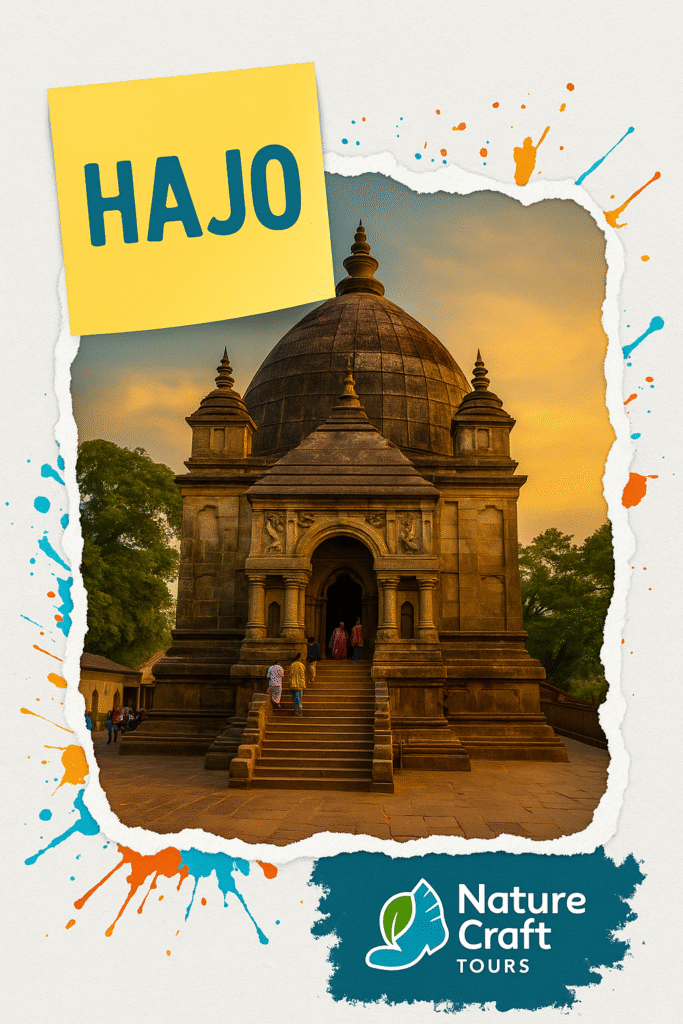
Hajo, situated on the north bank of the mighty Brahmaputra River in Assam, is one of the most ancient and spiritually vibrant pilgrimage towns in Eastern India. Celebrated for its unique confluence of Hinduism, Islam and Buddhism, this hilltop settlement has been a centre of harmony, sacred legends, art, architecture and intercultural dialogue for more than a thousand years. The region’s tranquil hills, ancient stone pathways, ornate temple structures, and timeless prayer traditions shape an atmosphere steeped in devotion and cultural depth.
Hajo’s two most significant religious landmarks—Hayagriva Madhava Temple on the Monikut Hill and Poa Mecca on the adjacent Hadiranacha Hill—stand as enduring symbols of Assam’s syncretic identity. According to Hajo on Wikipedia, the area has attracted saints, pilgrims, scholars and travellers for centuries due to its sacred status across multiple religions. The town is equally significant for Buddhists, especially followers of the Vajrayana and Mahayana traditions, as Hayagriva Madhava is often associated with the Mahayana conception of the Buddha’s image.
Hajo’s cultural richness is complemented by its serene natural setting—rolling hills, lotus-filled ponds, pastoral landscapes, and the expansive Brahmaputra plains. Visitors planning religious or cultural travel across Assam often consult official portals such as Assam Tourism for verified information on pilgrimage sites, festivals and travel routes.
Historical Context of Hajo
The history of Hajo dates back several centuries and is deeply rooted in Assam’s ancient kingdoms. The earliest references to the region are found in medieval chronicles and inscriptions associated with the Koch and Ahom rulers who patronized the temples and maintained the town’s religious institutions. The coexistence of multiple faiths in this small geographical area represents a remarkable legacy of tolerance and cultural exchange.
Hajo also served as a trade and cultural gateway connecting Assam with Bhutan, Bengal and the river-based economies of the Brahmaputra valley. Many architectural features of its temples and mosques reflect influences from neighbouring regions, highlighting the town’s historical openness to new ideas and artistic traditions.
Hayagriva Madhava Temple – The Divine Seat of Vishnu
The Hayagriva Madhava Temple, situated atop the Monikut Hill, is Hajo’s most iconic landmark. Dedicated to Lord Vishnu in his Hayagriva form, the temple is deeply revered by Hindu devotees across Assam and the wider northeastern region. It is believed to be one of the oldest temples in the state, with existing structures dating back to the medieval period.
Architecture and Artistic Grandeur
The temple is built in massive stone blocks, giving it a striking resemblance to early medieval stone temples of the region. Its entrance is adorned with intricate sculptures depicting celestial beings, animals, floral patterns and mythological motifs. The sanctum, known as the “garbhagriha,” houses the revered idol of Hayagriva Madhava—a representation of Vishnu with a horse’s head symbolizing knowledge and divine intelligence.
The temple architecture showcases a fusion of indigenous Assamese styles with hints of Pala and early Gupta influences, evident in the stone carvings and sculptural panels found across the complex. The grand stone staircase leading up the hill enhances the temple’s commanding presence, offering pilgrims an elevated spiritual experience.
Buddhist Significance
The Hayagriva Madhava Temple holds exceptional importance for Buddhists as well. Local tradition and historical studies suggest that the temple once housed an image associated with the Buddha, making it a place of reverence for both Hindus and Buddhists. Pilgrims from Bhutan and nearby Himalayan regions frequently visit the shrine. The fusion of Hindu and Buddhist symbolism within a single sacred space is one of Hajo’s most remarkable features.
Festivals and Rituals
Several important festivals are celebrated at Hayagriva Madhava Temple, including:
- Janmashtami – Celebrating the birth of Lord Krishna with music, prayers and community gatherings.
- Doul Utsav (Holi) – Marked by colourful festivities and traditional processions.
- Bihu celebrations – Where agricultural joy merges with devotional rituals.
Throughout the year, the air around the temple resonates with chanting, conch-shell blowing and the peaceful rhythm of bells, creating a deeply immersive spiritual environment.
Poa Mecca – A Sacred Islamic Pilgrimage Site
Across another hill in Hajo lies Poa Mecca, one of the most revered Islamic shrines in Assam. The name “Poa Mecca,” meaning “a quarter of Mecca,” reflects a popular belief that offering prayers here yields one-fourth the spiritual merit of performing the Hajj pilgrimage to Mecca.
Historical and Religious Importance
Poa Mecca was established during the medieval period and is believed to house earth brought from Mecca by a saint. The shrine includes a mosque, a prayer courtyard, and a commemorative structure dedicated to the revered Pir Giasuddin Aulia. Over the centuries, Poa Mecca has emerged as a major centre of Islamic devotion in Assam, drawing worshippers from across the Brahmaputra valley.
Architecture and Heritage
The structures at Poa Mecca showcase the typical Islamic architectural elements of the region—arched doorways, sloping roofs adapted to local climate, engraved mihrabs and simple yet elegant brickwork. From the hilltop, visitors enjoy sweeping views of Hajo’s temple-dotted landscape, symbolizing the harmonious coexistence of diverse faiths.
Community Traditions
The annual Urs commemorations attract thousands of devotees who gather for prayers, Sufi songs, community meals and spiritual retreats. The shrine plays an important role in promoting unity and inter-community dialogue in the region.
Other Attractions in and around Hajo
Ganesh Temple (Deva Bhavana)
Located near the Hayagriva Madhava temple, this shrine is dedicated to Lord Ganesha and houses a unique idol carved from stone. The temple is surrounded by large banyan trees and creates a calm, devotional atmosphere.
Kedareswara Temple
Dedicated to Lord Shiva, this ancient temple stands atop another nearby hill. The serene surroundings, combined with its stone architecture, make it an important stop for pilgrims exploring Hajo’s spiritual circuit.
Madan Kamdev (Nearby)
Though not in Hajo itself, Madan Kamdev’s archaeological ruins—often referred to as the “Khajuraho of Assam”—are within a day’s excursion distance and showcase elaborate medieval sculptures of deities, guardians and mythical creatures.
Travellers exploring sacred circuits in Assam often combine their itineraries with ecological destinations. For example, many compare Hajo’s serene hills with biodiversity-rich zones highlighted on the Sundarban Tour travel portal, helping them build a more diverse and culturally meaningful journey.
Major Distances from Hajo
- Hajo to Guwahati – approx. 25 km
- Hajo to Jalukbari – approx. 18 km
- Hajo to Kaziranga National Park – approx. 185 km
- Hajo to Barpeta – approx. 90 km
- Hajo to Sualkuchi (Silk Village) – approx. 13 km
- Hajo to Nalbari – approx. 45 km
For travellers planning wildlife, pilgrimage or heritage journeys, portals like Hajo (Hayagriva Madhava & Poa Mecca)
provide structured route ideas connected to national parks and sacred sites across India.
How to Reach Hajo
By Air
The nearest major airport is Lokpriya Gopinath Bordoloi International Airport in Guwahati, located around 30–32 km from Hajo. The airport is connected to major Indian metros through regular flights. From Guwahati, taxis, app-based cabs, and buses provide convenient transport.
By Rail
The closest major railway station is Guwahati Railway Station (approximately 25 km away), which connects Assam with the rest of India. From the station, travellers may hire taxis or take buses to reach Hajo.
By Road
Hajo is well connected through state highways and rural roads. Buses frequently operate between Guwahati and Hajo via Jalukbari and Sualkuchi. Private vehicles provide a smoother and more flexible travel experience, especially for those visiting multiple religious sites around the town.
Staying Options in Hajo and Nearby Regions
Hajo itself has limited accommodation options, primarily simple lodges and small town hotels. Many travellers prefer staying in Guwahati, which offers a wide range of properties across categories. Guwahati’s proximity to Hajo makes it convenient for day visits to the pilgrimage town.
1. Modest Town Hotels in Hajo
Simple guesthouses and small hotels provide comfortable accommodation with essential amenities. They are ideal for devotees seeking a budget stay near the temples.
2. Hotels and Resorts in Guwahati
Guwahati, being only around 25 km away, offers premium, mid-range and boutique hotel options for travellers who prefer staying in a more urban environment while exploring Hajo.
3. Homestays in Sualkuchi
Staying in Sualkuchi—the silk weaving capital of Assam—provides an enriching cultural experience. Handloom fans often combine their Hajo visit with local weaving tours and homestay experiences.
Best Time to Visit Hajo
The ideal time to visit Hajo is between October and April, when the weather remains pleasant and the skies are clear. Winter months, especially from November to February, offer the best conditions for hill walks, temple visits and cultural exploration.
The monsoon season (June to September) brings lush greenery but also heavy rain, making outdoor movement more challenging. However, the fresh landscape and cool air during post-monsoon months provide a tranquil charm to the region.
Things to Do in Hajo
- Climb the stone steps of Hayagriva Madhava Temple for scenic hilltop views.
- Visit Poa Mecca and learn about its deep spiritual heritage.
- Walk to nearby shrines such as Kedareswara Temple and Deva Bhavana.
- Explore the silk village of Sualkuchi, located just a short distance away.
- Participate in temple rituals and devotional chants.
- Photograph sunrise and sunset from hilltops overlooking the Brahmaputra plains.
- Learn about Assam’s syncretic religious culture through local guides and community members.
Practical Travel Tips
- Footwear must be removed before entering temples and sacred spaces.
- Dress modestly: shoulders and knees should preferably be covered inside shrines.
- Photography may be restricted in certain inner sanctums; seek permission when needed.
- Carry water, especially during hill climbs.
- Early morning visits offer the most peaceful environment.
- Hire local guides to understand the rich religious history of the region.
Conclusion
Hajo stands as one of Assam’s most culturally profound and spiritually layered pilgrimage landscapes. With its remarkable coexistence of Hindu, Islamic and Buddhist traditions, the town represents a harmonious legacy of tolerance and devotion. The Hayagriva Madhava Temple, with its majestic hilltop presence, and Poa Mecca, with its serene Islamic heritage, together form a rare sacred geography found nowhere else in the region.
Whether one seeks spiritual solace, historical understanding, architectural beauty or cultural enrichment, Hajo offers an unforgettable experience. Against the backdrop of the Brahmaputra plains and quiet green hills, the town continues to preserve its centuries-old heritage, welcoming pilgrims and travellers into a world shaped by devotion, unity and timeless grace.