Deepor Beel – A Complete Travel Guide to Assam’s Only Ramsar Wetland
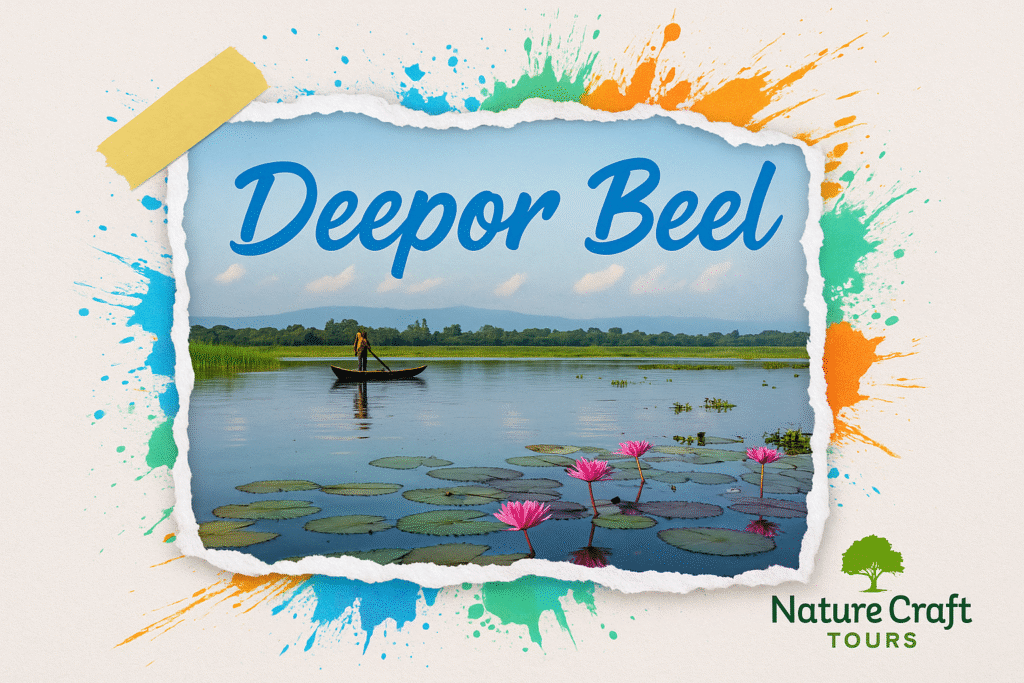
Deepor Beel (also written as Dipor Bil) is one of the most ecologically important and visually striking wetlands of Northeast India. Located on the south-western fringe of Guwahati city in Assam, this vast freshwater lake and marsh system serves as a crucial storm-water basin, a sanctuary for thousands of resident and migratory birds, and a lifeline for surrounding communities. Recognised internationally as a Ramsar Site for its biological and environmental significance, Deepor Beel stands today as a rare refuge of tranquillity and biodiversity in the rapidly expanding urban landscape of Guwahati.
The name “Deepor Beel” is derived from the Assamese word beel, meaning lake or large wetland. Spread over several square kilometres during the monsoon season, the lake is fed by hill streams and rivulets from the south and connected to the Brahmaputra via the Khanajan channel. As Assam’s only notified Ramsar Site and a designated Wildlife Sanctuary, Deepor Beel has been recognised by various national and international agencies for its outstanding ecological value, especially as a staging ground and wintering site for a remarkable diversity of waterbirds.
The wetland is increasingly being promoted as a responsible eco-tourism destination where birdwatchers, photographers and nature lovers can experience the rhythms of a living floodplain ecosystem. Government sources such as
Assam Tourism – Deepor Beel provide official information on its location, importance and conservation measures.
Ecological and Historical Importance of Deepor Beel
Deepor Beel is a permanent freshwater lake occupying the remnants of an abandoned Brahmaputra channel. Historically, the area functioned as a natural floodplain wetland that absorbed excess monsoon flows and released water gradually into the main river. Today, it continues to serve as the major storm-water storage basin for Guwahati, reducing flood risk for the city and maintaining regional hydrological balance.
The wetland’s ecological significance was formally recognised when a core area of more than 400 hectares was declared as Deepor Beel Wildlife Sanctuary by the Government of Assam in 1989. Subsequently, in 2002, the site was listed as a Wetland of International Importance under the Ramsar Convention, underscoring its global value for conservation of waterbirds, fish, and wetland ecosystems.
Deepor Beel is also an Important Bird Area (IBA) identified by BirdLife International, with over 120 species of birds recorded, including globally threatened storks, pelicans, eagles and a rich assortment of ducks, waders and marsh birds. During winter, vast flocks of migratory waterfowl arrive from Central Asia and Siberia, turning the lake into a living tapestry of wings and calls.
Major Attractions and Important Points to See
Birdwatching Zones and Viewpoints
One of the primary reasons travellers visit Deepor Beel is to observe birds in their natural habitat. Along the northern and eastern fringes of the lake, several informal viewpoints and embankments offer clear lines of sight across open water and reed beds. From these vantage points, visitors can often see:
- Large storks such as the Greater and Lesser Adjutant
- Spot-billed Pelicans and various cormorants
- Numerous species of ducks and geese in winter
- Kingfishers, egrets, herons and jacanas in shallower areas
- Birds of prey like kites and fishing eagles circling over the water
Early mornings and late afternoons are particularly rewarding for birdwatching, when both light conditions and bird activity are optimal.
Wetland Landscapes and Seasonal Changes
Deepor Beel presents different faces in different seasons. During the monsoon, the water level rises and the lake expands dramatically, merging with adjoining marshes and inundated fields. The horizon becomes a continuous sheet of water dotted with islands of trees. In the dry season, water levels recede, exposing mudflats, emergent vegetation and grazing grounds for livestock. This seasonal “breathing” of the wetland is part of its ecological character and supports a wide array of plant and animal life.
Local Fishing Activities and Traditional Practices
For nearby communities, Deepor Beel has long been a source of livelihood. Traditional fishing with nets, traps and small boats continues in parts of the wetland, especially outside the core sanctuary area. Observing these time-honoured practices offers visitors insights into the cultural and economic importance of the beel.
Elephant Movement Corridors
The wetland’s surroundings act as a movement corridor for wild Asian elephants travelling between the Rani–Garbhanga Reserve Forests and the riverine plains. With luck and from a safe distance, travellers may occasionally observe elephants along the southern fringe. This presence has earned Deepor Beel the evocative description “the lake of the elephants” in several nature-focused articles.
Travellers who appreciate wetlands and mangrove systems often pair Deepor Beel with other iconic water-based destinations in eastern India, using resources like the
Sundarban Tour website to understand how different wetland landscapes contribute to biodiversity and local culture.
Major Distances and Location Details
Deepor Beel lies to the south-west of the main Guwahati city centre in Kamrup Metropolitan district. Key approximate distances are as follows:
- Guwahati city centre to Deepor Beel – about 15–18 km by road
- Guwahati Railway Station to Deepor Beel – about 18 km
- Lokpriya Gopinath Bordoloi International Airport to Deepor Beel – about 5–10 km, depending on entry point
- Jalukbari junction to Deepor Beel – about 10 km
- Deepor Beel to Pobitora Wildlife Sanctuary – roughly 60–70 km (used in combined birding itineraries)
The wetland lies close to major transport corridors; a railway line skirts part of the beel, and National Highway alignments run nearby, making it accessible yet environmentally vulnerable.
For travellers designing broader eco-travel circuits connecting wetlands, bird sanctuaries and national parks, planning tools and ideas can be found on platforms such as
Deepor Beel, which aggregate information about protected areas and nature destinations.
How to Reach Deepor Beel
By Air
The nearest airport is Lokpriya Gopinath Bordoloi International Airport, which serves Guwahati and the wider Northeast. From the airport, Deepor Beel can be reached by taxi or hired vehicle in around 20–30 minutes, depending on the exact viewing point you choose around the wetland.
By Rail
Guwahati Railway Station is the primary railhead for visiting Deepor Beel. After arriving in Guwahati, travellers can proceed by taxi, app-based cab, auto-rickshaw or local bus towards the Jalukbari–Gorchuk side and then onwards to the wetland. A broad-gauge railway line also passes near the beel, but it is primarily for through traffic and is not used as a tourist access route.
By Road
Deepor Beel is accessible via road routes on the south-western edge of Guwahati. Travellers typically approach from:
- The Jalukbari area, taking roads towards Gorchuk and the beel.
- Local approach roads that run along the northern and eastern fringes, offering viewpoints and embankment access.
State buses, shared vehicles and private cars regularly ply these routes. Using a hired cab allows greater flexibility to stop at multiple viewing spots around the wetland.
Staying Options (Properties) for Visiting Deepor Beel
There are currently no large resorts directly inside the Deepor Beel Wildlife Sanctuary core area, in line with conservation norms. Visitors usually stay in Guwahati city and make day trips to the wetland. This arrangement balances comfort with ecological sensitivity.
Hotels and Guesthouses in Guwahati
Guwahati offers a wide range of accommodations:
- Premium hotels in and around the central business district and GS Road, suitable for travellers seeking higher comfort and in-house facilities.
- Mid-range properties near Jalukbari, Maligaon and adjoining localities, which reduce travel time to the beel.
- Budget lodges and guesthouses near the railway station and older parts of the city, convenient for value-conscious visitors and backpackers.
Homestays and Small Eco-Stays
Some homestays and small eco-oriented properties in the peri-urban areas around Guwahati cater to nature lovers and birdwatchers. While details vary, these can be a good choice for travellers wishing to combine wetland visits with a quieter stay away from the city’s busiest corridors.
Flora and Fauna of Deepor Beel
Deepor Beel supports a mosaic of aquatic, semi-aquatic and terrestrial habitats. The open water areas are fringed by emergent vegetation such as reeds, sedges, water lilies and lotus, while surrounding grasslands and scrub provide shelter for mammals, reptiles and numerous invertebrates.
Avifauna (Bird Life)
The birdlife of Deepor Beel is its greatest attraction. Among the more than 120 species recorded, notable examples include:
- Spot-billed Pelican
- Greater and Lesser Adjutant Storks
- Purple Heron, Grey Heron and several egret species
- Ruddy Shelduck, Gadwall, Northern Pintail and other migratory ducks
- Common Coots, Jacanas, Stilts and various waders
- White-breasted Kingfisher and Pied Kingfisher
- Brahminy Kite and other raptors
Aquatic Life and Mammals
The wetland supports a variety of fish species that sustain both avian predators and local fisheries. Amphibians and reptiles such as frogs, turtles and water snakes are common. The wider landscape, particularly towards the forested southern boundary, is occasionally visited by wild elephants and other mammals, underlining the beel’s role as part of a broader ecological network.
Best Time to Visit Deepor Beel
Deepor Beel can be visited throughout the year, but the experience varies by season.
The best time for birdwatching is generally from November to February, when winter migratory birds arrive and temperatures are pleasant. During this period, the lake’s open water attracts large flocks, making it ideal for nature photography and observation.
In the monsoon months (June to September), the wetland expands, and the landscape becomes lush and dramatic. However, heavy rains and water-logging can occasionally affect road access. Post-monsoon months (October and early November) offer clear skies and refreshed scenery.
Things to Do at Deepor Beel
- Birdwatching from embankments and designated viewpoints.
- Photography of wetlands, skies, and seasonal changes.
- Short nature walks along the lake fringe, respecting sanctuary rules.
- Observation of traditional fishing activities from appropriate vantage points.
- Combining the visit with nearby cultural sites and city attractions of Guwahati.
Responsible Travel and Conservation Concerns
Deepor Beel faces a range of ecological pressures including encroachment, solid-waste dumping, pollution, and unregulated land-use changes in its catchment area. Various government and civil society initiatives are underway to protect and restore the wetland’s ecological health, including weed-removal drives, monitoring of bird populations, and proposals for eco-tourism development aligned with conservation goals.
Visitors can contribute positively by:
- Maintaining silence and not disturbing birds or wildlife.
- Refraining from littering; carrying back all plastic and waste.
- Respecting local regulations and sanctuary boundaries.
- Supporting responsible operators who prioritise conservation.
Practical Travel Tips
- Carry binoculars and a camera with a zoom lens for birdwatching.
- Wear comfortable walking shoes and sun protection (hat, sunglasses, sunscreen).
- Early mornings and late afternoons provide the best light and bird activity.
- During winter, light woollens may be required due to cool morning temperatures.
- Engage local guides or nature educators, where available, to better understand the wetland’s ecology.
Conclusion
Deepor Beel is far more than a picturesque lake on the outskirts of Guwahati. It is a living, breathing ecosystem that absorbs floodwaters, sustains fisheries, shelters endangered birds, and offers citizens and visitors a vital connection to nature. As Assam’s only Ramsar-designated wetland, it holds both national and international responsibility for conservation.
For the mindful traveller, a visit to Deepor Beel becomes an education in the delicate balance between urban expansion and ecological preservation. Standing on its embankments, watching flocks of birds lift off over the reflective water, one experiences a rare stillness that defines the wetland’s enduring charm. Deepor Beel thus remains one of Assam’s most compelling nature destinations, inviting every visitor to appreciate, respect and help safeguard its irreplaceable beauty.