Nameri National Park – A Complete Travel Guide to Assam’s Serene Wilderness
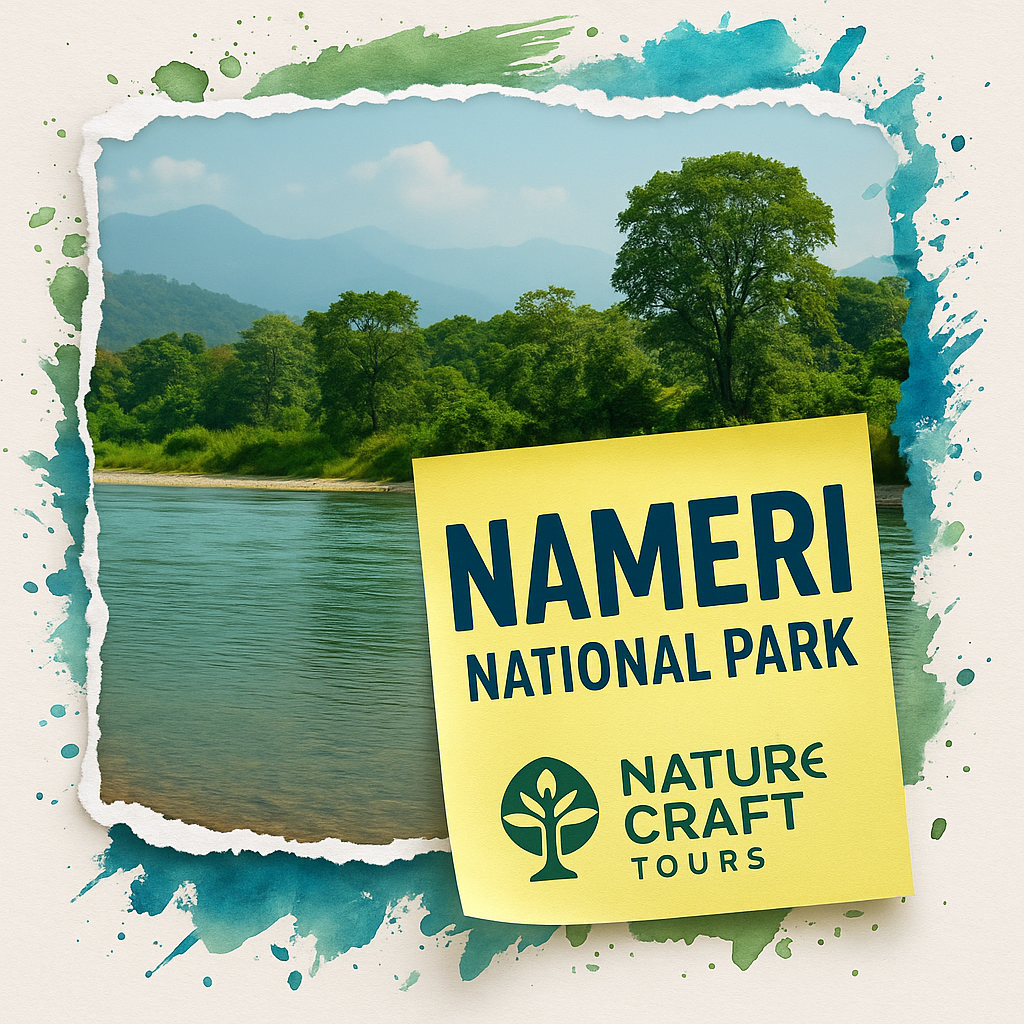
Nameri National Park, located in the foothills of the Eastern Himalayas within the Sonitpur district of Assam, is one of India’s most pristine and ecologically significant wildlife destinations. Celebrated for its evergreen forests, rich biodiversity, crystalline rivers and peaceful atmosphere, Nameri extends over an area of approximately 200 square kilometres. It forms an integral part of the larger Nameri–Pakke elephant landscape, sharing its northern boundary with the Pakke Tiger Reserve of Arunachal Pradesh. The result is a transboundary forest corridor where dense vegetation, riverine grasslands and rolling hills sustain a remarkable diversity of flora and fauna.
Recognised for its fragile wilderness, Nameri is a paradise for nature enthusiasts, ornithologists, conservation researchers, trekkers and river-rafting lovers. The park’s tranquillity, combined with its ecological richness, makes it one of Assam’s finest lowland forest destinations. Visitors often explore authentic and verified insights through the official government tourism portal
Assam Tourism, which lists Nameri among the state’s most important protected areas.
According to Nameri National Park on Wikipedia, the sanctuary forms part of Project Tiger and is home to numerous endangered species. Its diverse ecosystems include semi-evergreen forests, moist deciduous stretches, open grassy meadows and a network of rivers and rivulets feeding into the Jia-Bhoroli River. The park remains one of the last strongholds for the endangered White-winged Wood Duck—Assam’s state bird and among the rarest ducks in the world.
Historical Background and Ecological Significance
Historically, the forests that now constitute Nameri National Park were part of a nearly continuous forested belt extending from Assam into present-day Arunachal Pradesh. These forests supported elephants, tigers, primates, a wide array of bird species and diverse plant communities. In response to increasing conservation concerns, the region was declared a Wildlife Sanctuary in 1985 and subsequently elevated to the status of a National Park in 1998.
Nameri forms an exceptionally important wildlife corridor linking Assam with the Himalayan foothills. The park’s landscape, characterised by dense canopies and water bodies, serves as a refuge for migratory birds, freshwater fish, amphibians and several threatened mammals. It is also one of the very few national parks in India where visitors can undertake walking safaris with trained forest guides—an experience that allows deeper immersion into the wilderness.
Major Attractions and Important Places to See
1. Jia-Bhoroli River
The Jia-Bhoroli River forms the lifeline of Nameri. Originating in the Eastern Himalayas, this crystal-clear river passes through the park, nurturing aquatic species, riverine forests and grassland ecosystems. It is famous for its angling history—during British times, the river was renowned for its abundance of Golden Mahseer, a majestic game fish that attracts anglers and conservationists even today. Though angling is currently restricted for conservation reasons, rafting along the Jia-Bhoroli offers spectacular views of forests, birds and bank wildlife.
2. Forest Walking Trails
Unlike many national parks in India, Nameri allows visitors to participate in guided walking trails. These treks, led by trained forest guards and eco-guides, pass through grasslands, semi-evergreen forests, bamboo clusters and shallow streams. Walking through these forests allows travellers to observe plant species, butterflies, reptiles and birds at close range and to identify signs of wildlife such as tracks, calls or scratch marks on trees.
3. Birdwatching Zones
Nameri is considered a birdwatcher’s paradise. More than 370 species have been recorded, including globally threatened birds. One of the highlight species of Nameri is the critically endangered White-winged Wood Duck, which nests in old tree hollows near slow-moving streams.
Other notable birds include:
- Great Pied Hornbill
- Rufous-necked Hornbill
- Black Stork and Painted Stork
- Silver-breasted Broadbill
- Blue-bearded Bee-eater
- Crested Kingfisher
- Scarlet Minivet
- Emerald Dove
Serious birdwatchers often design combined itineraries linking Nameri with other wetland and river-based destinations. Platforms such as Sundarban Tour help travellers understand diverse ecological zones and migration routes across India.
4. River Rafting Experiences
Rafting on the Jia-Bhoroli River is one of the most popular activities at Nameri. The raft gently glides along the river’s currents, offering panoramic views of forested banks, sandbars, grasslands and wildlife. This is not a high-adventure, rapid-filled rafting experience; instead, it is a slow, scenic drift where one can spot hornbills flying overhead, otters playing along the banks and occasional sightings of elephants at distant salt licks.
5. Eco-Camps and Interpretation Centres
The eco-camps located near the park offer basic interpretation facilities, nature orientation programmes and guided experiences. They also host environmental awareness sessions for travellers and students. These centres help visitors understand the park’s fragile habitats and the conservation challenges faced by forest communities.
Flora and Fauna of Nameri
Nameri’s landscapes are composed of riverine forests, moist deciduous woodlands, cane-brakes, bamboo groves and open grassy meadows. Together, these habitats support an extraordinary range of species.
Mammals
The park is home to a variety of mammals including:
- Asian Elephant (frequently seen near forest edges)
- Bengal Tiger
- Clouded Leopard
- Leopard Cat
- Gaur
- Muntjac (Barking Deer)
- Hog Deer
- Indian Giant Squirrel
Though tigers and clouded leopards are elusive, signs of their presence—tracks, scat or claw marks—are often observed by experienced guides during forest walks.
Reptiles and Amphibians
Several snake species, geckos, lizards and turtles inhabit the park. Amphibians thrive near water channels, especially during the monsoon. The geological diversity of the region helps sustain unique microhabitats favourable for both reptiles and amphibians.
Aquatic Life
The clear waters of the Jia-Bhoroli nurture freshwater fish species including Mahseer varieties. Slow-moving channels and shaded inlets support aquatic plants, small fish, crustaceans and amphibians, contributing to the river’s ecological balance.
Major Distances from Nameri National Park
- Nameri to Tezpur – approx. 35 km
- Nameri to Guwahati – approx. 220 km
- Nameri to Itanagar (Arunachal Pradesh) – approx. 105 km
- Nameri to Kaziranga National Park – approx. 120 km
- Nameri to Bhalukpong – approx. 25 km
For travellers planning extended national park circuits and eco-tour itineraries, well-curated reference materials and planning suggestions can be found at Nameri National Park, which connects several Indian nature destinations into comprehensive travel routes.
How to Reach Nameri National Park
By Air
The nearest airport is Salonibari Airport in Tezpur, located approximately 35 km from the park. Regular flights connect Tezpur with major Indian cities via regional hubs. The more frequently used airport is Guwahati’s Lokpriya Gopinath Bordoloi International Airport (approximately 200–220 km), which offers extensive connectivity.
By Rail
Tezpur Railway Station is the closest major railhead. Alternately, travellers may use Rangapara North Railway Station, which receives a fair number of passenger and express trains. From either point, hired taxis and local transport options are available for the journey to Nameri.
By Road
Nameri is well connected by road via the Tezpur–Bhalukpong highway. Private taxis, tourist vehicles and state transport buses regularly ply along this scenic route. The drive offers beautiful views of rural villages, forest edges and distant mountains.
Staying Options (Properties) Around Nameri
Accommodation options in and around Nameri are mostly eco-friendly and nature-centric, which complement the region’s conservation ethos. While the number of properties is limited, the available options are comfortable and ideal for nature-oriented travel.
1. Eco-Camps and Forest Stays
Eco-camps near the park function as the primary accommodation base. These camps offer tented rooms, cottages, nature guides, interpretation activities and rafting arrangements. Their proximity to the park entrance makes them convenient for wildlife and birdwatching excursions.
2. Riverside Lodges
Some lodges situated near the river offer panoramic views of the surrounding forests. These properties are ideal for travellers seeking a peaceful retreat amidst nature.
3. Mid-Range Hotels in Tezpur
Those desiring urban amenities prefer staying in Tezpur and making day trips to Nameri. Tezpur offers various mid-range accommodations with comfortable rooms and essential facilities.
Best Time to Visit Nameri National Park
The best time to visit Nameri is between November and April, when the weather is pleasant and outdoor activities can be enjoyed comfortably. During this period, walking trails, rafting experiences and birdwatching excursions are at their finest.
The monsoon season, from June to September, witnesses heavy rainfall, making parts of the park inaccessible. The park remains closed during this period for visitor safety and ecological regeneration.
Activities to Enjoy in Nameri
- Guided forest walks with trained guards
- Birdwatching across riverine and forest zones
- Rafting along the Jia-Bhoroli River
- Nature photography and landscape exploration
- Butterfly and insect identification walks
- Observation of aquatic life and river ecology
- Village walks and cultural understanding sessions
Responsible Travel Guidelines
Nameri’s fragile ecosystems require mindful visitor behaviour. To help preserve the park’s biodiversity, visitors are advised to:
- Follow all instructions given by forest guides.
- Avoid loud noises and sudden movements during forest walks.
- Respect wildlife viewing distances.
- Carry back all waste—zero littering is essential.
- Use eco-friendly footwear and lightweight clothing.
- Avoid feeding wildlife and stray animals.
Conclusion
Nameri National Park stands as one of Assam’s most serene and ecologically vital protected areas. With its peaceful forests, clear rivers, rich birdlife and immersive nature experiences, the park offers a rare opportunity to connect with wilderness in its purest form. Whether one enjoys trekking beneath tall sal and teak trees, drifting down a Himalayan river or observing colourful birds in their natural habitats, Nameri provides an unforgettable encounter with nature.
As conservation efforts continue and sustainable tourism practices evolve, Nameri remains a treasured sanctuary—inviting travellers from India and around the world to immerse themselves in its quiet, untouched splendour while supporting the preservation of its precious ecosystems.