Orang National Park – A Complete Travel Guide to Assam’s Mini Kaziranga
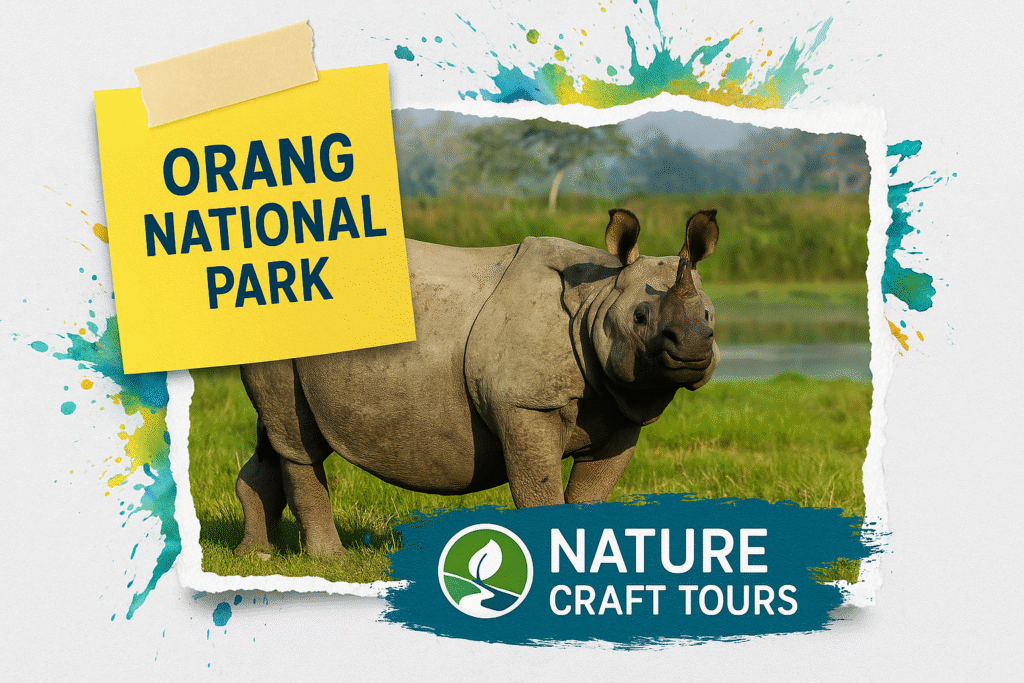
Orang National Park, located along the northern banks of the Brahmaputra River in Assam’s Darrang and Sonitpur districts, is one of India’s most remarkable wildlife reserves. Often referred to as the “Mini Kaziranga” for its similar topography and successful conservation of the one-horned rhinoceros, Orang offers a pristine landscape of grasslands, wetlands, woodlands, riverine islands and rich biodiversity. Covering over 78 square kilometres, the park is among the oldest protected areas in Assam and stands today as a powerful testimony to ecological resilience and scientific conservation.
Orang is celebrated for its high density of the great Indian one-horned rhinoceros, Bengal tigers, elephants, hog deer, wild boar and diverse avifauna. Its strategic location in the floodplains of the Brahmaputra creates a unique habitat mosaic that supports seasonal water bodies, marshlands, oxbow lakes and fertile grasslands. Travellers seeking government-approved information about this important ecosystem often refer to the official portal Assam Tourism, which lists Orang as one of the state’s most significant wildlife destinations.
According to Orang National Park on Wikipedia, the area was initially declared a Game Reserve in 1915, later upgraded to a Wildlife Sanctuary in 1985, and officially established as a National Park in 1999. Its long conservation history has given rise to thriving wildlife populations and a well-protected habitat that continues to attract naturalists, photographers and eco-travellers from across the world.
Historical, Ecological and Cultural Significance
Orang’s history is steeped in both indigenous stewardship and colonial conservation practices. Ancient local communities living along the Brahmaputra floodplains relied on these wetlands and grasslands for centuries. During British rule, concerns grew regarding wildlife depletion, especially of rhinos and deer species. This led to the area’s formal protection, which ultimately evolved into modern conservation management.
The park also plays a crucial ecological role as a floodplain buffer. Seasonal monsoon floods replenish the landscape with nutrients, refreshing grasslands and wetlands essential for herbivores. Moreover, Orang forms part of a larger trans-riverine wildlife corridor that includes Kaziranga, Pobitora, Burhachapori and Laokhowa, collectively supporting Assam’s long-term rhino conservation strategy.
Major Attractions and Important Places to See in Orang National Park
1. The Rhino Grasslands
Orang’s vast short-grass and tall-grass ecosystems are the heart of the park’s wildlife viewing experience. These fertile plains support a high concentration of one-horned rhinoceros, which can often be seen grazing peacefully near water bodies or walking across open clearings. The grasses here include elephant grass, imperata species and canelike vegetation essential for herbivores.
2. Wetlands and Oxbow Lakes
The park’s wetland systems form some of the richest habitats in the Brahmaputra basin. Numerous marshes, ponds and oxbow lakes sustain fish populations, reptiles, amphibians and migratory birds. These wetlands function as wildlife hotspots, particularly during early winter when birds arrive in large flocks.
3. Riverine Forests and Woodlands
Orang also contains dense patches of riverine forests dominated by sal, simul, ajhar and various deciduous trees. These woodlands shelter tigers, leopards, civets and numerous smaller mammals. The interplay of light and shadow in these forests creates ideal photography opportunities.
4. Avifaunal Zones
Orang National Park is a paradise for birdwatchers. With over 200 recorded species, the park hosts a spectacular diversity including:
- Indian Eagle Owl
- Changeable Hawk-Eagle
- White Pelican
- Black-necked Stork
- Pintail, Teal and other migratory ducks
- Open-billed and Adjutant Storks
- Kingfishers and Bee-eaters
The wetlands’ scenic backdrops make Orang one of Assam’s finest birding destinations. Many travellers link such wetland-rich itineraries with other ecosystems highlighted on Sundarban Tour, observing how water-based habitats support rich biodiversity.
5. The Brahmaputra River Landscape
The northern boundary of Orang is marked by the vast Brahmaputra River. The ever-shifting riverine landscape forms sandbars, islands and floodplain patches that attract elephants, deer and birdlife. During winter, the clear skies over the river offer extraordinary photographic opportunities.
Flora and Fauna of Orang National Park
The biodiversity of Orang extends across multiple categories of flora and fauna—many of which have adapted specifically to the Brahmaputra floodplain environment.
Mammals
Orang supports a rich mammalian population including:
- One-horned Rhinoceros
- Bengal Tiger
- Asian Elephant
- Hog Deer
- Barking Deer
- Wild Boar
- Leopard and Leopard Cat
- Porcupine and Civet species
Though tigers are elusive and mainly camera-trapped rather than commonly sighted, their presence indicates a healthy trophic structure.
Reptiles and Aquatic Species
The park is home to several reptilian species including pythons, king cobras, sand boas, monitor lizards and multiple freshwater turtles. The wetlands nourish abundant fish species which in turn attract birds, otters and aquatic predators.
Avifauna
Migratory waterfowl arrive in large numbers during winter. Resident birds, including raptors and wetland specialists, are also widely seen. The varied ecosystems—ranging from wetlands to grasslands—support both ground feeders and tree-dwelling birds.
Major Distances from Orang National Park
- Orang National Park to Tezpur – approx. 32 km
- Orang National Park to Guwahati – approx. 140 km
- Orang National Park to Mangaldoi – approx. 70 km
- Orang National Park to Kaziranga National Park – approx. 135 km
- Orang National Park to Nameri National Park – approx. 110 km
Travellers structuring multi-park wildlife circuits often find route ideas and helpful information through platforms such as
Orang National Park, which connects multiple Indian nature destinations.
How to Reach Orang National Park
By Air
The nearest major airport is Salonibari Airport in Tezpur, around 32 km from the park. Guwahati’s Lokpriya Gopinath Bordoloi International Airport lies approximately 140 km away and provides broader connectivity across India. From either airport, taxis or reserved vehicles can be hired for travel to Orang.
By Rail
The closest railway stations to Orang are Tezpur Railway Station and Rangapara North Railway Station. Both stations connect to major cities in Assam and neighbouring states. Once at the station, travellers can hire local transport to reach the national park.
By Road
Orang is accessible via well-maintained roads linking it to Tezpur, Guwahati and other towns. State-run buses, private buses and tourist taxis frequently ply these routes. The Tezpur–Guwahati corridor offers a smooth travel experience and scenic views of the countryside.
Staying Options (Properties) Near Orang National Park
Given its relatively small core area and emphasis on wildlife protection, Orang offers limited accommodation options immediately adjacent to the park. Most travellers stay in Tezpur or nearby eco-lodges providing forest views and nature-centric experiences.
1. Eco-Cottages and Nature Lodges
Several nature-focused lodges and eco-cottages operate near Orang’s buffer areas, offering comfortable stays surrounded by rural landscapes.
2. Hotels in Tezpur
Tezpur, being just 32 km away, offers excellent mid-range and premium hotel options. This town acts as the main accommodation base for most Orang travellers.
3. Homestays near Rural Zones
Local homestays allow travellers to experience the lifestyle of communities living near the Brahmaputra plains. These stays provide simple comfort with authentic cultural nuances.
Safari Experience at Orang National Park
Jeep safaris are the primary means of exploring the park. Safari routes pass through grasslands, scrub forests and wetland edges where rhinos, deer, wild boar and birds are often encountered. Early morning safaris offer the best wildlife activity and visibility.
Photography enthusiasts will find numerous opportunities to capture wildlife in diffused early sunlight, especially along watering points.
Best Time to Visit Orang National Park
The ideal time to visit Orang is between November and April. During winter and early spring, temperatures are pleasant and wildlife activity is high. The landscape is dry and visibility improves, making it easier to spot animals grazing in grasslands.
The park remains closed during the monsoon months (May to October) due to heavy rainfall and flooding, which make safaris unsafe.
Things to Do in Orang National Park
- Explore grassland habitats through guided jeep safaris
- Observe one-horned rhinos in open plains
- Birdwatching in wetland and woodland zones
- Photography of riverine landscapes and wildlife
- Visit nearby rural communities and craft centres
- Combine Orang with Nameri, Kaziranga and Pobitora in a multi-park circuit
Practical Travel Tips
- Carry binoculars for birdwatching and wildlife spotting.
- Wear neutral-coloured clothing suitable for the forest environment.
- Follow all safety instructions from forest authorities and guides.
- Avoid loud noises; maintain respectful silence near animals.
- Carry water, light snacks and sun protection.
- Book safari permits in advance during peak season.
Conclusion
Orang National Park stands as a testament to Assam’s conservation success and its commitment to safeguarding endangered wildlife. With its lush grasslands, vibrant wetlands, thriving birdlife and rich mammal population, the park offers a compact yet deeply rewarding wildlife experience. Whether one wishes to witness the great Indian one-horned rhinoceros in its natural environment, observe migratory birds across riverine landscapes or enjoy the serenity of floodplain forests, Orang delivers an unforgettable encounter with nature.
As Assam continues to position itself as a global wildlife destination, Orang National Park remains one of its brightest jewels—an oasis of biodiversity that invites travellers to explore, appreciate and help protect the delicate ecosystems of the Brahmaputra valley.