Dehing Patkai Wildlife Sanctuary
– A Complete Travel Guide to Assam’s Rainforest Jewel
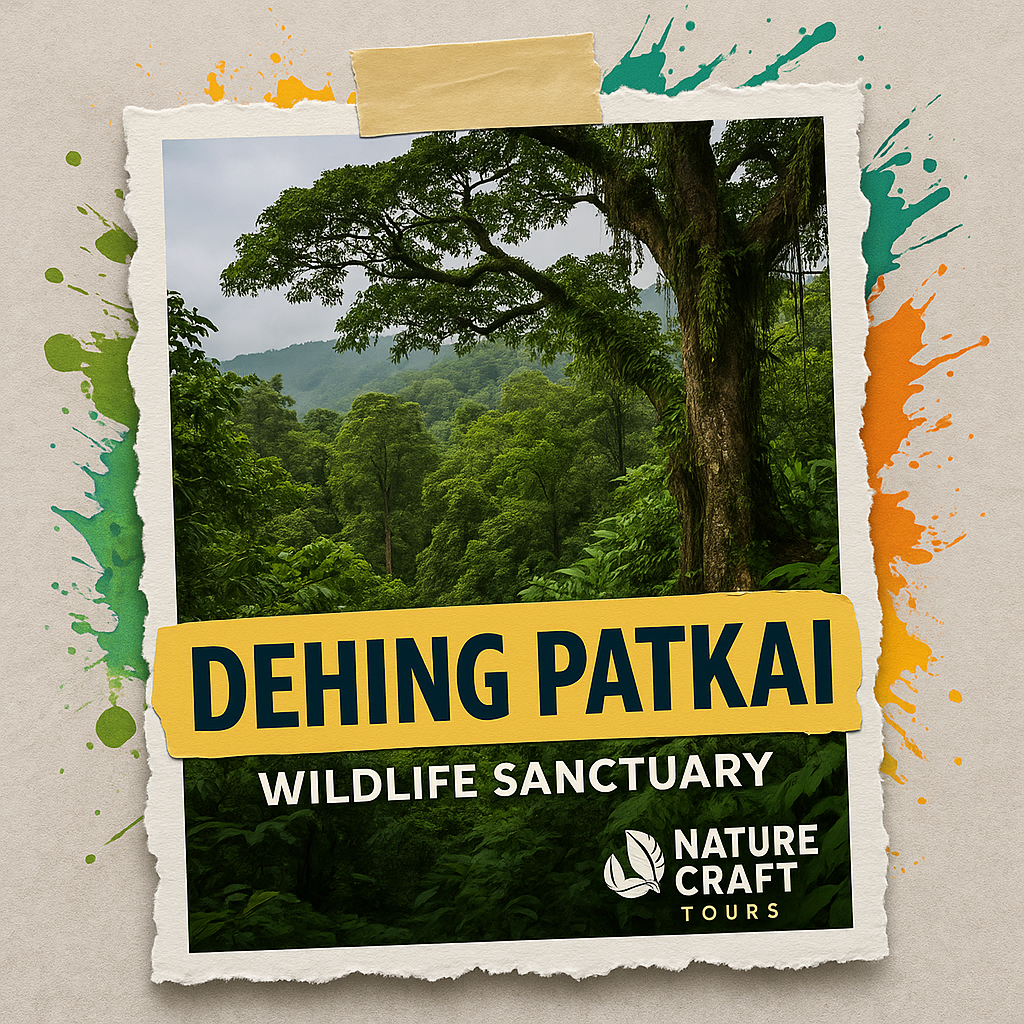
Dehing Patkai Wildlife Sanctuary, located in the easternmost region of Assam, is an extraordinary treasure of biodiversity and one of India’s last remaining stretches of lowland tropical rainforest. Often referred to as the “Amazon of the East,” this pristine sanctuary is part of the larger Dehing Patkai Elephant Reserve and represents one of the most ecologically significant forest belts in Northeastern India. Spread across the districts of Dibrugarh, Tinsukia and Sivasagar, the sanctuary comprises dense evergreen forests, rich wildlife populations, rolling hills, forest streams, giant trees and an exceptionally diverse array of flora and fauna. According to the official government portal Assam Tourism, the sanctuary is a hotspot of biological richness formed under the influences of high rainfall, humid climate and fertile alluvial soils.
Dehing Patkai was declared a Wildlife Sanctuary in 2004 and later upgraded to India’s newest national park in recent years. This recognition emphasizes its importance as a biological corridor and as a refuge for elephants, primates, big cats, rare birds, orchids and more. The area forms the westernmost edge of the Indo-Myanmar biodiversity hotspot, one of the world’s richest ecological zones. A detailed scientific profile is available at Dehing Patkai on Wikipedia, which highlights the sanctuary’s crucial role in conservation history.
Historical, Cultural and Ecological Significance
Historically, Dehing Patkai served as a buffer forest connecting Assam to Arunachal Pradesh and the ancient forest routes used by tribal communities. It also lies close to regions once shaped by the Ahom Kingdom and the tea industry’s early colonial heritage. Ecologically, the sanctuary contains some of the last remaining tracts of Assam’s lowland evergreen forests—habitats that have vanished from most of the state due to logging, mining and human encroachments.
The forest is named after the Dehing River and the legendary Patkai Hills. High humidity, abundant monsoon rainfall and fertile soils nurture an extraordinary diversity of plant life. Many species found here are endemic, endangered or rarely seen elsewhere in India. The area is equally significant culturally, forming part of the ancestral lands of local communities who depend on forest resources for sustenance.
Travellers seeking in-depth nature connections often include rainforest and wetland ecosystems in their itineraries. Guides and eco-resources such as Sundarban Tour illustrate how forest and river-based landscapes across eastern India form connected ecological networks.
Major Attractions and Important Points to See in Dehing Patkai
1. The Rainforest Trails
The forest trails of Dehing Patkai lead travellers through majestic evergreen canopies, dense understorey vegetation, thick climbers, bamboo groves and moss-covered tree trunks. The serene surroundings are filled with forest calls, bird songs and the rustling of wildlife. Walking these trails allows visitors to witness rare orchids, butterflies, amphibians, reptiles and fern species flourishing beneath the tall trees.
2. Dehing Patkai Elephant Reserve
The sanctuary forms the core of the larger Dehing Patkai Elephant Reserve, one of India’s most vital elephant conservation landscapes. Herds of Asian elephants migrate seasonally through these forests. Visitors often see signs of elephant activity—tracks, feeding marks and salt licks—though actual sightings depend on time, weather and seasonal movements.
3. The Patkai Hills Landscape
Towards the eastern boundary, the sanctuary merges with the foothills of the Patkai mountain range. These hills add scenic grandeur, with mist-covered slopes, lush green ridges and hilly streams. The elevation changes support unique plant species and occasional sightings of high-altitude wildlife.
4. Birdwatching Zones
Dehing Patkai is an Important Bird Area (IBA) with over 290 species recorded. Birdwatchers can spot:
- Great Hornbill
- Wreathed Hornbill
- Oriental Pied Hornbill
- Green Imperial Pigeon
- Sultan Tit
- Scarlet Minivet
- Blue-throated Barbet
- Various species of drongos, flycatchers and babblers
The richness of avifauna is enhanced by the dense tropical vegetation, which provides nesting, feeding and roosting opportunities.
5. Orchid Hotspots
The sanctuary is known for its spectacular orchid diversity. Rare and endemic orchids bloom within specific microhabitats shaped by humidity, shade and soil moisture. During the monsoon and post-monsoon periods, the forest becomes a living botanical gallery.
6. Tribal Villages and Cultural Experiences
Local communities such as the Singpho, Khamti, Tai and other indigenous groups reside near the forest. Their cultural traditions, food habits, handcrafts and forest-based livelihoods add anthropological richness to the region.
Flora and Fauna of Dehing Patkai
Dehing Patkai is a biodiversity hotspot unmatched by many Indian forests. The combination of tropical rainforest climate, fertile soil and low human interference has allowed both flora and fauna to flourish.
Flora
Botanically, the sanctuary is dominated by:
- Tropical wet evergreen forests
- Moist deciduous forests
- Cane brakes and bamboo forests
- Thick undergrowth of palms, climbers and shrubs
Major tree species include Hollong, Mekai, Fig species, Mesua ferrea, Terminalia species and riverine species adapted to periodic inundation.
Mammals
The sanctuary is home to a remarkable diversity of mammals, such as:
- Asian Elephant
- Clouded Leopard
- Bengal Tiger (rare sightings)
- Leopard
- Sun Bear (reported in forest fringes)
- Capped Langur
- Slow Loris
- Malayan Giant Squirrel
- Hoolock Gibbon (India’s only ape species)
Primates are among the most important wildlife groups in Dehing Patkai. The forest’s structure—composed of canopy layers—supports their lifestyles exceptionally well.
Birds
The sanctuary is an outstanding destination for bird enthusiasts. In addition to the hornbills, numerous wetland and woodland birds thrive here. The constant presence of streams and water sources creates suitable microhabitats for kingfishers, herons and forest specialists.
Reptiles and Amphibians
Snakes, geckos, frogs, toads and salamander-like amphibians are widely recorded from the region. The presence of dense canopy cover, moist leaf litter and stream banks makes Dehing Patkai ideal for herpetofauna diversity.
Major Distances from Dehing Patkai Wildlife Sanctuary
- Dibrugarh to Dehing Patkai – approx. 60–70 km
- Tinsukia to Dehing Patkai – approx. 40–45 km
- Dibrugarh Airport (Mohanbari) to Dehing Patkai – approx. 65–75 km
- Guwahati to Dehing Patkai – approx. 500+ km
- Digboi to Dehing Patkai – approx. 20–25 km
Travellers planning extended rainforest and wildlife circuits often refer to eco-travel resources such as
Dehing Patkai Wildlife Sanctuary, which curate multi-park itineraries across India’s protected areas.
How to Reach Dehing Patkai Wildlife Sanctuary
By Air
The nearest airport is Dibrugarh Airport (Mohanbari), offering flights from major Indian cities such as Kolkata, Delhi and Guwahati. From the airport, visitors may hire taxis or private vehicles to reach the sanctuary via Dibrugarh or Tinsukia.
By Rail
Tinsukia and Dibrugarh Railway Stations serve as the primary gateways. These stations are well-connected to the Indian Railways network. On arrival, travellers can proceed to the sanctuary using vehicle rentals or local transport options.
By Road
Dehing Patkai is accessible via the national and state highways that connect Guwahati, Dibrugarh, Digboi, Margherita and Tinsukia. Road conditions are generally good, allowing relatively smooth travel to the forest edges.
Staying Options (Properties) Near Dehing Patkai
As a protected rainforest zone, the sanctuary does not host commercial hotels within its core area. Travellers stay in nearby towns and eco-friendly accommodations.
1. Eco-Lodges near Forest Edges
Eco-lodges offer a nature-centric stay with forest views, guided walks and cultural experiences. These lodges often use sustainable materials and practices.
2. Hotels in Digboi and Margherita
These locations offer mid-range hotels ideal for travellers who need access to restaurants, markets and transportation.
3. Stays in Dibrugarh
Dibrugarh, with its larger urban infrastructure, provides high-quality hotels. Though farther away, it is preferred by travellers combining rainforest visits with tea garden tours.
Best Time to Visit Dehing Patkai Wildlife Sanctuary
The most favourable period to visit Dehing Patkai is between November and March, when the weather remains dry and pleasant. During these months, forest trails are more accessible, bird activity is high, and visibility is excellent.
The monsoon season, from May to September, brings heavy rainfall and humidity. While this period is ecologically vital for the rainforest, tourism activities may be restricted.
Things to Do in Dehing Patkai
- Rainforest trekking with trained guides
- Birdwatching across forest streams and canopy zones
- Photography of orchids, butterflies and dense forest landscapes
- Cultural village visits
- Sightings of elephants and primates (seasonal)
- Exploring nearby Digboi’s colonial heritage and tea lifestyle
Responsible Travel Guidelines
- Follow forest rules and remain with authorised guides.
- Refrain from disturbing wildlife or playing loud sounds.
- Carry eco-friendly gear and avoid plastic litter.
- Respect community norms in surrounding villages.
- Use appropriate clothing and footwear for rainforest conditions.
Conclusion
Dehing Patkai Wildlife Sanctuary stands as a shining example of the richness of India’s rainforest heritage. With its extraordinary flora, rare fauna, tribal cultures and dramatic hilly landscapes, it is one of Northeast India’s most compelling destinations for wildlife enthusiasts, researchers and responsible travellers. Visitors who walk its mist-filled trails experience an ancient forest that continues to thrive against the odds, sustained by conservation efforts and natural resilience.
For those seeking tranquillity, biodiversity and deep ecological immersion, Dehing Patkai remains an unforgettable rainforest realm—a living testament to Assam’s natural grandeur and its enduring commitment to protecting the wild.