Sundarban Tour
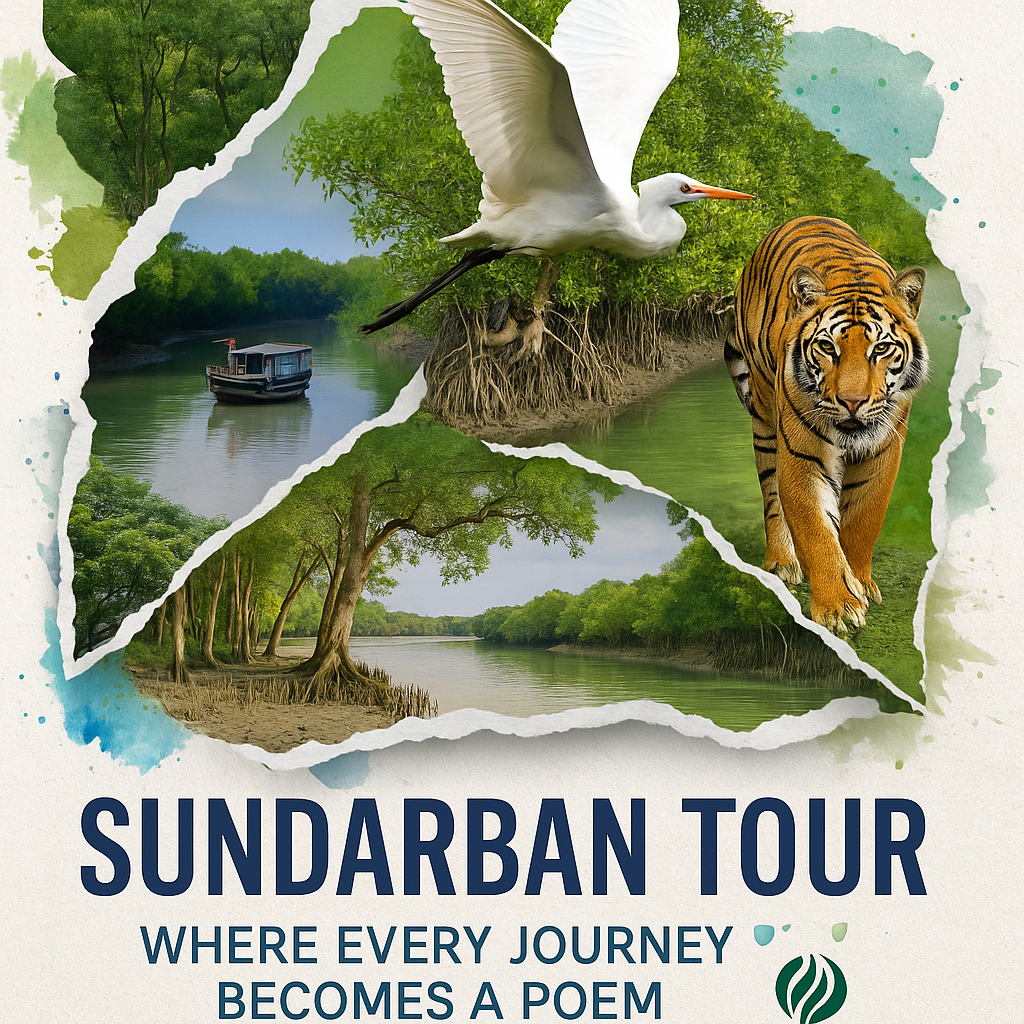
Where Every Journey Becomes a Poem
Some landscapes inform, some landscapes enchant, but the Sundarbans do something far more profound—they transform every traveller into a poet of their own experience. Here, the quiet breath of the mangrove leaves, the soft curl of river currents, and the distant echo of wild footsteps meld into a rhythm that feels written by nature’s oldest hands. A Sundarban Tour does not simply guide you through a forest; it invites you to walk inside a living poem, where every journey becomes a verse, every tide becomes a metaphor, and every silence becomes a stanza waiting to unfold.
The Dawn That Writes the First Line
Dawn in the Sundarbans is a deliberate, delicate art form. Before the sunlight fully awakens, an ethereal silver mist wraps itself around the mangroves. The rivers appear motionless, as though holding their breath for the day’s first verse. When the sun finally rises, its golden hue spills gently over the water, illuminating birds in flight and fishermen steering their boats with slow, purposeful movements. In this awakening, travellers often feel a sense of reverence—as though witnessing the forest writing its own prelude.
This serene moment is also a reminder of the Sundarbans’ ecological significance. Its vast mangrove systems protect coastal Bengal from cyclones, absorb carbon, filter saline water, and shield fragile islands from erosion. Understanding these dynamics during a Sundarban Travel experience allows visitors to perceive the region not only as a scenic marvel but as one of the planet’s most vital protective ecosystems. The poetry that unfolds here is as scientific as it is spiritual, blending resilience and fragility into one shared narrative.
Where Mangroves Compose Their Own Verses
The mangroves of the Sundarbans are unlike any other forest in the world. They blur the boundary between land and water, creating a space where roots rise like quills from the soil and branches dip their edges into the river like pens seeking ink. More than 60 mangrove species thrive in this delta, each adapted to high salinity, shifting land, and fluctuating tides. Their aerial roots—pneumatophores—pierce the mud like punctuation marks, allowing the trees to breathe in oxygen-starved soil.
As travellers drift deeper into this ecological labyrinth, they realise that the mangroves form the structural lines of the Sundarban poem. Every branch, every root, every cluster of leaves contributes to an unbroken stanza that extends for miles. The forest is quiet, but its silence carries a profound eloquence, speaking of survival, adaptation, and the timelessness of natural wisdom. A journey through a Sundarban Tour Package is therefore a journey through nature’s own literary masterpiece, composed entirely in green, brown, and the shimmering silver of tidal waters.
The Tiger — The Most Powerful Line in the Poem
No symbol defines the Sundarbans as powerfully as the Royal Bengal Tiger. This extraordinary predator has evolved to thrive in brackish water, swim across wide creeks, and navigate through tangled mangrove corridors with effortless grace. Its presence is the bold, arresting line in the Sundarban poem—a line that commands attention even when the tiger is unseen.
Visitors rarely encounter the tiger directly; its mystery is part of its magnificence. But its subtle signs—fresh pugmarks on muddy trails, the soft alarm cry of deer, or distant movements within the forest—leave a lasting imprint. The tiger’s shadow becomes a metaphor for all that remains unspoken yet deeply felt within nature. During a Sundarban Private Tour, this sense of unseen presence transforms the journey into something intimate and introspective. The delta teaches travellers that beauty is often most powerful when it reveals itself through suggestion rather than display.
A Symphony of Birds That Paint the Sky with Poetry
The Sundarbans host an astonishing variety of birds—kingfishers that strike the water with blue precision, herons that move like slow brushstrokes, egrets that glide with serene dignity, and eagles that survey the delta as though reading its hidden verses from above. Every bird contributes a distinct tone to the forest’s natural symphony. Their calls, movements, and patterns weave the aerial portion of the Sundarban poem, a verse written not with ink but with sound and flight.
Even the water participates in this poetic harmony. Dolphins emerge with playful arcs, crocodiles drift silently near the banks, and schools of fish shimmer beneath the surface as though reflecting hidden stanzas written below the river’s skin. Flora and fauna together create a seamless tapestry, revealing how every living being in this delta adds rhythm to the wilderness.
Villages That Live in Harmony with Nature’s Poetry
Scattered across the Sundarbans are villages where life unfolds in synchronization with the forest. Homes made of mud and bamboo stand resilient against tides. Fishermen mend nets under the cool shade of palm leaves. Children run along earthen paths sculpted by the river’s movements. The community’s lifestyle—simple, balanced, and rooted in tradition—feels like an extension of the delta’s poetic expression.
Local residents worship Bonbibi, the guardian spirit believed to protect them during forest expeditions. This mythological presence shapes cultural beliefs, reinforcing the necessity of coexistence with the wilderness. Visitors who witness these traditions begin to understand that poetry in the Sundarbans is not confined to nature; it lives in the people as well—their stories, their resilience, their faith, and their unspoken pact with the land.
A Natural Classroom of Science, Story, and Sublimity
The Sundarbans are not only poetic but scientifically extraordinary. Their complex food webs, tidal rhythms, and evolutionary adaptations make them a vital research site for ecologists and climate scientists alike. Mangroves absorb massive amounts of carbon, reducing greenhouse gases; their roots stabilise soil, preventing erosion; and their vegetative density lessens the impact of cyclones and storm surges.
The brackish water ecosystem allows unique species to thrive, showcasing evolutionary strategies rarely observed elsewhere. For travellers with a scientific curiosity, every moment becomes a lesson in ecological resilience. For those seeking emotional or spiritual connection, the landscape offers equal enrichment through metaphor and meaning. The Sundarbans thus become a dual experience—both textbook and poem, both laboratory and lyric.
Creeks, Rivers, and the Endless Flow of Natural Verse
The waterways of the Sundarbans function like the flowing lines of a long, uninterrupted poem. Creeks twist gracefully around islands; wide rivers stretch across the horizon like sweeping stanzas; hidden channels reveal intimate corners of the delta where nature’s secrets rest quietly. Travelling through these waterways, travellers sense the poetic continuity of the journey—how every turn of the boat brings a new metaphor, a new mood, a new meaning.
Light reflects on the water in shimmering strokes, painting scenes that feel almost dreamlike. In narrow creeks, branches form archways overhead, filtering sunlight into patterns resembling handwritten calligraphy upon the river’s surface. Each ripple becomes a syllable, each breeze a whisper, each shadow a punctuation mark in this endlessly evolving verse.
Nightfall — When the Poem Turns into a Whisper
Night in the Sundarbans carries its own gentle poetry. Stars shimmer above the darkened waterways, while nocturnal creatures emerge with soft rustles that blend seamlessly with the river’s quiet pulse. The forest does not fall silent; it simply shifts from lyrical expression to whispered confession. The sounds of the night—distant calls, soft waves, occasional wingbeats—compose the final stanza of the day.
Travellers often describe nightfall in the delta as a moment of profound introspection. Without city lights or noise to distract, the mind becomes more attuned to the forest’s subtle language. It is during these quiet hours that many feel the deepest connection to the Sundarbans, as though the delta has chosen to read them a part of its hidden poem reserved only for those who listen closely.
A Journey That Becomes a Poem Within You
Every Sundarban journey lingers long after it ends. The echo of wings, the smell of mud and mangroves, the play of light on water—all these memories remain etched like verses on the traveller’s heart. As the boat returns to the jetty and the forest slowly retreats from view, travellers realise they are leaving with far more than photographs or stories; they are carrying a poem shaped by the land, the water, the wildlife, and the silence.
Thus, a Sundarban Travel experience transcends the boundaries of tourism. It becomes a personal composition—an ever-unfolding poem that continues to inspire reflection long after the journey concludes.
For those seeking not just a destination but a deeper understanding of nature’s artistry, the Sundarbans stand unparalleled. Here, every ripple writes meaning, every wind stirs emotion, and every journey becomes poetry in motion.