Visakhapatnam (Vizag):
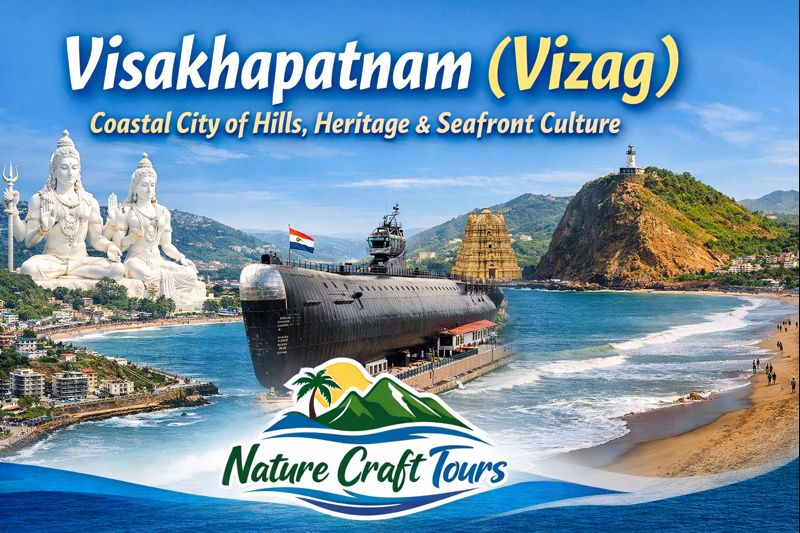
A Coastal City Where Hills, Heritage, and Seafront Culture Converge
Visakhapatnam, popularly known as Vizag, stands as one of India’s most distinctive coastal cities—where the Eastern Ghats gently descend into the Bay of Bengal, where ancient maritime history coexists with modern urban growth, and where natural landscapes continue to define the rhythm of daily life. Unlike many linear beach cities, Vizag unfolds in layers: forested hills, historic settlements, industrial corridors, spiritual landmarks, and a vibrant seafront culture that reflects both tradition and contemporary aspirations.
This in-depth travel guide explores Visakhapatnam not merely as a destination, but as a living coastal ecosystem shaped by geography, history, culture, and strategic importance. Designed from the perspective of an explorer, the following narrative offers a comprehensive tour plan, best travel timings, major and lesser-known destinations, and the cultural context that gives Vizag its unique identity.
Geographical Setting: Where the Eastern Ghats Meet the Sea
Visakhapatnam is uniquely positioned along the eastern coastline of India, framed by the Bay of Bengal on one side and the Eastern Ghats on the other. This rare coastal-hill geography creates dramatic landscapes—rocky headlands overlooking the sea, forested slopes descending toward beaches, and natural harbors that have historically supported maritime trade and naval operations.
The city’s terrain contributes to a relatively moderate coastal climate, scenic roadways, and natural vantage points that offer panoramic views of both sea and land. Hills such as Kailasagiri, Simhachalam, and Dolphin’s Nose are not isolated landmarks; they form an ecological and cultural spine that defines the city’s character.
Historical Evolution: From Ancient Port to Strategic Coastal Metropolis
Visakhapatnam’s history stretches back to ancient times, when it functioned as a port connecting eastern India with Southeast Asia. Archaeological findings and inscriptions suggest early maritime trade, Buddhist influences, and cultural exchanges that shaped the region’s development. Over centuries, the area came under various dynasties, each leaving behind architectural, religious, and cultural imprints.
During the colonial era, Vizag gained prominence due to its natural harbor and strategic location. In post-independence India, the city evolved into a major industrial and naval center, housing one of the country’s most significant shipbuilding and defense establishments. Despite rapid modernization, Vizag has retained strong connections to its past—visible in its temples, coastal traditions, and community life.
Best Time to Visit Visakhapatnam
October to March: Ideal Season for Exploration
The most favorable period to explore Visakhapatnam is from October to March, when temperatures remain pleasant and humidity levels are comparatively lower. This season is ideal for beach activities, hill excursions, city walks, and cultural exploration.
April to June: Summer Heat with Coastal Breezes
Summer months bring higher temperatures, yet early mornings and evenings remain suitable for sightseeing, especially along the coastline and hilltops. Travelers during this season benefit from fewer crowds.
July to September: Monsoon Landscapes
The monsoon transforms Vizag into a lush green panorama, particularly across its hill ranges. While heavy rains may occasionally disrupt travel plans, this season offers dramatic scenery and a quieter travel experience.
Comprehensive Tour Plan: Exploring Vizag Step by Step
Day 1: Coastal Introduction and Seafront Culture
Begin your journey along Visakhapatnam’s iconic coastline. The city’s beaches are not merely recreational spaces; they serve as social, cultural, and ecological zones where urban life meets the sea.
Morning hours are best spent walking along the shoreline, observing local fishing practices, and witnessing the sunrise over the Bay of Bengal. The beachfront roads provide expansive views and are integral to Vizag’s daily rhythm.
The evening introduces travelers to Vizag’s seafront culture—families gathering, local snacks being prepared, and cultural performances occasionally enlivening public spaces.
Day 2: Hilltop Landscapes and Spiritual Heritage
The second day is dedicated to exploring Vizag’s elevated landscapes. The hilltops offer a striking contrast to the coast, revealing forested terrain, panoramic viewpoints, and spiritual landmarks.
Visits to ancient temples and hill shrines provide insight into regional religious traditions and architectural styles. These sites are often located amidst natural surroundings, reinforcing the spiritual connection between landscape and belief systems.
Day 3: Cultural Institutions and Maritime Legacy
Visakhapatnam’s identity as a port city is deeply embedded in its maritime institutions. Museums, preserved vessels, and historical installations narrate the story of naval evolution, trade routes, and technological advancements.
This day also includes exploring cultural centers, markets, and heritage neighborhoods that reflect the city’s multicultural influences.
Day 4: Suburban Escapes and Natural Reserves
Beyond the city center, Vizag’s outskirts offer tranquil landscapes—coastal villages, forest reserves, and scenic valleys. These areas are ideal for travelers seeking slower, immersive experiences connected to nature.
Major Attractions of Visakhapatnam
The Beaches: Natural Amphitheaters of the Coast
Visakhapatnam’s beaches are characterized by a mix of rocky formations and sandy stretches. They serve ecological functions as well as social spaces, supporting marine biodiversity and local livelihoods.
Unlike heavily commercialized beaches, many coastal areas in Vizag maintain a balance between accessibility and natural preservation.
Kailasagiri Hill: A Natural Observation Deck
Kailasagiri stands as one of the most prominent viewpoints in Vizag. Rising above the city, it offers sweeping views of the coastline, harbor, and urban landscape. The hill exemplifies how Vizag integrates tourism with natural topography.
Simhachalam: Architectural and Spiritual Significance
The Simhachalam temple complex represents a fusion of religious devotion and architectural excellence. Its hilltop location and intricate stonework reflect centuries of cultural continuity.
Dolphin’s Nose: Strategic and Scenic Landmark
This rocky headland overlooking the harbor is both a strategic naval observation point and a scenic attraction. It highlights Vizag’s dual identity as a defense hub and a natural wonder.
Submarine Museum and Maritime Exhibits
Preserved naval vessels and maritime museums offer a rare opportunity to understand India’s naval history from within. These exhibits provide educational value and contextualize Vizag’s role in national security.
Cultural Fabric and Local Life
Visakhapatnam’s culture is shaped by coastal traditions, Telugu heritage, and a diverse population drawn by industry and defense establishments. Festivals, local cuisine, and art forms reflect this blend.
Seafood plays a central role in the local diet, complemented by traditional Andhra flavors. Markets and food streets offer insight into everyday life, far beyond typical tourist experiences.
Sustainable Travel and Environmental Awareness
As a city closely tied to natural ecosystems, Visakhapatnam faces challenges related to urban expansion, coastal erosion, and ecological preservation. Responsible tourism practices are essential to maintaining the balance between development and conservation.
Travelers are encouraged to respect local environments, minimize waste, and engage with community-based initiatives that support sustainable livelihoods.
Why Visakhapatnam Stands Apart
Visakhapatnam is not defined by a single landmark or experience. Its identity emerges from the interaction of hills and sea, tradition and modernization, spirituality and industry. For explorers seeking depth rather than surface-level tourism, Vizag offers layered narratives waiting to be discovered.
From sunrise walks along the Bay of Bengal to quiet moments atop forested hills, from ancient temples to modern maritime institutions, Visakhapatnam invites travelers to experience a coastal city shaped by both nature and history.
A journey through Vizag is not merely a vacation—it is an exploration of India’s eastern coast in its most balanced and authentic form.