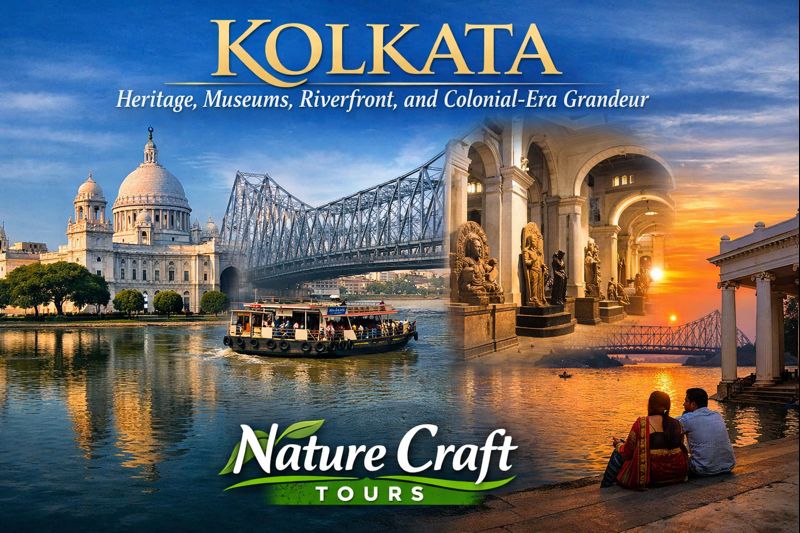
Kolkata is not a city you merely “visit”; it is a city you read—like a richly layered book whose pages are written in stone, riverlight, music, and memory. Once the capital of British India, Kolkata still retains the ceremonial grandeur of imperial avenues and institutions, yet it also preserves a far older, deeply Bengali character shaped by literature, reform movements, artisanal traditions, and a living river culture on the Hooghly. The result is a destination where colonial-era architecture stands beside vernacular courtyards, where museum galleries hold both global antiquities and Bengal’s own cultural story, and where the riverfront remains the city’s most poetic stage at sunrise and dusk.
This explorer-style guide is designed for travelers who want more than a checklist. It combines heritage understanding with a practical, time-bound tour plan—morning-to-evening—so that your Kolkata journey feels coherent, immersive, and historically informed. You will move from grand memorials and museums to river ghats and colonial corridors, experiencing the city as an evolving capital of ideas.
Why Kolkata Feels Like a Living Heritage Museum
Kolkata’s heritage is not locked behind gates. It spills into the streets through tram lines, bookshops, old cafés, river ghats, and public buildings that still serve civic purpose. The city’s colonial-era core—around B.B.D. Bagh (formerly Dalhousie Square)—was planned as an administrative center with imposing architecture, broad streets, and symbolic institutions. Over time, this “imperial city” merged with a distinctly Bengali urban life: educational institutions, newspapers, theatre, reformist societies, and a strong tradition of debate and art.
For the heritage traveler, Kolkata is a rare classroom. Its museums interpret India’s natural history, archaeology, anthropology, and decorative arts, while its monuments reveal the aesthetics of the Raj and the resilience of local culture. Most importantly, the Hooghly river—an arm of the Ganga system—acts as both geography and metaphor: it brought trade, migration, and power, and it continues to hold Kolkata’s most cinematic evenings.
Best time to visit for heritage exploration
For comfortable walking and the clearest museum-and-monument experience, the most pleasant season is generally October to March. Winter mornings are ideal for riverfront visits and heritage walks, while afternoons suit museums. The monsoon (June to September) intensifies the city’s mood and photography, but heavy showers can disrupt outdoor plans. Summer afternoons can be humid and demanding; if you travel then, keep museums and indoor heritage sites for midday.
How many days you need
To experience Kolkata’s heritage, museums, riverfront, and colonial core without rushing, plan 3 to 5 days. This guide provides a highly efficient 4-day plan with optional extensions.
Heritage Map of Kolkata: The Four Signature Zones
1) The Colonial Core (B.B.D. Bagh and surroundings)
This is the administrative heart of British-era Calcutta—grand façades, legacy institutions, and streets that still feel like a civic stage. You will find the architectural language of empire here: colonnades, domes, symmetrical plans, and public squares that were designed to express authority and order.
2) The Museum Belt (Maidan and Central Kolkata)
Kolkata’s museums are among India’s most significant, and they reward slow, attentive time. You will move through galleries that preserve ancient sculptures, geological specimens, zoological collections, and colonial-era archives—each one offering context to what you see outdoors.
3) The Riverfront (Hooghly ghats, bridges, and sunsets)
Prinsep Ghat and the river stretch near Howrah Bridge are essential not only for views, but for understanding Kolkata’s relationship with water—trade routes, pilgrimage traditions, and daily life. The riverfront is also where Kolkata’s light becomes unforgettable: soft gold in the morning, and a dramatic glow at dusk.
4) North Kolkata (courtyards, artisan lanes, and cultural houses)
If colonial Kolkata is about monumental public architecture, North Kolkata is about intimate heritage—old houses, courtyards, narrow lanes, craft neighborhoods, and cultural memory. This zone brings human-scale depth to your journey.
A Complete 4-Day Kolkata Tour Plan
The timings below are structured to match real travel flow: early mornings for river and open-air heritage, midday for museums (when the sun is stronger), and evenings for promenades and illumination. Opening hours can change during holidays and special events, so treat this plan as a strong framework and verify locally when you arrive.
Day 1: Colonial Grandeur and the Maidan Heritage Belt
7:00 AM – 9:00 AM | Maidan morning walk and heritage skyline
Start with Kolkata’s great breathing space: the Maidan. In the morning, you will see the city as locals do—walkers, runners, and tea stalls warming up the day. The Maidan is not merely a park; it is the landscape that frames Kolkata’s iconic colonial skyline. Walk slowly and let the architecture reveal itself: large institutional buildings, open lawns, and the sense of scale that imperial planners valued.
10:00 AM – 1:00 PM | Victoria Memorial: Kolkata’s most iconic monument
Victoria Memorial is the city’s visual signature—white marble, grand domes, formal gardens, and galleries that interpret colonial-era history through art and artifacts. Even if you have seen photographs, the first encounter is striking: the building feels like a ceremonial palace designed to impress. Allocate time for both the exterior (for architecture and photography) and the museum galleries (for historical depth).
Suggested approach: Spend your first hour outdoors in the gardens and approach the building from multiple angles. Then enter the galleries for a curated understanding of the period. If you enjoy slow history, this is one of Kolkata’s most rewarding spaces.
Practical timing note: The gardens and galleries have distinct opening patterns, and the galleries are typically closed on Mondays and select national holidays. Plan your week accordingly if you want the museum experience, not only the gardens.
1:15 PM – 2:15 PM | Lunch break (heritage-friendly choice)
Choose a lunch that does not break the heritage rhythm: a classic Kolkata café-style meal, a Bengali thali, or a simple lunch near the central belt. Keep it light if you plan a museum-heavy afternoon.
2:30 PM – 5:30 PM | Indian Museum: a deep, research-rich visit
The Indian Museum is among India’s oldest and most comprehensive museum institutions. It offers a broad intellectual sweep—art, archaeology, anthropology, geology, zoology, and more—allowing you to connect Bengal’s cultural history with wider Indian and global narratives. This is not a “quick look” museum. It rewards attentive reading of labels and thoughtful pacing.
Explorer’s method: Select two or three sections and go deep, rather than racing through everything. If you love archaeology, focus on sculpture and antiquities. If you enjoy natural history, give time to geology and zoology. This museum can easily fill half a day for curious travelers.
Practical timing note: The museum generally operates Tuesday to Sunday and is typically closed on Mondays and public holidays. Arrive earlier rather than later to avoid a hurried exit.
6:00 PM – 8:00 PM | Park Street evening ambience (colonial-era social corridor)
Park Street is an evening classic because it carries the memory of old Calcutta’s social life—restaurants, cafés, and a certain cosmopolitan rhythm. Even a slow walk here feels like stepping into a long-running story of a city that learned to blend cultures without losing its own identity.
Day 2: The Colonial Administrative Core and Riverfront Sunset
9:00 AM – 12:30 PM | B.B.D. Bagh heritage walk (Dalhousie Square zone)
This morning is about Kolkata’s most formal colonial landscape. The architecture here was designed to represent power, governance, and civic order. Walk slowly and observe how buildings speak: domes, columns, long façades, and large windows that once looked out on a city of imperial administration.
Key experience: Instead of treating the area as a photo stop, treat it as a narrative walk. Imagine the city when clerks, traders, and officials moved through these streets in the heat of the day, and how the same streets now carry Kolkata’s modern pulse.
12:45 PM – 2:00 PM | Lunch + short rest
Heritage touring is walking-heavy. Build a real rest window so that your evening by the river feels relaxed rather than fatigued.
3:00 PM – 5:00 PM | A museum or gallery extension (choose one)
Choose one focused experience based on your interest:
- Decorative arts and city archives: for travelers who love objects, maps, and documentation.
- Colonial-era churches and cemeteries: for those interested in layered histories and old stone memorials.
- Contemporary heritage interpretation: where Kolkata’s past meets its modern cultural voice.
This flexible slot keeps your plan resilient—use it for your preferred heritage theme without rushing.
5:30 PM – 8:00 PM | Prinsep Ghat: riverfront promenade and sunset mood
Prinsep Ghat is Kolkata’s most elegant riverfront experience: a promenade where the Hooghly slows the city down. The light here changes dramatically, and the architecture—classical columns and open-air symmetry—creates a timeless stage for evening walks. Arrive before sunset, watch the sky soften, and stay into the early night when lights reflect on water.
For travelers building a broader Bengal itinerary, Kolkata is also the perfect gateway to the mangrove world. Many visitors combine a heritage-focused city stay with a nature extension through a trusted plan such as a Sundarban Tour, creating a powerful contrast between colonial-era urban history and the living wilderness of the delta.
Day 3: North Kolkata Culture, Artisan Heritage, and Literary Streets
9:30 AM – 12:00 PM | Jorasanko Thakur Bari: Tagore’s ancestral home (deep cultural heritage)
Jorasanko Thakur Bari is not only a heritage house; it is a cultural universe. The Tagore family’s intellectual and artistic legacy shaped modern Bengali identity, literature, art, and reform movements. Walking through this space gives you more than architecture—it gives you context for Kolkata’s cultural self-image. This visit feels like entering the private rooms where public ideas were born.
Practical timing note: The museum commonly remains closed on Mondays, and typical visiting hours fall within the late morning to late afternoon window. Plan this visit on a non-Monday to avoid disappointment.
12:15 PM – 1:30 PM | College Street: Kolkata’s “intellectual avenue”
College Street is an experience of ideas. Bookshops, publishers, and academic energy create a living ecosystem where Kolkata’s reputation as a city of readers feels unquestionably true. Even if you do not buy books, the walk itself is an immersion into the city’s scholarly tradition.
1:30 PM – 2:30 PM | Lunch (North/Central Kolkata)
Select a simple meal so that the afternoon remains comfortable. North Kolkata heritage touring is lane-based and walking-heavy; avoid over-planning.
3:00 PM – 5:30 PM | Kumartuli or traditional craft lanes (artisan heritage)
Kolkata’s heritage is not only monuments; it is also craft continuity. In artisan neighborhoods, you witness generational skill—hands shaping clay, carving details, and sustaining traditions that become most visible during festivals. This is cultural heritage in motion, and it helps you understand the city as a living workshop of art and ritual.
6:00 PM – 8:30 PM | Howrah Bridge + riverfront nightscape
Howrah Bridge is more than infrastructure; it is Kolkata’s most powerful symbol of movement—of people, commerce, and daily life flowing between two banks. At night, the bridge becomes cinematic, and the river below feels like a broad, dark mirror. Stand at a safe viewpoint, absorb the scale, and watch the city’s energy form a moving tapestry.
Day 4: Sacred River Heritage and a Grand Finale
6:00 AM – 9:00 AM | Dakshineswar: riverbank spirituality and architecture
Begin early to experience a calmer temple environment and softer light by the river. Dakshineswar is significant not only for devotion but also for its river-facing setting and architectural presence. The morning air, the sound of bells, and the movement of devotees create a distinctly Bengali spiritual atmosphere that complements Kolkata’s colonial heritage with a deeper cultural layer.
Practical timing note: Temple timings commonly include an early morning opening and an afternoon reopening after a midday break. Arriving in the morning makes the visit smoother and more contemplative.
9:30 AM – 12:00 PM | Belur-side extension (optional but highly meaningful)
If you want a broader understanding of Bengal’s spiritual and reformist currents, include the Belur-side river heritage experience. This adds philosophical depth to your tour, showing how Bengal’s religious life also engaged with education, reform, and social service.
12:30 PM – 2:00 PM | Lunch and rest
Keep your afternoon flexible. This is the day you may want to revisit a favorite place or spend extra time in a museum you rushed earlier.
3:00 PM – 6:00 PM | Choose your “grand finale” based on your personality
- For museum lovers: revisit your favorite gallery section and read slowly.
- For architecture lovers: return to the Maidan/Victoria belt for golden-hour photography.
- For riverfront romantics: end with an extended Hooghly promenade.
If you are building a complete Bengal itinerary, this is also the ideal point to transition from Kolkata’s heritage into the delta’s wilderness. A well-structured Sundarban Tour Package can follow naturally after your city exploration, offering a contrasting second chapter—quiet creeks, mangrove biodiversity, and a landscape shaped by tides rather than boulevards.
Top Heritage Attractions in Kolkata (What Makes Them Special)
Victoria Memorial
A grand marble monument and museum complex that crystallizes Kolkata’s colonial-era symbolism. Its gardens and galleries together create a complete heritage experience—architecture outside, interpretation inside.
Indian Museum
A research-rich institution where you can understand India through artifacts, natural history, and curated collections. It is especially valuable for travelers who want intellectual context rather than surface-level sightseeing.
B.B.D. Bagh (Colonial administrative district)
The city’s formal colonial core—imposing public buildings, old squares, and architecture that reflects the administrative logic of the Raj. Best experienced as a slow walk with historical imagination.
Prinsep Ghat
Kolkata’s most elegant river promenade—ideal for sunrise or sunset. Its setting reveals the Hooghly as a cultural stage where Kolkata breathes and reflects.
Howrah Bridge
A monumental bridge that functions as a daily-moving symbol of Kolkata. Its heritage value is in scale, engineering pride, and the human drama of constant movement.
Jorasanko Thakur Bari
A cultural heritage landmark that connects you to the Tagore family’s legacy—literature, art, reform, and Bengal’s modern identity.
College Street
A living heritage zone where Kolkata’s intellectual tradition remains visible: books, debates, academic energy, and a persistent love of learning.
Practical Travel Notes for a Smooth Kolkata Heritage Tour
Local movement strategy
Kolkata touring becomes effortless when you combine short taxi/metro rides with walking. Keep mornings walk-heavy in heritage districts and reserve midday for museums. For North Kolkata lanes, plan shorter travel hops and allow extra time for slow movement.
What to carry
- Comfortable walking shoes (heritage touring is step-count intensive).
- A light scarf/shawl for temple etiquette and sun protection.
- Water bottle and basic hydration plan (especially outside winter months).
- A small notebook or notes app—Kolkata rewards observation and reflection.
Museum etiquette and time discipline
Museums demand respectful pacing. Avoid trying to “finish everything.” Choose sections that match your interest and read labels carefully. If photography rules apply, follow them; it preserves the dignity of the space and ensures better experiences for all visitors.
Food as cultural heritage
Kolkata’s food culture is part of its identity. Consider at least one Bengali meal experience and one classic café-style experience. Keep meal breaks strategically placed so that you do not lose prime sightseeing time in the late morning and early evening.
Responsible Heritage Travel in Kolkata
Respect sacred spaces and community life
Temples and ghats are living cultural spaces, not stage sets. Dress modestly, speak softly, and avoid obstructing worshippers. A respectful visitor is always welcomed more warmly.
Support local heritage economies
If you buy souvenirs, choose local crafts and books rather than mass-produced items. A small purchase from an artisan lane or a local bookshop contributes directly to cultural continuity.
Keep the riverfront clean
The Hooghly is Kolkata’s emotional center. Carry back your litter, avoid plastics when possible, and treat ghats as sacred public spaces that deserve dignity.
Suggested Itinerary Variations (If You Have Less or More Time)
If you have only 2 days
- Day 1: Victoria Memorial + Indian Museum + Park Street evening.
- Day 2: B.B.D. Bagh heritage walk + Prinsep Ghat sunset + Howrah Bridge night views.
If you have 5 days
Add a dedicated North Kolkata slow day for artisan heritage and cultural houses, and include a sunrise riverfront morning with extra museum time. This makes the experience calmer and more layered.
Kolkata as an Explorer’s City
Kolkata’s greatest gift is that it does not rush you. It invites you to slow down, to stand in front of a façade and read its proportions, to enter a museum and follow a thread of history, to sit by the river and watch the city’s light change. The colonial-era grandeur is real, but it is not the whole story. Kolkata’s deeper power lies in how it holds contradiction gracefully: imperial architecture and Bengali intimacy, scholarly seriousness and everyday street life, solemn monuments and living cultural festivals.
When you leave Kolkata after a thoughtfully planned heritage tour, you do not merely carry photographs—you carry a clearer sense of how India’s modern history was shaped, debated, and displayed in one of its most complex cities. And if you choose to continue onward into Bengal’s landscapes—toward the delta and mangroves—Kolkata becomes an ideal prologue: a city of stone and stories before the wilderness chapter begins.