Dakshineswar–Belur Math Spiritual Corridor:
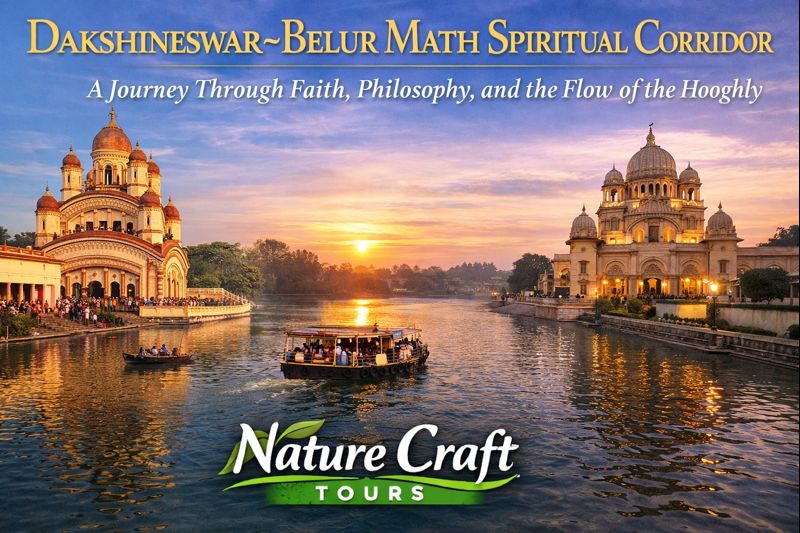
A Journey Through Faith, Philosophy, and the Flow of the Hooghly
The Dakshineswar–Belur Math spiritual corridor is not merely a pilgrimage route; it is one of India’s most profound cultural landscapes, where devotion, philosophy, architecture, and riverine geography merge into a continuous spiritual narrative. Stretched along the eastern bank of the Hooghly River on the northern edge of Kolkata, this corridor represents a rare harmony between ritual worship, universal spiritual inquiry, and social reform. To explore this stretch attentively is to witness how spiritual thought in Bengal evolved from temple-centered devotion to a broader, inclusive philosophy that engaged the modern world without abandoning its sacred roots.
This explorer-style guide presents a deeply researched and immersive understanding of the Dakshineswar–Belur Math corridor. It combines historical interpretation, architectural observation, river-based travel logic, and a carefully structured tour plan with realistic timings. The intention is not hurried darshan, but meaningful exploration—allowing the visitor to absorb the atmosphere, symbolism, and living traditions that continue to shape this sacred landscape.
Understanding the Dakshineswar–Belur Math Corridor
The corridor stretches roughly along the Hooghly River between Dakshineswar on the north and Belur on the opposite bank. What unites these two destinations is not only geography, but a shared spiritual lineage that transformed modern Indian religious thought. This is a landscape where intense personal devotion and universal spiritual inquiry coexist, framed by the continuous presence of the river.
The Hooghly here acts as both a physical connector and a symbolic axis. Ferries glide across the water just as ideas once traveled—between ascetic practice and social service, between temple rituals and global philosophy. The river ensures that this corridor remains fluid rather than fixed, experiential rather than monumental.
Why this corridor is unique in India
Unlike many pilgrimage circuits that focus on a single shrine or deity, the Dakshineswar–Belur Math corridor offers a spiritual progression. It begins with intense devotional practice and culminates in a universal vision that transcends sectarian boundaries. This layered journey makes it particularly meaningful for travelers interested not only in faith, but in philosophy, history, and cultural continuity.
Dakshineswar Kali Temple: Devotion Rooted in Tradition
Sacred geography and riverside setting
Dakshineswar Kali Temple stands on the eastern bank of the Hooghly, positioned deliberately beside the river. This placement reflects an ancient Indian understanding of sacred geography, where rivers are not merely natural features but spiritual conduits. The presence of the Hooghly lends the temple an ever-changing backdrop—misty mornings, shimmering afternoons, and serene evenings—all of which shape the devotional experience.
Temple complex and architectural symbolism
The temple complex is not a single structure but a carefully organized sacred environment. At its heart stands the main shrine dedicated to the goddess Kali, surrounded by smaller shrines, pathways, and river-facing spaces. The architecture emphasizes ritual movement—guiding devotees from entry points through sacred thresholds toward the central sanctum.
Every element within the complex serves a function: steps that encourage pause, courtyards that allow gathering, and sightlines that align the devotee with the river. The experience is immersive rather than observational; one does not merely see Dakshineswar, one participates in it.
Spiritual atmosphere and living worship
Dakshineswar is a living temple, animated continuously by worshippers. The sound of bells, chants, and river birds blends into a distinctive soundscape. Early mornings are marked by quiet devotion, while midday and evening bring increased activity. This rhythm reinforces the idea that spirituality here is inseparable from daily life.
The Hooghly River: Sacred Connector Between Two Spiritual Worlds
Between Dakshineswar and Belur Math flows the Hooghly River, wide and unhurried at this stretch. The river is not an obstacle but a bridge—both physically, through ferry crossings, and symbolically, through shared spiritual heritage. Traveling by water here is not simply transport; it is part of the pilgrimage itself.
River crossings as ritual movement
Ferry journeys across the Hooghly allow travelers to experience the corridor as it was historically intended. The slow movement over water encourages reflection, providing a transition between the devotional intensity of Dakshineswar and the contemplative universality of Belur Math.
Visual and emotional landscape of the river
The river reflects temples, skies, and human movement alike. Boats glide past ghats where rituals unfold, creating a layered visual narrative. For the explorer, this is one of the corridor’s most powerful moments—when landscape, architecture, and spirituality merge into a single experience.
Belur Math: Universal Spirituality and Architectural Harmony
Philosophical foundation
Belur Math represents a turning point in modern Indian spiritual history. It embodies a vision that sought to harmonize devotion, reason, and service. Unlike temple complexes designed primarily for ritual, Belur Math was conceived as a spiritual and educational center with global relevance.
Architectural synthesis
The architecture of Belur Math is deliberately inclusive, blending elements from multiple religious traditions. Domes, spires, and motifs coexist without hierarchy, symbolizing unity rather than division. This architectural language reinforces the institution’s core message: that truth is one, though paths may be many.
Atmosphere of contemplation and order
Belur Math offers a striking contrast to the bustling energy of Dakshineswar. The grounds are expansive, orderly, and calm. Silence here is not enforced but emerges naturally, encouraging reflection and study. Visitors are invited not just to worship, but to think.
A Complete One-Day Tour Plan: Dakshineswar–Belur Math Corridor
This itinerary is designed for spiritual depth rather than speed. Timings are realistic and allow space for observation, rest, and reflection.
6:00 AM – 8:30 AM | Morning darshan at Dakshineswar
Begin early to experience the temple at its most serene. Morning rituals unfold with a sense of quiet devotion, and the river air remains cool. This is the ideal time for attentive participation rather than hurried viewing.
8:30 AM – 9:30 AM | Riverside walk and pause
After darshan, spend time near the river-facing areas. Observe the water, the birds, and the slow awakening of the surroundings. This pause prepares the mind for the transition ahead.
10:00 AM – 10:45 AM | Ferry crossing to Belur
Cross the Hooghly by ferry. Treat this journey as part of the pilgrimage, not merely a commute. The changing perspective of both banks enhances understanding of the corridor’s unity.
11:00 AM – 2:00 PM | Exploration of Belur Math campus
Walk slowly through the campus, observing architectural details and spending time in designated quiet areas. This is the heart of the philosophical journey—from ritual to reflection.
2:00 PM – 3:00 PM | Lunch and rest
Take a break to rest and absorb the experience. Avoid rushing into further activities.
3:30 PM – 5:00 PM | Museum and interpretive spaces (if open)
Engage with interpretive exhibits that contextualize the spiritual philosophy of the Math. This adds intellectual depth to the experiential journey.
5:30 PM – 6:30 PM | Evening riverfront contemplation
As the light softens, return to the riverbank. The evening atmosphere unites the devotional and contemplative aspects of the day into a calm conclusion.
Special Attractions of the Spiritual Corridor
Living worship traditions
Unlike static heritage sites, both Dakshineswar and Belur Math are active spiritual centers. Observing daily rituals and disciplined routines offers insight into how tradition adapts to modern life.
River-based spiritual continuity
The Hooghly ensures continuity between sites. The experience of crossing water reinforces the idea of spiritual progression rather than separation.
Architecture as philosophy
From Dakshineswar’s ritual-focused design to Belur Math’s universal synthesis, architecture here communicates ideas as powerfully as texts.
Best Time to Visit the Dakshineswar–Belur Math Corridor
Seasonal guidance
October to March offers the most comfortable climate for extended exploration. Winter mornings and evenings enhance the spiritual atmosphere. Monsoon months create dramatic river scenes but require flexible planning.
Daily timing strategy
Early mornings and late afternoons are ideal. Midday heat can be managed by indoor or shaded activities.
Extending the Spiritual Journey Beyond the Corridor
Many travelers who experience the Dakshineswar–Belur Math corridor feel inspired to explore Bengal’s deeper relationship with water and spirituality. Extending the journey from urban riverbanks into the delta offers a powerful contrast. A thoughtfully curated Sundarban Tour allows travelers to move from structured spiritual spaces into landscapes shaped by tides and mangroves.
For those seeking continuity between cultural heritage and natural spirituality, options such as a Sundarban Tour Package provide a seamless transition from philosophical reflection to ecological immersion.
Responsible Spiritual Travel Guidelines
Respect sacred practices
Dress modestly, observe silence where appropriate, and follow local customs. These spaces are first and foremost places of worship.
Mindful observation
Photography and observation should never disrupt rituals or personal devotion. Seek permission where needed.
Environmental awareness
The Hooghly is central to the corridor’s identity. Avoid littering and respect riverfront cleanliness.
A Corridor of Continuity and Transformation
The Dakshineswar–Belur Math spiritual corridor is a journey through transformation—of space, thought, and self. It begins with intense devotional energy and evolves into universal philosophical calm, all guided by the steady presence of the Hooghly River. Few places in India offer such a coherent spiritual narrative within a single landscape.
For the explorer, this corridor teaches that spirituality is not static. It flows, adapts, and expands—just like the river beside it. To walk, cross, and contemplate here is to engage with one of Bengal’s most enduring contributions to the spiritual heritage of the world.