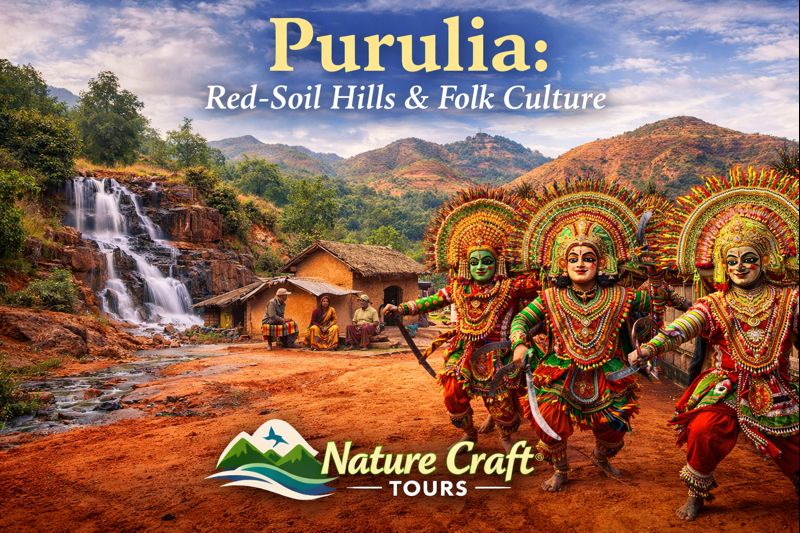
Purulia is a land where the earth itself speaks in shades of red, where rocky hills rise gently from ancient plateaus, and where folk traditions are not preserved in museums but lived daily by its people. Located in the westernmost part of West Bengal, Purulia represents a dramatic geographical and cultural contrast to the riverine plains of Bengal. This region belongs to the eastern fringe of the Chota Nagpur Plateau, and its landscape, climate, architecture, and way of life are shaped by this geological identity.
To explore Purulia is to move away from familiar Bengal narratives of deltas and waterways and enter a world of forests, stone, tribal memory, and ritual performance. This article approaches Purulia as an explorer would—patiently tracing the relationship between land and people, observing how geography has nurtured one of eastern India’s richest folk cultures.
Geographical Identity: The Red Earth Plateau
Purulia is defined by its laterite soil, rich in iron and distinctly red in color. This soil type, combined with undulating terrain and scattered hill ranges, gives the district its rugged beauty. The Ajodhya Hills dominate the landscape, forming a natural highland barrier and influencing local climate patterns.
Unlike the fertile alluvial plains of central Bengal, agriculture in Purulia depends heavily on seasonal rainfall. Rivers such as the Kangsabati, Kumari, and Dwarakeswar flow through rocky beds, often drying into quiet channels during summer months. This ecological constraint has shaped a culture of resilience, simplicity, and deep respect for nature.
Historical Layers: From Ancient Settlements to Folk Kingdoms
Archaeological evidence suggests human habitation in Purulia since prehistoric times. Stone tools, rock shelters, and early settlement remains indicate that the plateau supported hunter-gatherer and early agrarian communities long before recorded history.
During the medieval period, Purulia existed on the margins of major empires. Rather than imperial capitals, it nurtured small chieftaincies and tribal polities. These local rulers patronized temples, folk art, and community rituals, allowing indigenous traditions to flourish without heavy external influence.
Colonial rule brought administrative changes but limited industrial development. As a result, Purulia retained much of its traditional character, making it one of the most culturally intact regions of eastern India today.
Ajodhya Hills: The Natural Heart of Purulia
Landscape and Ecology
The Ajodhya Hills are not towering mountains but gentle, forested uplands marked by rocky outcrops, sal and palash trees, and seasonal streams. During spring, the hills glow with red palash blossoms, while monsoon transforms the region into a mosaic of waterfalls and green slopes.
Wildlife includes peafowl, langurs, foxes, and numerous bird species. Though not a designated wildlife sanctuary, the hills function as a natural ecological refuge.
Hilltop Viewpoints
Several natural viewpoints offer sweeping vistas of the plateau. At sunrise and sunset, the red soil reflects warm light, creating a dramatic visual experience that is both stark and meditative.
Joychandi Pahar: Myth, Cinema, and Stone
Joychandi Pahar is a granite hill formation steeped in mythological associations and modern cultural memory. Local legends connect the hill with ancient ascetics and folk deities. In more recent times, it gained popularity through Bengali cinema, further embedding it in regional consciousness.
The climb to the summit reveals rock-cut steps, shrines, and expansive views of the surrounding countryside. The hill exemplifies how natural formations become cultural landmarks through storytelling and ritual use.
Folk Culture of Purulia: Living Traditions
Chhau Dance
Chhau dance is the most iconic cultural expression of Purulia. This masked dance form combines martial movements, mythological storytelling, and dramatic choreography. Performed during festivals, particularly around the spring season, Chhau narrates episodes from epics and local legends.
The masks, crafted from clay and paper, are bold and expressive, reflecting both artistic skill and symbolic meaning. Each performance is a communal event, drawing villagers together in celebration.
Jhumur Songs and Folk Music
Jhumur songs accompany agricultural cycles and social rituals. Sung in local dialects, these songs express themes of love, labor, longing, and seasonal change. Instruments such as the madol drum provide rhythmic foundation, creating music that is deeply tied to daily life.
Temples and Sacred Sites
Purulia’s temples are typically modest in scale but rich in symbolism. Many are dedicated to local forms of Shiva, folk goddesses, and village guardians. Built with stone or laterite blocks, these structures blend seamlessly with the surrounding landscape.
Rather than grand architecture, the spiritual power of these sites lies in their continuous use. Rituals here follow age-old patterns, preserving spiritual continuity across generations.
Best Time to Visit Purulia
October to February
The most comfortable period to visit Purulia is between October and February. Winter temperatures are mild, and the landscape remains dry and accessible. Cultural festivals and folk performances are more frequent during this season.
Seasonal Variations
Summer months can be extremely hot and dry, though early mornings and evenings remain pleasant in hilly areas. Monsoon brings dramatic greenery and waterfalls but may limit access to remote locations due to rough terrain.
How to Reach Purulia
Purulia is well connected by rail, with direct train services from Kolkata and other major eastern cities. Road access is available via Bankura and Ranchi, offering scenic drives through plateau landscapes.
The nearest major airports are located in Ranchi and Kolkata, from where onward travel by rail or road is feasible.
Suggested 4-Day Explorer’s Tour Plan
Day 1: Arrival and Cultural Orientation
Arrive in Purulia town and begin with a visit to local markets and cultural centers. Observe daily life, interact with artisans, and gain an understanding of regional crafts and cuisine.
Day 2: Ajodhya Hills Exploration
Travel to the Ajodhya Hills for a full day of nature exploration. Visit waterfalls, forest trails, and viewpoints. Allow time for quiet observation and photography.
Day 3: Joychandi Pahar and Village Life
Explore Joychandi Pahar and surrounding villages. Engage with local communities to understand agricultural practices, folk rituals, and traditional livelihoods.
Day 4: Folk Heritage and Departure
Attend or observe a folk performance if available. Conclude the journey with reflection and departure from Purulia.
Purulia in the Broader Travel Landscape
For travelers interested in understanding eastern India through its ecological and cultural diversity, Purulia offers a powerful contrast to river-dominated regions. Many culturally inclined travelers combine plateau exploration with water-based ecosystems such as the Sundarban Tour, gaining insight into how geography shapes civilization in radically different ways.
Those seeking thematic journeys across Bengal’s natural and cultural spectrum often extend their itineraries through curated heritage routes and ecological explorations offered by specialized platforms such as Sundarban Tour Package providers.
Why Purulia Matters
Purulia is not a destination of polished monuments or curated experiences. It is a land of honest textures—stone, soil, song, and ritual. Its value lies in continuity rather than spectacle, in traditions that endure not because they are preserved, but because they remain essential to life here.
For the explorer, Purulia offers a rare opportunity to witness how landscape and culture evolve together. In its red soil and rhythmic dances, one finds a story of adaptation, creativity, and deep-rooted identity that continues to thrive against the odds.