When the River Slows the City
— An Explorer’s Evening Experience Along the Brahmaputra Riverfront, Guwahati
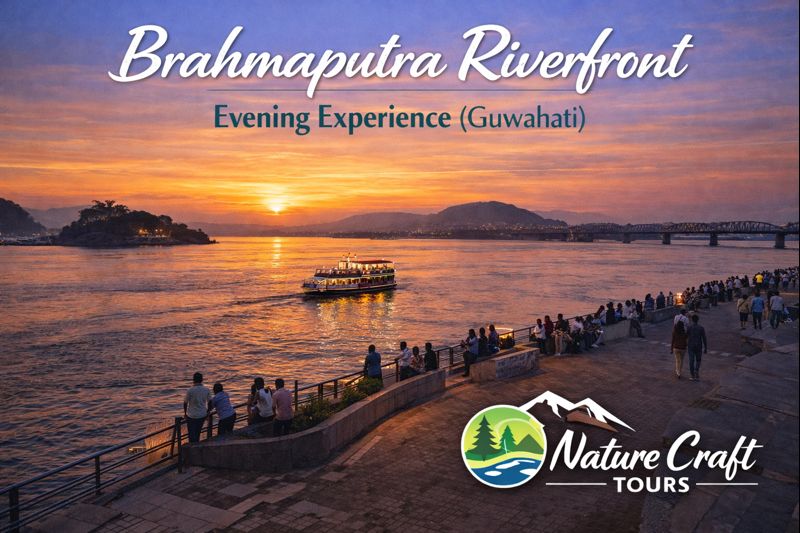
As daylight withdraws gently from Guwahati and the sky begins its slow transformation into layered hues of amber, violet, and indigo, the Brahmaputra Riverfront emerges as the city’s most contemplative space. This is not merely an evening promenade or an urban beautification project; it is a living threshold where time softens, movement slows, and the ancient river once again asserts its civilisational authority.
To experience the Brahmaputra Riverfront in the evening is to witness Guwahati recalibrate itself. The noise of commerce diminishes, conversations become quieter, and the river—vast, unhurried, and reflective—takes centre stage. For the explorer, this experience is not about activity but about presence. It is here that the Brahmaputra reveals its most human dimension.
The Brahmaputra at Guwahati: A River That Shapes the City’s Rhythm
The Brahmaputra is among Asia’s great river systems, and at Guwahati, it reaches one of its widest, most expansive forms. Unlike narrow riverfronts constrained by embankments, the Brahmaputra here breathes freely. Its width creates an open horizon, giving the river an almost oceanic presence.
This physical openness deeply influences the riverfront experience. Evenings here are defined not by enclosure, but by space—space to walk, observe, reflect, and pause. The riverfront becomes a mediator between urban life and elemental continuity.
Why the Evening Experience Is Unique
During the day, the Brahmaputra appears industrious—boats move, sunlight glints sharply off the water, and activity dominates perception. Evening, however, softens these edges. The river becomes reflective rather than assertive, allowing emotional and sensory engagement to deepen.
Understanding the Riverfront as a Cultural Space
The Brahmaputra Riverfront is not a static structure. It is an evolving cultural landscape designed to reconnect Guwahati’s residents and visitors with the river that sustains them. Carefully planned walkways, seating areas, ghats, and viewing points encourage interaction without overwhelming the natural environment.
This balance between access and restraint is crucial. The riverfront does not attempt to dominate the river; it invites people to sit beside it, observe it, and listen to its silence.
From Sacred Ghats to Civic Space
Historically, the riverbanks of Guwahati served religious, economic, and social functions. Evening rituals, boat arrivals, and communal gatherings once defined this zone. The modern riverfront subtly echoes these traditions, adapting them for contemporary urban life.
The Evening Transformation: Light, Water, and Silence
As sunset approaches, the Brahmaputra undergoes a visible transformation. Light stretches across the water in elongated reflections, boats appear as silhouettes, and distant hills fade into layered shadows.
The riverfront’s lighting is deliberately understated. Soft illumination ensures safety while preserving the dominance of natural twilight. This allows the evening experience to remain atmospheric rather than theatrical.
Soundscape of the Riverfront
Unlike crowded urban promenades, the Brahmaputra Riverfront offers a gentle soundscape—lapping water, distant boat engines, low conversations, and the occasional call of river birds. This acoustic softness is central to the experience.
Special Attractions of the Brahmaputra Riverfront in the Evening
Sunset Viewing Zones
Designated viewing areas allow uninterrupted sunset observation. The wide river ensures that no single structure blocks the horizon, making each evening visually distinct.
Boat Movement and River Life
Watching boats cross the river during dusk offers insight into the Brahmaputra’s continued role as a working river, not merely a scenic backdrop.
Quiet Walkways and Seating
Benches and walking paths are placed to encourage lingering rather than transit. Many visitors simply sit, watching light change minute by minute.
View of River Islands and Distant Hills
The presence of mid-river landforms and distant elevations adds depth to the visual field, reinforcing the river’s scale.
Best Time to Experience the Brahmaputra Riverfront
October to March: Ideal Evenings
Cool air, clear skies, and longer twilight periods make these months perfect for extended evening visits.
April to May: Warm but Atmospheric
While temperatures are higher, sunset colours during this period are often dramatic, rewarding those who arrive later in the evening.
Monsoon Evenings: Power and Presence
During the monsoon, the river rises and darkens. Evenings here are intense and contemplative, offering a raw encounter with the Brahmaputra’s force.
Suggested Evening-Focused Tour Plan
Day 1: Late Afternoon Arrival and Orientation
Arrive at the riverfront by late afternoon. Walk the length of the promenade to understand spatial layout before sunset.
Sunset to Twilight: Core Experience
Choose a seating area facing west. Observe the gradual transition from daylight to dusk without distraction.
Post-Sunset Walk and Reflection
After sunset, take a slow walk along illuminated pathways, allowing the river’s evening mood to settle.
The Brahmaputra Riverfront in a Broader River-Culture Context
Rivers have shaped human civilisation across the Indian subcontinent. The Brahmaputra Riverfront reflects a contemporary effort to restore this relationship within an urban setting.
Travellers familiar with river-dominated landscapes—such as those experienced during a Sundarban Tour—may recognise a shared philosophy: water as organiser of life, culture, and time.
Similarly, those undertaking immersive journeys like a Sundarban Tour Package from Kolkata will find the Brahmaputra Riverfront a quieter, urban expression of river-centred existence.
Responsible Riverfront Engagement
The riverfront’s serenity depends on visitor behaviour. Loud music, littering, and intrusive activity disrupt the delicate atmosphere. Respect for the river ensures that the space remains contemplative rather than commercial.
Evening visits should prioritise observation over occupation.
Why the Evening Experience Matters More Than the Day
Daytime reveals the river’s scale; evening reveals its soul. As the city’s edges soften, the Brahmaputra becomes a mirror—not just of light, but of thought and emotion.
Evenings here encourage a rare form of urban introspection, where one can be alone without isolation and present without urgency.
When the River Teaches the City to Slow Down
The Brahmaputra Riverfront Evening Experience is not a spectacle designed to impress. It is a space designed to calm. In a rapidly expanding city, this quietude is invaluable.
For the explorer, the riverfront offers something profoundly simple yet increasingly rare: an opportunity to watch time move without needing to follow it.
As night finally settles over Guwahati and the river absorbs the last traces of colour, one realises that the Brahmaputra does not merely flow past the city—it holds it, teaches it, and, every evening, gently reminds it to breathe.