🌸 Valley of Flowers Trek – 7 Days
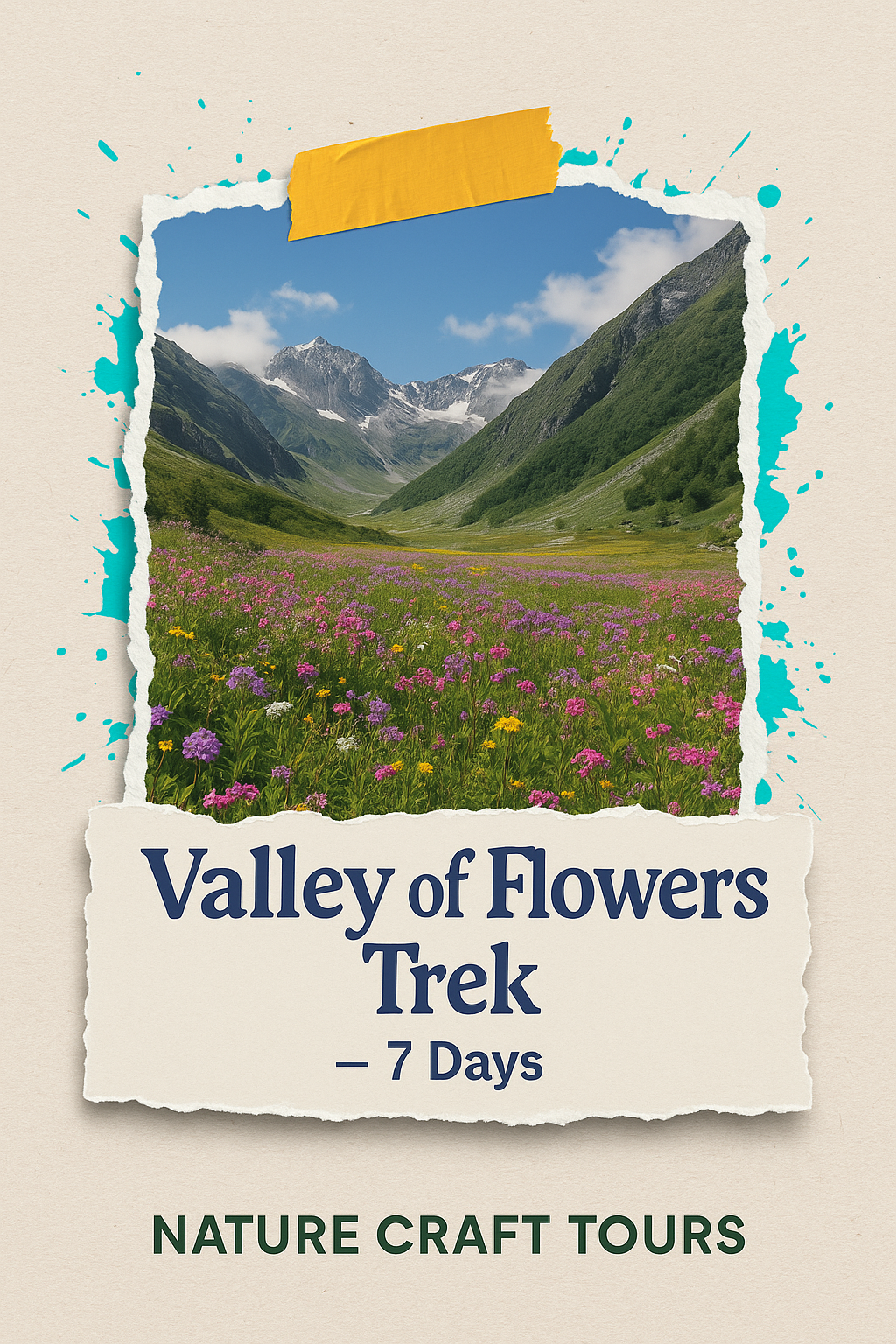
“Where Every Step Blooms with Nature’s Eternal Poetry”
Hidden high in the Garhwal Himalayas of Uttarakhand, the Valley of Flowers is a natural wonder that looks as if painted by divine hands. This UNESCO World Heritage Site, nestled at an altitude of over 12,000 feet, is a paradise of more than 500 species of alpine flowers — where colors, fragrance, and serenity combine to form a masterpiece of nature.
Every monsoon, the valley awakens from its icy slumber to transform into a carpet of colors — blue poppies, primulas, orchids, daisies, and anemones dancing together under the shadow of snow-capped peaks. The Valley of Flowers Trek is not just a journey through mountains; it is a walk through heaven itself. This 7-day expedition offers the perfect blend of adventure, natural beauty, and spiritual rejuvenation.
🌄 Introduction to the Valley
The Valley of Flowers lies in the Chamoli district of Uttarakhand and is part of the Nanda Devi Biosphere Reserve. Spread over an area of 87 square kilometers, it stands as one of the most spectacular alpine meadows in the world. Flanked by majestic peaks like Nilgiri Parvat, Rataban, and Gauri Parvat, the valley remains covered with snow during winter and blooms into a floral paradise between July and September.
First discovered by British mountaineer Frank Smythe in 1931, the valley continues to enchant trekkers and nature lovers. The region is also revered by Hindus, as it lies close to Hemkund Sahib — a sacred Sikh shrine dedicated to Guru Gobind Singh.
🗓️ Detailed 7-Day Itinerary
Day 1 – Rishikesh / Haridwar to Joshimath (approx. 255 km, 9–10 hours)
Your journey begins from the sacred towns of Rishikesh or Haridwar. The drive winds through the mountain roads alongside the Ganga and Alaknanda rivers, passing picturesque towns such as Devprayag, Rudraprayag, and Karnaprayag — each marking a confluence of holy rivers. Arrive in Joshimath by evening, a charming hill town serving as the gateway to several Himalayan treks. Overnight stay at a hotel or guesthouse in Joshimath.
Day 2 – Joshimath to Govindghat – Ghangaria (approx. 22 km drive + 10 km trek)
After breakfast, drive to Govindghat (1,828 m), the base point of the trek. The journey offers breathtaking views of the Alaknanda River and surrounding valleys. From Govindghat, start trekking towards Ghangaria (3,050 m), a small hamlet that serves as the last human settlement before entering the Valley of Flowers. The trek passes through lush pine forests, waterfalls, and small wooden bridges. Overnight stay at a guesthouse or campsite in Ghangaria.
Day 3 – Ghangaria to Valley of Flowers (approx. 4 km trek one way)
Wake up early and begin the ascent to the Valley of Flowers National Park. As you walk deeper into the valley, you will be surrounded by endless carpets of blooming wildflowers, butterflies fluttering in the sunlight, and crystal-clear streams winding through the meadows. The view of Pushpawati River flowing through the valley adds to the charm. Spend the day exploring, photographing, and simply soaking in the serenity. Return to Ghangaria for an overnight stay.
Day 4 – Ghangaria to Hemkund Sahib (approx. 6 km trek one way)
Today’s trek leads to one of the highest gurudwaras in the world — Hemkund Sahib (4,329 m). The steep trail takes you through high-altitude meadows and occasional snow patches. At the top, the tranquil Hemkund Lake glistens beside the white marble gurudwara, surrounded by seven peaks. Devotees often take a dip in the icy waters as part of their pilgrimage. After prayers and rest, return to Ghangaria for the night.
Day 5 – Ghangaria to Govindghat (10 km trek) – Joshimath (22 km drive)
Retrace your steps back to Govindghat through the scenic mountain trail, stopping for tea at small dhabas along the way. Once you reach Govindghat, drive back to Joshimath and check into your hotel. Evening is free for rest or a short walk around the charming market area.
Day 6 – Joshimath to Rishikesh / Haridwar (255 km, 9–10 hours)
After breakfast, begin your return journey via the same picturesque route along the Alaknanda River. En route, you can stop at Devprayag — the confluence of Bhagirathi and Alaknanda rivers forming the sacred Ganges. Arrive in Rishikesh or Haridwar by evening.
Day 7 – Departure
After breakfast, check out from your hotel and transfer to the nearest railway station or airport. The journey ends with unforgettable memories of the floral paradise and Himalayan grace.
🌿 Major Attractions & Important Points to See
1. Valley of Flowers National Park
The highlight of the trek, this natural garden is filled with more than 500 species of flowers including blue poppies, Himalayan bellflowers, primulas, and anemones. The valley stretches for about 5 km in length and 2 km in width, forming a multicolored carpet framed by snow peaks.
2. Hemkund Sahib
A sacred Sikh pilgrimage site located at 4,329 meters, surrounded by seven snow-capped mountains. The serene Hemkund Lake reflects the gurudwara like a mirror, creating a divine setting that soothes both body and soul.
3. Pushpawati River
Originating from the Tipra Glacier, this river flows gracefully through the Valley of Flowers, nourishing its vibrant flora and adding a musical rhythm to the landscape.
4. Bhyundar Village
Located near Govindghat, this quaint Himalayan settlement showcases traditional Garhwali culture, stone houses, and terraced farms. It is a great stop for photography and cultural interaction.
5. Auli (Optional Extension)
Only 16 km from Joshimath, Auli is famous for its meadows, ski slopes, and panoramic views of Nanda Devi and Kamet peaks. Many trekkers add an extra day to explore Auli before or after the Valley of Flowers trek.
🚗 How to Reach Valley of Flowers
By Air:
The nearest airport is Jolly Grant Airport in Dehradun, about 285 km from Joshimath. Regular flights connect Dehradun to Delhi, Mumbai, and other major cities. From the airport, hire a cab or join a tour vehicle to Joshimath.
By Train:
The nearest railway station is Haridwar Railway Station, around 275 km from Joshimath. Trains from Delhi, Kolkata, and Mumbai frequently arrive here. From Haridwar, one can take a shared cab or private taxi to reach Joshimath.
By Road:
The Valley of Flowers is accessible by a scenic drive from Rishikesh via Devprayag, Rudraprayag, and Karnaprayag. The roads are well maintained, and state transport as well as private buses operate between Haridwar, Rishikesh, and Joshimath.
📍 Major Distances
- Rishikesh to Joshimath: 255 km (approx. 9–10 hours)
- Joshimath to Govindghat: 22 km (approx. 1 hour)
- Govindghat to Ghangaria: 10 km trek (4–5 hours)
- Ghangaria to Valley of Flowers: 4 km (1.5 hours one way)
- Ghangaria to Hemkund Sahib: 6 km (3 hours one way)
- Joshimath to Auli: 16 km (45 minutes)
🏡 Staying Options (Properties)
Accommodation options are simple yet comfortable along the Valley of Flowers route. Given the eco-sensitive nature of the area, expect cozy guesthouses and lodges rather than luxury resorts.
1. Hotels in Joshimath
Joshimath offers various mid-range and premium hotels with scenic views of the Alaknanda valley. These are perfect for acclimatization before beginning the trek.
2. Guesthouses at Govindghat
A small settlement with basic guesthouses, eco-lodges, and a few comfortable hotels catering to trekkers. Ideal for overnight stays before or after the trek.
3. Lodges & Camps in Ghangaria
Ghangaria serves as the base for both Valley of Flowers and Hemkund Sahib. It offers numerous budget hotels, rest houses, and camping options surrounded by lush meadows and streams.
4. Eco-Stay Experiences
Several eco-lodges promote sustainable tourism in the region. These stays focus on minimizing waste, using solar power, and offering organic meals made from local produce.
🌼 Flora and Fauna
The Valley of Flowers is a living botanical museum. During monsoon months (July to September), the valley comes alive with wild orchids, saxifrages, rhododendrons, and primulas. Scientists have recorded over 500 plant species, including several rare medicinal herbs.
The region also supports rich wildlife — snow leopards, Himalayan black bears, blue sheep, musk deer, and Himalayan monals are occasionally sighted in the surrounding forests. The area’s biodiversity makes it one of the most pristine ecosystems in the Himalayas.
🧭 Best Time to Visit
The best time to undertake the Valley of Flowers Trek is between July and September. This is when the snow has melted, and the valley bursts into a kaleidoscope of colors.
- July: The valley starts blooming with early flowers and lush greenery.
- August: Peak blooming season with a full spectrum of flowers.
- September: Fewer tourists and a golden hue as flowers begin to fade.
During winter (October to May), the entire area remains under snow, and entry to the valley is closed.
🥾 Trekking Essentials & Preparation Tips
- Carry waterproof trekking shoes and a lightweight rain jacket.
- Keep sufficient cash, as ATMs are limited beyond Joshimath.
- Acclimatize properly in Joshimath before the trek to avoid altitude sickness.
- Carry reusable water bottles and avoid single-use plastics.
- Hire a licensed local guide for safety and better knowledge of flora.
- Respect the sanctity of the environment—no plucking flowers or littering.
🍴 Local Cuisine
The trek route offers simple yet flavorful Garhwali dishes. Try Mandua roti (finger millet bread), Bhatt ki dal (black soybean lentil), and Aloo ke Gutke with local chutneys. At Ghangaria, small dhabas serve tea, noodles, parathas, and rice meals. Do not miss sipping hot ginger tea while watching mist roll down the mountains.
🕊️ Responsible Travel Guidelines
- Follow the “Leave No Trace” principle — carry all waste back with you.
- Use biodegradable toiletries and avoid loud music or noise pollution.
- Respect the religious sentiments of pilgrims visiting Hemkund Sahib.
- Support local communities by buying handicrafts or hiring local porters.
📸 Photography & Scenic Highlights
Every bend of the trail presents postcard-perfect scenery — from the emerald waters of the Alaknanda to the misty ridges of Rataban Peak. Some of the best photography points include:
- The entrance bridge over Pushpawati River
- Flower meadows against snow peaks
- Reflection of Hemkund Sahib in the lake
- Sunrise over Joshimath valley
🌺 A Poetic Tribute
Where blossoms kiss the morning dew,
And skies paint shades of sapphire blue,
The Valley whispers tales untold,
Of mountains high and flowers bold.
Each step unveils a sacred hue,
Where heaven’s breath feels pure and new,
In silence deep, the spirit hears,
The songs of faith that calm all fears.
The Valley of Flowers Trek is more than an adventure—it is a spiritual and sensory awakening. Every path, every flower, and every whispering breeze invites travelers to rediscover their connection with the earth. It’s an experience that transcends photography and words, a walk into a living dream that nature has painted for centuries.
When you stand amidst this endless meadow, surrounded by colors that seem not of this world, you’ll understand why explorers called it a “slice of paradise.”
Embark on this journey with Nature Craft Tours — and let every flower you meet tell a story of life, love, and divine creation.