Jakhoo Hill and Jakhoo Temple, Shimla:
Where Geography, Faith, and Forest Converge
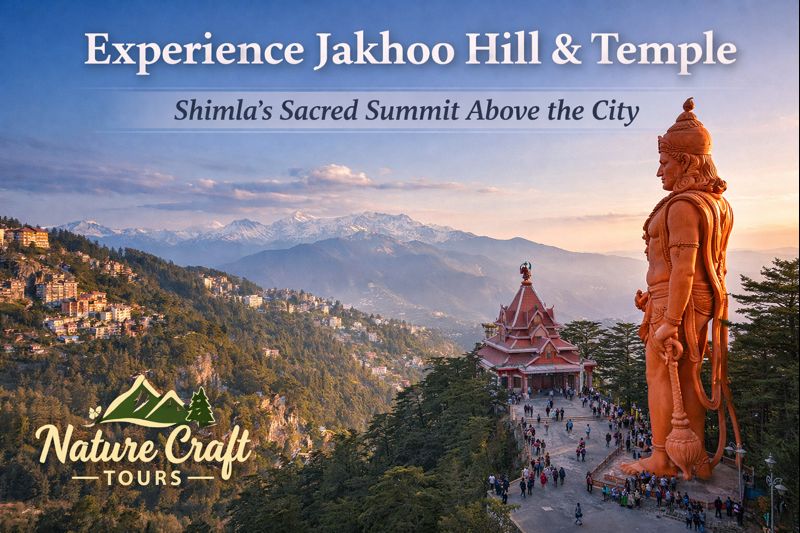
Rising quietly above the familiar bustle of Shimla’s central ridge is a wooded summit that has shaped the town’s identity long before promenades, colonial facades, or tourist circuits existed. Jakhoo Hill, the highest natural point in Shimla, is not simply a scenic elevation; it is a layered landscape where myth, ecology, and human movement intersect. At its crest stands Jakhoo Temple, an ancient place of worship whose spiritual gravity has endured through centuries of political change and urban expansion.
To approach Jakhoo Hill with seriousness is to understand Shimla from above and within at the same time. The hill is geographically dominant yet culturally restrained. It does not announce itself through spectacle alone. Instead, it invites gradual ascent—on foot, by winding road, or by ropeway—rewarding patience with silence, forest shade, and perspective. The experience of Jakhoo is not about arrival alone, but about the transition from town to treeline, from movement to stillness.
This travel narrative explores Jakhoo Hill and Jakhoo Temple as a single, integrated destination. It is written for travelers who value context as much as views, and who wish to understand how a sacred hill continues to function as a living ecological and cultural space within a growing Himalayan town.
Destination Overview: Jakhoo Hill in the Spatial Logic of Shimla
Jakhoo Hill occupies a commanding position in Shimla’s geography. At approximately 2,455 meters above sea level, it rises above the Ridge–Mall Road axis and the surrounding heritage core. From a planning perspective, Jakhoo has always acted as a natural boundary and a visual anchor. Its dense deodar and pine forests create a green crown over the town, moderating microclimate and offering a stark contrast to built-up slopes below.
Unlike many viewpoints that were created or formalized during colonial development, Jakhoo Hill predates urban Shimla in its cultural importance. The hill’s prominence made it a natural site for early worship, observation, and refuge. Over time, as Shimla expanded, Jakhoo remained largely forested, resisting heavy construction and preserving a sense of separation from the town’s commercial core.
Jakhoo Temple, dedicated to Lord Hanuman, is the spiritual heart of this landscape. The temple’s presence reinforces the hill’s identity not merely as a lookout, but as a place of pause, reflection, and ritual. Together, the hill and temple form a destination where geography and belief reinforce one another.
Why Jakhoo Feels Different from Other Shimla Attractions
Many destinations in Shimla are defined by activity—crowds, promenades, viewpoints designed for quick visits. Jakhoo Hill operates on a different rhythm. Sound softens as elevation increases. Forest cover thickens. Human movement becomes more deliberate. Even at peak hours, there is a perceptible shift in atmosphere compared to the Ridge or Mall Road.
This difference is not accidental. It reflects the hill’s role as a spiritual and ecological reserve. The experience here is less about consumption and more about orientation—both physical and mental.
Jakhoo Temple: Myth, Memory, and Living Faith
At the summit of Jakhoo Hill stands Jakhoo Temple, one of the oldest and most revered religious sites in the Shimla region. According to Hindu tradition, this is the place where Lord Hanuman paused during his journey to fetch the Sanjeevani herb from the Himalayas. The myth situates Jakhoo within the epic narrative of the Ramayana, giving the hill a sacred dimension that predates recorded history.
What is striking about Jakhoo Temple is not monumental architecture but continuity. The temple has evolved over time, adapting to changing needs while preserving its spiritual core. Devotees, pilgrims, and casual visitors share the space, often in quiet coexistence. Rituals proceed without theatrical excess, reinforcing the temple’s role as a functioning place of worship rather than a staged attraction.
The Hanuman Statue and Its Symbolic Presence
In recent decades, a towering statue of Lord Hanuman has become a visual marker of Jakhoo Hill, visible from many parts of Shimla. Its scale alters the skyline and has made the hill instantly recognizable. Yet its significance extends beyond visibility. The statue functions as a contemporary expression of devotion layered onto an ancient site.
From a traveler’s perspective, the statue provides orientation. It signals proximity to the summit and frames the final approach to the temple. At the same time, the surrounding forest and temple complex prevent the space from feeling overly monumental. The balance between scale and setting remains intact.
Temple Life and Daily Rhythm
Jakhoo Temple follows a daily rhythm shaped by prayer cycles, seasonal variations, and visitor flow. Mornings tend to be calmer, with devotees arriving early and the forest still holding night coolness. Midday brings more visitors, including travelers drawn by views and accessibility. Evenings often restore a quieter tone, particularly outside peak tourist seasons.
Observing these rhythms is part of understanding the site. The temple is not frozen in time; it breathes with the day and with the year.
Ecological Character of Jakhoo Hill
Jakhoo Hill is one of Shimla’s most important ecological assets. Its forest cover plays a crucial role in slope stabilization, water retention, and temperature regulation. Deodar, pine, and broadleaf species dominate the landscape, creating layered canopy structures that support birdlife and smaller fauna.
The hill also functions as a buffer zone between densely built areas and steeper outer slopes. In an era of increasing urban pressure, this ecological role is significant. Jakhoo’s relative preservation demonstrates how spiritual importance can indirectly support environmental conservation.
Human–Wildlife Interaction
One of the most discussed aspects of Jakhoo Hill is its population of monkeys. Their presence is not incidental; it reflects the continuity of forest habitat within the town. For travelers, this interaction requires awareness rather than fear. The monkeys are accustomed to human presence, particularly near the temple, and respectful behavior is essential.
Avoiding open food, maintaining distance, and following local guidance ensures that human–wildlife coexistence remains manageable. Observed thoughtfully, this interaction becomes part of Jakhoo’s ecological narrative rather than a disruption.
Climate and Micro-Environment
Due to its elevation and forest density, Jakhoo Hill often feels cooler and windier than central Shimla. Fog can arrive suddenly, especially during monsoon months. This microclimate contributes to the hill’s atmosphere but also requires preparation. Warm layers, stable footwear, and attentiveness to weather shifts are advisable throughout the year.
Reaching Jakhoo Hill: Routes and Accessibility
Jakhoo Hill is accessible through multiple routes, each offering a different experience of ascent. The choice of route significantly shapes the visit, transforming it from a simple sightseeing stop into a gradual engagement with terrain and environment.
On Foot: The Traditional Ascent
Walking to Jakhoo Temple remains the most immersive way to experience the hill. Several footpaths wind upward from different parts of Shimla, passing through residential zones and forested stretches. The ascent is steady rather than steep, making it manageable for reasonably fit travelers.
Walking allows you to perceive changes in vegetation, temperature, and sound. It also reinforces the spiritual logic of pilgrimage—arrival feels earned rather than delivered.
By Road and Ropeway
For those with limited time or mobility constraints, Jakhoo Hill can be reached by road transport or ropeway. These options reduce physical effort while still delivering access to the summit. However, they compress the experiential arc. Travelers who choose this route may wish to spend additional time walking around the summit area to reconnect with the landscape.
Best Time and Season to Visit Jakhoo Hill
Jakhoo Hill is accessible year-round, but seasonal conditions shape the quality of the experience.
Spring and Early Summer
Spring offers moderate temperatures and renewed forest growth. Wildflowers appear along paths, and visibility is generally good. Early summer remains comfortable due to elevation, making this one of the most balanced seasons for a visit.
Monsoon
During the monsoon, Jakhoo Hill becomes lush and atmospheric. Clouds move quickly through the forest, and the hill feels more secluded. However, rain can make paths slippery, and fog may obscure views. Travelers during this season should prioritize safety and allow flexible timing.
Autumn and Winter
Autumn brings clarity and crisp air, often offering the longest views. Winter transforms Jakhoo into a quieter, colder space. Occasional snowfall enhances the forest’s stillness but may restrict access on some days. For travelers who appreciate silence and are prepared for cold, winter visits can be deeply rewarding.
Ideal Duration and Visit Planning
Jakhoo Hill and Temple can be visited in half a day, but a rushed approach diminishes its value. Allocating a full morning or afternoon allows for a more complete experience.
Suggested Time Allocation
- Ascent and approach: 60–90 minutes (on foot)
- Temple visit and quiet observation: 30–45 minutes
- Forest walks and viewpoints near the summit: 45–60 minutes
- Descent or return journey: 45–75 minutes
This pacing transforms Jakhoo from a checkbox destination into a contemplative journey.
Key Highlights and Viewpoints
Jakhoo Hill offers expansive views of Shimla and surrounding ranges, but its highlights are not limited to panoramas.
Summit Vistas
On clear days, the summit provides layered views of ridgelines and valleys. Unlike constructed viewpoints, these vistas feel organic, emerging between trees rather than dominating them.
Forest Walks Around the Temple
Short trails radiate from the temple area, allowing visitors to step away from the main gathering point. These walks reveal the hill’s quieter character and are ideal for reflective pauses.
Cultural and Historical Significance
Jakhoo Hill represents a rare continuity of sacred landscape within an urban environment. While Shimla’s lower areas evolved rapidly during the colonial period, Jakhoo retained its spiritual identity. This continuity shaped how development occurred around it, preserving forest cover and limiting structural intrusion.
In a broader Indian context, Jakhoo illustrates how religious narratives often align with prominent natural features, reinforcing environmental respect through belief. This relationship between faith and landscape has parallels across the country, from mountain shrines to riverine temples.
Travelers who explore diverse Indian geographies may notice how different ecosystems shape sacred practice. Just as Himalayan hills foster forest-based shrines, deltaic landscapes support river-centered traditions. Such contrasts become clearer when journeys include places as distinct as Jakhoo Hill and the mangrove regions associated with Sundarban Tourism.
Practical Insights for Travelers
Footwear and Clothing
Wear sturdy shoes suitable for uneven paths. Carry layers, even in summer, as wind and shade can lower temperatures quickly.
Managing Monkeys Respectfully
Do not carry visible food. Keep belongings secure and avoid sudden movements. Respecting these guidelines ensures a smoother experience for both visitors and wildlife.
Timing and Crowd Management
Early mornings offer the calmest conditions. Visiting outside peak tourist hours enhances the spiritual and ecological atmosphere of the hill.
Integrating Jakhoo into a Wider Itinerary
Jakhoo Hill pairs well with heritage walks in central Shimla, offering a natural counterpoint to built environments. Travelers seeking contrast within a broader travel plan often combine mountain destinations with lowland or wetland ecosystems. Structured itineraries such as a Sundarban Tour Package from Kolkata highlight how different landscapes demand different rhythms of travel and observation.
A Thoughtful Half-Day Plan for Jakhoo Hill
Morning Ascent and Temple Visit
Begin early, walking through quieter streets as the town wakes. Allow the forest to gradually replace urban sound. Visit the temple with unhurried attention.
Midday Forest Exploration
Spend time on surrounding trails, observing vegetation and light. This is where Jakhoo’s ecological value becomes most apparent.
Return with Reflection
Descend slowly, noticing how perspective changes as elevation drops. The return often feels as meaningful as the ascent.
Jakhoo Hill as a Vertical Sanctuary
Jakhoo Hill and Jakhoo Temple offer more than views over Shimla; they provide a vertical sanctuary where forest, faith, and geography align. In a town shaped by ridges and history, Jakhoo stands apart as a reminder that elevation can foster not only outlooks, but introspection.
For the traveler willing to slow down, to walk rather than rush, and to observe rather than consume, Jakhoo Hill reveals Shimla’s quieter dimension. It is a place where ascent becomes understanding, and where the highest point in town offers not dominance, but calm.