Chail: Forest Calm and Palace-Region Heritage in the Lesser Himalaya
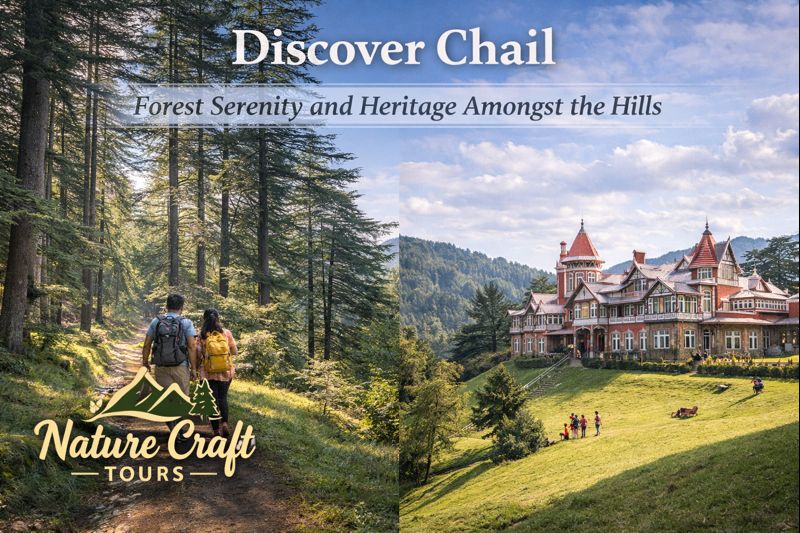
Set away from the crowded hill-station corridors of Himachal Pradesh, Chail unfolds as a landscape of deliberate quiet. Forests dominate the horizon, ridgelines stretch unbroken, and architecture appears sparingly—never overwhelming the terrain. Known for its palace-region heritage and expansive deodar woods, Chail offers an experience fundamentally different from the animated energy of nearby Shimla. It is not a destination that demands attention; instead, it rewards those willing to slow down, observe, and listen.
Chail’s identity rests on two intertwined elements. The first is ecological calm: dense forests, high-altitude meadows, and an atmosphere shaped more by wind and birdsong than by traffic or commerce. The second is historical restraint: a former princely retreat built with intention rather than spectacle. Together, these qualities form a destination that feels grounded, contemplative, and deeply connected to its surroundings.
This article explores Chail through the lens of forest geography and palace-region history, offering a research-driven, field-informed understanding of why this lesser-known hill town remains one of the most balanced landscapes in the Shimla region.
Destination Overview: Locating Chail in the Himalayan Context
Chail lies approximately 45 kilometers from Shimla, positioned at an elevation of around 2,250 meters above sea level. While geographically close to more prominent hill stations, Chail occupies a distinct ecological and cultural zone. The terrain here is broader and more gently undulating, allowing forest cover to dominate without being constantly interrupted by urban construction.
Unlike ridge-centric towns, Chail spreads across a series of wooded plateaus. This spatial arrangement contributes to its calm character. Settlements remain small and dispersed, roads curve quietly through forest corridors, and open viewpoints emerge naturally rather than being engineered for mass visitation.
Historically, Chail was developed as a princely retreat rather than a commercial hill station. This origin shaped its planning philosophy. Space was valued over density, privacy over spectacle, and landscape integration over architectural dominance.
Why Chail Feels Different from Nearby Hill Stations
Many Himalayan destinations grew around administrative or commercial imperatives. Chail did not. Its development was selective and purposeful, resulting in an environment where built heritage exists within forests rather than replacing them. This balance remains visible today.
Travelers often notice that time feels slower in Chail. Distances are not measured by landmarks or shopping stretches, but by forest transitions and elevation shifts. This experiential difference is central to Chail’s appeal.
The Palace-Region Heritage of Chail
Chail’s historical significance is anchored in its palace complex, constructed in the late 19th century as a summer retreat for the Maharaja of Patiala. The decision to establish a palace here was as much political as personal, shaped by colonial-era dynamics and the desire for autonomy from British-controlled Shimla.
Architecturally, the palace reflects restraint rather than extravagance. Built in a blend of European and Indian styles, it emphasizes symmetry, proportion, and harmony with the surrounding landscape. The structure does not dominate the ridge; it occupies it thoughtfully.
Palace Architecture and Landscape Integration
What distinguishes the Chail Palace is its relationship with space. Expansive lawns, forested buffers, and unobstructed sightlines create a sense of openness. The palace appears as part of the terrain rather than an imposition upon it.
This design approach offers insight into princely-era planning that valued seclusion and environmental integration. Unlike urban palaces meant to impress, Chail’s palace was meant to retreat, observe, and govern quietly.
Cultural Legacy Beyond the Structure
The palace-region heritage extends beyond the building itself. Associated structures, pathways, and open grounds reflect a way of life oriented toward seasonal movement and reflective governance. Even today, the area around the palace retains a formal calm distinct from surrounding forest zones.
Ecological Character: Forests, Meadows, and Air
Chail is surrounded by one of the densest forest covers in the region. Deodar, pine, and oak dominate the landscape, forming layered canopies that influence climate, soil health, and biodiversity. These forests act as natural buffers, moderating temperature extremes and supporting water retention.
The absence of heavy construction has allowed ecological systems to remain relatively intact. Forest floors are rich with organic matter, and seasonal streams continue to follow natural courses.
Chail Wildlife Sanctuary and Conservation Context
The Chail Wildlife Sanctuary protects a significant portion of the surrounding forest. It supports a range of Himalayan fauna, including deer, birds, and smaller mammals. While wildlife sightings are not guaranteed, the presence of protected habitat reinforces the region’s ecological importance.
For travelers, this means movement should be quiet and respectful. The forest is not a backdrop; it is the primary resident.
Forest Soundscapes and Sensory Experience
One of Chail’s most overlooked qualities is its soundscape. Wind through deodar needles, distant bird calls, and the absence of mechanical noise create an auditory environment rarely experienced near major hill stations. This sensory calm is as defining as any visual feature.
Seasonal Character of Chail
Chail changes subtly but distinctly across seasons. Each period reveals a different aspect of its forest and heritage landscape.
Spring: Renewal and Soft Light
Spring brings mild temperatures and fresh forest growth. Wildflowers appear along trails, and the air carries a gentle clarity. This season is ideal for long walks and architectural observation around the palace region.
Summer: Cool Refuge and Forest Shade
During summer, Chail remains cooler than the plains and less crowded than Shimla. Dense tree cover provides shade, and open meadows allow airflow. It is a season suited for unhurried exploration.
Monsoon: Green Density and Introspection
The monsoon transforms Chail into a deeply green environment. Mist moves through forests, and rain amplifies the region’s quiet character. Travel during this season requires caution but offers a uniquely introspective experience.
Autumn and Winter: Clarity and Silence
Autumn brings crisp air and long-range visibility. Winter introduces occasional snowfall, particularly in higher forest zones, enhancing stillness. Chail in winter is subdued rather than festive, appealing to travelers who value solitude.
Route and Accessibility
Chail is accessed primarily by road, with routes connecting from Shimla and Solan. The approach passes through forested stretches and small settlements, gradually transitioning from urban to woodland environments.
Approach from Shimla
The road from Shimla to Chail winds through hills and forests, offering changing perspectives of the landscape. Travel time varies by season, but the journey itself sets the tone for the destination.
Movement Within Chail
Once in Chail, walking is the most effective way to experience the area. Short distances separate key points, and many forest paths are accessible without strenuous effort.
Ideal Travel Duration
Chail rewards longer stays. While a single day introduces its character, a two- to three-day visit allows deeper engagement with both forest and heritage elements.
Suggested Duration
- Day 1: Arrival, palace-region exploration, evening forest walk
- Day 2: Wildlife sanctuary trails, meadow observation, reflective downtime
- Day 3: Optional extended walks or nearby ridge exploration
Key Attractions and Highlights
Chail Palace Complex
The palace remains the most prominent built landmark. Its value lies not only in architecture but in spatial context—lawns, viewpoints, and forest edges that frame the structure.
Forest Trails and Open Meadows
Chail’s trails are its true highlights. They allow travelers to move between forest density and open space, revealing how landscape shapes mood and perception.
High-Altitude Grounds and Historic Sites
The region also includes historically significant grounds that reflect princely-era recreation and discipline, further enriching Chail’s heritage narrative.
Cultural and Environmental Significance
Chail represents a model of restrained hill development. Its palace heritage demonstrates how power once coexisted with nature rather than overpowering it. Ecologically, its forests illustrate the long-term value of low-density planning.
Across India, landscapes have shaped cultural responses in distinct ways. Mountain retreats like Chail emphasize withdrawal and reflection, while other regions evolved around adaptation to water and tides. Travelers who explore contrasting ecosystems—such as Himalayan forests and deltaic mangroves encountered on a Sundarban Trip—often gain deeper appreciation of how geography influences lifestyle and heritage.
Practical Insights for Travelers
Clothing and Preparation
Layered clothing is essential, as temperatures vary throughout the day. Comfortable walking shoes are recommended for forest trails.
Responsible Travel Practices
Avoid disturbing wildlife, remain on established paths, and minimize waste. Chail’s serenity depends on collective restraint.
Combining Chail with Broader Travel Plans
Chail integrates well into itineraries that balance nature and culture. Travelers often pair Himalayan destinations with lowland ecosystems to experience India’s geographic diversity. Structured journeys such as a Best Sundarban Tour Package highlight how different environments require different travel rhythms and sensibilities.
A Thoughtful Two-Day Plan for Chail
Day One: Heritage and Forest Introduction
Arrive and settle into the forest rhythm. Explore the palace complex slowly, followed by an evening walk through nearby woods.
Day Two: Deep Forest Engagement
Spend the day on sanctuary trails and meadow edges. Allow time for stillness and observation rather than constant movement.
Chail as a Study in Restraint
Chail does not seek attention. Its forests speak softly, its palace observes rather than commands, and its spaces invite reflection. In an era of accelerated tourism, Chail stands as an example of how destinations can retain dignity through restraint.
For travelers willing to listen, Chail offers more than scenery. It offers perspective—on landscape, on heritage, and on the quiet power of calm.