Narkanda: Orchards, Winter Snow, and Ridge Views in the Upper Himalaya
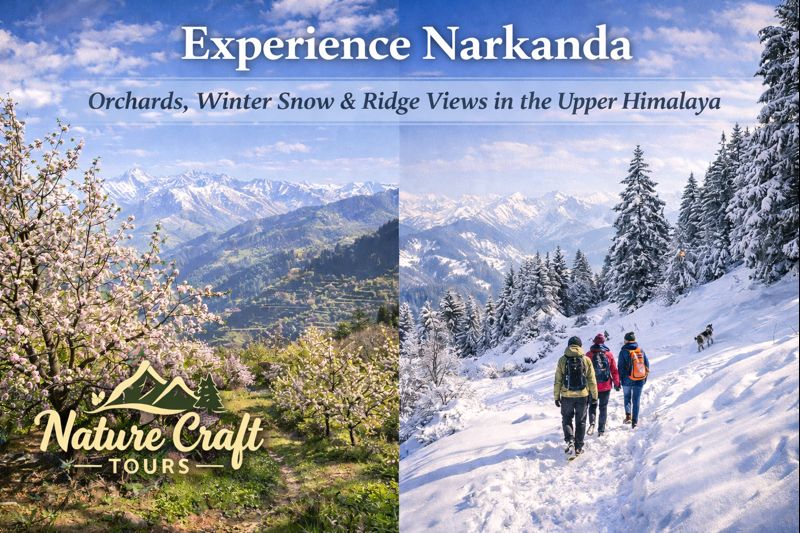
Perched high above the familiar circuits of Shimla tourism, Narkanda is a place where the Himalaya speaks in a quieter, more grounded voice. Apple orchards spread across undulating slopes, winter snow reshapes both landscape and routine, and long ridgelines offer views that feel earned rather than staged. Narkanda is not a spectacle-driven destination. It is a working mountain settlement where geography, climate, and livelihood are tightly interwoven.
Travelers often encounter Narkanda as a name on the old Hindustan–Tibet Road, a brief pause en route to somewhere else. Yet to treat it merely as a stopover is to miss its deeper character. Narkanda rewards time and attention. Its beauty does not lie in monuments or crowded viewpoints, but in seasonal change, agricultural rhythm, and the way the horizon opens slowly as altitude increases.
This article presents Narkanda as a complete destination in its own right—examining its orchards, snow-bound winters, and expansive ridge views within a broader context of ecology, history, and lived mountain culture. It is written from the perspective of field observation rather than promotional gloss, for travelers who value understanding place as much as seeing it.
Destination Overview: Narkanda in the Geography of Himachal Pradesh
Narkanda lies approximately 60 kilometers northeast of Shimla, at an elevation of around 2,700 meters above sea level. This altitude places it firmly within the middle-to-upper Himalayan zone, where climatic conditions differ sharply from lower hill stations. Winters are longer and colder, snowfall is more consistent, and summers remain mild even when the plains experience extreme heat.
Geographically, Narkanda occupies a ridge along one of North India’s most historically significant mountain corridors. The old Hindustan–Tibet Road once connected the plains to high Himalayan trade routes, and settlements like Narkanda developed as practical nodes along this axis rather than as administrative capitals. This origin shaped the town’s functional, understated character.
Unlike ridge cities built around promenades or colonial institutions, Narkanda spreads across gentle slopes and forest edges. Construction remains limited, allowing orchards, forests, and open views to dominate the visual landscape. The result is a settlement that feels lived-in rather than curated.
A Landscape Shaped by Use, Not Display
Narkanda’s defining features—orchards, snow, and ridges—are not ornamental. They are structural elements of everyday life. Apple cultivation dictates seasonal labor. Snow determines mobility and pace. Ridge views serve as both orientation and weather forecast. For visitors, this means engaging with a living landscape rather than a designed attraction.
Orchards of Narkanda: Apple Country of the Upper Hills
Narkanda is situated in one of Himachal Pradesh’s most important apple-growing regions. The surrounding slopes are patterned with orchards that change dramatically across the year, offering one of the clearest visual expressions of seasonal agriculture in the Himalaya.
Seasonal Cycle of Apple Cultivation
Spring brings apple blossoms, covering hillsides in soft white and pale pink. This is a period of anticipation rather than harvest, marked by pruning, soil preparation, and careful observation of weather. Summer sees dense green foliage and developing fruit, while autumn transforms the landscape into a zone of activity as apples are harvested, sorted, and transported.
Winter strips the orchards bare. Snow settles on branches, and the visual emphasis shifts from foliage to form. This dormancy is not absence but preparation—trees rest, and the land resets for the coming year.
Orchards as Cultural Landscape
Apple cultivation reshaped Narkanda in the twentieth century, influencing settlement patterns, land ownership, and seasonal migration. Orchards represent a long-term adaptation to altitude and climate, requiring precise conditions and sustained care.
For travelers, orchards offer insight into mountain livelihoods. They should be observed respectfully from public paths, recognizing that these are working spaces rather than decorative scenery.
Winter Snow: The Season That Redefines Narkanda
Snow is central to Narkanda’s identity. Unlike destinations where snowfall is occasional or symbolic, winter snow here is structural. It alters sound, movement, and daily routine, shaping both physical and social landscapes.
Snowfall and Daily Adaptation
From late December through February, Narkanda often experiences sustained snowfall. Roads may close temporarily, walking becomes deliberate, and daily schedules adjust to daylight and weather. This is not disruption but adaptation—a rhythm embedded in local life.
Snow also transforms perception. Forests quieten, orchards become skeletal, and ridges appear sharper against pale skies. Visibility fluctuates, but when conditions clear, winter offers some of the most defined mountain views of the year.
Winter Travel: Patience Over Pace
Winter travelers to Narkanda benefit most from a slower approach. Short walks, time spent observing weather shifts, and attention to how the settlement functions in cold conditions provide deeper understanding than constant movement.
Ridge Views: Seeing the Himalaya from Narkanda
Narkanda’s ridge location offers expansive views that unfold gradually rather than from a single, staged viewpoint. These views are integral to the settlement’s orientation and identity.
Hatu Peak and High Ridge Geography
One of the highest points near Narkanda, Hatu Peak provides a commanding perspective of surrounding ranges. Reaching it involves both road travel and walking, reinforcing a sense of ascent. From higher ridges, layered mountain ranges stretch across the horizon, their appearance shifting with season and light.
Weather, Light, and Horizon Reading
Ridge views in Narkanda are also practical tools. Cloud movement, wind direction, and light changes signal incoming weather. Locals read these cues instinctively. Travelers who spend time watching the horizon begin to notice similar patterns.
Ecological Character: Forests, Altitude, and Climate
Dense Himalayan forests surround Narkanda, dominated by deodar, pine, and spruce. These forests stabilize slopes, regulate water flow, and support regional biodiversity.
Forest Zones and Wildlife
The forests around Narkanda support birdlife and small mammals adapted to cold climates. While wildlife sightings are not guaranteed, the integrity of the ecosystem is evident in soundscapes, vegetation structure, and seasonal change.
Altitude Sensitivity
At nearly 2,700 meters, Narkanda’s environment is sensitive to small climatic variations. Changes in snowfall patterns affect orchards, forests, and water availability, underscoring the importance of responsible travel.
Best Time and Season to Visit Narkanda
Spring (April to May)
Spring is ideal for observing orchard blossoms and forest renewal. Temperatures are moderate, and walking conditions are comfortable.
Summer (June to September)
Summer offers clear skies and green slopes. It is well suited for ridge walks and forest exploration, particularly for travelers escaping heat from lower elevations.
Autumn (October to November)
Autumn provides clarity and calm. Harvest activity adds cultural context, and ridge views are often at their longest.
Winter (December to February)
Winter defines Narkanda’s character but requires preparation and flexibility. Snow enhances atmosphere while limiting movement.
Route and Accessibility
Narkanda is accessed primarily by road from Shimla along the historic mountain highway. The route climbs steadily through forested zones and smaller settlements.
Approach from Shimla
Travel time varies by season and weather. In winter, early departures and flexible schedules are advisable due to possible road closures.
Movement Within Narkanda
Exploration is best done on foot or via short drives to ridge points. Walking allows engagement with orchards, forests, and subtle landscape transitions.
Ideal Travel Duration
To experience Narkanda beyond a brief stop, a minimum of two days is recommended. Three days allow for deeper seasonal observation.
Suggested Duration
- Day 1: Arrival, orchard-edge walks, sunset ridge views
- Day 2: Hatu Peak area, forest exploration, weather observation
- Day 3 (optional): Slow walks, photography, seasonal focus
Cultural and Historical Context
Narkanda’s history is tied to trade routes and agriculture rather than administration. Its position along the old Hindustan–Tibet Road shaped a culture oriented toward movement and exchange.
This relationship between environment and livelihood mirrors patterns across India. Just as Himalayan orchards define Narkanda, other regions evolved around water and tide. Travelers exploring contrasting ecosystems—such as high ridges and mangrove deltas encountered on a Sundarban Trip—often gain deeper appreciation of how geography shapes culture.
Practical Insights for Travelers
Clothing and Preparation
Layered clothing is essential year-round. Even in summer, evenings can be cold. Winter travel requires insulated footwear and cold-weather gear.
Respecting Orchards and Private Land
Orchards are working landscapes. Remain on public paths and avoid entering private property without permission.
Environmental Responsibility
Carry waste back, minimize noise, and avoid disturbing wildlife. Narkanda’s appeal depends on its ecological integrity.
Integrating Narkanda into Broader Travel Plans
Narkanda fits well into itineraries that combine altitude zones. Travelers often balance Himalayan journeys with lowland ecosystems for contrast. Structured routes such as a Sundarban Tour Package from Kolkata illustrate how different geographies require different travel rhythms.
Narkanda as a Seasonal Mountain Landscape
Narkanda is not defined by a single attraction. Its identity emerges from the interaction of orchards, snow, and ridges across the year. Season dictates experience, and patience reveals depth.
For travelers seeking a Himalayan destination rooted in land use and climate rather than spectacle, Narkanda offers clarity. It demonstrates that the most meaningful views are not always framed—they are lived, season by season, on the mountain itself.