Solang Valley:
An Adventure Landscape Shaped by Snow, Slopes, and the Himalayan Imagination
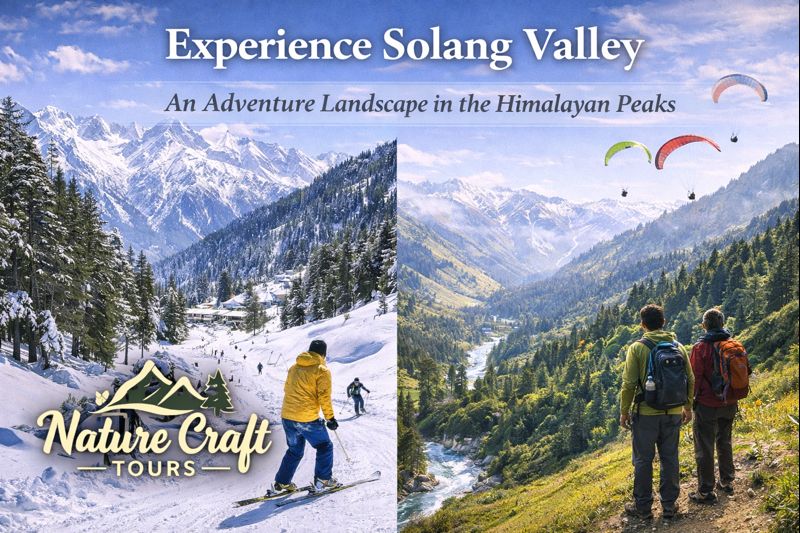
Just a short distance beyond the settled rhythms of Manali, the landscape opens suddenly into a broad alpine bowl framed by steep forested slopes and high ridgelines. This is Solang Valley—a place often described through the language of adventure, yet far richer than any single activity. Solang is not merely a site where sports are conducted; it is a terrain where geography itself invites motion. Snowfall, gradient, wind, and seasonal light combine to create one of the most dynamic adventure landscapes in the Western Himalaya.
Unlike traditional mountain towns that evolved around agriculture or trade, Solang Valley’s modern identity is inseparable from its physical form. The valley floor widens here, slopes descend at precise angles, and elevation remains accessible without extreme ascent. These characteristics have made Solang a natural laboratory for human movement—first for pastoral use, later for military and training exercises, and eventually for recreational adventure.
This article examines Solang Valley not as a checklist of activities, but as a living adventure landscape. It explores how terrain, climate, and culture intersect, and how travelers can engage with Solang thoughtfully—balancing excitement with understanding, and movement with respect for the environment that makes such movement possible.
Destination Overview: Locating Solang Valley in the Himalayan System
Solang Valley lies approximately 13 kilometers northwest of Manali, positioned along the ascent toward the higher Lahaul region. Sitting at an average elevation of around 2,560 meters above sea level, the valley occupies a transitional zone between temperate forests and alpine terrain. This positioning is critical to its character.
The valley is carved by glacial and fluvial processes, resulting in a wide, gently sloping basin flanked by steep valley walls. During winter, snow accumulates evenly across the open floor, while in summer the same space transforms into grassland fed by snowmelt streams. Few Himalayan locations offer such dramatic seasonal reversals within a compact area.
Solang’s proximity to Manali ensures accessibility, yet its geography creates a psychological separation. Within minutes, urban textures fade, replaced by open sky, exposed slopes, and the sound of wind moving across grass or snow.
Why Solang Is an “Adventure Landscape” by Nature
Adventure destinations are often manufactured through infrastructure. Solang is different. Its terrain inherently supports skiing, paragliding, climbing, and traversing. Human intervention here has largely followed geography rather than imposed upon it. The valley’s consistent gradients, clear run-outs, and natural wind channels make it uniquely suited to controlled adventure.
Geography and Terrain: The Foundation of Adventure
Understanding Solang begins with understanding its landforms. The valley floor slopes gently upward, while surrounding ridges rise sharply, creating vertical contrast within short distances. This allows multiple elevation-based activities to coexist within visible range of one another.
Valley Floor and Open Slopes
The central basin of Solang is wide and relatively unobstructed. In winter, this becomes a natural snowfield ideal for skiing and snow-based movement. In summer, it serves as open meadowland, supporting trekking routes and launch zones for aerial activities.
Ridges, Forest Edges, and Gradient Control
Surrounding slopes are steep but not abrupt, providing ideal gradients for both ascent and descent. Forest belts stabilize these slopes, preventing excessive erosion while framing activity zones. This balance between openness and enclosure is rare in Himalayan valleys.
Seasonal Transformation of Solang Valley
Solang Valley undergoes one of the most pronounced seasonal transformations in Himachal Pradesh. Each season reshapes not only appearance but function.
Winter: Snow as Structure
From December through February, Solang becomes a snow-dominated environment. Snowfall blankets the valley floor, smoothing terrain and unifying slopes into a continuous white field. Movement slows in some respects but becomes more directional, guided by gravity and slope.
Winter in Solang is not simply scenic; it is structural. Snow alters sound, depth perception, and physical effort. It demands awareness and adaptation from anyone who enters the landscape.
Spring: Transition and Meltwater
As temperatures rise, snow begins to recede. Meltwater streams emerge, cutting temporary channels across the valley floor. This period reveals the underlying structure of the land—ridges, depressions, and drainage patterns.
Summer: Meadow and Airspace
Summer transforms Solang into a green basin. Grasses cover slopes, and wind patterns stabilize, making this the prime season for aerial activities. The same slopes that supported skiing now support paragliding and trekking.
Autumn: Clarity and Stillness
Autumn brings crisp air and long visibility. Activity reduces slightly, allowing the valley’s form to stand out without seasonal extremes. This is an ideal time for observation and photography.
Adventure Activities as Landscape Interaction
Solang’s reputation rests largely on adventure sports, but these activities are best understood as ways of interacting with the landscape rather than isolated experiences.
Snow-Based Movement
In winter, skiing and snow traversal dominate. The valley’s gentle gradients allow beginners to move safely, while steeper edges challenge more experienced participants. Importantly, the openness of the terrain allows clear sightlines, reducing risk.
Aerial Perspective and Paragliding
In warmer months, Solang’s stable wind channels and open launch zones make it ideal for paragliding. From the air, the valley’s geometry becomes immediately legible—ridges, river lines, and settlement patterns reveal themselves as a coherent system.
Ground-Based Exploration
Trekking, short climbs, and exploratory walks allow slower engagement. These activities reveal micro-features often missed at speed: alpine flowers, soil transitions, and subtle changes in slope angle.
Ecological Context: Fragility Beneath the Adventure
Despite its robust appearance, Solang Valley is ecologically sensitive. Alpine meadows regenerate slowly, and snowpack variations directly affect water availability downstream.
Vegetation Zones
Lower slopes support grasses and seasonal flowers, while higher zones transition toward alpine scrub. Forest edges, primarily coniferous, play a crucial role in stabilizing soil and regulating runoff.
Water Systems
Meltwater from Solang feeds into tributaries of the Beas River, linking the valley to the broader Kullu hydrological system. Disruption here has downstream consequences.
Cultural and Historical Layers
Before its modern adventure identity, Solang was part of seasonal pastoral movement routes. Shepherds used the valley for grazing during warmer months, leaving behind a legacy of trails and ecological knowledge.
In the mid-20th century, Solang gained prominence as a training ground for mountaineering and winter movement, further embedding it within India’s adventure culture.
Best Time and Season to Visit Solang Valley
December to February
Best for snow-based landscape experience. Requires cold-weather preparation and flexible planning.
March to May
Ideal for observing seasonal transition and moderate activity.
June to September
Best for aerial and ground-based exploration. Weather is generally stable, though monsoon showers may occur.
October to November
Clear, calm, and visually striking. Suitable for landscape-focused visits.
Ideal Travel Duration
Solang Valley can be visited as a half-day excursion, but this limits understanding. Two full days allow observation across different times of day and weather conditions.
Suggested Duration
- Day 1: Valley floor exploration and primary activity
- Day 2: Slower walks, ridge observation, seasonal study
Route and Accessibility
Solang Valley is accessed by road from Manali. The ascent is gradual, following the Beas Valley before opening into the Solang basin.
Internal Movement
Once inside the valley, walking is often the most revealing way to experience scale and gradient. Short vehicle movements supplement foot exploration.
Solang Valley in Broader Landscape Perspective
Solang represents one expression of adventure shaped by mountains. Elsewhere in India, adventure landscapes emerge from entirely different systems—tides, mangroves, rivers, and deltas. Experiencing both enhances geographical literacy.
For example, travelers who contrast alpine adventure zones like Solang with water-dominated environments explored on a Sundarban Trip gain insight into how terrain dictates movement, risk, and culture in fundamentally different ways.
Practical Insights for Travelers
Preparation and Clothing
Layered clothing is essential in all seasons. Weather can change rapidly, and exposure varies significantly with activity.
Environmental Responsibility
Avoid trampling vegetation, manage waste carefully, and respect marked zones. Adventure landscapes depend on cumulative restraint.
Pacing and Awareness
Solang invites speed, but understanding comes from pauses. Allow time to observe terrain, wind, and light.
Integrating Solang into Wider Travel Plans
Solang fits best within itineraries that balance movement with reflection. Combining mountain adventure with contrasting ecosystems deepens perspective. Structured journeys such as a Sundarban Tour Package from Kolkata demonstrate how varied landscapes shape different forms of engagement.
A Thoughtful Two-Day Plan for Solang Valley
Day One: Immersion in Movement
Engage in one primary activity suited to the season. Spend time observing others and the landscape from multiple angles.
Day Two: Landscape Reading
Walk the valley slowly. Trace water channels, observe slope transitions, and note how activity zones align with geography.
Solang as a Landscape of Motion and Meaning
Solang Valley is not defined solely by adventure activities. It is defined by a landscape that invites motion, demands respect, and rewards understanding. Snow, slope, wind, and water converge here in a rare balance.
For travelers who look beyond adrenaline, Solang offers a lesson in how geography shapes human behavior. It reminds us that adventure, at its best, is not about conquering land—but about moving with it.