Manikaran (Parvati Valley):
Hot Springs, Sacred Currents, and the Pilgrimage Mood of the Himalaya
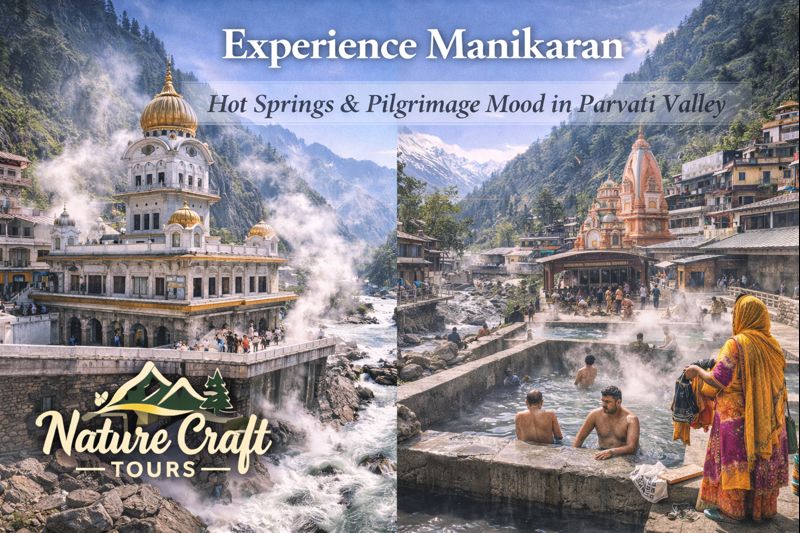
At the narrow meeting point of river, rock, and belief, Manikaran occupies a rare position in the Himalayan imagination. Situated deep within the Parvati Valley, this small settlement is defined not by altitude alone, but by heat—natural geothermal heat rising unexpectedly from the earth in a cold mountain environment. Around these hot springs has grown a layered atmosphere of pilgrimage, daily ritual, and quiet endurance, making Manikaran as much a spiritual landscape as a geographical one.
Manikaran does not present itself as a scenic pause or a recreational stop. It is a working sacred town where faith, geology, and community life are closely bound. Steam rises continuously from stone-lined pools, prayer chants mingle with the sound of the Parvati River, and pilgrims move through the town with a sense of purpose that is markedly different from leisure travel. The mood here is neither hurried nor performative—it is anchored in repetition, belief, and long memory.
This article explores Manikaran as a convergence point: of hot springs and cold mountains, of Hindu and Sikh pilgrimage traditions, of geological forces and spiritual interpretation. Written from a field-observational perspective, it seeks to understand Manikaran not as an attraction, but as a living sacred environment shaped by natural phenomena and sustained cultural practice.
Destination Overview: Manikaran in the Parvati Valley
Manikaran is located approximately 45 kilometers from Kullu, along the Parvati River, at an elevation of about 1,760 meters above sea level. The town sits in a constricted section of the Parvati Valley, where steep slopes descend sharply toward the river, leaving limited flat land for settlement. This compression of space contributes to Manikaran’s intense, inward-facing character.
Unlike open valley towns, Manikaran grows vertically and inward. Buildings cluster closely together, pathways are narrow, and sacred spaces are woven directly into residential and communal areas. The Parvati River flows with force beside the settlement, reinforcing a sense of constant movement and energy.
Geographically, Manikaran marks a transition within the valley—from the broader agricultural stretches below to the narrower, more rugged upper reaches. Culturally, it functions as a destination rather than a transit point, drawing pilgrims who come with specific spiritual intent.
A Settlement Defined by Heat and Faith
Most Himalayan towns are defined by cold, snow, and shelter. Manikaran is defined by heat. The presence of naturally boiling water in a cold mountain setting shapes not only daily routines, but the symbolic understanding of the place itself.
The Hot Springs of Manikaran: Geology and Meaning
The hot springs of Manikaran are the town’s central feature and reason for existence. These geothermal springs emerge at temperatures high enough to boil food, a phenomenon that has inspired both scientific curiosity and religious interpretation for centuries.
Geological Context of the Hot Springs
Manikaran lies along a geologically active zone within the Himalaya, where tectonic movement allows groundwater to be heated deep below the surface before rising through fractures in the rock. This geothermal activity is rare in the region and highly localized, making Manikaran an exceptional natural site.
The springs emerge close to the river, releasing steam continuously. Stone enclosures channel the water into pools used for bathing, ritual cleansing, and cooking.
Hot Springs as Sacred Phenomenon
Long before geological explanations were articulated, the springs were understood through spiritual narratives. In Hindu tradition, the hot waters are associated with divine intervention and purification. In Sikh belief, they are connected to acts of grace and service. These interpretations coexist without conflict, reflecting Manikaran’s shared sacred identity.
Pilgrimage Traditions: Hindu and Sikh Presence
Manikaran holds a unique position as a pilgrimage site revered by both Hindus and Sikhs. This shared reverence shapes the town’s atmosphere, making it a place of disciplined devotion rather than spectacle.
Hindu Pilgrimage Context
For Hindu pilgrims, Manikaran is associated with Lord Shiva and Goddess Parvati. Ritual bathing in the hot springs is considered purifying, believed to cleanse both body and spirit. The proximity of temples to the springs reinforces the connection between natural phenomenon and divine presence.
Pilgrims often follow a structured routine—bathing, prayer, and quiet contemplation—before moving on. The focus remains inward rather than outward.
Sikh Spiritual Significance
Manikaran is equally important in Sikh tradition due to its association with Guru Nanak Dev Ji. The Gurudwara at Manikaran stands as a place of seva (selfless service), hospitality, and community.
The langar tradition here is especially significant. Food is prepared using water heated naturally by the hot springs, transforming a geological feature into a daily act of spiritual equality and generosity.
Pilgrimage Mood and Daily Rhythm
The defining mood of Manikaran is shaped by pilgrimage rather than tourism. Movement through the town follows ritual patterns, and time is measured through prayer schedules and communal activities rather than itineraries.
Soundscape and Atmosphere
The soundscape of Manikaran is distinctive. Flowing water, chanting, temple bells, and the murmur of conversation blend continuously. Steam rising from the springs adds a visual softness, blurring edges and reinforcing the sense of sacred enclosure.
Community Life Around Pilgrimage
Local residents live in close relationship with the pilgrimage economy. Shops, kitchens, and services are oriented toward supporting pilgrims rather than entertaining visitors. This functional approach preserves the town’s spiritual tone.
Ecological Setting: River, Valley, and Thermal Contrast
Manikaran’s ecological character is shaped by contrast—hot springs against cold air, a fast-flowing river beside still bathing pools, steep forested slopes enclosing dense settlement.
The Parvati River
The Parvati River flows forcefully alongside Manikaran, fed by snowmelt from higher elevations. Its cold, rapid movement contrasts sharply with the hot springs, creating a dramatic thermal and sensory juxtaposition.
Forest Slopes and Valley Enclosure
Surrounding slopes are covered with mixed Himalayan forest, stabilizing the terrain and framing the settlement. These forests also mark the boundary between sacred space and wilderness.
Cultural and Historical Layers
Manikaran’s importance spans centuries. It has been referenced in religious texts, travel accounts, and oral traditions, consistently described as a place of divine encounter and endurance.
Continuity of Sacred Use
Unlike sites that shift function over time, Manikaran has remained consistently sacred. Its infrastructure evolved around ritual needs rather than administrative or military functions, preserving its spiritual orientation.
Manikaran Within the Parvati Valley Narrative
Within the broader Parvati Valley, Manikaran represents the point where pilgrimage overtakes pastoral life. Beyond it, the valley becomes more remote and less settled, reinforcing Manikaran’s role as a spiritual threshold.
Best Time and Season to Visit
Spring (March to May)
Spring offers moderate temperatures and stable access. Snow recedes from higher slopes, and pilgrimage activity increases steadily.
Summer (June to September)
Summer is the busiest period. Monsoon rains may occur, but the town remains active. The contrast between cool air and hot springs is especially pronounced.
Autumn (October to November)
Autumn brings clarity and a calmer atmosphere. Pilgrim numbers reduce slightly, allowing quieter engagement with the town’s rhythm.
Winter (December to February)
Winters are cold, with occasional snowfall. The hot springs become central to daily life, and the pilgrimage mood intensifies rather than diminishes.
Ideal Travel Duration
Manikaran is often visited briefly, but meaningful engagement requires time. Two full days allow participation in daily rhythms without haste.
Suggested Duration
- Day 1: Arrival, orientation, evening rituals
- Day 2: Morning bathing, prayer, observation of community life
Route and Accessibility
Manikaran is accessible by road from Kullu and Bhuntar. The route follows the Parvati River, climbing steadily into the valley.
Approach Experience
The approach to Manikaran narrows as the valley tightens. Roads curve along riverbanks, reinforcing the sense of entering a distinct zone.
Key Highlights and Observational Points
Hot Spring Complexes
The stone-lined bathing pools are central to daily activity. Observation should be respectful, recognizing these as sacred spaces.
Gurudwara and Langar
The communal kitchen embodies the town’s ethos of equality and service, operating continuously with discipline and care.
Riverbank Walks
Short walks along the river offer perspective on how natural forces frame the settlement.
Manikaran in a Broader Geographic Perspective
Manikaran’s identity is shaped by geothermal heat and spiritual interpretation. Elsewhere in India, sacred landscapes are shaped by water flow, tides, and forests.
Travelers who compare mountain pilgrimage sites like Manikaran with lowland sacred ecosystems—such as those explored on a Sundarban Trip—gain insight into how different natural forces inspire distinct religious traditions.
Practical Insights for Travelers
Conduct and Respect
Modest clothing, quiet behavior, and respect for ritual boundaries are essential. Photography should be discreet.
Health and Safety
Hot spring temperatures are high. Bathing should be done carefully, following local guidance.
Environmental Responsibility
Avoid contaminating water sources. Waste management is critical in such a compact settlement.
Integrating Manikaran into Wider Travel Plans
Manikaran pairs well with journeys that explore sacred geographies shaped by nature. Structured itineraries such as a Sundarban Tour Package from Kolkata highlight how spiritual landscapes emerge from contrasting environments.
A Thoughtful Two-Day Plan for Manikaran
Day One: Arrival and Immersion
Arrive by afternoon. Observe evening rituals and the communal rhythm.
Day Two: Participation and Reflection
Begin early with bathing and prayer. Spend time observing daily life before departure.
Manikaran as a Living Sacred Landscape
Manikaran is not defined by grandeur or isolation, but by continuity—of heat rising from the earth, of prayers repeated daily, of communities sustained by belief and service. The hot springs are not an attraction; they are the heart of the settlement.
For travelers willing to adapt to its rhythm, Manikaran offers an encounter with a Himalayan sacred landscape where geology and faith are inseparable. It reminds us that some places are not meant to be consumed quickly, but entered respectfully, with patience and awareness.