Dalhousie: Colonial-Era Hill Calm, Carefully Preserved Above the Ravi Valley
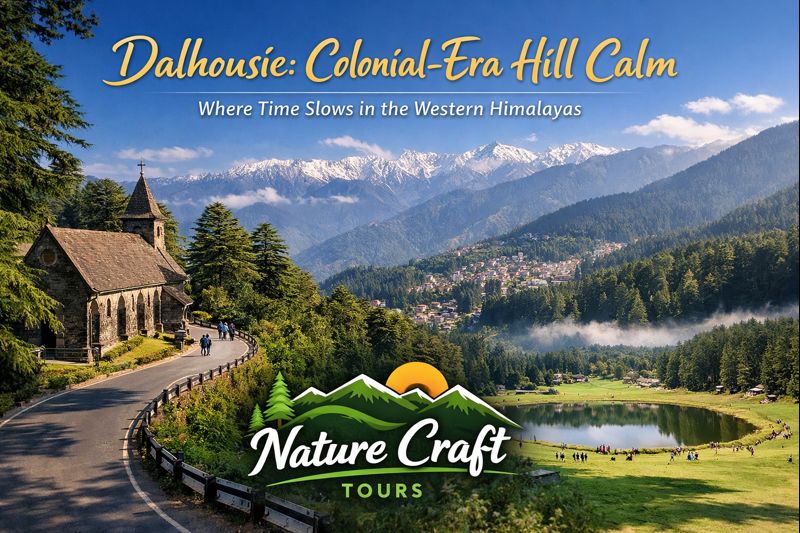
There are Himalayan towns that impress immediately—by altitude, by crowds, by a constant insistence that you must be doing something at every hour. Dalhousie belongs to a rarer category. It does not compete for attention. It simply holds its ground, quietly, on a set of long ridges above the Ravi valley, where pine and deodar trees absorb sound and the air stays cool enough to slow the body’s pace. The calm here is not a marketing promise; it is a consequence of geography and history. Dalhousie was shaped as a nineteenth-century hill station with an administrative purpose, and that origin left behind a physical language of restraint: promenading roads, stone churches, low-rise buildings, and viewpoints that reveal themselves gradually rather than theatrically.
“Colonial-Era Hill Calm” is an accurate way to understand Dalhousie because the town still feels designed for slow living. Mornings can be misted and soft, afternoons are clean and bright, and evenings belong to long walks rather than noise. Even when the season is busy, Dalhousie tends to disperse visitors across ridges and forest roads. You can stand near an old church and hear wind in the branches; you can walk for an hour and feel that the town is not pushing you toward a “must-do” list. That is Dalhousie’s value: a living pause in the Western Himalaya, where the principal attraction is the experience of measured time.
This travel narrative is written as an immersive field guide for thoughtful travelers—those who prefer layered landscapes to hurried sightseeing. It brings together Dalhousie’s colonial timeline, its ecological setting, its signature walks and viewpoints, and a complete tour plan that respects the destination’s nature. The goal is not to overdecorate the place with clichés, but to explain why Dalhousie feels the way it does, how to reach it responsibly, what to do without rushing, and how to leave with a deeper sense of the mountain’s quiet intelligence.
Destination Overview: Where Dalhousie Sits, and Why It Feels Different
Geographical Setting and Terrain
Dalhousie lies in Himachal Pradesh’s Chamba district, perched across multiple ridgelines at roughly two thousand meters above sea level. Unlike valley towns that feel enclosed by steep walls, Dalhousie is open-textured: long viewpoints, curving roads that follow contours, and forested slopes that run outward into deep ravines. The Ravi valley sits below, and on clear days the far ridges appear layered—light blue at distance, darker closer in—giving the landscape a calm, graded depth.
The town is spread across a series of hills, which explains why Dalhousie feels like a collection of neighborhoods rather than a single tight marketplace. Roads here were historically designed for walking and carriage movement, not for heavy modern traffic. As a result, you find gentle gradients and long stretches that invite slow exploration. This structure is not just convenient; it is psychological. A town that is walkable tends to quiet the mind. Dalhousie’s calm begins with the way it is built.
Climate and the “Hill Calm” Micro-Experience
Dalhousie’s climate creates a specific daily rhythm. Early mornings often begin cool, sometimes with fog or low cloud that makes the pines and rooftops feel softened, as if the town is still waking. Midday brings clearer light and the sharpness of mountain air. Evenings cool quickly, encouraging warm clothing and slower movement. This cooling cycle shapes how you should plan your day: walks and viewpoints feel best in morning and late afternoon; midday is ideal for relaxed cultural exploration and unhurried meals.
The calm is also acoustic. Pines and deodars absorb and scatter sound; the town’s lower building heights reduce echo; and many scenic roads sit away from the busiest market corners. When you step onto a ridge walk, the primary noises are wind, distant voices, and occasional birds. For travelers who spend most days in dense urban soundscapes, Dalhousie can feel like an unexpected reset.
A Short, Honest History: The Colonial Foundation and the Town’s Lasting Character
Why the British Built Dalhousie
Dalhousie grew as a colonial hill station in the mid-nineteenth century, created as a summer retreat and administrative outpost. The logic of colonial hill stations was practical: cooler climate, reduced disease risk compared to the plains, and a psychological separation from the heat and intensity of lowland cities. This origin matters because it explains the town’s layout. Dalhousie was not a settlement that expanded by accident; it was developed with a specific purpose and a preference for order.
Churches, cantonment-style buildings, and wide walking roads were central to that design. Many structures were built to suit mountain conditions: sloped roofs, verandas, thick walls, and windows that frame views. Over time, the town blended with local influences and Indian livelihoods, but the foundational planning principle remained: keep the town breathable, walkable, and relatively spaced out.
What Remains Today
The colonial imprint today is less about a museum-like aesthetic and more about an atmosphere. You see it in stone churches set among trees, in old bungalows with balconies, and in promenading routes that still work beautifully for evening walks. You also feel it in the town’s modest scale. Dalhousie does not dominate its ridges with towers; it sits among them. The built form remains secondary to the forest and the view, and this hierarchy is a major reason the destination still feels calm.
Best Time to Visit Dalhousie: Choosing Your Season by Mood, Not Only Weather
Spring to Early Summer (March to June): Clear Walks and Classic Hill Station Comfort
This is the most comfortable and widely preferred period for first-time visitors. Days are pleasant, nights are cool, and the ridges offer clear walking conditions. If you want Dalhousie’s classic experience—morning viewpoints, slow afternoons, and long evening promenades—this season is reliable. The forest feels fresh, and the town’s colonial-era walking routes are at their best.
Monsoon (July to September): Mist, Quiet, and a More Introspective Dalhousie
Monsoon changes Dalhousie’s personality. The town becomes greener, the air turns heavier with moisture, and the ridges often sit inside cloud. If you enjoy contemplative travel—reading, writing, photographing fog, listening to rain—this season can be deeply rewarding. However, it requires flexibility: intermittent rain can interrupt viewpoints, and occasional road disruptions can occur in the broader hill region. Monsoon is not for hurried itineraries. It is for travelers who accept the mountain’s schedule.
Autumn (October to November): Crisp Light and Long Views
Autumn brings clarity. Skies tend to be clean, and distant ranges appear sharper. Days are mild and nights can be cold. This is a strong season for panoramic views and comfortable walking, especially if you prefer fewer crowds than peak summer.
Winter (December to February): Snow Potential and Deep Quiet
Winter is when Dalhousie can feel most still. Cold increases, and there may be snowfall during peak winter spells. Some travelers come specifically for that possibility. The forest becomes quieter, and the town’s evenings feel almost old-fashioned—warm rooms, hot tea, early nights. Winter travel requires warm clothing and sensible pacing, but it rewards you with the purest version of Dalhousie’s calm.
Ideal Travel Duration: How Many Days Dalhousie Truly Needs
Dalhousie is best experienced in a way that respects its slow design. A rushed one-night visit will show you the viewpoints but not the town’s character. A balanced stay is 3 nights / 4 days, which allows:
- One day to settle into the town and its walking routes.
- One day for higher viewpoints and forest edges.
- One day for a signature day trip to nearby landscapes.
- One day for gentle revisits—because Dalhousie improves on repetition.
If you can stay for 5 days, you will experience Dalhousie in the way it deserves: unhurried, with time for quiet mornings, long ridge walks, and slow meals without constantly checking the clock.
Route and Accessibility: How to Reach Dalhousie Smoothly
Reaching the Region
Dalhousie is typically approached via the nearest major rail-linked gateway in the lower hills and plains, after which the journey continues by road into the higher ridges. The road ascent is part of the experience: the air cools gradually, vegetation changes from broadleaf to conifer, and the landscape begins to open into valleys and ridgelines.
To travel comfortably, plan an arrival that allows daylight on the hill roads. Daytime travel improves safety and also makes the ascent visually rewarding. Carry water and light snacks for the road, but keep luggage compact—Dalhousie’s best moments often happen when you can move easily between viewpoints and walking routes.
Local Movement Within Dalhousie
Dalhousie is at its best when you walk. Even if you arrive with a vehicle, consider using it only for transfers between major points, and reserve time each day for slow foot exploration. The town’s ridges are made for walking: curved roads, pine shadows, and long sections where the valley seems to run beside you like a companion.
Travelers who enjoy nature-oriented circuits across India often recognize this rhythm—where the environment sets the pace and your schedule adapts to it. That same idea is present in river-and-forest destinations as well, and if you are ever planning a calm, nature-first journey beyond the mountains, you may find useful context in curated experiences like Sundarban Tourism, where movement is guided by landscape rather than urgency.
Key Attractions and Highlights: Dalhousie’s Most Meaningful Places
The Mall Road Promenade: The Town’s Living Spine
Dalhousie’s Mall Road is not merely a shopping lane; it is the town’s promenade tradition in modern form. Walk it in the early morning when shops are still waking and mist may still cling to rooftops. Walk it again at sunset when the air sharpens and people drift out for their evening circuit. The value here is not a single monument; it is the act of walking itself, framed by colonial-era architecture and forested slopes.
St. John’s Church and Stone-Built Quiet
Among Dalhousie’s most significant colonial-era remnants are its stone churches. These buildings carry a specific hill-station aesthetic: heavy stone walls, modest towers, quiet interiors, and a sense of separation from the bustle of markets. Visit in the daytime for architectural details and the surrounding tree cover. You may notice how the church spaces are positioned—often slightly away from the most commercial roads—preserving the silence they were meant to hold.
Bakrota Hill Walk: A Landscape Designed for Unhurried Time
Bakrota Hill is best understood as a walking experience rather than a “spot.” The road around it is gentle and expansive, with valley views that appear and disappear as trees thin and thicken. This is where Dalhousie’s colonial-era calm becomes physical: the town offers you a place to do nothing but walk, breathe, and watch changing light.
Plan at least one long Bakrota walk during your stay. Leave your phone away for stretches. Let the mind settle. Dalhousie reveals itself when you stop treating it like a task list.
Dainkund Peak: Wind, Height, and the Most Open View
Dainkund is among the highest accessible points around Dalhousie and offers an expansive sense of altitude. The ascent is not only about reaching a viewpoint; it is about experiencing the shift in temperature, wind strength, and horizon width. The summit often feels airy and energetic, with wind producing a natural soundscape through the trees.
Go early for the cleanest light and the calmest atmosphere. Carry a warm layer even in pleasant seasons, as wind at higher points can make temperatures feel significantly colder.
Kalatop Forest Zone: Deodar Depth and Ecological Continuity
The Kalatop forest area represents the deeper ecological identity of the region: dense deodar cover, long shaded trails, and an atmosphere that feels darker and cooler than town roads. Even if wildlife sightings remain subtle, the forest’s presence is valuable. It teaches you why hill stations like Dalhousie were originally chosen: trees regulate climate and create an environment that feels naturally restorative.
Move quietly in forest zones. Avoid loud music. Keep your pace slow. In such landscapes, the reward is often in small details: a change in birdsong, a sudden opening in the trees revealing a valley, the scent of resin in cool air.
Khajjiar: The Meadow Contrast That Complements Dalhousie
Khajjiar is frequently visited as a day trip from Dalhousie and is known for its meadow setting and open views. What makes it meaningful is contrast. Dalhousie is ridge-and-forest calm; Khajjiar is open-field brightness. Visit with a calm plan: arrive earlier, walk around the meadow edges, and avoid compressing your schedule into hurried photo stops. If you treat Khajjiar as a landscape rather than a selfie point, it becomes a natural extension of Dalhousie’s slow philosophy.
Cultural and Historical Significance: Beyond Scenery
A Meeting Point of Colonial Planning and Himachali Life
Dalhousie’s cultural interest lies in its layered identity. The town reflects a colonial urban design—churches, cantonment aesthetics, promenading roads—while the surrounding region holds Himachali livelihoods shaped by mountain agriculture, seasonal rhythms, and local crafts. This creates a destination that is not culturally “flat.” It holds multiple narratives at once.
If you explore beyond the busiest lanes, you see everyday mountain life: small shops, local produce, woolens, and the practical intelligence of people who understand slopes, winters, and changing weather. Observing respectfully is part of the travel experience. Speak softly in quiet spaces, ask before photographing individuals, and treat the town as lived habitat rather than an exhibition.
Ecology as Heritage
In Dalhousie, ecology is not separate from heritage. The forests are a form of living infrastructure. They stabilize slopes, influence rainfall behavior, and keep the town cooler. When you walk a deodar-lined road, you are also walking through the ecological reason the hill station exists at all. This perspective changes how you travel: you begin to understand that protecting trees, reducing waste, and minimizing noise are not moral extras—they are essential to preserving the destination’s core identity.
Complete Tour Plan: A 4 Days / 3 Nights Itinerary Built for Calm
Day 1: Arrival, Orientation, and the First Slow Walk
Arrive in Dalhousie and resist the urge to “cover” attractions immediately. The town’s charm appears when your body adjusts to altitude and temperature. Check in, hydrate, and take a short orientation walk along the Mall Road area. Notice the town’s pacing: shops opening gradually, people walking without urgency, the way the ridge curves guide your movement.
In the late afternoon, choose a gentle viewpoint nearby and spend time there without rushing. The first day is about settling into the hill calm. End with an early dinner and a warm, unhurried evening. Dalhousie rewards those who let the destination set the schedule.
Day 2: Bakrota Hill Walk and Colonial-Era Architecture
Begin with a long, comfortable Bakrota Hill walk. Start early enough to catch soft light through the trees. Walk slowly, pause at valley openings, and let the morning stretch. This is not a fitness activity; it is a landscape immersion. Carry water, wear comfortable shoes, and keep your pace conversational.
After the walk, explore a stone church and nearby colonial-era structures with an observer’s mindset. Pay attention to materials—stone, wood, sloped roofs—and how architecture responds to climate. In the afternoon, keep plans light: a small café, reading, or quiet photography. In the evening, do a short repeat walk. Dalhousie becomes more intimate when you revisit places rather than chase new ones constantly.
Day 3: Dainkund Peak and Kalatop Forest Depth
Dedicate this day to the wider landscape. Leave early for Dainkund Peak to experience the cleanest horizon and the most open air. Dress in layers. Spend time at the top, not merely minutes. Watch how the wind changes the mood of the place, how trees behave, and how the valley appears from greater height.
Later, move toward the Kalatop forest zone for a different kind of calm—deeper, darker, more enclosed. Walk quietly on forest trails and let the sensory experience guide you: scent of cedar, texture of the path, variations in birdsong. If you prefer structured travel, you may plan a simple picnic lunch (without leaving litter) and treat the forest as your afternoon living room.
Return to Dalhousie before late evening. The day will feel full, but not hectic, if you keep transitions gentle and avoid over-scheduling.
Day 4: Khajjiar as a Soft Finale, and Departure
On the final day, consider a short, early visit to Khajjiar for its meadow contrast—especially if your departure schedule allows. Keep your time there purposeful yet calm: walk along the edges, avoid crowd concentration points, and let the openness work as a gentle closing chapter to Dalhousie’s forested ridges.
Return to Dalhousie, collect belongings, and depart with time in hand. Hill departures feel best when unhurried. If you leave with calm, you carry Dalhousie’s lesson more easily.
A 5-Day Extension: For Travelers Who Want Dalhousie to Become a Routine
If you can stay longer, add two calmer layers:
- One “repeat day”: revisit Bakrota Hill at a different hour, revisit a church in different light, and allow the town to feel familiar.
- One “slow culture day”: explore local markets gently, observe regional food habits, and spend time with the surrounding landscape without pushing for distance.
Longer stays allow Dalhousie to shift from destination to temporary home. That is when colonial-era calm becomes more than scenery; it becomes a lived rhythm.
Practical Insights for Travelers: Comfort, Safety, and Responsible Travel
Clothing and Packing
Carry layers in every season. Even when days are mild, evenings can cool quickly. Comfortable walking shoes are essential because the most rewarding experiences—Bakrota, promenades, viewpoint roads—are walk-based. A light rain jacket is valuable outside peak dry months. Keep luggage compact to move easily on hill roads and steps.
Health and Altitude Comfort
Dalhousie’s altitude is moderate, but first-time hill travelers should still pace themselves on arrival day. Hydrate, avoid heavy exertion immediately, and sleep early. If you are sensitive to cold, protect ears and hands in winter months. The calm experience improves when the body feels comfortable.
Food Habits and Local Taste
Dalhousie offers a mix of simple hill-station cafés and local Himachali flavors. Choose warm meals in colder months and keep snacks for walks. Avoid over-reliance on packaged foods; it increases waste and reduces the value of local consumption. A mindful traveler supports the town’s small economy through respectful, moderate choices rather than excessive, showy consumption.
Photography and Etiquette
Dalhousie is visually gentle: stone textures, pine shadows, mist, and ridge lines. Photograph slowly and observe how light changes. If photographing people, ask permission. In churches and quiet spaces, keep phones silent and behavior respectful. Hill calm is fragile; it survives when travelers behave as guests, not as owners of space.
Waste and Environmental Responsibility
Carry a small waste bag for wrappers and tissues and dispose of it properly. Avoid plastic bottles when possible by using refillable containers. Do not feed wildlife or leave food in forest areas. Forests around Dalhousie are not theme parks; they are living systems that protect the town’s climate and slope stability.
Dalhousie’s Deeper Value: Why This Town Matters in a Faster Tourism Era
Many hill towns today are pressured by volume tourism: rapid construction, congestion, and an atmosphere that feels more like a marketplace than a mountain. Dalhousie still holds a different identity. Its best features—walkability, low-rise planning, forest continuity, quiet architecture—are not accidental comforts; they are the foundation of its charm. Protecting that foundation is in every traveler’s interest because once calm is lost, it is difficult to rebuild.
This is why Dalhousie appeals strongly to travelers who seek nature-led pacing. The same travel philosophy appears in other Indian landscapes that rely on ecological rhythm rather than entertainment, whether in high forests or riverine mangrove worlds. If you are building a broader nature-first travel calendar, it can be useful to compare how different ecosystems control movement and attention—an idea reflected in well-structured itineraries such as the Sundarban Tour Package from Kolkata, where routes, tides, and wildlife etiquette determine the day’s tempo.
Taking Dalhousie Home as a Habit of Calm
Dalhousie is not a place that demands constant activity. It is a place that invites you to remember what unhurried time feels like. Its colonial-era calm survives in ridgeline roads designed for walking, in stone-built quiet spaces, in forests that still dominate the skyline, and in an overall scale that remains breathable. You leave Dalhousie with fewer “achievements” than you might collect in louder destinations, but you leave with something more durable: a slower heartbeat, clearer thought, and the sense that travel can be restorative without being dramatic.
If you plan Dalhousie with patience—choosing seasons by mood, staying long enough to repeat walks, respecting forests as living heritage—you will experience the town in the way it was meant to be experienced. Dalhousie does not reward speed. It rewards presence. And in that reward lies its rarest offering: a quiet Himalayan calm that still feels authentic, still feels human, and still feels worth protecting.