Chandratal Region:
The Seasonal High Lake Experience in the Trans-Himalaya
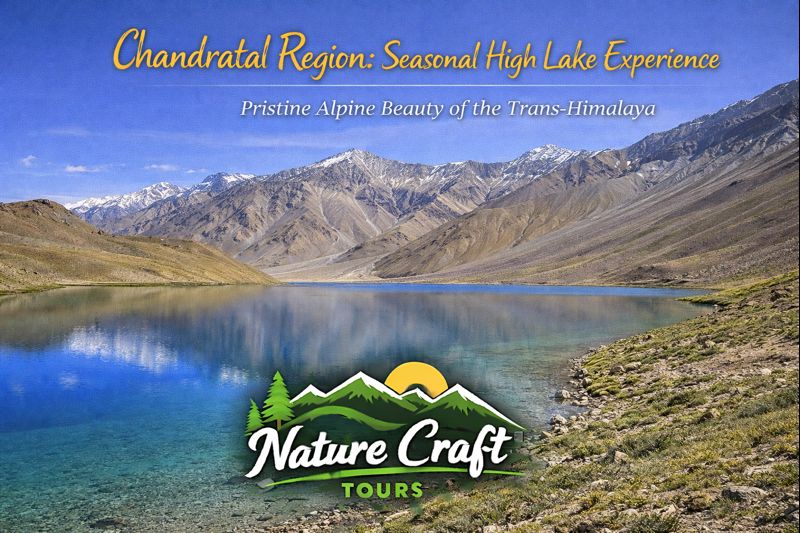
Chandratal is not a destination that exists year-round in human terms. It appears, withdraws, and reappears with the rhythm of snow and thaw. For much of the year, this high-altitude lake and its surrounding plateau remain sealed under ice, wind, and silence. When access finally opens, Chandratal does not greet travelers with abundance or comfort; it offers clarity, space, and a rare sense of seasonal privilege. To reach Chandratal is to arrive at a place that is allowed, not owned—a landscape temporarily accessible before nature closes the gates again.
The phrase “Seasonal High Lake Experience” defines Chandratal more accurately than any superlative. This is not merely a lake to be seen; it is a region to be entered during a narrow window of time, governed entirely by altitude, weather, and restraint. The experience is shaped as much by anticipation and preparation as by the lake itself. Chandratal does not tolerate haste, noise, or excess. It rewards those who arrive slowly and leave lightly.
This travel narrative examines the Chandratal region as a seasonal Himalayan environment rather than a single photographic landmark. It explores geography, access patterns, ecological sensitivity, cultural associations, and the discipline required to experience a high-altitude lake that exists on nature’s terms alone. Chandratal is not a permanent attraction; it is a temporary invitation.
Destination Overview: Understanding the Chandratal Region
Geographical Setting and Elevation
Chandratal, meaning “Moon Lake,” is located in the upper reaches of the Lahaul–Spiti region of Himachal Pradesh at an elevation of approximately 4,300 meters above sea level. The lake lies on a high-altitude plateau near the Kunzum Pass, surrounded by barren ridges, glacial debris, and expansive alpine meadows that exist only during brief summer months.
The region forms part of the Trans-Himalayan cold desert system, characterized by minimal vegetation, low precipitation, and extreme temperature variation. Unlike river-fed valleys, Chandratal is a closed basin lake, sustained primarily by snowmelt. This hydrological isolation contributes to its fragility and seasonal nature.
Climate and Seasonal Access
Chandratal experiences long, severe winters with heavy snowfall that renders the region inaccessible for more than half the year. Temperatures remain well below freezing, and the lake surface stays frozen. Access typically opens between late June and early October, depending on snow conditions and road clearance.
Even during peak season, weather remains unpredictable. Strong winds, sudden temperature drops, and intense ultraviolet exposure define the environment. The region demands preparedness rather than adaptability.
The Meaning of a Seasonal High Lake
Access Governed by Nature
Unlike permanent tourist centers, Chandratal exists outside continuous human control. Roads are not maintained year-round, and no permanent settlements exist near the lake. Seasonal access depends entirely on snowmelt patterns, pass conditions, and administrative regulation designed to limit impact.
This enforced seasonality preserves Chandratal’s character. The lake remains largely untouched during winter months, allowing ecological processes to reset without human interference.
Psychology of Temporary Presence
Travelers often experience Chandratal differently from lower-altitude destinations. Knowing that access is temporary creates a heightened sense of attentiveness. Time feels limited, and activities become simpler—walking, observing, breathing, and resting. Chandratal encourages presence rather than consumption.
Cultural and Historical Context
Mythological Associations
Chandratal occupies a place in regional folklore and broader Hindu mythology. It is traditionally associated with narratives from the Mahabharata, where the lake is believed to be the site from which the moon god carried Yudhishthira to the heavens. While such stories are symbolic, they reflect the lake’s longstanding perception as a sacred and liminal space.
Local communities historically approached the lake with reverence rather than utility. It was not a resource to be exploited, but a site to be acknowledged.
Absence of Permanent Settlement
The lack of permanent habitation near Chandratal distinguishes it from monastery-centered or village-based Himalayan destinations. Seasonal pastoralists may pass through nearby grazing grounds, but no community claims year-round residency. This absence reinforces the lake’s untouched character.
Ecological Significance of the Chandratal Region
High-Altitude Wetland System
Chandratal functions as a high-altitude wetland within an otherwise arid landscape. It supports specialized alpine flora and serves as a seasonal habitat for migratory birds. The lake’s clarity and color are direct results of minimal nutrient input and limited biological activity.
Any disturbance—waste, trampling, or chemical contamination—has long-term consequences due to slow ecological recovery at this altitude.
Fragility and Regeneration Limits
Soil regeneration in the Chandratal region occurs over decades rather than years. Vegetation grows slowly, and once damaged, may not recover within a human lifetime. This fragility necessitates strict controls on camping, movement, and waste management.
Best Time and Season to Experience Chandratal
Early Season (Late June to Mid-July)
Access typically opens as snow clears from Kunzum Pass. The landscape retains snow patches, and the lake often shows a mix of ice and open water. Visitor numbers are lower, and the environment feels raw and transitional.
Peak Season (Mid-July to September)
This is the most stable and accessible period. Roads are open, alpine meadows emerge, and the lake displays its characteristic blue hues. Daytime temperatures are manageable, though nights remain cold. Most travelers plan visits during this window.
Late Season (Late September to Early October)
Temperatures drop rapidly, and early snowfall becomes possible. Visitor numbers decline, and the region grows quiet. This period offers exceptional clarity but requires careful monitoring of weather conditions.
Ideal Travel Duration
Chandratal is best experienced as part of a broader high-altitude itinerary. A minimum of one overnight stay in the region allows for acclimatization and unhurried exploration. Two nights provide flexibility in case of weather changes and enable deeper engagement with the landscape.
Extended stays are discouraged due to ecological sensitivity and exposure risks.
Route and Accessibility
Approach Routes
Access to Chandratal typically involves crossing high mountain passes and navigating unpaved roads. The final approach usually requires a short walk from designated drop-off points to minimize vehicular impact near the lake.
The journey itself is demanding, reinforcing the idea that Chandratal must be earned rather than reached casually. As with other environment-dominated journeys—whether navigating Himalayan plateaus or entering tidal wilderness during a Sundarban Trip—the approach shapes mindset before arrival.
Movement Within the Region
Walking is the primary mode of movement near Chandratal. Paths are informal and often dictated by terrain rather than construction. Staying on established routes is essential to protect fragile ground cover.
Key Attractions and Highlights
Chandratal Lake Itself
The lake’s most striking feature is its color, which shifts with light and weather—from deep turquoise to pale silver. Walking slowly around the perimeter reveals subtle variations rather than dramatic changes.
Surrounding High Plateau
The open plateau around Chandratal offers expansive views of surrounding ridges and distant peaks. This space emphasizes scale and isolation rather than focal landmarks.
Night Sky and Silence
With no permanent lighting and minimal human presence, the night sky near Chandratal is exceptionally clear. Silence is profound, broken only by wind and distant water movement.
Practical Insights for Travelers
Acclimatization and Health
At over 4,300 meters, altitude effects are significant. Travelers must acclimatize at lower elevations before visiting. Symptoms of altitude sickness should be taken seriously, and descent should not be delayed if discomfort increases.
Clothing and Equipment
Layered clothing is essential, including thermal insulation, wind protection, and sun shielding. Temperatures can drop below freezing at night even in summer. Footwear should be suitable for rocky and uneven terrain.
Environmental Responsibility
All waste must be carried out. Camping is regulated and should occur only in designated areas. Use of detergents, soaps, or chemicals near water sources is strictly discouraged.
Behavioral Discipline
Noise, crowding, and unnecessary movement detract from the Chandratal experience and stress the environment. Quiet observation and minimal footprint define responsible presence.
Chandratal in the Context of Conscious Travel
Chandratal exemplifies a form of travel where access is conditional and responsibility is non-negotiable. Its appeal aligns with journeys that prioritize ecological integrity and seasonal awareness, similar in philosophy to carefully structured experiences such as the Best Sundarban Tour Package, where environment dictates pace and behavior.
Chandratal as a Temporary Privilege
Chandratal does not belong to the traveler. The traveler belongs briefly to Chandratal. This distinction defines the region’s power. The lake’s seasonal accessibility, ecological fragility, and high-altitude isolation ensure that it remains a place of discipline rather than indulgence.
For those willing to prepare, wait, and move lightly, Chandratal offers one of the purest high Himalayan experiences available—a meeting with landscape on its own terms. It is not a destination to conquer or complete, but a moment to witness, respect, and leave behind unchanged.