🌸 Shantiniketan Heritage Tour – 2 Days
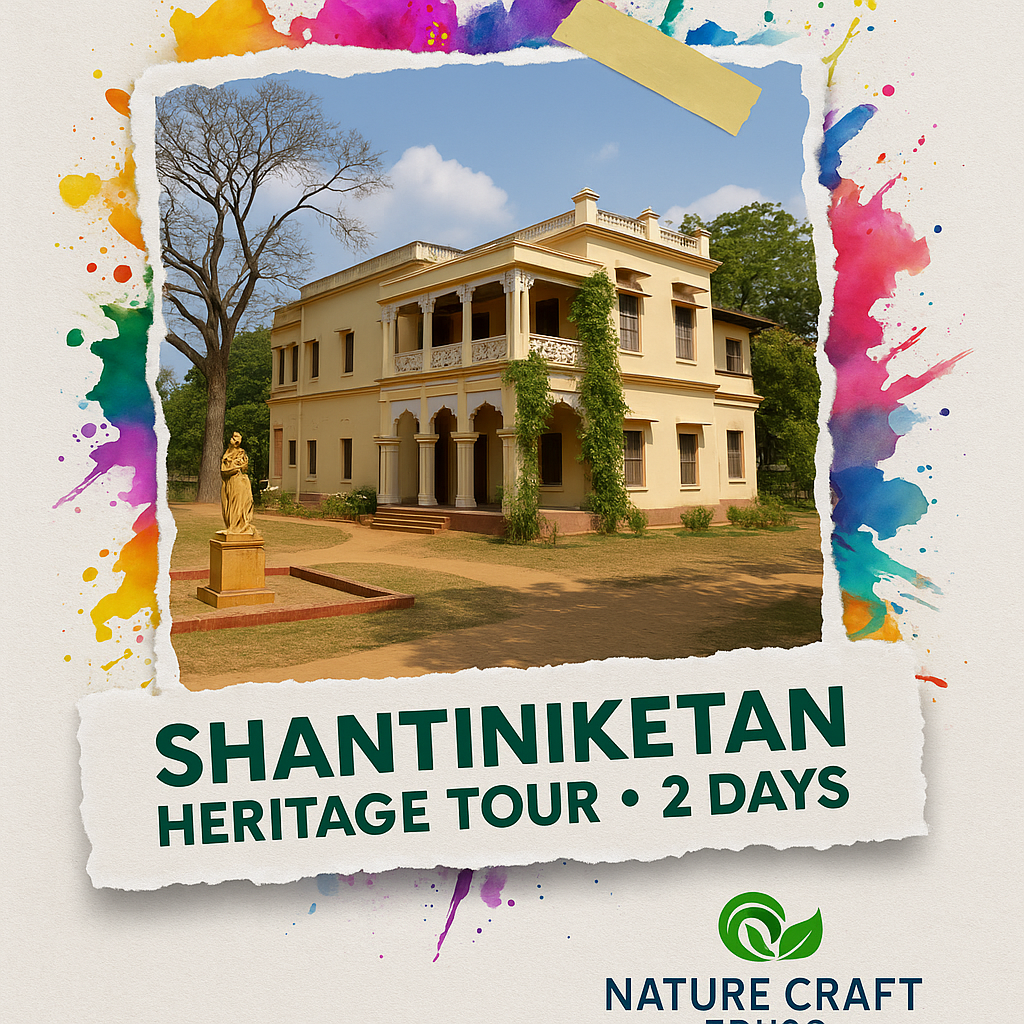
“Where Art, Culture, and Nature Embrace the Soul”
Nestled in the heart of West Bengal’s Birbhum district, Shantiniketan is not merely a town—it is a living poem written by the great Nobel laureate Rabindranath Tagore. The word “Shantiniketan” literally translates to “Abode of Peace,” and true to its name, the place embodies tranquility, creativity, and cultural richness.
Once a quiet retreat for meditation, Shantiniketan has evolved into an internationally recognized center of education, art, and heritage—thanks to Visva-Bharati University, founded by Tagore himself.
A 2-day Shantiniketan Heritage Tour offers an immersive journey through open-air classrooms, terracotta temples, Baul music, and the timeless charm of Bengal’s countryside.
🏛️ Introduction to Shantiniketan – The Land of Tagore
Shantiniketan was founded in the late 19th century by Maharshi Debendranath Tagore, the father of Rabindranath Tagore, as a spiritual retreat. Later, in 1901, Rabindranath transformed it into a place of learning and creativity by establishing Visva-Bharati University—a unique institution that promoted harmony between the East and West through art, education, and philosophy.
Today, Shantiniketan stands as a symbol of Bengal’s cultural identity, blending natural beauty, intellectual pursuits, and artistic excellence. Its mud-walled houses, red laterite paths, and lush trees reflect a harmony rarely found elsewhere. The town comes alive with festivals like Poush Mela and Basanta Utsav, when music, dance, and art blend into an unforgettable experience.
📍 Major Attractions & Important Places to See
1. Visva-Bharati University
The heart of Shantiniketan, Visva-Bharati University was established by Rabindranath Tagore in 1921. It represents Tagore’s vision of a world where “the world makes a home in a single nest.” The university campus is an open-air museum in itself, showcasing architectural styles inspired by Bengal’s rural aesthetics, modern art, and Tagore’s global philosophy.
Visitors can explore various departments such as Kalabhavana (Fine Arts), Sangit Bhavana (Music), and Cheena Bhavana (Chinese Studies). Each area exhibits sculptures, murals, and artworks created by eminent artists like Nandalal Bose, Ramkinkar Baij, and Benode Behari Mukherjee.
2. Tagore’s Ashram
Located inside the university complex, Tagore’s Ashram is the nucleus of Shantiniketan’s heritage. It comprises several historic buildings such as Upasana Griha (Prayer Hall), Shyamali, Udayan, Konalini, and Dehali—each narrating the story of Tagore’s life and philosophy. The ashram area remains serene, filled with large trees, murals, and open courtyards that echo the poet’s ideals of education in nature’s lap.
3. Rabindra Bhavana Museum
A must-visit for scholars and Tagore enthusiasts, the Rabindra Bhavana Museum preserves the poet’s manuscripts, letters, photographs, and personal belongings. The museum also houses his Nobel Prize replica and provides a rare insight into the cultural legacy that made Tagore a global icon.
4. Uttarayan Complex
This is where Tagore spent the later years of his life. The Uttarayan Complex consists of five houses—Udayan, Konark, Shyamali, Punascha, and Udichi. Each house is an architectural gem with influences from various parts of the world, reflecting Tagore’s cosmopolitan ideals. The interiors showcase original furniture, artworks, and decorations from Tagore’s era.
5. Kala Bhavana (Institute of Fine Arts)
A paradise for art lovers, Kala Bhavana stands as a testament to India’s modern art movement. Established in 1919, it became the creative cradle for artists such as Nandalal Bose and Ramkinkar Baij. The campus is adorned with sculptures, murals, and open-air studios that define the identity of Shantiniketan’s art tradition.
6. Amar Kutir
Once a refuge for freedom fighters, Amar Kutir is now a cooperative society promoting Bengal’s handicrafts and cottage industries. Visitors can shop for leather goods, batik prints, handwoven fabrics, and dokra metal crafts. It is an ideal spot to buy authentic souvenirs and witness the spirit of Bengal’s rural craftsmanship.
7. Kankalitala Temple
Located just a few kilometers from the main town, Kankalitala Temple is one of the 51 Shakti Peethas, where it is believed that the bones of Goddess Sati fell. The temple is serene and situated by a peaceful pond, offering both spiritual solace and scenic beauty.
8. Ballavpur Wildlife Sanctuary (Deer Park)
This sanctuary is a refreshing break from cultural sightseeing. Spread over 200 hectares, it is home to spotted deer, blackbucks, and various species of birds. The tranquil lake inside the park becomes a haven for migratory birds during winter, making it a favorite spot for nature photographers.
9. Khoai Haat (Sonajhuri Market)
A visit to Shantiniketan is incomplete without exploring the vibrant Khoai Haat, held every Saturday near Sonajhuri Forest. The open-air market bustles with artisans selling handmade crafts, jewelry, terracotta toys, and paintings. Local Baul singers perform soulful songs, filling the air with rustic rhythm and joy.
🗺️ Suggested 2-Day Shantiniketan Heritage Tour Itinerary
Day 1 – Exploring the Cultural Core
- Depart from Kolkata early morning (around 7:00 AM).
- Drive towards Shantiniketan via NH2 or Burdwan (approximately 165 km / 4 hours).
- Check-in at your chosen resort or heritage lodge.
- Visit Visva-Bharati University and Tagore’s Ashram.
- Explore Rabindra Bhavana Museum and Uttarayan Complex.
- Evening walk through Kala Bhavana and its sculpture-filled gardens.
- Enjoy dinner with a Baul music performance near Sonajhuri.
Day 2 – Nature, Art & Local Life
- After breakfast, visit Ballavpur Wildlife Sanctuary (Deer Park).
- Head to Amar Kutir for handicrafts shopping and cultural demonstration.
- Explore Kankalitala Temple and nearby rural villages.
- If it’s Saturday, experience the colorful Khoai Haat at Sonajhuri.
- Lunch at a local café serving authentic Bengali cuisine.
- Return to Kolkata by evening (approx. 4-hour drive).
📏 Major Distances and Travel Duration
- Kolkata to Shantiniketan: 165 km (Approx. 4 hours by road)
- Burdwan to Shantiniketan: 90 km (2 hours)
- Bolpur Railway Station to Shantiniketan: 2 km (10 minutes)
- Shantiniketan to Kankalitala Temple: 7 km (20 minutes)
- Shantiniketan to Amar Kutir: 3 km (10 minutes)
The region is well-connected and easily accessible for weekend getaways, making it ideal for a 2-day cultural retreat.
🚗 How to Reach Shantiniketan
By Road
Shantiniketan is approximately 165 km from Kolkata. You can drive via NH2 or NH19 passing through Dankuni, Burdwan, and Panagarh. Regular bus services and private car rentals are available. The roads are smooth, making the journey pleasant and scenic.
By Train
The nearest railway station is Bolpur (Shantiniketan), about 2 km from the main campus area. Regular express and intercity trains such as Kabiguru Express, Shantiniketan Express, and Rampurhat Express connect Bolpur with Howrah and Sealdah. Auto-rickshaws and local taxis are available outside the station.
By Air
The nearest airport is Netaji Subhas Chandra Bose International Airport, Kolkata. From there, travelers can hire a private cab or take a train from Howrah to Bolpur. The total journey time is around 5 hours.
🏨 Staying Options in Shantiniketan
Shantiniketan offers a variety of accommodation options, from eco-resorts to heritage lodges that blend local aesthetics with modern comfort. Staying amidst red soil paths and rural charm enhances the cultural experience of this heritage town.
1. Heritage Resorts
These properties replicate the rustic architecture of old Bengal—mud cottages, open courtyards, and thatched roofs. They offer a quiet retreat surrounded by trees, where you can experience authentic Bengali hospitality with traditional meals.
2. Boutique Hotels & Eco-Stays
For modern travelers, boutique hotels and eco-resorts provide air-conditioned rooms, in-house restaurants, and guided tours to local attractions. Many properties organize evening Baul music programs for guests.
3. University Guest Houses
Visva-Bharati occasionally allows visitors to stay in guest houses within the campus area. These are clean, affordable, and located close to key attractions like Tagore’s Ashram and Kala Bhavana.
4. Local Homestays
Several family-run homestays around Sonajhuri and Prantik offer immersive experiences with homemade food, local art workshops, and guided walks through rural trails.
🌸 Best Time to Visit Shantiniketan
The best time to visit Shantiniketan is from October to March, when the weather remains cool and pleasant. This period also coincides with major cultural events and festivals that highlight the spirit of this heritage town.
- Winter (November – February): Ideal for sightseeing and attending open-air cultural programs.
- Spring (March): Experience Basanta Utsav, Shantiniketan’s most colorful festival celebrating Holi with Tagore’s songs and dance.
- December: Visit during Poush Mela—a grand fair with folk music, handicrafts, and traditional Bengali cuisine.
- Monsoon (June – September): The countryside looks lush, but outdoor activities may be limited due to rain.
🎨 Cultural Experiences & Things to Do
- Attend a Baul music performance near Sonajhuri or inside a resort courtyard.
- Explore local art workshops at Kala Bhavana.
- Buy authentic handicrafts, dokra jewelry, and batik sarees from Amar Kutir or Khoai Haat.
- Visit nearby villages like Surul to witness rural pottery and folk art.
- Join nature walks through the Sonajhuri Forest at sunrise.
🕊️ Festivals of Shantiniketan
Festivals here are not mere celebrations—they are a living embodiment of Tagore’s philosophy of joy, creativity, and human unity.
- Poush Mela (December): The biggest event of Shantiniketan, marked by folk performances, stalls, and vibrant community gatherings.
- Basanta Utsav (March): The spring festival inspired by Tagore’s Holi songs, celebrated by students in colorful attire, singing and dancing under flower showers.
- Rabindra Jayanti (May): Celebrating the birth anniversary of Rabindranath Tagore with performances of his songs, plays, and poetry.
🌿 Sustainable Tourism Practices
Shantiniketan thrives on eco-conscious and community-based tourism. Visitors are encouraged to respect the serene environment and local customs.
- Support local artisans by buying directly from village markets.
- Avoid littering in the university and forest areas.
- Use reusable water bottles and eco-friendly products.
- Respect the sanctity of Tagore’s Ashram and other cultural sites.
📅 Quick Tour Summary
- Duration: 2 Days / 1 Night
- Destination: Shantiniketan, Birbhum District
- Ideal for: Heritage Lovers, Families, Art Enthusiasts, Weekend Travelers
- Major Attractions: Visva-Bharati University, Rabindra Bhavana, Amar Kutir, Kankalitala Temple, Khoai Haat
🌺 Conclusion
A Shantiniketan Heritage Tour is not just a trip—it is a pilgrimage to Bengal’s intellectual and artistic soul.
In two days, travelers can relive the legacy of Rabindranath Tagore, experience Bengal’s folk art, and embrace a life philosophy that blends simplicity, creativity, and harmony with nature. The tranquil red soil paths, the songs of Bauls, and the gentle whispers of Shal trees together make Shantiniketan an eternal abode of peace.
If you wish to reconnect with your inner self while exploring Bengal’s artistic roots, there is no better destination than Shantiniketan—the timeless abode of art, soul, and serenity.