Meghalaya Living Root Bridge Trek – 4 Days
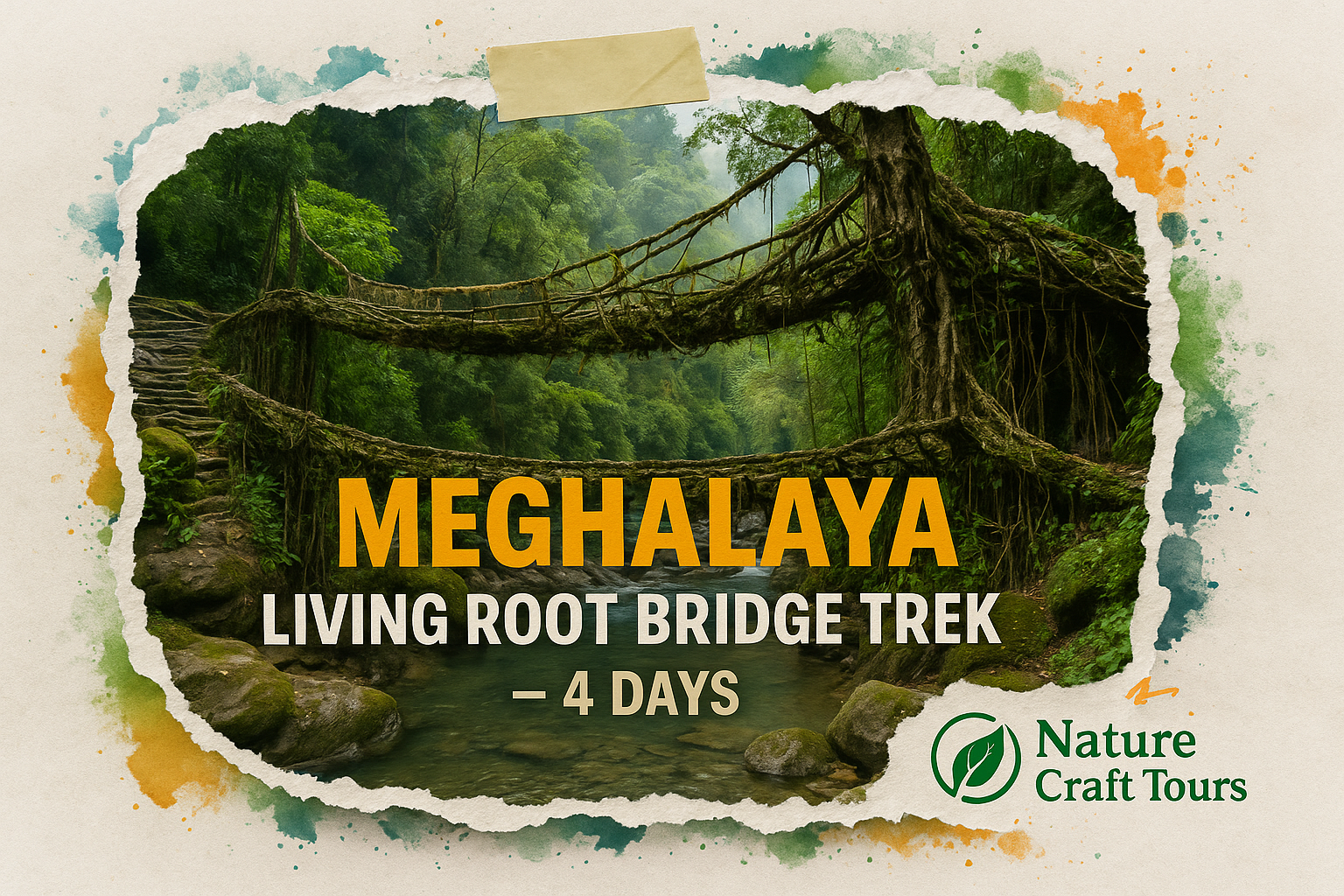
The Meghalaya Living Root Bridge Trek is one of India’s most unique and enchanting experiences, blending adventure, culture, and natural beauty in the heart of the “Abode of Clouds.” Meghalaya, famed for its verdant landscapes, cascading waterfalls, and misty hills, is home to one of the world’s most extraordinary marvels — living root bridges crafted by the Khasi tribes over centuries. These living structures, made from the roots of the Indian rubber tree (Ficus elastica), are nature’s perfect example of sustainable engineering and human harmony with the environment.
This 4-day trek offers travelers a chance to walk amidst pristine forests, cross natural root bridges, and witness some of India’s cleanest and most picturesque villages. It’s not just a hike; it’s a journey through time, culture, and nature’s craftsmanship at its best.
Overview of the Living Root Bridges of Meghalaya
The living root bridges are found primarily in the Khasi and Jaintia Hills of Meghalaya, especially around the villages of Nongriat, Mawlynnong, and Riwai. These bridges are made by guiding the roots of ancient rubber trees across streams until they intertwine and solidify to form walkable structures — some of which are over 500 years old.
The most famous among them is the Double Decker Living Root Bridge near Nongriat village, which attracts trekkers, photographers, and nature enthusiasts from across the world. The trek to these bridges takes travelers through cloud-kissed valleys, forested trails, and cascading waterfalls — an immersive experience of Meghalaya’s raw beauty.
Day-wise Itinerary – Meghalaya Living Root Bridge Trek (4 Days / 3 Nights)
Day 1: Arrival at Shillong – Gateway to the Khasi Hills
Arrive at Shillong, the charming capital of Meghalaya, fondly known as the “Scotland of the East.” After checking into your hotel, spend the day exploring the serene town, its vibrant culture, and colonial charm.
- Umiam Lake (Barapani): En route to Shillong from Guwahati, stop at this expansive man-made lake surrounded by pine-covered hills. The view of the setting sun reflecting on its tranquil waters is simply breathtaking.
- Ward’s Lake: Located in the heart of the city, this landscaped lake with wooden bridges and flower gardens is perfect for a relaxing stroll.
- Don Bosco Museum: A seven-storey museum showcasing Northeast India’s culture and traditions through fascinating exhibits and interactive displays.
- Police Bazaar & Café Hopping: Spend your evening exploring Shillong’s bustling market and enjoy a cup of locally brewed coffee in one of its chic hill cafés.
Overnight stay at Shillong. Prepare for the upcoming adventure amidst nature’s marvels.
Day 2: Shillong to Tyrna – Start of the Living Root Bridge Trek
After breakfast, drive towards Tyrna Village, the base point for the Living Root Bridge Trek, located around 65 km (3 hours) from Shillong. The scenic drive passes through pine forests, mountain streams, and mist-laden valleys.
- Sohra (Cherrapunji): On the way, visit some iconic spots in Cherrapunji — the world’s rainiest place — including Nohkalikai Falls (India’s tallest plunge waterfall), Mawsmai Cave, and Seven Sisters Falls. These natural wonders offer incredible photo opportunities.
- After sightseeing, arrive at Tyrna village, the starting point of the trek to the famous Double Decker Living Root Bridge at Nongriat.
The trek begins with a steep descent of around 3,000 stone steps through lush forests, small hamlets, and suspension bridges over crystal-clear streams. The path, though challenging, is dotted with breathtaking views and the sound of waterfalls echoing through the valley.
Upon reaching Nongriat Village, marvel at the awe-inspiring Double Decker Root Bridge — a masterpiece of natural engineering. Locals claim that the bridge has been growing stronger with every passing year. Spend some time relaxing and soaking in the beauty of this incredible structure before settling into a homestay in Nongriat.
Overnight stay in Nongriat village surrounded by forested hills and the soothing melody of waterfalls.
Day 3: Exploration of Nongriat – Rainbow Falls & Nearby Villages
Wake up to the chirping of birds and the cool breeze of the forest. After breakfast, set out for a full day of exploration around Nongriat.
- Rainbow Falls Trek: A moderately challenging trek (around 1.5–2 hours from Nongriat) that leads to the mesmerizing Rainbow Falls, named for the colorful spectrum that forms on its misty waters. The trail winds through dense jungle paths, hanging bridges, and bubbling streams — an absolute delight for trekkers.
- Enjoy a dip in the cool blue waters at the base of the falls or simply relax by the rocks surrounded by nature’s orchestra.
- Village Interaction: Interact with the warm and friendly Khasi villagers and learn about their eco-friendly lifestyle. Nongriat’s community thrives on sustainable tourism and traditional knowledge passed through generations.
- Photography & Relaxation: Capture the living bridge and natural pools in different lights or simply unwind amid the tranquility of the valley.
Return to the village by afternoon, enjoy local Khasi cuisine prepared by your hosts, and spend a peaceful evening under a starlit sky.
Overnight stay in Nongriat homestay.
Day 4: Return Trek to Tyrna – Drive Back to Shillong or Guwahati
After breakfast, begin the ascent back to Tyrna. The climb is physically demanding, with approximately 3,000 steep steps, so take your time and rest at intervals. Once you reach Tyrna, you’ll be greeted with panoramic views of the valleys below — a fitting farewell to Meghalaya’s natural wonders.
Drive back to Shillong (or directly to Guwahati if you have an onward flight). En route, stop at:
- Mawkdok Dympep Valley Viewpoint: A breathtaking viewpoint offering sweeping vistas of the deep valleys and cloud-covered gorges below.
- Umiam Lake: Stop again for a final glimpse of this serene waterbody before bidding adieu to the hills of Meghalaya.
End your journey with unforgettable memories of the enchanting Living Root Bridge Trek — a true testament to nature’s artistry and the harmony between humans and the environment.
Major Attractions on the Living Root Bridge Trek
- Double Decker Root Bridge, Nongriat: The most famous and photogenic root bridge in Meghalaya.
- Rainbow Falls: Hidden amidst the forest, this turquoise-blue waterfall is one of Meghalaya’s natural jewels.
- Single Root Bridges at Riwai & Tyrna: Perfect examples of local ingenuity and bio-engineering.
- Nohkalikai Falls: India’s highest plunge waterfall located near Cherrapunji.
- Mawsmai Caves: Limestone caves with fascinating formations of stalactites and stalagmites.
- Local Khasi Villages: Experience authentic tribal life and eco-friendly village hospitality.
Major Distances
- Guwahati to Shillong: 100 km (Approx. 3 hours drive)
- Shillong to Tyrna: 65 km (Approx. 2.5–3 hours drive)
- Tyrna to Nongriat (trek): 3 km (Approx. 2–3 hours trek downhill)
- Nongriat to Rainbow Falls: 2.5 km (Approx. 1.5–2 hours trek)
- Tyrna to Guwahati: 160 km (Approx. 5 hours drive)
How to Reach
By Air: The nearest airport is Lokpriya Gopinath Bordoloi International Airport in Guwahati, connected to Delhi, Mumbai, Kolkata, and other major Indian cities. From Guwahati, Shillong is approximately 100 km by road.
By Train: Guwahati Railway Station is the nearest railhead, linked with major Indian cities. From there, taxis and shared cabs are available to Shillong and Cherrapunji.
By Road: Well-maintained highways connect Guwahati, Shillong, and Cherrapunji. Regular taxis, tourist cabs, and buses operate on this route.
Accommodation Options – Where to Stay
The Meghalaya Living Root Bridge route offers a range of accommodations — from eco-friendly homestays to comfortable resorts. Most stays blend harmoniously with the environment, offering warm hospitality and stunning views of the valleys.
- Shillong: Ri Kynjai – Serenity by the Lake (Luxury Eco-Resort), Pinewood Heritage Hotel, The Heritage Club – Tripura Castle, Café Shillong Guest House.
- Cherrapunji: Polo Orchid Resort (with views of Seven Sisters Falls), Cherrapunjee Holiday Resort, Coniferous Resort.
- Nongriat Village: Traditional Khasi homestays run by local families offering simple but comfortable lodging with home-cooked meals and cultural interaction.
Best Time to Visit Meghalaya for Living Root Bridge Trek
The trek to the Living Root Bridges is possible throughout the year, but each season offers a unique charm:
- October to April (Winter – Early Summer): Ideal for trekking, clear skies, and comfortable temperatures. Waterfalls are still active and the trails are dry and easy to navigate.
- May to September (Monsoon): The forest turns lush green, and waterfalls roar in full glory, but the trails can be slippery. It’s perfect for adventure seekers who love the rain-soaked wilderness.
- December: For a festive experience, Shillong and nearby villages light up during Christmas celebrations with music and local traditions.
Trek Difficulty & Preparation Tips
- The trek is considered moderate to challenging due to the steep descent and ascent involving over 3,000 steps.
- Physical fitness and good stamina are essential. It’s advisable to do light cardio or stair climbing before the trip.
- Carry essential gear: trekking shoes with grip, rain jacket, reusable water bottle, flashlight, and light snacks.
- Local guides are available and highly recommended for navigating trails safely and understanding cultural insights.
Local Culture & Cuisine
The Khasi people, who inhabit this region, are known for their deep connection with nature. They practice sustainable living — evident in their architecture, agriculture, and waste management practices. Visitors can witness their hospitality and taste traditional dishes like Jadoh (rice cooked with meat), Tungrymbai (fermented soybeans), and Dohneiiong (pork curry with black sesame).
Travel Tips for a Responsible Trek
- Respect local traditions and seek permission before photographing villagers.
- Carry all waste back with you — plastic littering is strictly discouraged.
- Opt for eco-friendly homestays to support local communities.
- Avoid loud noise and music; let the sounds of nature dominate the experience.
- Stay hydrated and carry sufficient water, especially during the climb back.
- Support local artisans by purchasing handmade bamboo or cane souvenirs.
Nearby Attractions for Extended Travel
- Mawlynnong (80 km from Shillong): Known as Asia’s Cleanest Village, it’s a perfect blend of scenic beauty and sustainable living.
- Dawki (25 km from Cherrapunji): Famous for its crystal-clear Umngot River and India-Bangladesh border view.
- Mawsynram: The wettest place on Earth, surrounded by caves and stunning landscapes.
- Laitlum Canyon: Near Shillong, offering panoramic views of the deep gorges and misty hills.
Conclusion
The Meghalaya Living Root Bridge Trek is a soulful adventure that transcends ordinary travel. It’s a journey into nature’s architecture, ancient traditions, and the rhythm of life untouched by modern chaos. Every step through its moss-covered trails and every view of the intertwining roots narrate a story of resilience, patience, and coexistence.
From the whispers of the rainforest to the laughter of Khasi children playing by waterfalls, the trek embodies the spirit of Meghalaya — mystical, pristine, and alive. Whether you’re an adventurer, photographer, or culture seeker, this experience will stay etched in your heart forever.
Embark on your journey with Nature Craft Tours — where every trek is not just an adventure but a harmony with nature’s timeless wonders.