Majuli Island Cultural Tour – 4 Days
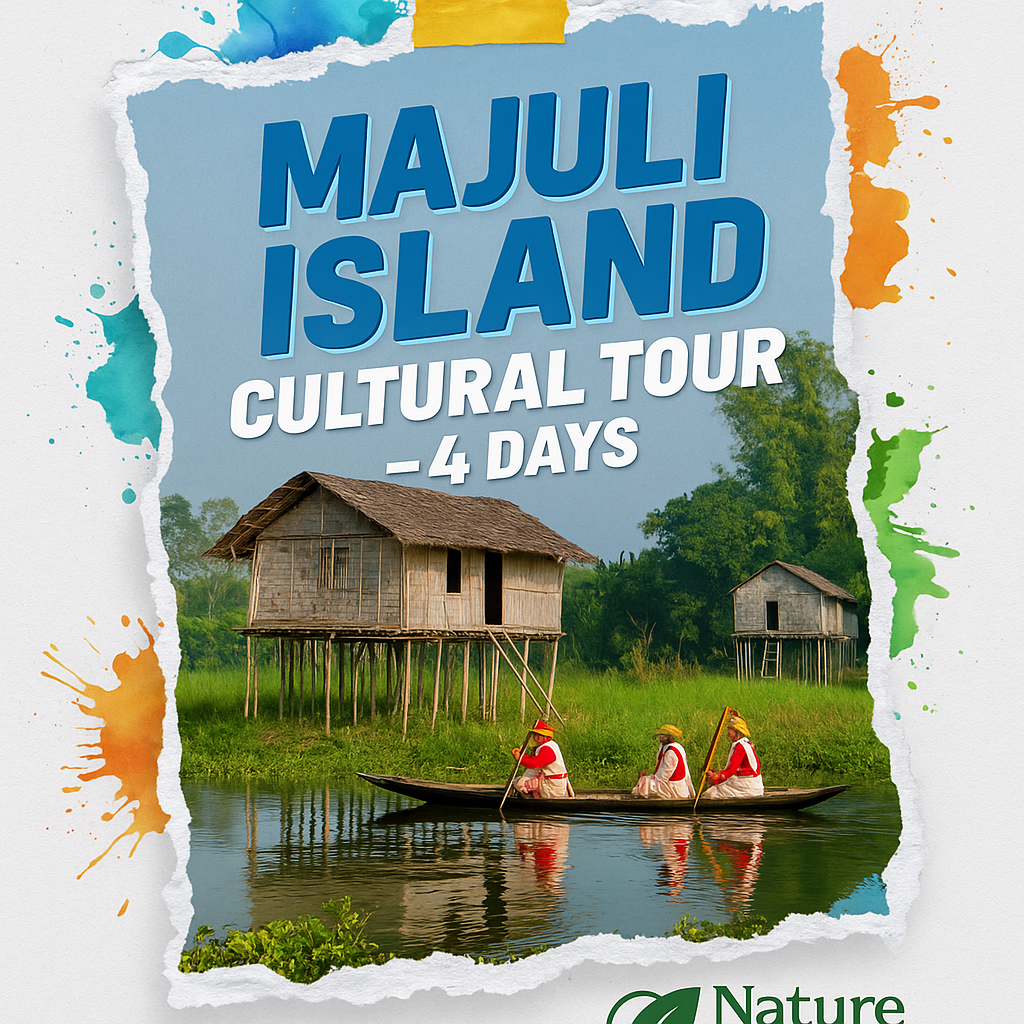
The Majuli Island Cultural Tour is a soulful journey into the heart of Assam’s living heritage. Nestled in the mighty Brahmaputra River, Majuli is the world’s largest inhabited river island and the cultural capital of Assam. Known for its vibrant Vaishnavite monasteries (Satras), serene landscapes, traditional art forms, and warm-hearted tribal communities, this enchanting island offers a glimpse into an ancient yet ever-evolving way of life.
This 4-day Majuli Island tour is a perfect blend of nature, spirituality, and culture. It invites travelers to explore the mystical charm of the Satras, interact with Mishing and Assamese artisans, experience traditional mask-making, and enjoy the rhythm of rural life surrounded by the Brahmaputra’s tranquil beauty.
Overview of Majuli Island
Located about 20 km from Jorhat in Upper Assam, Majuli covers an area of approximately 352 square kilometers (though it once spanned over 1,200 sq km before the river’s erosion). The island is formed by the Brahmaputra in the south and the Subansiri in the north, creating a fertile landmass adorned with rice fields, wetlands, and small forest patches.
Majuli’s unique charm lies in its rich cultural tapestry. It is home to several Satras (Vaishnavite monasteries) established by the saint-reformer Srimanta Sankardeva in the 15th century. These Satras preserve dance, drama, music, painting, and literature that reflect the pure essence of Assamese culture.
The island’s inhabitants — mainly Mishing, Deori, and Assamese communities — live in bamboo stilt houses and lead simple, harmonious lives in tune with nature. For travelers seeking an authentic and peaceful experience, Majuli is a destination unlike any other.
Day-wise Itinerary – Majuli Island Cultural Tour (4 Days / 3 Nights)
Day 1: Arrival at Jorhat – Drive to Majuli (20 km + Ferry Ride)
Arrive at Jorhat Airport or Railway Station, the gateway to Upper Assam. After a warm welcome, begin your journey towards Majuli. Drive to Neemati Ghat (about 15 km from Jorhat) and board the ferry that takes you across the mighty Brahmaputra River to Kamalabari Ghat in Majuli. The ferry ride — lasting around an hour — is an experience in itself, offering panoramic views of the river, fishermen at work, and the island’s distant greenery.
- Check-in: Upon arrival, check into your riverside eco-resort or bamboo cottage built in traditional Assamese style.
- Evening Leisure: Walk around nearby villages, interact with locals, and witness the scenic sunset over the Brahmaputra.
- Dinner: Enjoy a traditional Assamese meal with local rice, fish curry, and fresh vegetables cooked in earthen pots.
Overnight stay at Majuli.
Day 2: Exploring the Cultural Heart – The Satras of Majuli
Begin your cultural exploration with the visit to Majuli’s ancient Vaishnavite monasteries known as Satras. These spiritual and cultural centers preserve art forms founded by Sankardeva and his disciple Madhavdeva. Each Satra is known for its unique traditions of dance, music, and spiritual discipline.
- Kamalabari Satra: One of the most important Satras known for its fine arts, classical dance, and religious plays. The monks perform Sattriya Nritya, a graceful classical dance form recognized as one of India’s eight classical dances.
- Auniati Satra: Famous for its collection of Assamese artifacts, ancient manuscripts, and traditional performances. The Satra also holds a museum that displays cultural treasures from medieval Assam.
- Dakhinpat Satra: A magnificent monastery with beautiful murals and paintings. It plays a central role during the Raas Leela Festival, one of Majuli’s most celebrated events.
- Samaguri Satra: Visit this unique monastery known for mask-making — a centuries-old art form used in traditional Assamese dance dramas. The artists craft expressive masks from bamboo, cane, and clay, painted with natural dyes. Visitors can observe and even participate in short workshops.
Spend the afternoon interacting with the monks, learning about their simple lifestyle, and witnessing devotional performances if available.
In the evening, enjoy a folk music session featuring Ojapali or Naam-Prasanga – soulful devotional songs accompanied by drums and cymbals, creating an atmosphere of spiritual serenity.
Overnight stay at Majuli.
Day 3: Tribal Villages, Handicrafts & Nature Trails
After breakfast, embark on a village exploration tour to experience the indigenous lifestyle of Majuli’s inhabitants. The island is home to several tribal groups, each with its unique traditions and craftsmanship.
- Mishing Tribal Villages: The Mishing people are the largest ethnic group in Majuli. Visit their stilted bamboo houses built to withstand floods. Learn about their daily life, weaving traditions, and sustainable practices. Try your hand at traditional weaving on backstrap looms – a skill passed down through generations.
- Salmora Pottery Village: Known for its ancient pottery craft where artisans make pots and utensils without using a wheel, relying purely on hand techniques. This eco-friendly art has been practiced for centuries using local clay and natural firing methods.
- Kamalabari Village: Explore this charming settlement where the locals engage in mask-making, traditional music, and farming. Their bamboo crafts and fishing tools reflect a perfect blend of creativity and practicality.
- Birdwatching & Wetlands: Majuli’s wetlands attract migratory birds like Siberian cranes, adjutant storks, and purple herons. Early morning or evening birding trails near the riverbanks are ideal for photographers and nature lovers.
Evening free to relax by the riverside or enjoy a traditional Mishing dance performance accompanied by drums and bamboo flutes under the starlit sky.
Overnight stay at Majuli.
Day 4: Return Journey – Majuli to Jorhat
After breakfast, bid farewell to the tranquil island and take the ferry back to Neemati Ghat. From there, drive to Jorhat for your onward journey.
- Optional Stop: Visit a tea estate near Jorhat to experience Assam’s world-famous tea culture. Learn about tea processing and enjoy a fresh brew amidst the scenic plantations.
- Shopping: Buy souvenirs like handwoven shawls, bamboo crafts, and traditional masks from local artisans.
Your Majuli Island Cultural Tour concludes as you continue to your next destination with cherished memories of Assam’s cultural heartland.
Major Attractions of Majuli Island
- Kamalabari Satra: Cultural hub of Vaishnavite art and dance.
- Auniati Satra: Houses an impressive museum and artifacts.
- Samaguri Satra: Traditional mask-making center of Assam.
- Dakhinpat Satra: Famous for Raas Leela celebrations.
- Mishing Tribal Villages: Explore bamboo stilt houses and weaving traditions.
- Salmora Pottery Village: Ancient wheel-less pottery craft.
- Brahmaputra River Views: Serene ferry rides and sunsets over the water.
- Wetlands & Birdlife: Ideal for photography and nature walks.
Major Distances
- Jorhat to Neemati Ghat: 15 km (Approx. 30 minutes drive)
- Neemati Ghat to Kamalabari (Majuli) by Ferry: 20 km (Approx. 1–1.5 hours)
- Majuli to Dibrugarh: 190 km (Approx. 6 hours drive + ferry)
- Majuli to Guwahati: 330 km (Approx. 9–10 hours by road + ferry)
How to Reach Majuli Island
By Air: The nearest airport is Jorhat Airport (Rowriah), about 20 km from Neemati Ghat. Guwahati’s Lokpriya Gopinath Bordoloi International Airport (330 km) is the major air hub in Assam. From Jorhat, one can take a taxi or local transport to the ferry point.
By Train: The nearest railway station is Jorhat Town Railway Station, connected with Guwahati, Dibrugarh, and major cities in Assam.
By Road: Jorhat is well connected to Guwahati, Dibrugarh, and Tezpur by NH-715. From Jorhat, travelers can reach Neemati Ghat by taxi or shared cab and then take a government or private ferry to Majuli Island.
By Ferry: Ferries operate daily from Neemati Ghat (Jorhat side) to Kamalabari or Aphalamukh Ghat (Majuli side). The ferry ride offers scenic views of the Brahmaputra’s vast expanse and lasts around an hour. During monsoon, schedules may vary depending on water levels.
Accommodation Options – Where to Stay
Majuli offers charming stays ranging from eco-resorts and bamboo cottages to homestays that give travelers an authentic taste of Assamese hospitality. Most accommodations are located around Kamalabari and Garamur villages, offering easy access to cultural sites and natural beauty.
- La Maison de Ananda: A popular bamboo homestay run by locals, offering a traditional Mishing-style experience with modern comfort.
- Me:Po Okum Eco Resort: A riverside resort offering eco-friendly cottages and locally inspired cuisine.
- Deka Chang Eco Resort: A rustic property known for its natural setting and cultural performances.
- Majuli Bamboo Cottage: Simple yet cozy bamboo cottages reflecting Assamese craftsmanship.
- Satriya Guesthouses: Some Satras provide basic accommodation for visitors seeking a spiritual retreat.
Best Time to Visit Majuli Island
- October to March (Winter & Early Spring): The best time to visit Majuli when the weather is cool and pleasant. The river levels are stable, and the island’s greenery is at its best.
- April to June (Summer): Warm but manageable, ideal for cultural exploration and photography.
- July to September (Monsoon): The island remains lush but prone to flooding; ferry services may be irregular.
Festivals to Experience:
- Raas Leela (November): Majuli’s most famous festival depicting the life of Lord Krishna through dance and drama, performed in Satras with music, masks, and lights.
- Ali-Aye-Ligang (February): A harvest festival celebrated by the Mishing tribe with traditional dance and rice beer.
- Bhogali Bihu (January): The Assamese harvest festival celebrated with bonfires, traditional feasts, and folk dances.
Travel Tips for Majuli Tour
- Carry light woolens and comfortable walking shoes for exploring villages and Satras.
- Respect local customs — remove footwear before entering monasteries.
- Photography may be restricted inside some Satras; seek permission from monks.
- Carry cash, as ATMs are limited on the island.
- Use eco-friendly products — Majuli is an environmentally sensitive region.
- Stay hydrated and protect yourself from the sun during summer.
- Try the local cuisine — especially fish curries, rice cakes, and traditional rice beer called Apong.
Nearby Attractions for Extended Tours
- Jorhat: Known for tea gardens, museums, and the Tocklai Tea Research Centre.
- Sivasagar: The ancient capital of the Ahom dynasty, famous for temples and historical monuments (80 km).
- Kaziranga National Park: A UNESCO World Heritage Site home to the one-horned rhinoceros (125 km from Jorhat).
- Dibrugarh: The tea capital of Assam and gateway to eastern Arunachal Pradesh (190 km).
Conclusion
The Majuli Island Cultural Tour is not just a trip but a journey into Assam’s living traditions and the tranquil rhythm of rural life. From devotional chants echoing in ancient Satras to the cheerful laughter of Mishing children by the riverbanks, Majuli embodies simplicity, art, and spirituality. The island’s charm lies in its ability to connect visitors with nature and culture in the purest form.
Whether you are a culture enthusiast, photographer, or peace seeker, Majuli promises to captivate your heart with its unspoiled beauty and cultural vibrancy. As the sun sets over the Brahmaputra and prayer songs fill the air, you will realize that Majuli is more than a destination — it is a timeless experience.
Embark on this unforgettable journey with Nature Craft Tours — where the essence of Assam’s art, faith, and nature converge on the magical island of Majuli.