Tinchuley – The Serene Eco-Village of Darjeeling Hills:
A Complete Travel Guide
Introduction
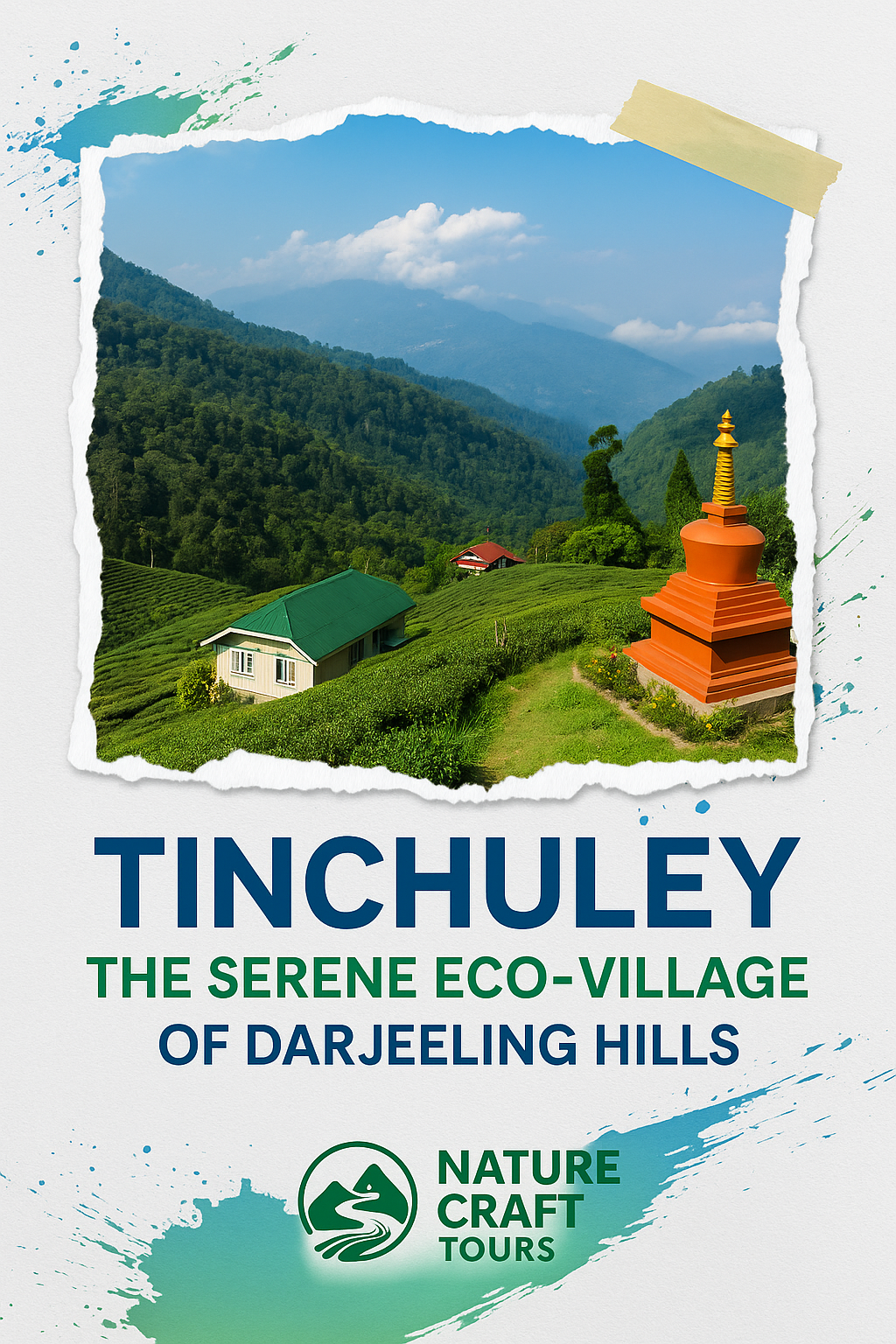
Tinchuley, a tranquil eco-village nestled in the Eastern Himalayas, stands as one of the most serene offbeat destinations near Darjeeling. Surrounded by rolling tea gardens, pine forests, organic farmland, orange orchards, and spectacular viewpoints overlooking the confluence of the Teesta and Rangeet rivers, Tinchuley offers an immersive escape into nature. Its name originates from the Nepali words “tin” (three) and “chuley” (ovens), referring to the three hilltops that surround the village like a natural tripod. Over the years, Tinchuley has evolved into an eco-friendly tourism model driven by sustainable farming, homestays, tea estate culture, and rural Himalayan life.
This detailed, research-based guide presents everything you need to plan a trip to Tinchuley—from important attractions to major distances, access routes, stay options, food culture, and the best time to visit. Written in a formal, descriptive tone, this guide is ideal for travellers, bloggers, researchers, and tourism planners looking to explore one of the most soothing corners of the Darjeeling Himalayas.
Understanding Tinchuley’s Natural & Cultural Identity
Tinchuley is neither a conventional tourist spot nor a commercial hill town. Instead, it embodies the soul of a small Himalayan settlement—a place where life flows at a gentle pace, guided by the rhythms of nature. The village sits at an altitude of roughly 5,500 feet and is surrounded by lush forests and terraces of organic agricultural land. Its residents, mostly engaged in farming and tea cultivation, follow a sustainable lifestyle influenced by traditional Nepali, Lepcha, and local Himalayan cultures.
The combination of orange orchards, wild forest paths, the fragrance of tea gardens, and sweeping mountain panoramas gives Tinchuley a charm unmatched by many well-known destinations in the region. The community’s commitment to eco-friendly tourism has helped preserve the purity of the environment while creating a peaceful space for visitors.
Important Places to See in Tinchuley
1. Tinchuley Viewpoint
The Tinchuley viewpoint remains one of the main attractions. From here, visitors can enjoy breathtaking views of the Teesta Valley and the distant Himalayan slopes. At sunrise, the sky transforms into a canvas of golden and purple hues, while the valley below is covered in a sheet of early morning mist.
2. Lover’s Meet Viewpoint
This viewpoint is a visual feast, offering a panoramic scene of the confluence of the Teesta and Rangeet rivers. The merging colors of the two rivers—one emerald green and the other crystal blue—create a dramatic contrast. The setting is an excellent location for photography and peaceful contemplation.
3. Orange Orchards
During winter months (November to January), Tinchuley’s orange orchards come alive with ripened fruits glowing like tiny suns across the landscape. These orchards are maintained by local farmers, and visitors can witness the cultivation process, pluck fresh fruits, and enjoy the fragrant atmosphere that envelopes the orchards.
4. Tinchuley Monastery
This small but spiritually rich monastery offers a serene atmosphere. It is surrounded by prayer flags fluttering in the wind and provides a beautiful vantage point over the valley. The soft chanting and the smell of incense add a peaceful ambiance to the visit.
5. Gumbadara Viewpoint and Caves
Located close to Tinchuley, the Gumbadara Caves are natural rock formations believed to have been used by monks in ancient times. The nearby viewpoint offers sweeping views of the Himalayas and the valleys below, making it a popular stop for trekkers and adventure seekers.
6. Takdah Orchid Centre
A short drive from Tinchuley leads to the famous Orchid Centre of Takdah, where travellers can explore numerous varieties of Himalayan orchids, seasonal flowers, and exotic plants. The greenhouses are a paradise for botanical enthusiasts.
7. Rungli Rangliot and Teesta Valley Tea Gardens
Some of Darjeeling’s finest tea estates surround Tinchuley. Visitors can enjoy guided walks, meet pluckers, and observe the intricate process of tea cultivation. The endless slopes of green tea bushes make this region one of the most photogenic landscapes in the Darjeeling hills.
8. Lamahatta Eco Park
Located just 10 km away, Lamahatta Eco Park is perfect for a half-day trip. The sacred pond, pine trails, prayer flags, and manicured gardens create a refreshing environment ideal for families and nature lovers.
Major Distances from Key Destinations
- Darjeeling to Tinchuley: Approx. 32 km (1.5 hours)
- Kalimpong to Tinchuley: Approx. 21 km (1 hour)
- Takdah to Tinchuley: Approx. 3–4 km
- Lamahatta to Tinchuley: Approx. 10–12 km
- Teesta Bazaar to Tinchuley: Approx. 16 km
- NJP Railway Station: Approx. 60 km
- Bagdogra Airport: Approx. 65–68 km
How to Reach Tinchuley
By Air
The nearest airport is Bagdogra (IXB). From Bagdogra, travellers can hire a private vehicle or shared cab to reach Tinchuley via the scenic routes of Siliguri, Teesta Bazaar, and Takdah.
By Rail
The nearest major railway station is New Jalpaiguri (NJP). The onward journey involves a picturesque drive along mountain roads through tea estates, forests, and river valleys.
By Road
Tinchuley is well-connected by road through:
- Peshok Road – Scenic forest route
- Takdah–Gumbadara Road – A beautiful hillside drive
- Kalimpong Link Road – Ideal if travelling from the Kalimpong side
Private vehicles are the most convenient, but shared taxis from Darjeeling, Siliguri, and Kalimpong are also available.
Staying Options in Tinchuley
Tinchuley is known for its warm hospitality and nature-friendly accommodations. Visitors can choose from:
- Homestays with stunning valley views
- Eco-lodges crafted with wood and bamboo
- Tea garden-facing cottages
- Mountain-view retreats
These properties often provide fresh organic meals prepared using locally sourced vegetables and herbs. The typical lodging experience includes wooden interiors, cozy Himalayan bedding, outdoor fire pit areas, and balconies overlooking the lush valleys.
Food & Local Experiences
Food in Tinchuley reflects the traditional mountain lifestyle. Most accommodations offer home-cooked meals with farm-fresh ingredients. Popular dishes include:
Local Food Highlights
- Organic rice and vegetable platters
- Steamed dumplings (momos)
- Local millet breads
- Fermented leafy greens
- Home-made pickles and chutneys
Experiences to Enjoy
- Tea garden walks and photography
- Orange orchard visits (seasonal)
- Birdwatching in the surrounding forests
- Village lifestyle tours
- Tea tasting experiences
- Silent nature walks through pine forests
Best Time to Visit Tinchuley
The weather in Tinchuley remains pleasant throughout most of the year, though each season offers a different experience:
- October to December: Clear views, crisp air, excellent for photography.
- January to February: Cold with misty mornings and quiet landscapes.
- March to April: Blooming season with flowers and greenery.
- May to June: Comfortable climate ideal for family vacations.
- July to September: Monsoon lovers can enjoy lush forests and mist-covered valleys.
- November to January: Best for orange orchard visits.
Suggested Itineraries
2-Day Tinchuley Itinerary
- Day 1: Arrival → Tinchuley Viewpoint → Orange Orchards → Monastery
- Day 2: Lover’s Meet → Takdah Orchid Centre → Tea Garden Walk
3-Day Tinchuley Itinerary
- Day 1: Tinchuley exploration + evening nature walk
- Day 2: Takdah heritage tour + tea estates
- Day 3: Lamahatta Eco Park + Gumbadara Viewpoint
Why Tinchuley is Ideal for Offbeat Travellers
Tinchuley is perfect for travellers who seek serenity, nature, and a deep cultural connection with the Himalayas. It offers a refreshing alternative to crowded tourist destinations, making it suitable for writers, photographers, bird lovers, honeymooners, families, and eco-tourism researchers.
Its sustainable tourism model, organic farming culture, community-driven hospitality, and pristine natural surroundings position Tinchuley as one of the most charming offbeat destinations in the Darjeeling region.