Charkhole
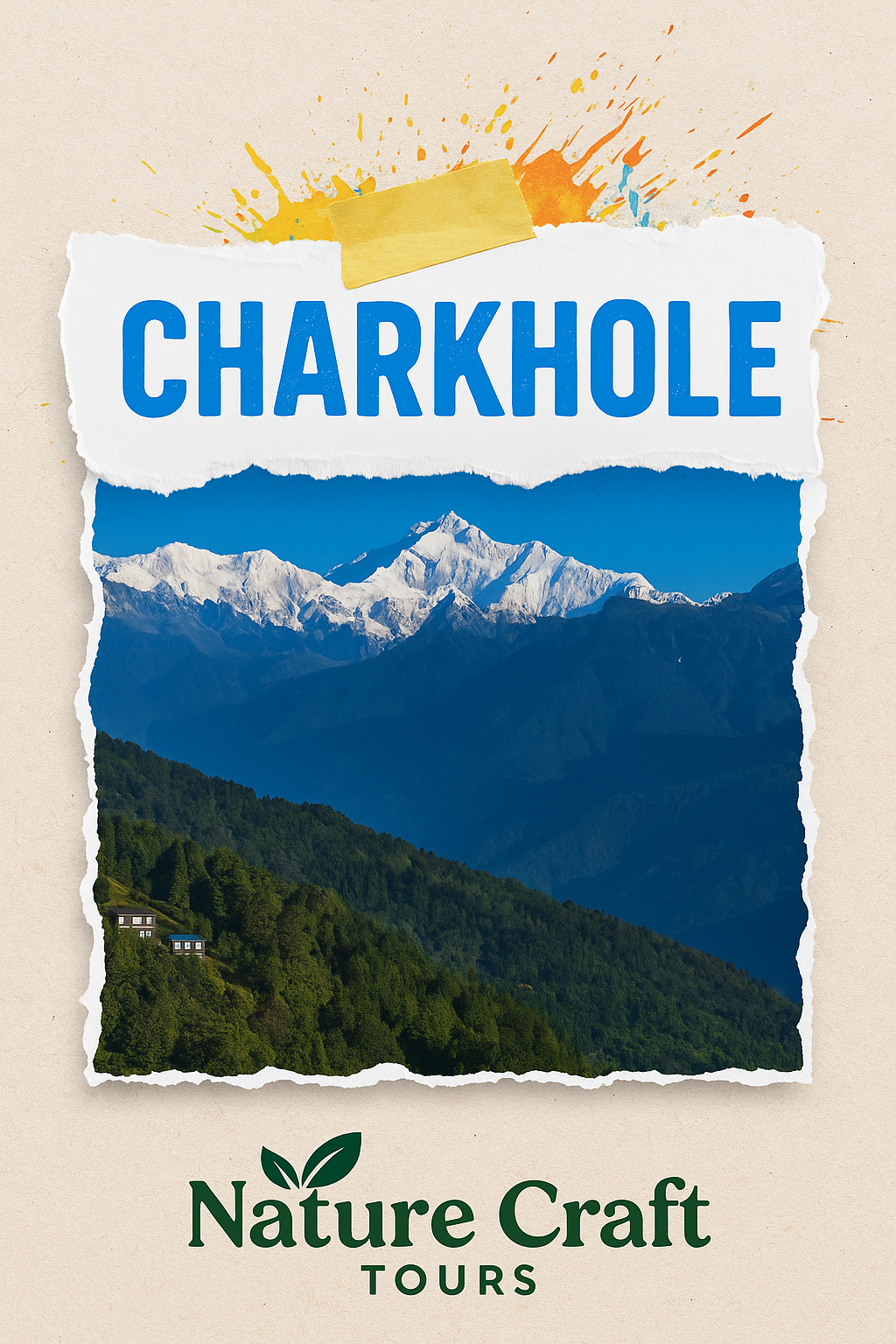
– The Hidden Green Balcony of the Eastern Himalayas
Charkhole, also spelled “Charkhol,” is a serene Himalayan village situated at an altitude of approximately 5,500 ft (1,676 metres), tucked deep within the lush forests of the Kalimpong district of West Bengal. Revered among offbeat travellers, photographers, and peace-seekers, this small settlement unfolds like a green balcony overlooking the mighty Kanchenjunga range. With towering pine forests, fluttering clouds, melodious mountain birds, and far-stretching panoramic views, Charkhole embodies the most enchanting attributes of Himalayan wilderness and rural beauty.
It is one of the few places in the region where travellers can enjoy a 180-degree uninterrupted view of the snow peaks, while being surrounded by oak, fir, and pine forests teeming with rich biodiversity. Far removed from the bustle of mainstream hill stations, Charkhole offers a quiet refuge where time slows down and nature reveals its most pristine colours.
Understanding the Soul of Charkhole
Charkhole is more than a picturesque village; it is a natural sanctuary where centuries-old forests thrive without human intrusion. Historically a small agricultural community, the region still maintains its rustic charm with scattered wooden houses, cultivated terraces, prayer flags fluttering gently, and pathways lined with wildflowers. The simplicity of rural Himalayan life blends effortlessly with dramatic landscapes to create a truly immersive travel experience.
Locals speak Nepali, Lepcha, and a mixture of regional dialects. Their hospitality is warm, humble, and genuine. Visitors often leave the village feeling deeply connected to the people and the profound silence of the mountains. The undisturbed environment, minimal pollution, and slow-paced lifestyle make Charkhole an ideal destination for mindfulness retreats, writing, nature photography, birdwatching, or simply revitalizing one’s spirit.
Major Attractions and Points of Interest in Charkhole
Charkhole is surrounded by scenic viewpoints, forest trails, and culturally significant landmarks. The following are the most prominent attractions:
1. Kanchenjunga Viewpoint
The highlight of Charkhole is its spectacular viewpoint offering an unobstructed and panoramic glimpse of Mt. Kanchenjunga and its sister peaks. On clear mornings, the snow range glows in soft golden hues during sunrise, creating a breathtaking canvas of Himalayan light. This viewpoint is ideal for photographers, artists, or anyone who seeks a quiet moment with nature’s grandeur. When clouds float below the peaks, the scenery becomes even more dramatic.
2. Forest Trails through Pine, Oak, and Fir
Charkhole is surrounded by dense forests rich with Himalayan flora. Walking trails weave through pine groves, brilliant green moss beds, wild orchids, ferns, and UNESCO-protected vegetation. The scent of wet earth, pine needles, and mountain breeze creates a refreshing and calming atmosphere. These trails are gentle enough for families but scenic enough to satisfy avid trekkers.
3. Birdwatching Hotspot
The region is a treasure trove for birdwatchers. With more than 60 species of Himalayan and migratory birds, this area promises thrilling sightings. Some commonly spotted birds include the Verditer Flycatcher, Blue Whistling Thrush, Scarlet Minivet, Himalayan Bulbul, Green-backed Tit, Rufous Sibia, and the rare Satyr Tragopan in surrounding forests. Early mornings are the most rewarding for birdwatchers.
4. Charkhole Monastery
A peaceful Buddhist monastery lies close to the village, offering a serene spiritual environment. Surrounded by forested hillsides, this monastery provides a calming retreat where the rhythmic sound of prayer wheels, chants, and gentle mountain winds uplift the senses. The monastery also stands as a cultural symbol, showcasing Buddhist traditions practiced in the region.
5. Loleygaon (Nearby Excursion)
Located around 13 km from Charkhole, Loleygaon is famous for its towering canopy walk made of hanging bridges within the dense forests. The view of the tall pine and oak trees from the bridge creates an unforgettable experience. Loleygaon also offers several viewpoints perfect for sunrise and sunset photography.
6. Changey Waterfall
Approximately 15 km from Charkhole lies one of the most beautiful waterfalls in the region. The Changey Waterfall crashes gracefully into a deep basin surrounded by dense forest. The journey to the waterfall includes a scenic drive followed by a short trek. Its refreshing ambiance makes it a must-visit for nature lovers.
7. Lava and Rishop
Both Lava and Rishop are easily accessible from Charkhole, making them excellent short-day trip destinations. Lava is known for its monastery, forest trails, and the entrance to Neora Valley National Park. Rishop, perched on a higher ridge, offers incredible views of snow peaks and is popular for its tranquil ambience.
Unique Experiences in Charkhole
Charkhole is not just about sightseeing; it offers immersive activities that allow visitors to connect deeply with Himalayan life and natural surroundings.
- Forest Meditation: The dense, quiet forests are ideal for meditation and deep breathing sessions.
- Village Walks: Explore terraced fields, wooden houses, and experience authentic mountain hospitality.
- Local Cuisine: Taste traditional Himalayan dishes prepared using organic ingredients.
- Bonfire Evenings: Enjoy storytelling sessions, stargazing, and warm fires in the cold mountain atmosphere.
- Photography Expeditions: Every frame—from sunrise colours to forest silhouettes—offers something extraordinary.
Distances from Major Locations
Here are the approximate distances and travel durations to Charkhole:
| Location | Distance | Approx. Travel Time |
|---|---|---|
| New Jalpaiguri (NJP) | 105 km | 4 – 4.5 hours |
| Bagdogra Airport | 110 km | 4 – 5 hours |
| Lava | 28 km | 1 hour 15 minutes |
| Rishop | 22 km | 1 hour |
| Loleygaon | 13 km | 45 minutes |
| Kalimpong Town | 32 km | 1.5 hours |
How to Reach Charkhole
By Air
Bagdogra Airport is the nearest air base. From the airport, travellers need to hire a private taxi or reserved car to reach Charkhole via Kalimpong or Lava. The scenic route takes visitors through river valleys, highland ridges, and lush forests.
By Train
New Jalpaiguri (NJP) is the nearest major railway station. The station connects to all major Indian cities. From NJP, reserved vehicles are easily available to Charkhole through Kalimpong or Gorubathan.
By Road
Private vehicles or shared jeeps are the most common mode of transport. The roads are generally well-maintained, though the final stretch approaching Charkhole passes through dense forest and narrow bends, adding to its charm. Travellers often choose routes via Kalimpong, Lava, or Loleygaon depending on weather and itinerary preferences.
Local Transport and Connectivity
Charkhole is a compact village and most local attractions can be reached on foot via forest trails. For nearby towns and viewpoints, travellers usually rely on homestay-arranged cars. Mobile networks may be weak, offering a perfect environment for digital detox.
Staying Options in Charkhole
Charkhole is known for its scenic homestays and eco-lodges rather than commercial hotels. These properties blend seamlessly with nature and reflect local architecture, primarily built with wood and eco-friendly materials.
Types of Accommodation
- Premium wooden cottages facing the Kanchenjunga range
- Forest-edge homestays surrounded by pine trees
- Budget-friendly mountain cottages for backpackers
- Family-friendly lodges with spacious rooms
- Eco-resorts promoting sustainability and organic living
Most accommodations include home-cooked meals, warm hospitality, cosy rooms, bonfire facilities, and guided village walks. The primary charm of staying in Charkhole lies not in luxury but in the authenticity of the mountain experience.
Local Cuisine in Charkhole
Charkhole’s food brings the flavours of Himalayan kitchens directly to visitors’ plates. Most homestays serve meals prepared with organic vegetables, fresh herbs, and locally sourced ingredients. Common dishes include:
- Rice, dal, and sautéed mountain greens
- Local chicken curry
- Home-made pickles like radish, bamboo shoot, and chilli
- Momo (steamed dumplings)
- Thukpa (traditional Tibetan noodle soup)
- Gundruk (fermented leafy greens)
The freshness of ingredients combined with the mountain climate enhances the culinary experience, making every meal both comforting and memorable.
Best Time to Visit Charkhole
Charkhole’s climate remains soothing throughout the year, though certain seasons provide unique experiences:
Summer (March to June)
Clear skies, mild temperatures, and blooming wildflowers make this season ideal for sightseeing and forest treks.
Monsoon (July to September)
Verdant landscapes flourish under monsoon showers. However, heavy rain may cause occasional roadblocks. This season is recommended for nature enthusiasts who enjoy misty atmospheres.
Autumn (October to November)
Perhaps the most popular season. Golden light, crisp air, and perfect visibility for Kanchenjunga views define these months.
Winter (December to February)
Cold but exhilarating weather. This is an excellent time for travellers who enjoy solitude, frosty mornings, and complete tranquility. Frost and light snowfall may be experienced in higher ridges.
Suggested 3-Day Itinerary for Charkhole
Day 1
- Arrival at NJP/Bagdogra
- Scenic drive to Charkhole
- Check-in and relaxation
- Evening nature walk inside pine forests
Day 2
- Early morning Kanchenjunga viewpoint visit
- Birdwatching trail
- Visit Lava and Changey Waterfall
- Evening bonfire at the homestay
Day 3
- Village exploration and photography
- Visit Loleygaon canopy walk
- Return journey to NJP/Bagdogra
Travel Tips for Charkhole Visitors
- Carry warm clothing throughout the year due to fluctuating temperatures.
- Wear trekking shoes for forest trails and uneven terrain.
- Respect local culture and maintain eco-friendly travel habits.
- Always book homestays in advance during peak seasons.
- Carry basic medicines as pharmacies are limited in the region.
- Avoid single-use plastic to support the region’s ecological balance.
Conclusion
Charkhole captures the very essence of Himalayan beauty—mighty snow ranges, dense forests, whispering winds, melodious bird calls, and a lifestyle rooted in simplicity. It stands as a sanctuary for the modern soul, offering peace, rejuvenation, and a profound connection with nature. The charm of this village lies not only in its majestic viewpoints but also in the subtle moments—watching clouds drift silently, hearing leaves rustle under the feet, or seeing prayer flags sway gracefully in the mountain breeze.
For travellers seeking an untouched Himalayan haven far from commercial tourism, Charkhole is truly a rare gem. Whether visited for a quiet family retreat, a romantic escape, a writer’s solitude, or a photographer’s expedition, this scenic enclave promises memories as lasting as the eternal mountains surrounding it.