Godak
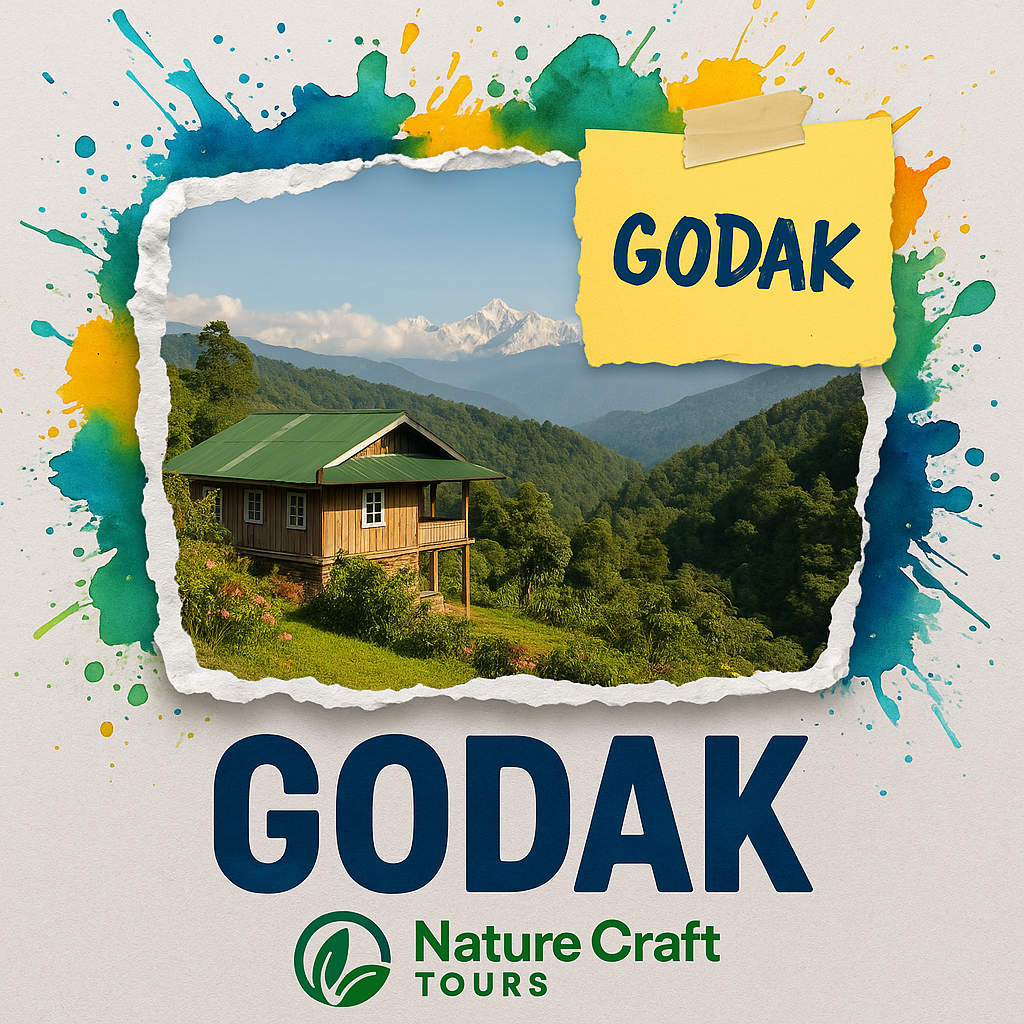
– A Tranquil Himalayan Border Village Wrapped in Forest Mystique and Indigenous Culture
Godak, a serene and culturally rich Himalayan border village, lies deep within the undisturbed valleys of the Kalimpong district in West Bengal. Surrounded by dense evergreen forests, cardamom plantations, terraced farms, and pristine river streams, Godak stands as one of the most untouched and spiritually intriguing destinations within the eastern Himalayan landscape. Located close to the Bhutan border, it offers a unique blend of natural beauty, ancient tribal heritage, and an atmosphere of complete tranquility.
Still far removed from mainstream tourism, Godak captivates travellers who seek quiet landscapes, forest trails, and an authentic glimpse into indigenous Himalayan life. The village’s mystical environment, the sacred “Beesh Ghar” (Poison House), and the unusual blend of Hindu, Buddhist, and tribal cultures make Godak one of the most fascinating offbeat travel spots in the entire Kalimpong–Dooars region. With its fresh mountain air, immersive greenery, and silent valleys, Godak invites travellers to slow down, breathe deeply, and experience nature in its purest form.
Understanding the Essence and History of Godak
Godak is home to communities whose roots trace back centuries, particularly the Lepchas, one of the oldest tribes of the Eastern Himalayas. The village’s cultural structure is deeply influenced by tribal mythology, animistic beliefs, and spiritual rituals that have been passed down generations. These traditions remain intensely preserved in Godak, thanks to its remote location and minimal modern distractions.
Geographically, Godak sits close to the Indo-Bhutan border, which gives the region a unique cross-cultural flavour. The mountain air, forest vegetation, and terraced agricultural fields create an atmosphere reminiscent of both Indian hill hamlets and Bhutanese countryside. The combination of tribal heritage and natural wilderness makes Godak a rare destination for cultural researchers, nature lovers, and travellers looking for unexplored Himalayan landscapes.
Major Attractions and Important Places to See in Godak
Despite being a small village, Godak is rich in natural, cultural, and spiritual landmarks. Each site carries its own distinctive charm and contributes to the village’s mystical appeal.
1. The Sacred Beesh Ghar (Poison House)
The most unique and culturally significant attraction in Godak is the mysterious Beesh Ghar, also known as the “Poison House.” It is believed to be a sacred site where water flowing beneath the structure is naturally medicated with herbs from the surrounding forests. Local traditions state that this water holds healing properties.
The house is built entirely of wood and bamboo. It stands upon wooden stilts under which the water flows. Visitors are often captivated by the ancient architecture, the intriguing local beliefs surrounding the site, and the deep forest setting that gives the place an almost mythical aura.
2. Cardamom Plantations
Godak is known for its expansive cardamom plantations. The cool climate and fertile soil create ideal conditions for cultivating high-quality cardamom. Travellers often walk through these plantations to observe traditional Himalayan farming techniques. The scent of fresh cardamom fills the forest air, creating an aromatic and soothing environment.
3. Forest Trails and Nature Walks
The village is surrounded by dense evergreen forests filled with moss-covered stones, bamboo groves, orchids, ferns, and rich birdlife. Several trails wind through these forests, offering peaceful walks for travellers who enjoy solitude and nature immersion. The forest trails around Godak are untouched, making them a perfect escape from crowded tourist circuits.
4. Todey-Tangta Region
Just beyond Godak lies the Todey–Tangta region, known for its scenic beauty, remote tribal culture, and expansive cardamom farming. These villages are more isolated and offer deeper exploration opportunities for travellers interested in ethnographic cultures and untouched Himalayan life.
5. Jaldhaka River Valley
A short journey from Godak leads to the shimmering Jaldhaka River Valley. With emerald waters, rocky riverbeds, and forested slopes, this valley presents breathtaking scenery. Travellers often relax on the riverbanks, take photographs, or enjoy the soothing sounds of the mountain river.
6. Paren
Located close to Godak, Paren is another enchanting forest village known for its wooden cottages and lush green surroundings. The calm pine forests, small bridges, and sweeping Himalayan views make Paren an excellent secondary destination while visiting Godak.
7. Jhalong and Bindu
Jhalong and Bindu, famous for their river valleys, birdlife, and Indo-Bhutan border viewpoints, lie close to Godak. These destinations enhance the overall travel experience and are often included in the Godak sightseeing circuit.
Unique Experiences in Godak
Travel to Godak is not merely sightseeing—it is a cultural and ecological immersion. Here are the top experiences that travellers enjoy:
- Forest Meditation: The silence of the evergreen forests creates the perfect environment for meditation and relaxation.
- Nature Photography: Moss-covered stones, ancient tribal houses, deep forests, and mountain streams offer compelling photo compositions.
- Birdwatching: Species such as Himalayan Bulbul, Scarlet Minivet, Oriental Turtle Dove, and Rufous Treepie can be spotted.
- Village Interactions: Learning about Lepcha traditions, agricultural practices, and rituals enriches the cultural understanding of visitors.
- Exploring Cardamom Farms: These plantations provide a serene environment with fresh aromas and vibrant greenery.
- Spiritual Visits: Observing local rituals at Beesh Ghar offers deep insight into the village’s ancient beliefs.
Distances and Travel Times from Major Locations
Below are the approximate distances from Godak to nearby important places:
| Location | Distance from Godak | Approx. Travel Time |
|---|---|---|
| New Jalpaiguri (NJP) | 110 km | 4 – 4.5 hours |
| Bagdogra Airport | 115 km | 4.5 hours |
| Jhalong | 12 km | 30 minutes |
| Bindu | 18 km | 45 minutes |
| Paren | 20 km | 50 minutes |
| Kalimpong | 65 km | 2.5 hours |
| Todey–Tangta | 25 km | 1 – 1.5 hours |
How to Reach Godak
By Air
The nearest airport to Godak is Bagdogra. After landing, travellers can hire reserved vehicles to reach Godak via Malbazar, Chalsa, Jhalong, and Paren. The journey is scenic and passes through forests, tea gardens, and mountain roads. The drive takes approximately 4.5 hours.
By Train
New Jalpaiguri (NJP) is the closest major railway station. From NJP, private cabs or shared vehicles can be arranged to reach Godak. Travellers often enjoy the route due to its diversity—ranging from the plains of Siliguri to the lush greenery of the Dooars and finally the forested mountains.
By Road
Godak is accessible via motorable mountain roads. The most commonly preferred route is:
NJP → Sevoke → Malbazar → Chalsa → Jhalong → Godak
Another alternative route is:
Kalimpong → Algarah → Pedong → Paren → Godak
This second route is particularly scenic for travellers coming from Kalimpong or Pedong.
Local Transportation
Most travellers explore Godak on foot due to its compact size and forest surroundings. Local homestays arrange small cars for sightseeing to nearby destinations like Todey-Tangta, Jhalong, Bindu, Paren, and cardamom plantations.
Accommodation Options in Godak
Godak primarily offers homestays and eco-lodges run by local families. These wooden and bamboo structures blend harmoniously with the natural environment and offer warm hospitality, traditional meals, and comfortable lodging.
Types of Properties Available
- Wooden homestays overlooking forests
- Eco-lodges surrounded by cardamom farms
- Budget cottages for offbeat travellers
- Family-run village stays
- Forest-view premium rooms in select homestays
Most stays offer home-cooked meals, organic vegetables, bonfire arrangements, village walks, and guided forest tours.
Local Cuisine in Godak
The cuisine of Godak reflects the culinary traditions of Himalayan tribal communities. Meals are prepared using fresh produce from nearby farms and forests.
- Steamed rice and lentils
- Local chicken curry
- Momos and thukpa
- Pickles made using bamboo shoots and radish
- Steamed millet preparations
- Fried organic vegetables
- Wild herbs used in traditional curing soups
The freshness and simplicity of the meals make the dining experience healthy and memorable.
Best Time to Visit Godak
Godak remains pleasant throughout the year, but different seasons offer different atmospheres.
Summer (March to June)
Cool, refreshing climate with excellent visibility for scenic walks and village exploration.
Monsoon (July to September)
The village transforms into lush greenery with dramatic cloud formations. Forests appear magical but travellers should be cautious of slippery trails.
Autumn (October to November)
Clear skies, pleasant temperatures, and vibrant post-monsoon landscapes make this the best season for photography.
Winter (December to February)
Cool weather, orange orchards, misty mornings, and the scent of fresh cardamom make winter a charming season to visit.
Suggested 3-Day Itinerary for Godak
Day 1
- Arrival from NJP/Bagdogra to Godak
- Village walk and cardamom plantation tour
- Visit the sacred Beesh Ghar
Day 2
- Visit Paren forest village
- Explore Jhalong Hydel Project
- Visit Bindu Dam and Indo-Bhutan border
Day 3
- Visit Todey-Tangta
- Return journey to NJP/Bagdogra through the scenic Dooars region
Travel Tips for Visiting Godak
- Carry warm clothes even in summer due to unpredictable mountain weather.
- Wear trekking-friendly shoes for forest pathways.
- Carry essential medicines and cash since ATMs are far away.
- Be respectful of local customs and tribal traditions.
- Avoid plastic waste and support eco-friendly tourism.
- Pre-book homestays during peak seasons.
Conclusion
Godak stands as one of the most enchanting and culturally rich destinations in the Eastern Himalayas. With its deep forests, mystical sacred sites, tranquil rivers, and warm indigenous communities, this village offers a rare opportunity to experience nature and culture in their most authentic forms. Perfect for eco-tourists, cultural researchers, families, photographers, and spiritual travellers, Godak promises an unforgettable journey through ancient traditions, breathtaking landscapes, and the peaceful rhythms of Himalayan village life.