Offbeat Tajpur Villages
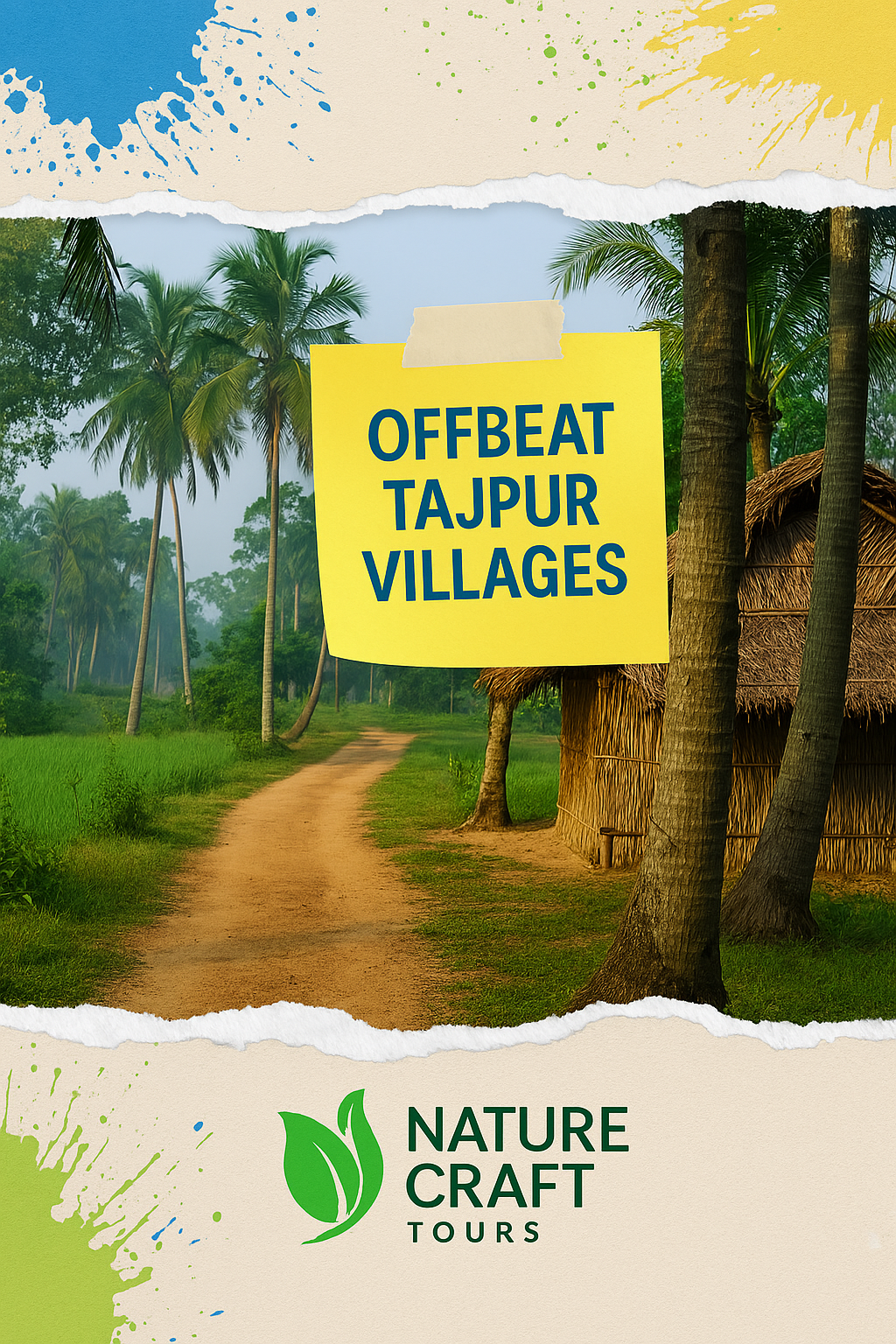
– A Serene Journey Through Bengal’s Hidden Coastal Heartland
The coastline of East Midnapore is renowned for its famous beaches like Digha, Mandarmani, and Shankarpur. Yet, tucked quietly between these bustling destinations lies an entirely different world – the offbeat Tajpur villages. These rural enclaves form a tranquil, scenic, and culturally rich stretch around Tajpur, revealing a far more authentic side of Bengal’s coast. From red crab habitats and moon-shaped beaches to sprawling casuarina forests, fishing hamlets, and idyllic farmlands, Tajpur’s offbeat villages offer a rare blend of nature, silence, and earthy rural charm.
Over the last decade, Tajpur has become popular among travellers who prefer peaceful beaches over crowded seashores. However, beyond the main Tajpur beach lies a cluster of unique offbeat villages like Bodra, Kadua, Jaldha, Kalindi, Balisai, and a series of fisherman settlements that remain unexplored yet incredibly enchanting. These villages carry an old-world grace—rustling palm groves, ponds full of water lilies, quiet sandy lanes, local fishermen repairing boats, and the continuous sound of sea wind weaving through dense jhau forests.
Geographical Overview of Tajpur and Its Offbeat Villages
Tajpur lies between Mandarmani and Shankarpur, around 170 km from Kolkata. While the main Tajpur beach is well-known for its crescent-shaped shoreline, the interior villages form a diverse ecological and cultural landscape. These villages stretch across sandy belts, casuarina forests, small dune systems, shrimp farms, agricultural plots, and coastal creeks.
The offbeat villages surrounding Tajpur include:
- Bodra Village: A serene settlement with dense casuarina patches leading to an isolated beach extension.
- Kadua Village: Known for its crab habitats and wide open sandy fields.
- Balisai: One of the most populated villages offering rural markets and local food options.
- Jaldha: A fisherman’s village with scenic views of coastal ponds, boats, and net-making activities.
- Kalindi: A tranquil riverside village near the Kalindi estuary.
Together, these settlements create a mosaic of natural and rural attractions rarely experienced by mainstream travellers.
History and Cultural Background
The Tajpur region historically belonged to fishing communities and agricultural families. The villages evolved around coastal forests and ponds, supporting livelihoods based on fishing, betel leaf farming, paddy cultivation, and shrimp culture. Cultural traditions such as boat festivals, coastal folk songs, and rural celebrations still thrive in these villages.
With increasing tourism interest, a few eco-friendly homestays and village-retreat properties have emerged, yet the core identity of the region remains untouched. Traditional mud-walled houses, coconut groves, hand-dug ponds, and coastal shrines continue to define the cultural heritage of Tajpur’s villages.
Major Distances and Travel Mapping
- Kolkata to Tajpur: 165–170 km
- Digha to Tajpur: 18–20 km
- Shankarpur to Tajpur: 10–12 km
- Mandarmani to Tajpur: 15–18 km
- Balisai to Tajpur Beach: 2–3 km
- Bodra Village to Tajpur Beach: 2 km
- Jaldha Village to Tajpur Beach: 3–5 km, depending on route
The network of narrow rural roads, casuarina forest tracks, and sandy pathways create an immersive travel experience, especially for those who enjoy cycling, walking, or photography.
Places to See in Offbeat Tajpur Villages
The Crescent Beach of Tajpur
The main Tajpur beach is known for its unique moon-shaped shoreline, red crabs, silent surroundings, and jhau forests. Early morning views offer a blend of soft light, calm waves, and the sight of fishing boats returning from the sea.
Bodra Forest Trail
One of the most scenic offbeat experiences is a walk through the Bodra casuarina forest. The sandy forest floor covered with dry pine needles creates a carpet-like texture, while sunlight streams through the trees, producing dramatic shadows. The trail eventually opens up to a lesser-known beach extension where you may find complete solitude.
Kadua Sandscape and Crab Habitat
Kadua village features a unique landscape of open sandy fields leading towards the coastline. During low tide, the entire patch resembles a miniature desert with small dunes and crab holes. Thousands of red crabs can be seen scuttling across the sand, offering a mesmerising sight for photographers.
Jaldha Fishing Hamlet
Jaldha village offers an insight into the coastal lifestyle of Bengal. Here, fishermen mend nets, paint boats, and prepare for daily voyages. The surrounding ponds reflect the sky in beautiful hues during sunrise and sunset. Jaldha is also a great place to observe traditional wooden boat craftsmanship.
Kalindi Estuary
The Kalindi River meets the Bay of Bengal near the southern fringes of the Tajpur region. The estuary area is scenic and offers opportunities to explore mudflats, bird habitats, mangrove seedlings, and fishing activities. The riverbanks remain one of the most peaceful areas in the entire coastal belt.
Village Ponds and Rural Landscapes
The villages around Tajpur are dotted with lotus-filled ponds, coconut plantations, and paddy fields. These locations offer excellent photography opportunities and a glimpse into traditional rural life. Early mornings often bring mist-covered ponds with fishermen casting nets — a beautiful sight to behold.
Casuarina Watchtower Viewpoints
Several elevated mounds and makeshift viewpoints exist within the jhau forests. These provide panoramic views of the coastline, forest cover, and rural settlements. The soundscape here is serene — a mix of sea wind, rustling trees, and distant boat engines.
How to Reach Offbeat Tajpur Villages
By Road
The road route from Kolkata to Tajpur is smooth and scenic. Travellers usually take the NH16 highway until Kolaghat, and from there follow the route through Nandakumar and Contai. The last 2–3 km stretch involves narrow village roads leading to the offbeat areas near the beach.
Common route:
Kolkata → Kolaghat → Nandakumar → Contai (Kanthi) → Balisai → Tajpur
From Balisai, small lanes branch into the interior villages.
By Train
Take a train from Howrah to Digha or Contai. From Contai, hire local vehicles to reach Tajpur villages. From Digha, Tajpur is approximately 20 km away and can be reached by car or auto-rickshaw.
By Bus
Direct buses from Esplanade to Digha and Contai are very frequent. From Contai, local transport options take travellers to Balisai or Tajpur village road.
Staying Options in Offbeat Tajpur Villages
The Tajpur region offers varied accommodations ranging from beach resorts to eco-cottages and rural homestays. Contact numbers have not been mentioned, following your requirement.
Eco-Cottages in Forest Zones
These properties are designed with natural aesthetics—wooden interiors, bamboo décor, open verandahs, and garden spaces. They are ideal for travellers who want to live close to the casuarina forest and experience total peace.
Beach Resorts Near Tajpur Shoreline
Located close to the main Tajpur beach, these resorts offer sea access, landscaped gardens, lawns, and open-air seating areas. They provide comfort while still being near rural areas.
Village Homestays
Homestays located inside offbeat villages like Bodra and Jaldha offer a rustic experience – mud houses, home-cooked meals, ponds, farms, and simple yet cosy rooms. These are excellent options for travellers who want an authentic cultural immersion.
Budget Hotels Near Balisai
Several budget accommodations near Balisai cater to travellers seeking affordability and convenience while exploring Tajpur’s offbeat side.
Local Cuisine and Food Culture
Tajpur’s food culture revolves around fresh seafood, rice, and Bengali traditional dishes. Common delicacies include prawns, pomfret, bhetki, crabs, and shrimp prepared in mustard and coconut-based gravies. Many homestays offer meals cooked with farm-grown vegetables and local spices.
Vegetarian travellers will also find plenty of options including dal, posto dishes, seasonal vegetables, and rice-based meals.
Best Time to Visit Offbeat Tajpur Villages
The best time to explore Tajpur’s offbeat villages is **November to February**, when the weather is cool and ideal for beach walks, forest trails, and cycling tours. The skies are clear, humidity is low, and the sea remains gentle.
Summer (March to June): Suitable for morning and evening activities, though afternoons can be warm.
Monsoon (July to September): The villages turn lush, the ponds overflow, and forests become vibrant—but the beaches may be too windy for long walks.
Things to Do in Offbeat Tajpur Villages
- Walk or cycle through village lanes and forest trails.
- Explore red crab colonies during low tide.
- Visit fishing hamlets and observe net-making activities.
- Relax on less crowded beach extensions.
- Enjoy sunrise photography along ponds and estuaries.
- Indulge in fresh seafood prepared in local style.
- Watch casuarina forests sway in coastal winds.
- Visit nearby attractions like Shankarpur, Mandarmani, and Digha.
Travel Tips for Offbeat Tajpur Exploration
Carry Essentials
Since the villages are peaceful and less commercialised, travellers should carry essential medicines, sunscreen, and comfortable walking shoes.
Respect Local Culture
The communities in Tajpur villages are humble and traditional. Seek permission before taking close-up photographs of fishermen or villagers.
Avoid Plastic Waste
Help preserve the fragile coastal ecosystem by avoiding plastic bags, bottles, and littering in forests or beaches.
Conclusion
The offbeat Tajpur villages offer a side of coastal Bengal that remains pure, untouched, and profoundly peaceful. From silent forest trails and crab-filled sandy stretches to fishing hamlets and river estuaries, the region is a treasure trove for travellers who prefer nature over noise. Whether you seek meditation, photography, village life, or quiet seaside charm, Tajpur’s offbeat villages promise a retreat that nourishes the soul and refreshes the senses.