Itachuna Rajbari
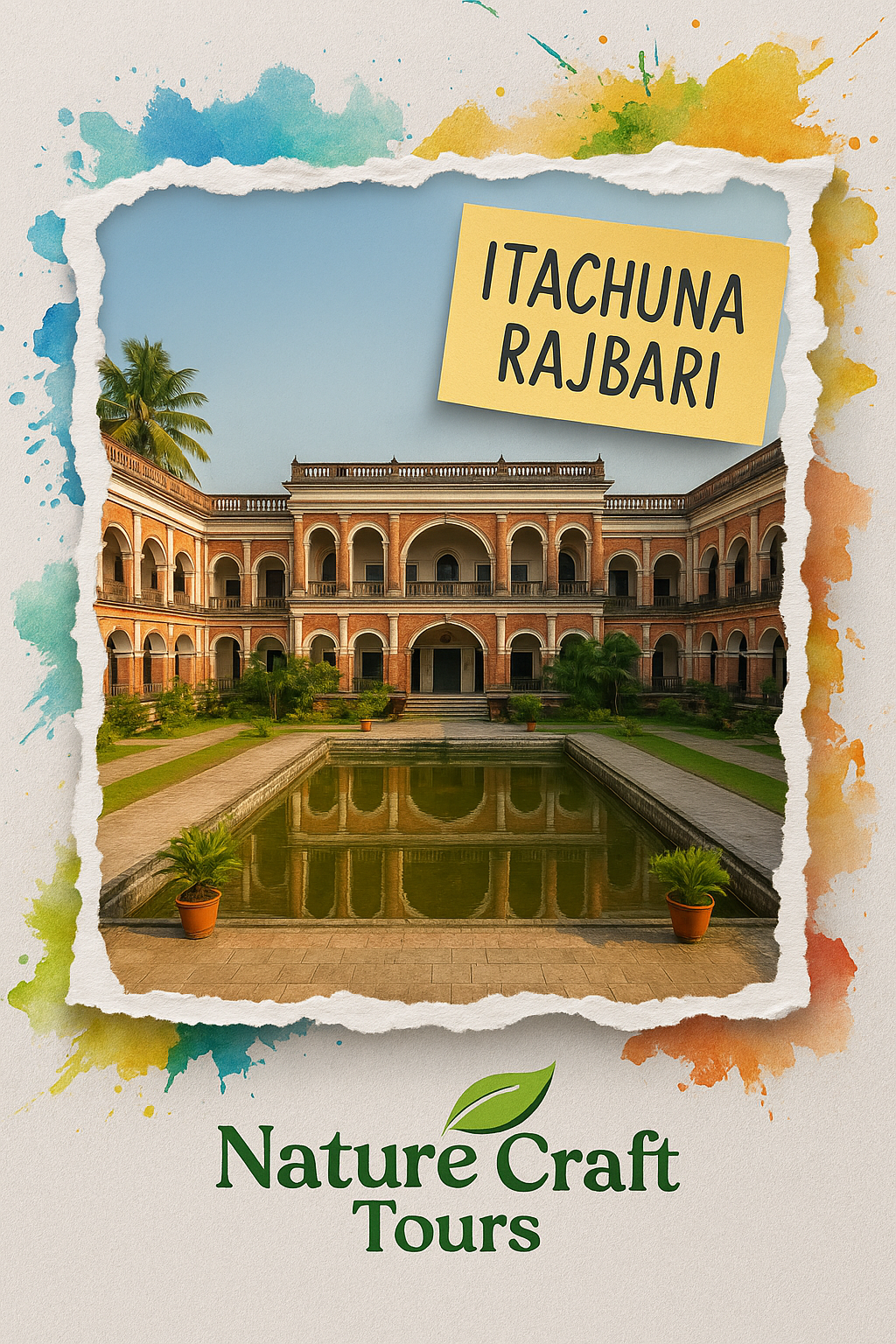
– A Timeless Royal Residence Preserving Bengal’s Aristocratic Heritage
Itachuna Rajbari, located in the Hooghly district of West Bengal, is one of the finest examples of Bengal’s zamindari heritage preserved with remarkable architectural depth. Steeped in history, wrapped in royal ambience, and known for its enchanting courtyards, arched verandahs, and hidden chambers, this 18th-century mansion offers visitors a surreal journey into Bengal’s aristocratic past. Originally built by the Kundu family (also known as the “Bargee Danga” Rajbari), the structure stands today as a heritage homestay and cultural destination—welcoming travellers, history lovers, photographers, and film crews.
Set amidst rural landscapes, serene ponds, towering gateways, and traditional village surroundings, Itachuna Rajbari is more than a building—it is an experience. Its intricate corridors, terracotta designs, antique furniture, family temples, music rooms, and sprawling courtyards represent a glorious chapter of zamindari rule. This detailed guide explores every dimension of the Rajbari: history, architecture, important points to see, distances, how to reach, staying options, environment, cultural significance, and the best time to visit.
Historical Background of Itachuna Rajbari
The Itachuna Rajbari was built in 1766 by the Kundu family—who originally came from the Maratha region and rose to prominence during the era of Maratha attacks in Bengal. Locally termed “Bargee Raj,” these zamindars controlled vast estates across Hooghly district. To establish their cultural and administrative presence, they built the grand Itachuna Rajbari, blending Bengali, Rajasthani, and colonial architectural elements.
Over the centuries, the Rajbari underwent several phases of construction, expansion, and restoration. The family maintained their political and economic influence until the abolition of the Zamindari system in the mid-20th century. Today, the descendants of the original family operate this majestic property as a heritage destination, keeping alive its royal traditions, rituals, and architectural grandeur.
Major Distances and Location Advantages
- Kolkata to Itachuna Rajbari: 65–70 km
- Bandel to Itachuna Rajbari: 20–22 km
- Konnagar to Rajbari: 30–35 km
- Chinsurah to Rajbari: 24–26 km
- Arambagh to Rajbari: 30–32 km
- Khanyan Railway Station to Itachuna: 3–4 km
The Rajbari lies in a peaceful village environment near the Khanyan railway station, making it extremely accessible for visitors from Kolkata and suburban areas.
Architectural Style and Structural Design
Itachuna Rajbari showcases classic Bengali rajbari architecture mixed with influences from Rajasthani and European construction principles. Built predominantly in red bricks (from which the name “ITA-chuna” may have originated), the mansion contains multiple courtyards, arched passageways, intricately designed pillars, elegant windows, and ornamental balconies.
The structure is arranged around central aangan-type spaces, with residential sections, prayer halls, administrative chambers, and servant quarters positioned symmetrically. Its layout preserves the cultural aesthetics of Bengal’s zamindari households—emphasizing privacy, grandeur, and ceremonial spaces.
Major Attractions and Important Points to Explore in Itachuna Rajbari
The Grand Entrance Gateway (Singha Dwara)
The imposing entryway, marked by lion motifs and brick architecture, leads visitors into the royal compound. The gateway instantly transports travellers into an old-world era, signalling the grandeur within the Rajbari premises.
The Giant Courtyards (Boro Angan)
The heart of the Rajbari lies in its courtyards. These open spaces historically served as ritual venues, community gathering areas, and locations for festivals such as Durga Puja. Today, they offer majestic views of the surrounding architecture and allow visitors to experience the ambience that once hosted royal ceremonies.
Traditional Thakur Dalan
The Thakur Dalan is an iconic part of any Bengali Rajbari. At Itachuna, this area is beautifully adorned with pillars, arches, and terracotta accents. It once served as the devotional centre of the zamindar family, used for Puja rituals, cultural evenings, and musical gatherings.
Antar Mahal (Inner Chambers)
The Antar Mahal was traditionally reserved for the women’s quarters and private family spaces. Its ornate interiors, antique furniture, carved wooden doors, and old artefacts narrate the domestic history of the Rajbari. The passages here are narrow, mysterious, and deeply atmospheric.
Vintage Rooms and Heritage Suites
The Rajbari’s rooms are preserved with authentic décor—wooden four-poster beds, antique mirrors, hand-polished furniture, royal drapes, and traditional Bengali artwork. These chambers were once occupied by members of the zamindar family, and now some are converted into heritage stay options.
Terracotta Temples and Family Shrines
The Rajbari complex hosts several small shrines featuring terracotta art, traditional clay idols, and old ceremonial structures. These temples highlight the family’s spiritual lineage and artistic sense.
The Old Rang Mahal
Historically used for festivals and entertainment, the Rang Mahal is one of the most vibrant architectural sections of the Rajbari. Although partially restored, it still carries echoes of past celebrations, music, and gatherings.
The Open Gardens and Ponds
The Rajbari is surrounded by lush greenery, lotus-filled ponds, and open natural landscapes. These areas served as both aesthetic and functional parts of zamindari households, often being used for rituals, fishing, and daily household activities.
Film Shooting Spots
Itachuna Rajbari has increasingly gained popularity among film directors and production houses. The mansion served as a shooting location for Bengali and Bollywood films, television serials, and documentaries. Its timeless backdrop adds cinematic charm to every frame.
How to Reach Itachuna Rajbari
By Road from Kolkata
The journey from Kolkata to Itachuna takes approximately 2 to 2.5 hours. Travellers typically follow the Delhi Road (State Highway 13) or the old Grand Trunk Road, both offering smooth connectivity. Upon reaching Khanyan, a short detour leads to the Rajbari.
Common Route:
Kolkata → Bally → Uttarpara → Konnagar → Serampore → Chinsurah → Khanyan → Itachuna Rajbari
By Train
The nearest station is Khanyan, located just a few kilometres from the Rajbari. Frequent local and express trains operate from Howrah to Khanyan. From the station, travellers can hire local vehicles to reach the palace.
By Bus
Buses from Kolkata to Chinsurah, Pandua, and Burdwan pass near the Rajbari region. From major junctions, one can take local transport to Itachuna.
Staying Options in Itachuna Rajbari
Itachuna Rajbari operates as a heritage stay, offering a royal living experience. While following your instructions, no contact numbers or pricing details are included.
Heritage Suites
The restored suites within the Rajbari offer luxurious stays retaining antique interiors, four-poster beds, vintage lighting, and handcrafted décor. These rooms are ideal for travellers seeking an immersive royal experience.
Royal Family Rooms
These rooms preserve the essence of zamindari living with minimal modern interference. They feature antique furniture, classic wooden ceilings, and ornate balconies overlooking courtyards.
Courtyard-Facing Rooms
Rooms facing the central courtyards offer an atmospheric stay, providing visitors with the daily rhythms of Rajbari life—morning prayers, cultural performances, and serene architectural views.
Village Homestays Nearby
A few rural homestays have emerged around the Itachuna region, offering simple stays and home-cooked food for budget travellers while keeping proximity to the Rajbari.
Food and Dining Experience
The dining experience at Itachuna Rajbari reflects Bengal’s aristocratic taste. Meals are traditionally served either in the courtyard or designated dining halls. The cuisine includes:
- Traditional Bengali thalis
- Local fish preparations
- Pure vegetarian meals cooked in authentic homestyle methods
- Seasonal delicacies prepared with local produce
The food is simple yet elegant, showcasing Bengal’s culinary richness.
Best Time to Visit Itachuna Rajbari
The most favourable time to visit is during the winter months—November to February. The weather is cool and ideal for exploring the Rajbari, outdoor photography, cultural events, and rural walks.
Summer: Warm but manageable indoors due to high-ceiling architecture.
Monsoon: The Rajbari becomes exceedingly atmospheric with rain-washed brick walls and misty gardens.
Activities and Experiences for Visitors
- Explore the historic Thakur Dalan and courtyards
- Enjoy cultural performances (Baul songs, folk music)
- Participate in Rajbari rituals and evening aarti
- Walk through the surrounding rural landscape
- Experience traditional Bengali hospitality
- Photography of heritage architecture
- Observe antique artefacts and relics
- Relax in garden areas and pondsides
Travel Tips for Itachuna Rajbari
Respect Heritage Spaces
Visitors should maintain decorum while exploring fragile, antique areas of the Rajbari. Some areas may be restricted for preservation purposes.
Photography Guidelines
Photography is encouraged but should be done with sensitivity—avoiding flash on antique objects and respecting private sections of the property.
Carry Essentials
If visiting during summer, carry light cotton wear, hats, and water. Winters may require shawls or light sweaters during the evening.
Conclusion
Itachuna Rajbari is not just a heritage monument; it is a living testimony to Bengal’s aristocratic past. Its sprawling courtyards, towering gateways, ancient shrines, terracotta artwork, and timeless ambience weave together a cultural story that resonates with history lovers and travellers alike. Whether you wish to spend a weekend in royal luxury, explore the intricate architecture, or simply soak in the serenity of rural Bengal, Itachuna Rajbari offers an unforgettable experience—preserved beautifully for generations to cherish.