Chilika Lake
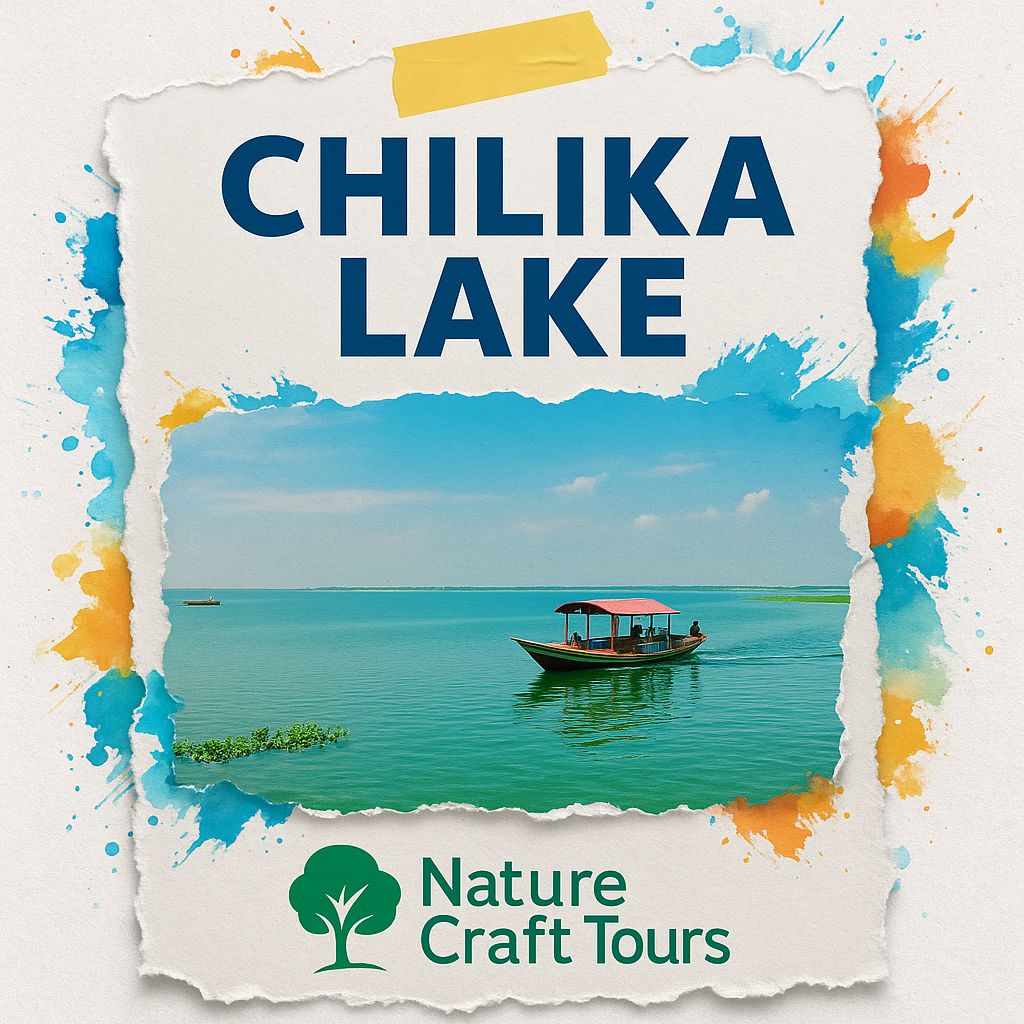
– Asia’s Enchanted Brackish Lagoon of Birds, Dolphins and Islands
Chilika Lake, spread across the districts of Puri, Khordha and Ganjam in coastal Odisha, is Asia’s largest brackish water lagoon and one of the most captivating wetland ecosystems in the world. Cradled between the gentle waves of the Bay of Bengal and the undulating Eastern Ghats, this vast, shimmering water body stretches over more than a thousand square kilometres and shelters a fragile yet dazzling mosaic of islands, reeds, mudflats and channels.
Recognised as a Ramsar Wetland of International Importance, Chilika is celebrated for its extraordinary birdlife, rich fish diversity, unique hydrology and the fascinating coexistence of freshwater and marine influences. It is also a deeply cultural space—home to ancient shrines, fishing communities, folklore, and age-old boat routes that still carry the rhythm of traditional life. For travellers, the lake offers a rare blend of wildlife viewing, island-hopping, village encounters and serene sunrises that slowly unveil themselves over a silver-blue horizon.
Geographical and Ecological Significance of Chilika Lake
Chilika Lake lies at the mouth of the Daya River, where the riverine waters meet the salty tides of the Bay of Bengal. This meeting creates a brackish environment—neither completely fresh nor entirely marine—resulting in a remarkably productive ecosystem. Seasonal variations in salinity and water spread shape distinct ecological zones within the lake, from almost freshwater stretches in the northern sector to more saline areas near the outer channel that opens into the sea.
The lagoon’s area fluctuates between roughly 900 and over 1,100 square kilometres depending on the monsoon, making it one of the largest coastal lagoons on earth. Within this vast sheet of water lie several islands, including Nalabana, Kalijai, Breakfast Island, Birds Island and Parikud, each contributing its own landscape, culture and wildlife. The wetland supports hundreds of species of plants and animals: seagrasses, mangrove associates, aquatic weeds, crustaceans, molluscs, reptiles, and an impressive assemblage of resident and migratory birds.
Chilika is also a crucial livelihood resource. Thousands of local families depend on the lake for fishing, prawn and crab collection, boat services and small-scale tourism. When visiting, it is important to view the lake not just as a scenic attraction, but as a living, working landscape where conservation and community well-being are closely intertwined.
Major Tourism Zones and Important Points to See
Because of its large size, Chilika Lake is accessed from several different gateways. Each sector offers a distinct experience, and understanding these zones helps in designing a meaningful itinerary.
Satapada – Irrawaddy Dolphins and Sea Mouth
Satapada, on the eastern side of the lake near the new mouth to the Bay of Bengal, is the most popular entry point for casual visitors from Puri. Here the lagoon stretches wide and deep, creating an ideal habitat for the graceful yet endangered Irrawaddy dolphins. Boat trips from Satapada usually take visitors through broad channels towards the sea mouth, where the lake’s waters mingle with the ocean in a constantly shifting mosaic of sandbars and currents.
Highlights at Satapada include:
- Dolphin Watching: Early-morning or late-afternoon boat rides offer higher chances of sighting Irrawaddy dolphins surfacing in small pods. Their rounded foreheads and gentle movements contrast charmingly with the restless water.
- Sea Mouth and Sandbar: The channel where the lagoon meets the Bay of Bengal is dramatic in winter, with foaming waves on one side and calmer backwaters on the other. During favourable tides, visitors may disembark on sandbars to walk along the surf.
- Island Visits: Depending on the route, boats may halt at small islands or fishing hamlets, allowing glimpses of traditional nets, wooden boats and simple shore temples.
Nalbana Bird Sanctuary – The Migratory Birds’ Capital
Nalbana Island lies near the central sector of the lagoon and becomes fully visible after the monsoon waters recede. Declared a bird sanctuary, this mudflat island is the heart of Chilika’s avian drama. During the winter months, thousands upon thousands of migratory birds arrive from distant landscapes such as Central Asia, Siberia and the Himalayan region, turning the skies into a moving tapestry of wings.
Birdwatchers can expect to observe:
- Large flocks of ducks and geese including pintails, shovellers and greylag geese
- Waders such as sandpipers, plovers and stilts feeding in the shallows
- Herons, egrets and ibises standing elegantly along the edges
- Occasional sightings of flamingos and raptors scanning the wetland for prey
Access to Nalbana is regulated, and visitors may need permits and authorised boats, usually arranged through government tourism facilities or recognised operators in nearby sectors such as Barkul or Balugaon. This ensures minimal disturbance to nesting and feeding birds.
Mangalajodi – An Immersive Wetland Experience
On the northern side of the lake, Mangalajodi has emerged as a model for community-based bird tourism. Here the wetland is shallow and reed-filled, with narrow creeks that allow small boats to glide almost noiselessly through dense vegetation. Former poachers have been trained as bird guides and now protect the birds they once hunted.
The experience at Mangalajodi is intimate and quiet. Boats are small, typically propelled by a bamboo pole rather than a noisy engine, so that visitors can approach birds closely without alarming them. It is an excellent place to observe jacanas, moorhens, egrets, purple herons, openbill storks and a variety of ducks at eye level. Photography opportunities are superb, especially in the subdued golden light of early morning.
Kalijai Island – Temple and Mythology
Kalijai Island rises gently from the waters of the central sector and is crowned by a temple dedicated to Goddess Kalijai, revered as the guardian deity of Chilika. Local legend tells of a young bride named Jai who lost her life in a storm while crossing the lake; she was later worshipped as Kalijai, the divine protector of fishermen and sailors.
Pilgrims and tourists visit the island by boat from various ghats. A short, shaded climb leads from the landing point to the small temple courtyard. From the top, panoramic views open across the lagoon, dotted with boats and distant shorelines. The island becomes especially lively during the annual Makar Sankranti fair in January, when devotees, traders and performers gather in colourful celebration.
Rambha, Barkul and the Southern Islands
The southern and western sectors of Chilika, accessible from Rambha and Barkul, are defined by tranquil bays, rolling hill backdrops and a string of small islands with evocative names such as Breakfast Island, Honeymoon Island and Birds Island. This area is less crowded than Satapada and is ideal for travellers who prefer quiet, reflective journeys.
Key points of interest include:
- Rambha Bay: A wide, scenic expanse of water framed by low hills, perfect for slow boat cruises at sunrise or sunset.
- Breakfast Island and Honeymoon Island: Tiny islets traditionally used as picnic and rest spots, offering short walks and calm views of open water.
- Birds Island: A rocky outcrop frequented by nesting birds and encircled by clear, shallow water, attractive for nature photography.
Because this sector is more spread out, visitors often choose longer boat safaris that combine island-hopping, birdwatching and relaxed drifting through the quieter channels of the lagoon.
Activities and Experiences Around Chilika Lake
A well-planned visit to Chilika can be as relaxed or as immersive as desired. Beyond simple sightseeing, travellers can engage with the landscape through a variety of activities.
- Wildlife Watching: Irrawaddy dolphin spotting, birdwatching, and observing aquatic life in the shallows.
- Boating and Island Tours: Short one-hour cruises or extended half-day circuits visiting multiple islands and fishing settlements.
- Cultural Encounters: Interactions with local fishing communities, exploring village markets and learning about traditional net-making and boat-building.
- Nature Photography: Panoramic landscapes, reflections of clouds on the water, silhouettes of birds in flight and vibrant sunset skies.
- Pilgrimage: Visiting Kalijai Temple and other small shrines scattered around the lake’s edges.
Those interested in deeper learning may also explore interpretation centres and information boards maintained by conservation authorities, which explain the lake’s hydrology, biodiversity and restoration efforts.
Major Distances and Travel Circuits
Chilika Lake is conveniently located along major tourism routes in Odisha, particularly the Bhubaneswar–Puri–Konark “Golden Triangle.” Travellers often include a day or two at the lake within a larger coastal or cultural tour.
- Puri to Satapada (Chilika): Approximately 50 km by road, usually taking 1 to 1.5 hours depending on traffic and halts.
- Puri to Barkul: Roughly 105–110 km by road via NH16.
- Puri to Rambha: Around 130–140 km by road, suitable for those heading further south towards Gopalpur-on-Sea or Berhampur.
- Bhubaneswar to Satapada (via Puri): About 100–110 km in total, often covered in 2.5 to 3 hours including city traffic.
- Bhubaneswar to Barkul: Around 105 km along National Highway 16.
- Bhubaneswar to Mangalajodi: Approximately 70–75 km, making it a popular day-trip destination for birdwatchers.
These distances allow considerable flexibility: one may choose a simple day excursion from Puri to Satapada, or a two- to three-day circuit covering Puri, Konark, Barkul and Rambha with boating and birding at multiple points around the lagoon.
How to Reach Chilika Lake
By Air
The nearest major airport is Biju Patnaik International Airport in Bhubaneswar, the capital of Odisha. From the airport, travellers can hire private cabs or use pre-booked transport to reach Satapada, Barkul, Rambha or Mangalajodi. The drive from Bhubaneswar to the lake sectors ranges from roughly 1.5 to 3 hours depending on the chosen gateway.
By Rail
Several railway stations provide access to different sides of the lagoon:
- Puri: Convenient for trips to Satapada, widely connected to major Indian cities.
- Bhubaneswar: A key junction on the East Coast Railway; works well for planned tours covering multiple destinations.
- Balugaon and Khallikote: Smaller stations on the western shore, suitable for reaching Barkul and nearby lakefront areas.
- Rambha: Ideal for travellers heading directly to the southern bays of the lake.
Auto-rickshaws, local taxis and pre-arranged vehicles are commonly used from the stations to reach specific lakefront resorts, government tourist complexes or boat jetties.
By Road
Chilika is well-connected via National Highway 16 (formerly NH5) that links Kolkata to Chennai along the eastern coast. From this highway, clearly marked turn-offs lead towards Barkul, Rambha and nearby settlements. For Satapada, the most common approach is via the scenic Puri–Brahmagiri–Satapada road, which passes through paddy fields, lakeside villages and occasional glimpses of backwaters.
State transport buses, private buses, and shared vehicles operate between major towns, while private taxis provide more comfort and flexibility, especially for groups or families planning multiple halts for photography and local food.
Local Transport and Boating
Within each sector, the primary means of exploring the lake is by boat. Official tourism bodies, cooperative societies and registered private operators run a variety of boats—ranging from small country boats to larger motorised vessels with seating and safety equipment.
It is advisable to:
- Choose authorised operators who follow safety norms and environmental guidelines.
- Wear life jackets during boat rides.
- Avoid itineraries that disturb birds or dolphins by approaching too closely.
Staying Options Around Chilika Lake
Accommodation around Chilika spans comfortable government-run tourist complexes, private resorts, eco-retreat camps and homely guesthouses. Exact contact numbers are not included, but the following zones and property types are commonly available and can be easily located through travel platforms or official tourism websites.
Barkul Sector
Barkul on the western shore is one of the oldest and most popular bases for exploring the central and southern parts of the lagoon. From here, boats typically proceed to Kalijai Island, Nalbana (in season) and nearby clusters of islands.
Travellers can expect:
- Well-established tourist lodges overlooking the lake with lawns and jetties.
- Mid-range hotels along the highway offering lake views from selected rooms.
- Simple eateries serving traditional Odia meals, including fresh fish curries when available.
Rambha Sector
Rambha, further south, provides a quieter ambience with dramatic hill silhouettes and island-studded bays. It appeals especially to photographers, couples and travellers seeking rest after long road journeys.
In Rambha, staying options often include:
- Lakeside resorts or tourist bungalows with large verandas and viewing decks.
- Rooms that directly face the water, ensuring beautiful sunrise and sunset scenes.
- Easy access to boat services for visiting Honeymoon Island, Breakfast Island and Birds Island.
Satapada and Puri Sector
Guests who base themselves in Puri often visit Chilika as a day excursion to Satapada. However, modest lodges and guesthouses are also available at Satapada itself, catering to those who wish to experience dawn over the lake and early dolphin trips.
Advantages of staying in this sector include:
- Combination of beach holiday at Puri with backwater experiences at Satapada.
- Easy road connectivity and ample choices of hotels in Puri across different budget ranges.
- Possibility of returning to Puri by evening after a scenic day cruise on the lake.
Mangalajodi and Northern Wetlands
For birdwatchers and nature lovers, basic yet charming eco-lodges and homestays have been developed around Mangalajodi. These usually feature rustic architecture, local cuisine and guided boat safaris in the wetlands at dawn and dusk.
Staying here allows:
- Multiple low-impact birding sessions over two or more days.
- Interaction with trained local guides who share stories of the area’s transformation from poaching to conservation.
- An immersive understanding of wetland ecology, village life and seasonal changes in the landscape.
Best Time to Visit Chilika Lake
While Chilika retains its charm throughout the year, certain seasons are particularly rewarding depending on one’s interests.
Winter (November to February) – Prime Bird and Dolphin Season
Winter is widely regarded as the best time to visit Chilika Lake. Temperatures remain pleasant, generally ranging from cool early mornings to comfortably warm afternoons. Most significantly, millions of migratory birds arrive during this period, transforming Nalbana, Mangalajodi and other mudflats into living carpets of feathers and calls.
The clearer skies and gentle light of winter also enhance visibility for dolphin watching, landscape photography and long boat rides. Festivals in Odisha, such as the Konark Dance Festival and events in nearby Puri, can be combined with a Chilika excursion to create an enriching cultural and natural itinerary.
Monsoon (June to September) – Lush and Dramatic
During the monsoon, the lake swells, its channels deepen and the surrounding hills turn a rich green. Overcast skies, sheets of rain moving across the water and dramatic cloudscapes provide a completely different experience. Some islands such as Nalbana may be submerged, and boating options can vary based on safety considerations, but the atmosphere is undeniably romantic.
Summer (March to May) – Quiet but Warm
Summer brings higher temperatures, and midday outings can become tiring. However, early mornings and late evenings remain comfortable, and visitor numbers are lower compared to peak winter. For those who can tolerate the heat with proper sun protection and hydration, this season offers quieter boat rides and sometimes more flexible bargaining for private lake tours.
Suggested Itineraries for Travellers
One-Day Trip from Puri
- Depart from Puri after breakfast and drive to Satapada.
- Take a 2–3 hour boat cruise for dolphin watching and sea mouth visit.
- Enjoy a simple lakeside lunch at Satapada.
- Return to Puri by evening, stopping at countryside viewpoints along the way.
Two-Day Chilika Experience (Barkul and Rambha)
- Day 1: Arrive at Barkul from Bhubaneswar or Puri, check into a lakeside property, and visit Kalijai Island in the afternoon.
- Day 2: Travel south to Rambha, embark on an extended boat tour to explore Breakfast Island, Honeymoon Island and Birds Island, then continue onward to Gopalpur or return to Bhubaneswar.
Birding-Focused Itinerary at Mangalajodi
- Arrive at Mangalajodi in the evening and stay at an eco-lodge.
- Take dawn and dusk pole-boat safaris in the wetlands over two consecutive days.
- Combine the trip with a visit to Barkul or Puri for a more rounded coastal experience.
Responsible Travel and Conservation Etiquette
Chilika Lake is a delicate ecosystem under constant pressure from siltation, pollution, unregulated tourism and changing hydrology. Every visitor plays a role in its protection. Simple yet meaningful actions include:
- Choosing licensed boats that maintain safe distances from dolphins and bird colonies.
- Avoiding littering; carrying back plastic bottles and wrappers for proper disposal.
- Respecting local customs in fishing villages and supporting authentic local crafts and food outlets.
- Refraining from purchasing shells, coral or wildlife products extracted from the lagoon.
- Encouraging silence and restraint during birdwatching, particularly in breeding and feeding areas.
Conclusion – Where Water, Sky and Life Converge
Chilika Lake is not a single viewpoint or monument; it is a vast, breathing landscape where water levels rise and fall with the seasons, birds arrive and depart on ancient flyways, dolphins surface briefly in glints of silver, and island temples watch quietly over generations of fisherfolk. To travel here is to witness the delicate balance between nature’s generosity and human dependence.
Whether one approaches the lagoon from Satapada’s dolphin point, Mangalajodi’s reed-filled creeks, Barkul’s pilgrimage routes or Rambha’s dreamy bays, the impression is the same—a deep sense of serenity infused with subtle movement and sound. For those willing to slow down, listen and look carefully, Chilika Lake becomes more than a destination; it becomes a reminder of how land, water, wildlife and people can coexist in a shared, ever-changing harmony.