Satkosia Gorge
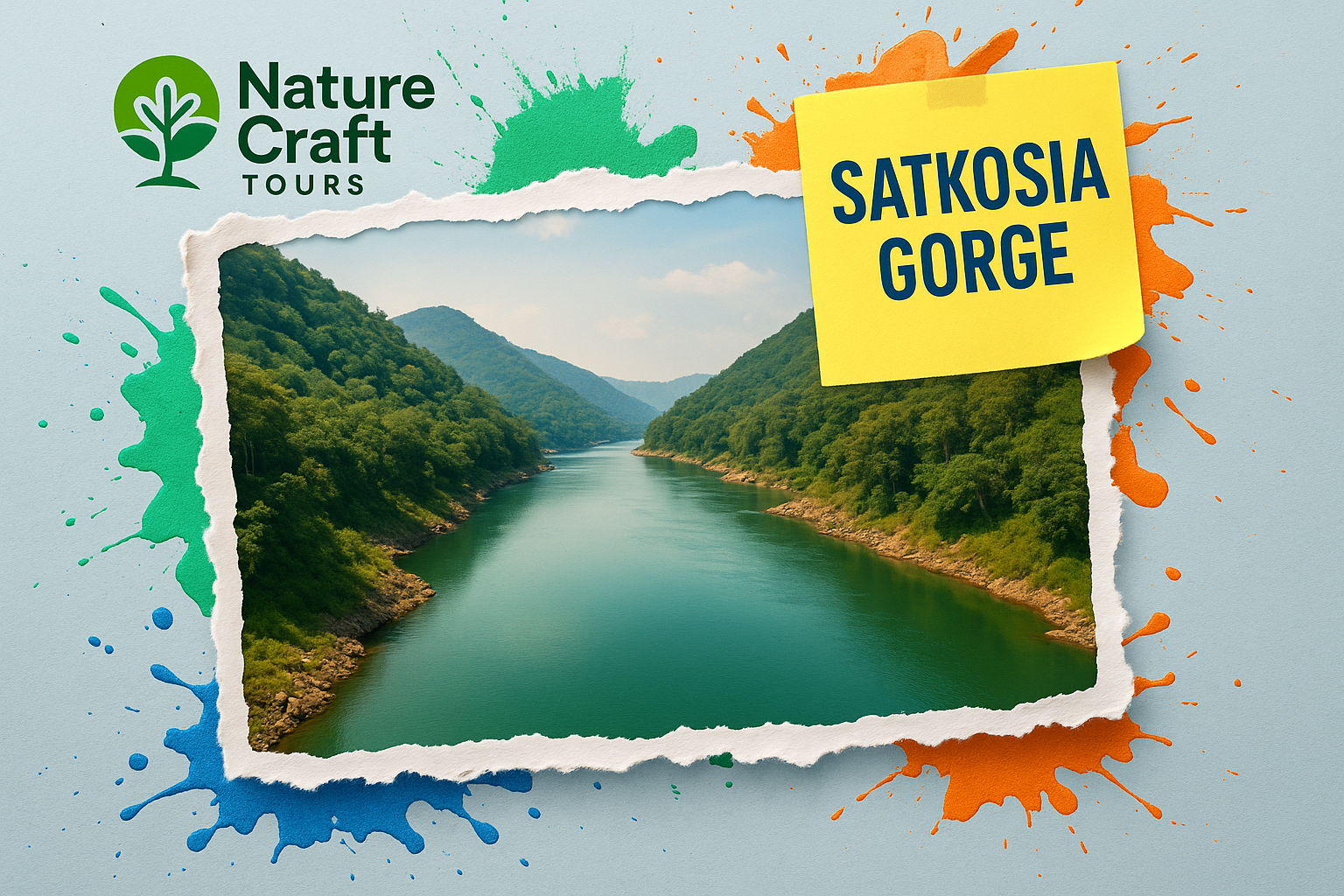
– Odisha’s Majestic Canyon of Forests, Rivers and Wildlife
Satkosia Gorge, one of India’s most extraordinary natural wonders, is a breathtaking canyon carved by the mighty Mahanadi River as it cuts through the Eastern Ghats of Odisha. Stretching over 22 kilometers, Satkosia represents the harmonious blend of dense forests, towering hills, pristine riverbanks, and thriving wildlife—making it one of the most scenic ecological zones in the country.
Recognized as a Tiger Reserve, Elephant Reserve and Wildlife Sanctuary, Satkosia embodies the essence of India’s protected landscapes. It shelters species such as the gharial, mugger crocodile, Indian fox, fishing cat, leopard, giant squirrels, and hundreds of bird and butterfly species. Its serene river stretches, misty hill silhouettes, thick sal forests, and riverside camps make Satkosia a premier destination for eco-tourism and nature enthusiasts.
For travellers seeking a profound encounter with nature—whether through boat safaris, jungle walks, stargazing nights, wildlife sightings, or peaceful riverbank stays—Satkosia Gorge offers an unforgettable experience.
Geography and Formation of Satkosia Gorge
The term “Satkosia” derives from two Odia words—sat meaning “seven” and kos meaning “two miles”—indicating the ancient measurement of the gorge’s length. The canyon lies at the juncture where the Mahanadi River exits the Chhattisgarh plains and squeezes dramatically between two high mountain ranges of the Eastern Ghats.
This combination of water, forest, mountains and valley has created a rare ecosystem where:
- Moist deciduous forests merge with dry deciduous landscapes
- Riverine flora thrives alongside rugged slopes
- A diverse wildlife population finds refuge in an undisturbed habitat
The river here widens into tranquil pools and narrows into strong currents in different sections, presenting a changing tableau of ripples, reflections and dramatic natural contrasts.
Important Points to See in and Around Satkosia Gorge
Satkosia is vast, and major attractions are spread across zones such as Tikarpada, Baliput, Chhotkei, Purunakote and Labangi. Each section offers its own unique beauty and wildlife experiences.
Tikarpada – The Heart of Satkosia
Tikarpada is one of the most scenic regions of Satkosia and serves as the primary eco-tourism zone. It offers spectacular views of the gorge where tall cliffs rise dramatically on both sides of the Mahanadi River.
Major highlights of Tikarpada include:
- The Gharial Sanctuary: One of India’s most important habitats for endangered gharials.
- River Viewpoints: Uninterrupted vistas of the gorge surrounded by dense forests.
- Boating: Peaceful boat rides through calm river stretches.
- Sunrise and Sunset Views: Dramatic golden hues reflecting on the river surface.
Satkosia Tiger Reserve
Satkosia Tiger Reserve spans parts of Angul, Cuttack, Nayagarh and Boudh districts. Although tiger sightings are rare, the reserve is home to leopards, elephants, deer, and numerous small mammals.
Key features include:
- Diverse forest types
- High biodiversity
- Species-rich birdlife (hornbills, kingfishers, eagles, forest birds)
Baliput – Riverside Beauty
Baliput is known for its tranquil backwaters and sandbanks. It is ideal for:
- Kayaking
- Riverbank walks
- Village interactions
The views of Mahanadi bordered by hill ranges create postcard-perfect scenery.
Chhotkei – Forest Escapes
Chhotkei is one of Satkosia’s most immersive forest zones, surrounded by hills, sal forests and natural trails that are perfect for:
- Birdwatching
- Butterfly photography
- Trekking and guided nature walks
Purunakote – Elephant Country
Purunakote is known for its elephant corridors. While sightings depend on timing and luck, the region offers deep forest landscapes and quiet roads where nature’s soundscape can be experienced fully.
Mundanai and Labangi Viewpoints
These elevated viewpoints provide sweeping views of Satkosia’s forest canopy, hill contours and winding river. They are particularly mesmerizing during sunrise and monsoon season.
Gharial and Crocodile Conservation Centre
Satkosia is one of India’s most important crocodilian habitats. Visitors can observe:
- Gharials basking on sandbanks
- Mugger crocodiles in shallow waters
- Conservation initiatives for repopulation
Flora and Fauna of Satkosia Gorge
Satkosia Gorge is a biological hotspot with rich ecological diversity.
Flora
The forests are dominated by:
- Sal
- Asan
- Bija
- Arjuna
- Kendu
- Sishu
Riparian vegetation along the riverbanks includes grasses, reeds and aquatic plants that support river-dependent species.
Fauna
Satkosia’s wildlife includes:
- Large animals: elephants, leopards, wild boars, sambars, spotted deer
- Small mammals: civets, mongoose, giant squirrels
- Crocodilians: gharial and mugger crocodile
- Birds: grey hornbill, pied kingfisher, serpent eagle, brahminy kite, herons, peafowls
- Reptiles: various snakes, lizards and turtles
The gorge’s freshwater ecosystem also supports a diverse fish population.
Major Distances to Satkosia Gorge
- Bhubaneswar to Satkosia (via Angul): 160–170 km
- Cuttack to Satkosia: 150–160 km
- Angul to Tikarpada: 50 km
- Nayagarh to Purunakote: 65–70 km
- Sambalpur to Satkosia: 145–160 km
How to Reach Satkosia Gorge
Satkosia Gorge is accessible from multiple routes depending on the zone you wish to visit.
By Air
The nearest major airport is Biju Patnaik International Airport in Bhubaneswar. From there, travellers can hire taxis or private vehicles to reach Satkosia.
By Rail
The closest railway stations include:
- Angul Railway Station – best for Tikarpada and Baliput access
- Nayagarh Town Station – convenient for Purunakote and Chhotkei
From the stations, road transport options include private cabs, auto services and eco-tourism vehicles.
By Road
Satkosia is accessible via well-connected highways:
- Bhubaneswar → Khurda → Nayagarh → Purunakote
- Cuttack → Angul → Tikarpada
Road conditions are mostly good, and the journey passes through forests, hills and village landscapes.
Staying Options Near Satkosia Gorge
Satkosia encourages eco-friendly tourism, so most accommodations are nature-based. While no hotel contacts are shared, typical lodging options include:
- Forest Eco-Cottages in Tikarpada, Chhotkei, and Purunakote
- Riverside Tented Camps overlooking the Mahanadi
- Jungle Retreats with basic but comfortable amenities
- Small Lodges in Angul and Nayagarh towns
Eco-retreat accommodations are typically run by forest authorities and emphasize sustainable tourism, offering:
- Campfires (seasonal)
- Nature guides
- Local cuisine
- Wildlife interpretive walks
Best Time to Visit Satkosia Gorge
Winter (November to February)
This is the ideal season for visiting Satkosia. The weather remains cool, visibility is excellent, and wildlife sightings are frequent. River depths stabilize after monsoon, making boating safe and enjoyable.
Post-Monsoon (September to October)
Lush green hills and fresh river flows make this period extremely picturesque. Photography opportunities are outstanding.
Summer (March to June)
Summer is warm, but early mornings and evenings remain pleasant. Wildlife sightings increase near water sources during this season.
Activities to Enjoy in Satkosia Gorge
- Boat Safaris: Calm river cruises with chances to observe gharials and river birds.
- Jungle Trails: Guided walks through dense sal forests.
- Birdwatching: Woodpeckers, kingfishers, hornbills and more.
- Stargazing: Clear night skies above eco-camps.
- Photography: Landscapes, wildlife, riverscapes and nature textures.
- Village Interactions: Meet forest communities living in harmony with nature.
Suggested Itinerary for Satkosia
2-Day Nature Escape
- Day 1: Arrival → River viewpoint → Jungle walk → Sunset by the river
- Day 2: Morning boat safari → Visit eco-centres → Forest drive → Departure
3-Day Wildlife Explorer
- Day 1: Check-in at eco cottages → evening nature orientation
- Day 2: Early boat ride → Gharial watch → Trek to forest viewpoints → Campfire
- Day 3: Birdwatching trail → Relax by the river → Return journey
Responsible Tourism Guidelines
- Do not disturb wildlife or enter restricted zones.
- Avoid plastic bottles and disposables.
- Respect forest guides and their instructions.
- Do not feed or approach wild animals.
- Use eco-friendly travel and support local communities.
Conclusion – The Wild Heart of Odisha
Satkosia Gorge stands as a masterpiece of nature—where a mighty river cuts through ancient mountains, where forests whisper timeless stories, and where wildlife flourishes in its natural rhythm. For travellers seeking tranquillity, adventure and ecological richness, Satkosia offers an extraordinary tapestry of experiences.
Whether you view the sunrise over Mahanadi’s calm waters, trek through sal forests, watch gharials basking on sunlit sandbanks, or spend starlit nights beside the river, Satkosia leaves an everlasting impression. It is a sanctuary of purity, balance and natural splendour—one that inspires admiration and demands protection.