Sambalpur & Hirakud Dam
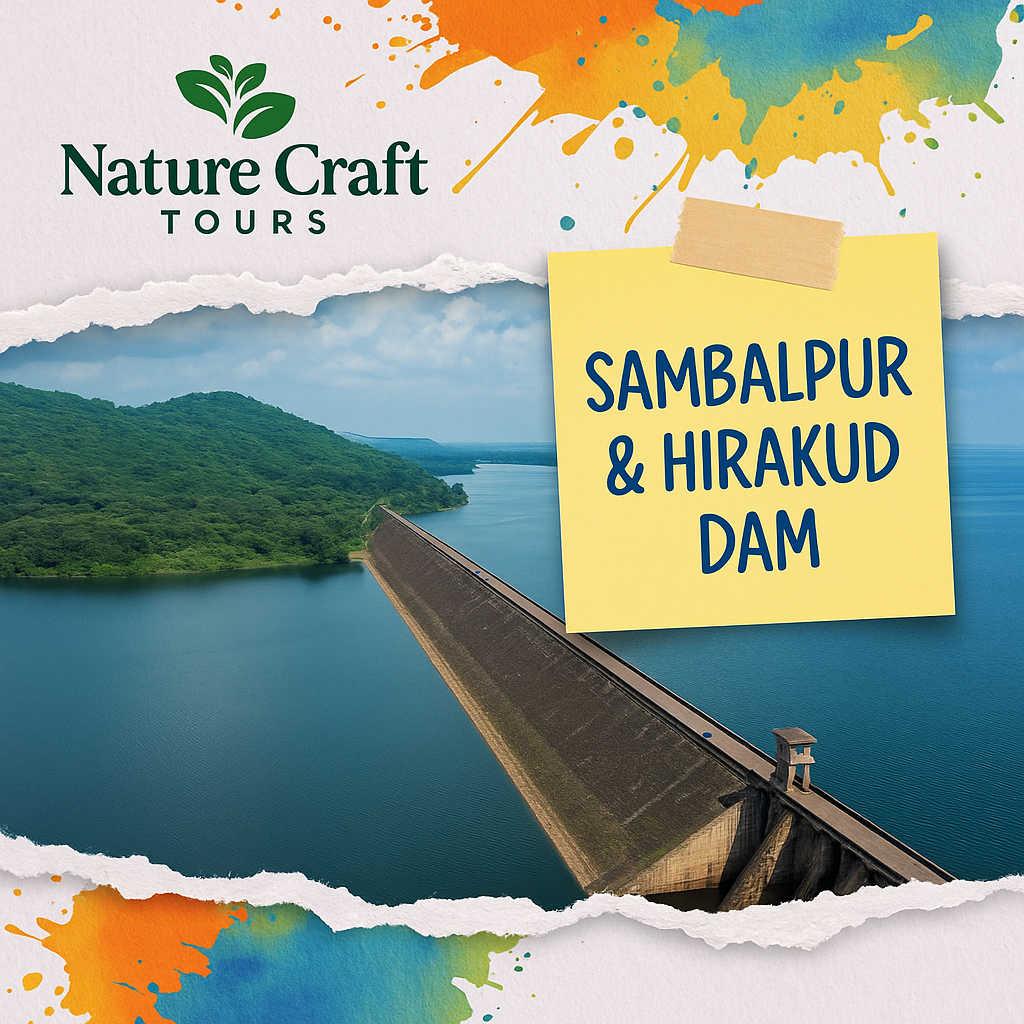
– The Cultural Heartland and Engineering Marvel of Western Odisha
Sambalpur, one of the oldest and most culturally vibrant cities of Odisha, stands proudly on the banks of the mighty Mahanadi River. Known for its classical Sambalpuri textiles, ancient temples, folk traditions, natural landscapes and historic legends, the city has been a beacon of western Odisha’s heritage for centuries. Just a short distance away lies the colossal Hirakud Dam—the longest earthen dam in the world and one of India’s most ambitious post-independence engineering achievements.
Together, Sambalpur and Hirakud form a compelling destination that blends culture, nature, engineering, wildlife and tradition. For travellers seeking an immersive experience—whether in history, craftsmanship, riverside beauty, or monumental infrastructure—this region offers an unforgettable journey.
Historical Background of Sambalpur
Sambalpur derives its name from the presiding deity Maa Samaleswari, whose shrine has drawn devotees for centuries. Historically, Sambalpur was an important trading centre associated with diamond mining, river commerce and textile craftsmanship. Ancient texts, including foreign travel accounts, reference the region’s significance in trade and culture.
The city has witnessed the rule of various dynasties, including the Chauhans, the Bhonsles and British administrators. It played a notable role in India’s freedom movement, and its cultural identity remains shaped by traditional dance forms, tribal heritage, vibrant festivals and the revered Sambalpuri weaving community.
Hirakud Dam – A Monument of Modern India
The Hirakud Dam, located about 20 km from Sambalpur, is one of India’s first major multipurpose river valley projects, built across the Mahanadi River. Completed in 1957, this engineering marvel extends nearly 27 km—including the main dam and dykes—creating one of the largest artificial lakes in Asia.
The reservoir, known simply as the Hirakud Lake, spans vast distances, dotted with islands, forest-covered hills, migratory birds, submerged temples and scenic viewpoints. The dam controls floods, supports irrigation, generates hydroelectric power and contributes to the region’s socio-economic growth.
Major Tourism Attractions in Sambalpur & Hirakud
Both Sambalpur and the Hirakud region are rich in landscapes, heritage, architecture and local traditions.
1. Maa Samaleswari Temple
The Samaleswari Temple is the spiritual nucleus of Sambalpur. The goddess, lovingly known as “Samalei Maa,” is worshipped as the protector and mother of the region. The temple architecture reflects the Koshali style and features stone carvings, pillared halls and a sanctum filled with devotional ambience.
2. Hirakud Dam and Reservoir
A vast dam stretching across the Mahanadi River, Hirakud is an extraordinary example of human ingenuity and perseverance. It offers dramatic views of the water expanse, distant islands and surrounding hills.
Notable features include:
- The longest earthen dam in the world
- Over 55 km of total embankment length including dykes
- A massive reservoir spanning more than 700 sq km during monsoon
- Hydropower stations generating electricity for the region
3. Gandhi Minar (Tower) Viewpoint
Situated on the right dyke of the dam, Gandhi Minar offers panoramic views of the reservoir. A spiral viewing platform rotates slightly to give a 360-degree perspective of the vast water body and distant mountains.
4. Nehru Minar
Located at the far end of the dam, Nehru Minar offers equally stunning viewpoints. The drive across the dam road, with water on one side and dry forest on the other, is an experience in itself.
5. Debrigarh Wildlife Sanctuary
Situated along the western flank of the Hirakud reservoir, Debrigarh Wildlife Sanctuary is a biodiversity hotspot famous for:
- Leopards, deer and antelopes
- Elephants and wild boars
- Birds such as herons, eagles, peafowls and winter migrants
- Scenic eco-cottages overlooking the reservoir
The sanctuary is a serene destination for wildlife photography, boat rides and nature walks.
6. Huma Leaning Temple
About 25 km from Sambalpur lies the extraordinary Huma Temple, known for its naturally leaning structure. Dedicated to Lord Shiva, this temple leans in one direction while the surrounding structures also tilt subtly—a mystery that continues to intrigue visitors and architects.
7. Cattle Island (Underwater Villages)
Deep inside the Hirakud reservoir, several ancient villages lie submerged, leaving only hilltops visible. These have now become islands where herds of cattle roam freely, hence the name “Cattle Island.” Boat rides to nearby islands provide unique glimpses of these isolated landscapes.
8. Ghanteswari Temple
This temple is famous for its wind chimes and bells. Historically, the sound of bells warned sailors navigating the strong currents of the Mahanadi. Located on the banks of the river near the reservoir, the site offers a picturesque, windy ambience.
9. Sambalpuri Textile Villages
Sambalpur is globally renowned for the Sambalpuri Ikat weave. Villages around the region produce these masterpieces using tie-and-dye techniques passed down through generations. Visitors can witness:
- Weaving looms in action
- Naturally dyed threads
- Fabrics showcasing traditional motifs such as shankha, chakra and phula
These villages offer deep insights into the region’s artisanal identity.
Culture, Festivals and Local Traditions
Sambalpur is a treasure house of western Odisha’s cultural heritage.
Sital Sasthi Festival
A grand wedding celebration of Lord Shiva and Goddess Parvati, Sital Sasthi transforms Sambalpur into a city of music, procession and joy. The festival is marked by cultural performances, folk dances and elaborate decorations.
Nuakhai Festival
Nuakhai, the harvest festival of western Odisha, is celebrated with traditional rituals, dances and feasts. It symbolizes gratitude for the new crop and strengthens community bonding.
Dalkhai and Rasarkeli Folk Dance
Women perform the energetic Dalkhai dance during festive seasons, accompanied by rhythmic drums and folk songs that reflect the region’s agrarian traditions.
Nature and Landscape Around Hirakud
The Hirakud reservoir forms a stunning landscape where water meets forested hills. The lake is dotted with:
- Small islands (locally known as “diyas”)
- Submerged temple spires visible during dry seasons
- Migratory birds arriving in winter
- Fishermen’s boats gliding across the vast waters
Sunset across the reservoir paints the sky in hues of orange and gold, offering surreal photographic moments.
Activities to Enjoy in Sambalpur & Hirakud
- Boat rides across Hirakud’s serene waters
- Wildlife jeep safaris in Debrigarh Sanctuary
- Visit viewpoints and watch the vast dam expanse
- Photography of waterfalls, migratory birds and landscapes
- Exploring Sambalpuri weaving villages
- Cultural immersion during festivals
Major Distances Around Sambalpur & Hirakud
- Sambalpur to Hirakud Dam: 20–21 km
- Sambalpur to Debrigarh Sanctuary: 40–45 km
- Sambalpur to Jharsuguda Airport: 60 km
- Sambalpur to Rourkela: 150 km
- Sambalpur to Bhubaneswar: 275–300 km
How to Reach Sambalpur & Hirakud
By Air
The nearest airport is Jharsuguda Airport, which is well-connected to major Indian cities. From the airport, travellers can reach Sambalpur by road within 1.5 hours.
By Rail
Sambalpur Junction is an important railway station on the East Coast and South Eastern Railway routes. It has direct connections to:
- Delhi
- Kolkata
- Mumbai
- Chennai
- Ahmedabad
- Bhubaneswar
By Road
Sambalpur is connected through excellent highways:
- NH 55 (Cuttack–Sambalpur)
- NH 53 (Chhattisgarh–Sambalpur)
- Local roads connecting to Hirakud, Burla, Debrigarh and Huma
Staying Options in Sambalpur & Hirakud
Accommodation options include:
- Premium hotels in Sambalpur city
- Mid-range hotels near business districts and markets
- Eco-stays near Debrigarh Sanctuary
- Guesthouses and lodges near Hirakud and Burla
Many properties offer river views, garden surroundings or proximity to major tourist spots. Visitors can choose stays based on:
- Proximity to Hirakud dam
- Nature and wildlife interests
- City-based comfort and convenience
Best Time to Visit Sambalpur & Hirakud
Winter (November to February)
This is the ideal season as the weather is pleasant, water levels stabilize, and wildlife viewing increases. Migratory birds also gather around the reservoir.
Monsoon (July to September)
Hirakud reservoir fills dramatically, creating breathtaking views. However, access to certain areas may depend on rainfall levels.
Summer (March to June)
Though warm, the region remains suitable for sightseeing in mornings and evenings. Sunset views at the reservoir are especially beautiful.
Suggested Itinerary
Day 1 – Explore Sambalpur
- Visit Maa Samaleswari Temple
- Explore local markets and Sambalpuri textile centres
- Sunset walk near Mahanadi riverfront
Day 2 – Hirakud Dam & Wildlife
- Morning visit to Hirakud Dam
- Climb Gandhi Minar or Nehru Minar for panoramic views
- Afternoon safari at Debrigarh Wildlife Sanctuary
- Enjoy lakeside tranquillity and birdwatching
Day 3 – Cultural Heritage
- Visit Huma Leaning Temple
- Optional boat ride to islands (seasonal)
- Engage in local cultural experiences during festive periods
Responsible Tourism Guidelines
- Respect wildlife habitats near Debrigarh and avoid disturbing animals.
- Do not litter at the dam area or along the reservoir.
- Support local Sambalpuri weavers by purchasing authentic products.
- Follow instructions at eco-stay and wildlife zones.
Conclusion – A Journey Through Nature, Culture and Achievement
Sambalpur and Hirakud Dam together offer a rare blend of cultural richness, natural beauty and engineering marvel. The ancient heritage of Sambalpur, combined with the monumental scale of Hirakud, creates a narrative where tradition and modernity coexist harmoniously. Whether you stand before the majestic Samaleswari Temple, watch the sun set behind the vast reservoir, listen to folk songs echoing across villages, or observe wildlife at Debrigarh, the region leaves an enduring impression of serenity and pride.
A visit to Sambalpur and Hirakud is more than just travel—it is a journey into the cultural soul of western Odisha and a celebration of India’s spirit of resilience, creativity and progress.