Balasore City
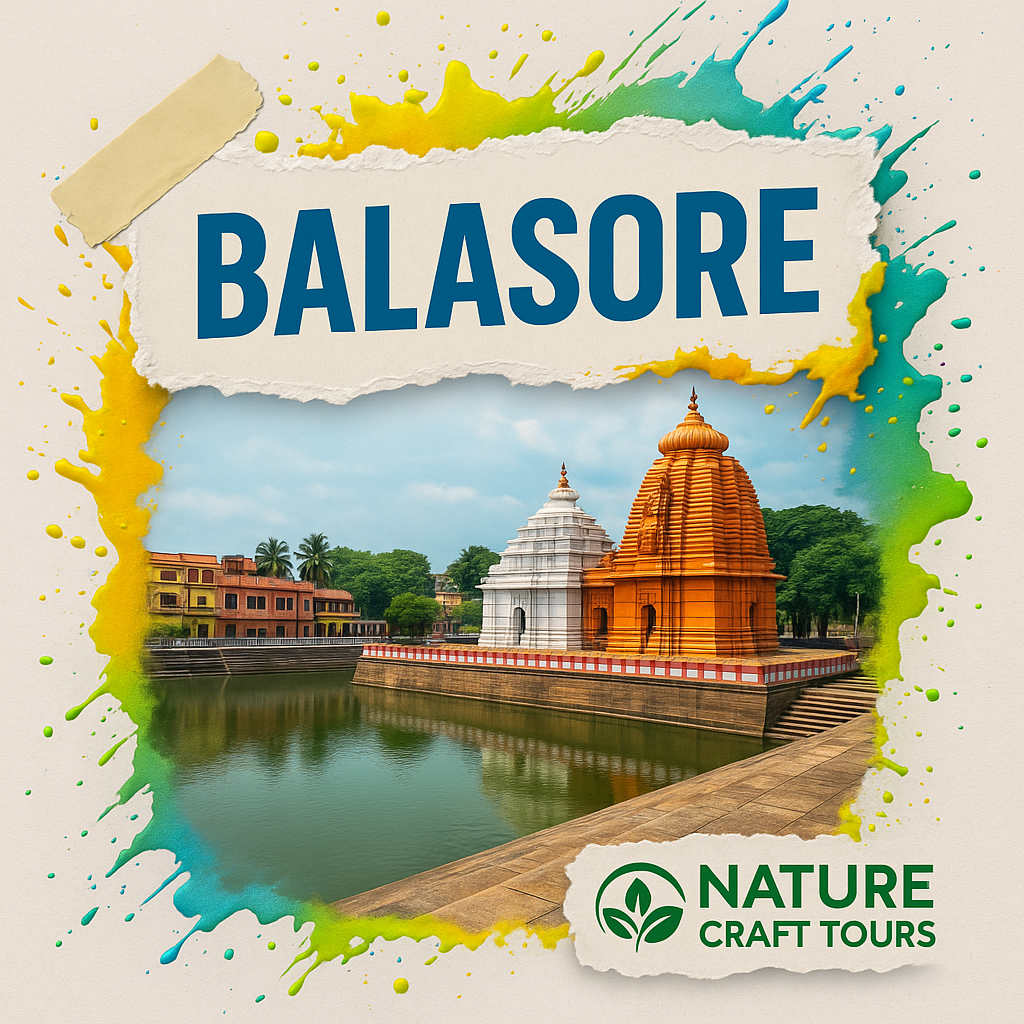
– Where History, Science and Coastal Culture Converge in Northern Odisha
Balasore (also written as Baleshwar or Baleswar) is one of the most dynamic cities of northern Odisha, gracefully balancing its historic legacy with its present role in India’s strategic and scientific landscape. Situated close to the Bay of Bengal and nourished by the Budhabalanga and Subarnarekha river systems, Balasore is at once a trade town, a cultural centre, a gateway to serene beaches, and a name closely associated with India’s missile and defence research programmes.
The city has been shaped by multiple influences over centuries—ancient Kalinga trade, medieval maritime links, Mughal and Maratha power struggles, British colonial administration and, in modern times, the growth of engineering, education and defence technology. Today, Balasore City is a vibrant urban hub with bustling markets, temples, educational institutions, nearby nature escapes, and the famous Integrated Test Range (ITR) at Chandipur-on-sea a short drive away.
This detailed, research-based city guide focuses specifically on Balasore City—its history, culture, temples, science establishments, markets and nature connection—along with major distances, access routes, stay options (categories only), and the best time to visit.
Geographical Setting and Urban Profile
Balasore is located in the northern coastal belt of Odisha, roughly between the Subarnarekha River (towards the state border) and the Budhabalanga River. The city lies on the major trunk route connecting Kolkata with Bhubaneswar and Chennai, making it a key rail and road junction. Its terrain is primarily flat with fertile alluvial soil in the surrounding countryside, supporting agriculture, fisheries and horticulture.
The urban core consists of administrative zones, old bazaar streets, residential colonies, educational campuses and small industrial pockets. The climate is typically tropical: warm to hot summers, a humid monsoon and a pleasantly mild winter. The city’s proximity to the sea moderates extreme temperature swings and enriches the surrounding landscape with coconut, casuarina and paddy fields.
Historical Overview of Balasore City
Historically, Balasore emerged as a significant node in the coastal trade routes of ancient and medieval Kalinga. Its location near the coast and close to river mouths made it ideal for maritime activity. Over centuries, the region came under the influence of different powers including regional Hindu dynasties, the Mughals, the Marathas and later the British East India Company.
During the colonial period, Balasore developed as an administrative and trading centre. The British recognized its strategic value due to its coastal access, and the town gradually grew with warehouses, markets, educational institutions and transport links. Post-independence, Balasore retained its importance as a district headquarters and steadily expanded in the fields of education, engineering, agriculture, industry and defence research.
Modern Balasore’s identity is closely tied to the nearby Integrated Test Range at Chandipur, where many of India’s indigenous missile systems have been tested over the decades. Yet, the city itself retains a distinctly Odia character—steeped in temple culture, local festivals, traditional sweets, and a relaxed coastal lifestyle.
Cultural Life and Traditions
The culture of Balasore City reflects the larger cultural ethos of coastal Odisha, enriched with local flavours. Odia is the primary language, complemented by Bengali and Hindi in commercial and educational settings. The people celebrate a wide range of festivals with devotion and colour, including:
- Ratha Yatra – Celebrated with processions inspired by Puri’s famous chariot festival.
- Durga Puja – Particularly vibrant in parts of the city due to cultural exchanges with neighbouring Bengal.
- Makar Sankranti and Raja – Seasonal celebrations linked with agriculture and nature.
- Kartik Purnima – Marking maritime heritage, with lamp-floating rituals on waterbodies.
Balasore is also noted for its literary tradition and the legacy of Fakir Mohan Senapati, a pioneering figure of modern Odia literature, who spent significant years in this region. The presence of educational institutions and cultural clubs keeps theatre, poetry, classical music and dance active in the city’s social life.
Important Places to See in and Around Balasore City
While many travellers associate Balasore district with Chandipur Beach and other coastal destinations, Balasore City itself offers a variety of places of interest spanning spirituality, history, science and daily life.
1. Temples Within and Around Balasore City
Several temples in and around Balasore underscore the region’s spiritual depth:
- Jagannath Temples (City Area): Multiple shrines inspired by the Puri Jagannath tradition are found across Balasore, attracting devotees during Ratha Yatra and Snana Purnima.
- Shiva and Shakti Temples: Old neighbourhoods often house historic Shiva temples, Devi shrines and gramadevati (village goddess) temples that become focal points during local festivals and jatras.
A short drive from the city extends the religious landscape further, especially towards famous shrines like Khirachora Gopinath at Remuna to the west and other regional temples, which many visitors include as part of a larger Balasore circuit.
2. Science & Defence Presence – The Chandipur Connection
While technically outside the immediate city core, Balasore’s identity is closely linked with the Integrated Test Range (ITR) at Chandipur-on-sea, where numerous strategic missiles and defence systems have been tested. Balasore City serves as the nearest major urban base for scientists, engineers and defence staff working at ITR and associated establishments.
Though the testing areas themselves are restricted and not open for casual tourism, the presence of this facility has raised Balasore’s profile nationally and contributes to its modern, science-oriented character.
3. Parks, Lakes and Urban Green Spaces
Balasore City includes small parks, gardens and waterbodies where residents gather in the mornings and evenings for walks, children’s play and socialising. Seasonal flower gardens, public lakes and riverside areas (towards the Budhabalanga) offer opportunities for photography and quiet reflection away from busy streets.
4. Local Markets and Bazaars
Traditional markets are among the most engaging aspects of Balasore City life:
- Main Bazaar Areas: Crowded lanes filled with textiles, jewellery, utensils, handicrafts, daily-use items and festive decorations.
- Fish and Vegetable Markets: Fresh produce from nearby villages, including river fish, coastal catch, leafy greens and seasonal fruits.
- Sweet Shops and Snack Stalls: Offering Odia sweets like chhena-based delicacies, pithas, savoury snacks and tea stalls where locals gather throughout the day.
For visitors, the markets present a chance to observe everyday life, sample local food and possibly purchase handicrafts or textiles as mementoes.
5. Educational and Cultural Institutions
Balasore hosts a number of schools, colleges and specialised institutes, including engineering and management colleges in and around the city. These institutions contribute to a relatively young population, with students filling cafés, bookshops and coaching centres.
Cultural halls and auditoriums often host music concerts, Odissi dance programmes, plays and literary events—especially during festival seasons and annual college fests.
6. River Landscapes Near the City
Towards the outskirts of Balasore, especially in the direction of the Budhabalanga River, visitors may find scenic riverbanks and rural views comprising fishing spots, sandy stretches and cultivated farmland. These are particularly atmospheric during sunrise and late afternoon, when warm light reflects off the water and surrounding fields.
Distances from Key Locations to Balasore City
Understanding distances helps in planning journeys to Balasore City as a standalone stop or as part of a larger Odisha–Bengal itinerary.
- Bhubaneswar to Balasore: roughly 200–210 km by road along the coastal highway.
- Cuttack to Balasore: approximately 170–180 km by road.
- Kolkata (West Bengal) to Balasore: about 230–240 km by road or rail along the main Kolkata–Chennai line.
- Baripada to Balasore: around 60–70 km, connecting two key towns of north Odisha.
- Chandipur-on-sea to Balasore City Centre: generally 12–16 km, making Chandipur a comfortable half-day or full-day excursion from the city.
These distances make Balasore City an excellent intermediate stop between Kolkata and Bhubaneswar, or a base for exploring nearby coastal and forest destinations in the district.
How to Reach Balasore City
By Rail
Balasore is a major station on the Howrah–Chennai main line, served by numerous long-distance trains connecting it with Kolkata, Bhubaneswar, Cuttack, Visakhapatnam and other cities. Express and superfast trains frequently halt here, making rail one of the most convenient modes of travel.
From Balasore Railway Station, the main city areas are accessible by auto-rickshaws, cycle-rickshaws, battery rickshaws and local taxis.
By Road
Balasore lies directly on National Highway routes connecting Kolkata–Bhubaneswar–Chennai. Both government and private buses ply regularly between Balasore and major cities like Bhubaneswar, Cuttack, Baripada and Kolkata.
Travellers using private vehicles enjoy a smooth drive along the coastal highway, passing through small towns, rice fields, rivers and roadside eateries. Way-side dhabas and tea stalls provide opportunities to pause and experience local flavours.
By Air (Nearest Airports)
Balasore does not have a commercial airport of its own. The nearest major airports are:
- Biju Patnaik International Airport, Bhubaneswar – approx. 200+ km away.
- Netaji Subhas Chandra Bose International Airport, Kolkata – approx. 230–250 km away.
From these airports, visitors can take trains, intercity buses or hired cabs to reach Balasore City.
Staying Options in and Around Balasore City
As a district headquarters and a transit hub, Balasore offers a range of accommodations suitable for various budgets and requirements. While specific property details are not mentioned here, broad categories include:
1. Mid-Range City Hotels
Several mid-range hotels operate in Balasore City, mainly clustered near the railway station, central market areas and arterial roads. These typically offer:
- Comfortable rooms with standard amenities
- In-house dining with Odia, North Indian and Chinese cuisine
- Room service and travel assistance
2. Budget Lodges and Guest Houses
Budget travellers, students and backpackers can find economical lodges across the city. These properties provide basic rooms, essential facilities and easy access to transport.
3. Business-Class and Highway Hotels
Some accommodations along the highway or key commercial streets cater to business travellers and transit guests, with meeting spaces, parking facilities and flexible check-in options.
4. Resorts and Hotels Near Chandipur (For Combined Stay)
Visitors who wish to combine urban Balasore with beach relaxation may choose to stay at properties near Chandipur-on-sea and visit the city during the day for shopping, temple visits and railway connectivity.
Best Time to Visit Balasore City
Balasore can be visited year-round, but climate and comfort levels vary significantly with the seasons.
Winter (November to February)
This is the most pleasant time to explore Balasore City. Temperatures are mild, humidity is lower and evenings are comfortable. Street walks, market visits and excursions to nearby spots like Chandipur and Remuna are particularly enjoyable during this season.
Post-Monsoon (September to October)
After the monsoon rains, the surrounding countryside turns lush green, rivers flow full and the air feels fresh. Occasional showers may still occur, but this period is excellent for scenic drives and photography.
Summer (March to June)
Summers can be warm and humid, particularly in May and June. However, early mornings and late evenings in the city remain manageable. Visitors are advised to stay hydrated, wear light cotton clothing and plan outdoor sightseeing during cooler hours.
Monsoon (June to September)
Monsoon brings heavy showers, overcast skies and waterlogged patches in some areas. While this season may limit extensive outdoor activity, it also highlights the coastal and riverine charm of the region. Travellers who enjoy rain-soaked atmospheres and lower tourist rush may find this period appealing, but should plan with flexibility.
Suggested One-Day City-Focused Itinerary
Travellers using Balasore as their base can follow a city-centric day plan such as:
- Morning: Visit central temples and explore older neighbourhoods; enjoy breakfast at a traditional eatery.
- Late Morning: Walk through market areas to observe local life and shop for sweets, snacks or handicrafts.
- Afternoon: Visit parks, lakes or riverside areas on the urban outskirts for relaxation and photography.
- Evening: Experience the city’s lively bazaar streets again, sample local snacks and enjoy the illuminated temple façades.
When extended to multiple days, visitors typically add day trips to Chandipur-on-sea, Remuna and other district attractions while retaining Balasore City as their logistical hub.
Practical Travel Tips for Balasore City
- Use trains or highway buses for efficient connectivity between major cities and Balasore.
- Within the city, rely on auto-rickshaws, cycle-rickshaws and battery rickshaws for short distances.
- Dress modestly when visiting temples and respect local customs.
- Summer visitors should carry sun protection, water bottles and light clothing.
- Try local sweets and snacks from reputed shops to sample genuine coastal Odia flavours.
- For combined city-plus-coast trips, plan stays that balance urban convenience with seaside relaxation.
Conclusion – Balasore City: A Coastal Crossroads of Past and Future
Balasore City is a place where multiple narratives meet—ancient coastal trade, medieval royal power, colonial history, modern science and everyday Odia culture. It is a city that welcomes travellers not with grand spectacle, but with layered experiences: temple bells at dawn, busy markets through the day, students in uniforms cycling to class, and the knowledge that just beyond its edge, the sea and rivers continue their timeless flow.
For travellers seeking a destination that blends heritage with modern life, Balasore offers an authentic slice of Odisha’s coastal soul—rooted in history, alive in the present, and quietly connected to some of India’s most significant scientific endeavours.