Barpeta & Barpeta Satra
– A Complete Travel Guide to Assam’s Vaishnavite Heritage Town
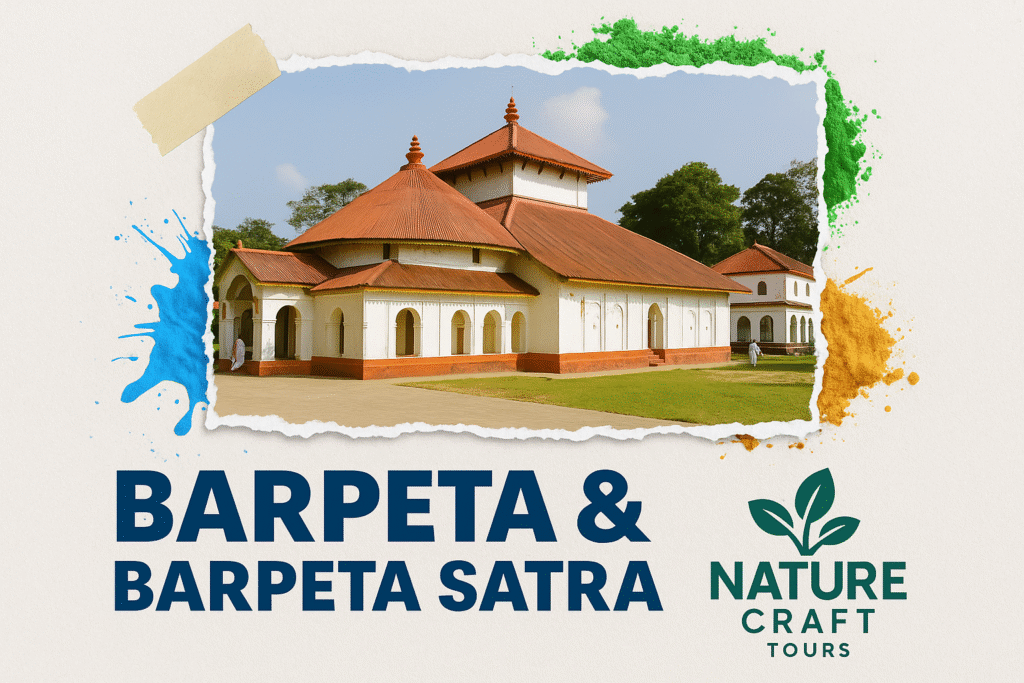
Barpeta, located in Lower Assam, is one of the most spiritually significant and culturally refined towns in the Brahmaputra Valley. Often called the “Satra Nagari” or “Town of Monasteries,” Barpeta is best known for the esteemed Barpeta Satra – a living centre of the Neo-Vaishnavite movement founded by the 16th-century saint Madhabdev, the foremost disciple of Srimanta Sankardev. The town’s quiet lanes, whitewashed prayer halls, intricately carved gateways, lush ponds, and rhythm of kirtan (devotional songs) together create an atmosphere of deep peace and timeless devotion.
Beyond its spiritual aura, Barpeta is also an important cultural hub where classical Sattriya dance, traditional music, manuscript painting, weaving, and communal living thrive within the Satra system. Surrounded by fertile paddy fields, coconut groves, and waterways, the town presents a harmonious blend of rural charm and sacred heritage. Travellers seeking government-authenticated information about the region often refer to the official tourism portal
Assam Tourism, which highlights Barpeta’s importance within Assam’s cultural map.
According to Barpeta Satra on Wikipedia, the institution is one of the major seats of Ekasarana Dharma – the monotheistic Vaishnavite faith propagated by Srimanta Sankardev. Over the centuries, Barpeta Satra and the surrounding town have played a crucial role in shaping Assamese religious, social, and artistic life. This comprehensive guide explores the history, key attractions, distances, connectivity, staying options, and the best time to visit Barpeta and Barpeta Satra in a detailed, research-oriented manner.
Historical and Spiritual Significance of Barpeta Satra
Barpeta Satra was established in the 16th century by Madhabdev, who transformed Barpeta into a vibrant centre of bhakti, learning, and art. The Satra system introduced by Sankardev and his disciples was unique: it combined monastic life with community participation, literature with devotional practice, and art with everyday spirituality. Barpeta Satra became one of the most influential institutions of this movement.
Within its walls, generations of bhakats (monks and devotees) have preserved classical Sattriya dance, Borgeet (devotional music), traditional drama known as Ankiya Naat, and manuscript illustrations. The Satra also contributed to village administration, conflict resolution, and community welfare. Even today, much of Barpeta town’s social rhythm is synchronized with the Satra’s daily prayer routines, festivals, and congregational activities.
Layout and Architecture of Barpeta Satra
The architecture of Barpeta Satra reflects the characteristic features of Assamese Vaishnavite monasteries. The complex is enclosed by high walls with multiple gateways. Inside, broad courtyards, prayer halls, residential quarters for monks, storehouses, and ponds are arranged according to traditional patterns.
Kirtan Ghar
At the heart of Barpeta Satra lies the magnificent Kirtan Ghar or main prayer hall. This rectangular structure is distinguished by its whitewashed exterior, sloping roofs, intricately carved wooden doors, and long open verandas. Devotees gather here for daily prayers, chanting of the name of Lord Krishna, recitation of scriptures, and performance of sacred music and dance. The simplicity of its design, combined with a powerful sense of sanctity, makes the Kirtan Ghar the spiritual centre of Barpeta.
Doul Ghar and Ranga Mancha
The Doul Ghar is an important structure used during festivals such as Doul Utsav (Holi). Nearby, the Ranga Mancha, a raised platform or stage, hosts traditional plays and devotional performances. During major religious occasions, the Satra courtyards come alive with colour, music, and disciplined movement as Sattriya dancers and Borgeet singers create a sublime atmosphere.
Math and Residential Quarters
Surrounding the main prayer hall are numerous maths (residential blocks) where the bhakats live. These simple structures, with their extended verandas, tiled roofs, and small gardens, contribute to the serene monastic environment. The Satra also contains kitchens, grain stores, and administrative rooms required for a self-sustaining religious community.
Other Important Satras and Sacred Spots in Barpeta
Though Barpeta Satra is the most famous, Barpeta town has several other Satras and sacred sites which together justify its title as the “Satra town” of Assam.
Sundaridiya Satra
Located not far from the main Barpeta Satra, Sundaridiya Satra is associated with the life and works of Srimanta Sankardev himself. It is said that he spent time in this area, composing devotional works and interacting with disciples. The Satra maintains a quiet, contemplative environment and is known for its sacred manuscripts and traditional rituals.
Ganakkuchi Satra and Jania Satra
These Satras are smaller yet historically significant centres of Vaishnavite culture in the region. They preserve old texts, sacred objects, and local variations of religious practice. Visiting several Satras allows travellers to appreciate how each institution has developed its own unique character while remaining anchored in the same spiritual tradition.
Namghar Network
Beyond formal Satras, the Barpeta region is dotted with numerous Namghars (village prayer halls). These serve as community centres for prayer, storytelling, music, and social discussion. The Namghar is fundamental to Assamese village life, and Barpeta is one of the best places to witness this living tradition.
Cultural Life and Festivals in Barpeta
The cultural calendar of Barpeta is filled with religious and community events closely linked to the Satra. Soft rhythms of khool (traditional drum), taal (cymbals), and kirtan regularly echo through the streets. Scholars, artists, and devotees from various parts of Assam travel here to participate in festivals, perform, or engage in research on Vaishnavite heritage.
Doul Utsav (Holi)
Doul Utsav is among the grandest celebrations in Barpeta Satra. Over several days, colourful processions, kirtan sessions, communal prayers, and symbolic enactments of Krishna’s play with colours fill the Satra complex. The festival is remarkable for its discipline and spiritual focus, with joy and devotion blending harmoniously.
Raas Mahotsav
During Raas Mahotsav, Barpeta hosts dramatic representations of episodes from the life of Lord Krishna. The Sattriya dance-drama tradition comes into full bloom as elaborately costumed performers present episodes of divine love and playfulness. The entire town seems to transform into a stage of devotion and art.
Other Observances
Janmashtami, the birth anniversary of Krishna; Sankardev and Madhabdev Tithis (birth and death anniversaries); and other Vaishnavite dates are observed with special recitations, processions, and communal feasts. Visitors who time their journeys with these festivals gain a profound insight into the spiritual fabric of Barpeta.
Natural Setting and Nearby Attractions
Barpeta is situated on the western bank of the Brahmaputra in a region of fertile plains, interlaced with small rivers and wetlands. Coconut, areca nut, and banana groves surround the town, while paddy fields extend outward to the horizon. Traditional houses with sloping roofs, bamboo fencing, and flowering gardens impart a tranquil rural charm.
The town also serves as a convenient base for exploring nearby ecological and cultural attractions. Many travellers club their Barpeta visit with a trip to Manas National Park, one of India’s premier wildlife reserves and a UNESCO World Heritage Site. For broader planning of such eco-cultural journeys, travellers often consult platforms like Sundarban Tour, which highlight how sacred landscapes and natural habitats together create rich travel circuits across eastern India.
Major Distances from Barpeta
- Barpeta to Guwahati – approximately 95–100 km by road
- Barpeta to Barpeta Road (nearest main railway town) – approximately 20–22 km
- Barpeta to Manas National Park (Bansbari Range) – approximately 40 km
- Barpeta to Bongaigaon – approximately 70 km
- Barpeta to Nalbari – approximately 45 km
- Barpeta to Jorhat – approximately 260–270 km
Travellers devising broader wildlife and heritage itineraries across India’s national parks and pilgrimage towns may find it useful to refer to curated resources such as Barpeta & Barpeta Satra, which provide structured information for linking cultural centres with nearby forest reserves.
How to Reach Barpeta and Barpeta Satra
By Air
The nearest major airport to Barpeta is Lokpriya Gopinath Bordoloi International Airport in Guwahati, located about 100 km away. The airport is well connected to major Indian cities by regular flights. From Guwahati, travellers can proceed to Barpeta by road via hired taxis, shared vehicles, or state-run buses.
By Rail
Barpeta Road Railway Station, around 20–22 km from Barpeta town, is the principal railhead for the region. It lies on the important railway line connecting Guwahati with New Bongaigaon, New Jalpaiguri, and the rest of India. From Barpeta Road, local buses, shared tempos, and taxis provide frequent transport to the town and Barpeta Satra.
By Road
Barpeta is connected by well-maintained roads to Guwahati, Nalbari, Bongaigaon, and neighbouring districts. National and state highways, along with rural roads, make the journey scenic as they pass through villages, fields, and groves. Assam State Transport Corporation (ASTC) buses and private operators provide regular services, while travellers also frequently use private cars for greater flexibility.
Staying Options in and around Barpeta
Accommodation in Barpeta ranges from modest town hotels to guesthouses and simple lodges suitable for pilgrims, researchers, and cultural travellers. Though the town does not focus on luxury tourism, it offers comfortable options that complement its spiritual ambience.
Town Hotels and Guesthouses
Several small to mid-range hotels operate in and around the main market area of Barpeta. These offer clean rooms, basic amenities, and in-house dining facilities. Their central location makes it convenient to walk or hire short transport to Barpeta Satra and other parts of the town.
Pilgrim Lodges and Dharamshalas
Near Barpeta Satra, there are simple lodging options catering primarily to pilgrims and long-stay devotees. These provide basic accommodation with shared facilities, reflecting the Satra’s emphasis on simplicity and community life. Advance inquiries are recommended during major festivals when demand is high.
Stays near Manas National Park
Travellers who combine a visit to Barpeta with wildlife excursions at Manas National Park often choose to stay in eco-lodges and forest resorts around the Bansbari Range. From these properties, it is possible to undertake day trips to Barpeta or vice versa, allowing an enriching combination of spiritual and ecological experiences.
Best Time to Visit Barpeta and Barpeta Satra
The best time to visit Barpeta is between October and April, when the climate is relatively cool and comfortable for walking, sightseeing, and participating in Satra activities. Winter months (November to February) offer clear skies and pleasant days, ideal for exploring the courtyards, ponds, and surrounding countryside.
The monsoon season, from June to September, brings abundant rainfall which turns the landscape lush green but may cause occasional travel delays. Certain festivals, however, may fall during this period, attracting large numbers of devotees despite the rains. Travellers should check festival dates in advance and plan accommodation accordingly.
Important Travel Tips for Visitors
- Dress modestly and respectfully when visiting Barpeta Satra and other religious sites; shoulders and knees should preferably be covered.
- Footwear must be removed before entering prayer halls and certain courtyards; carrying a simple cloth bag for your shoes is convenient.
- Photography inside sensitive religious spaces may be restricted; always ask permission from Satra authorities or local guides.
- Participating quietly in kirtan sessions can be a moving experience; visitors are welcome to sit, observe, and absorb the devotional atmosphere.
- Engage local guides or knowledgeable residents to gain a deeper understanding of the Satra’s history, rituals, and architectural nuances.
- Respect community norms regarding silence during prayers, queue discipline, and use of mobile phones inside sacred premises.
- Combine your visit with nearby attractions such as Manas National Park, village Namghars, and regional handloom centres for a richer itinerary.
Conclusion
Barpeta and Barpeta Satra together form one of the most important spiritual and cultural landscapes of Assam. Here, the teachings of Srimanta Sankardev and Madhabdev are not confined to scripture alone; they permeate everyday life in the form of communal prayers, music, dance, simple living, and mutual respect. The town’s serene ponds, whitewashed gateways, tree-lined courtyards, and melodious kirtan create a rare environment where inner peace and community harmony are palpably felt.
For travellers seeking more than conventional tourism, Barpeta offers a chance to encounter a living tradition of bhakti, art, and ethics that has shaped Assamese identity for centuries. Whether one arrives as a pilgrim, researcher, photographer, or curious visitor, the experience of walking through the precincts of Barpeta Satra and its surroundings leaves a lasting impression of quiet devotion, aesthetic grace, and cultural depth.