Barren Island (Active Volcano View Trip)
Barren Island: India’s Only Active Volcano and the Ultimate Andaman Explorer Experience
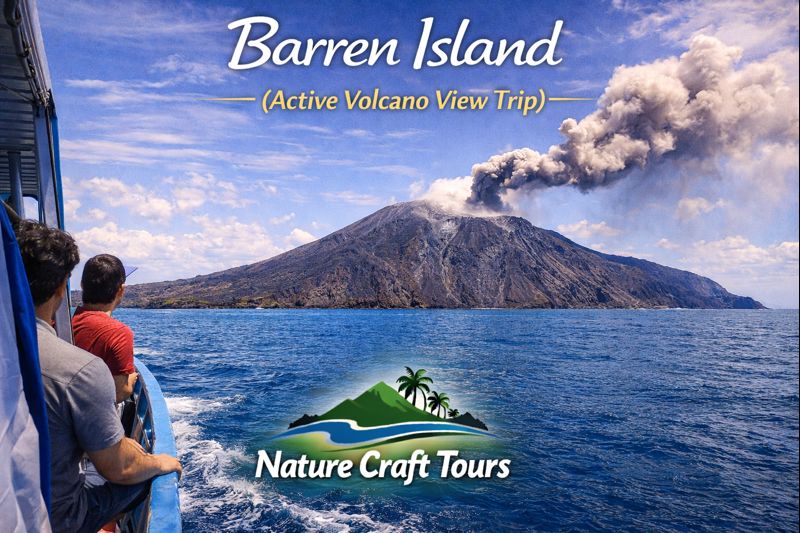
Far beyond beaches, coral lagoons, and tropical forests, the Andaman Islands conceal a landscape that feels almost extraterrestrial in character. Barren Island, located in the remote waters of the Andaman Sea, is not merely a destination—it is a geological revelation. As the only confirmed active volcano in India, Barren Island represents a rare convergence of fire, ocean, and isolation. A visit here is not about relaxation or leisure; it is about witnessing Earth’s deep forces at work, safely observed from a distance yet powerfully present.
The Barren Island active volcano view trip is designed for serious explorers, geoscience enthusiasts, photographers, and travelers who seek experiences that are intellectually enriching and emotionally humbling. This island is uninhabited, protected, and strictly regulated, ensuring that its raw volcanic landscape remains largely untouched. What follows is a comprehensive, research-driven exploration of Barren Island—its geology, access routes, best timing, and how to plan a responsible and unforgettable volcano-view expedition.
Geographical Location and Regional Context
Barren Island lies approximately 135 kilometers northeast of Port Blair, positioned between the Andaman Islands and Myanmar. It is part of the larger Andaman volcanic arc, a tectonically active zone formed by the subduction of the Indian Plate beneath the Burma Plate. Unlike most Andaman destinations that are shaped by coral reefs and sedimentary processes, Barren Island is entirely volcanic in origin.
The island spans roughly 3 kilometers in diameter and is dominated by a central stratovolcano rising from a caldera-like depression. Its steep, ash-covered slopes descend directly into the sea, creating a stark contrast between dark volcanic rock and the surrounding blue waters.
Why Barren Island Is Geologically Exceptional
Barren Island is India’s only active volcano and one of the few active volcanic islands in the Indian Ocean region. Periodic eruptions have been recorded since the late 18th century, with intermittent activity continuing into the present century. These eruptions are typically strombolian in nature, characterized by ash plumes, lava fragments, and glowing vents rather than explosive lava flows.
Understanding the Volcano: Fire Beneath the Sea
The volcano of Barren Island is a stratovolcano formed through successive layers of lava, ash, and volcanic debris. Its activity is closely linked to regional tectonic movements, making it a key site for geological research.
The island’s surface tells a story of repeated eruptions: hardened lava fields, ash slopes devoid of vegetation, and older lava flows partially reclaimed by pioneer plant species. From a distance, observers can often see steam emissions or ash plumes rising gently from the crater during active phases.
A Living Laboratory of Earth Processes
Barren Island demonstrates how new landforms are created and reshaped over time. The interaction between volcanic material and seawater results in rapid cooling, rock fracturing, and unique mineral formations. This process-driven landscape contrasts strongly with erosion-dominated environments such as river deltas explored during a Sundarban Tour, where water rather than fire is the primary sculptor.
Is Landing Allowed on Barren Island?
Landing on Barren Island is strictly prohibited for tourists. The island is designated as a protected zone due to its active volcanic status and ecological sensitivity. All tourism activity is limited to offshore viewing by boat, ensuring visitor safety while preserving the island’s pristine condition.
This restriction enhances the experience rather than diminishing it. Observing an active volcano from the sea emphasizes scale, isolation, and respect for natural forces.
The Barren Island View Trip: What the Experience Involves
A Barren Island trip typically involves a long sea journey aboard a well-equipped vessel. The experience is shaped as much by the voyage as by the destination.
Open-Sea Navigation
The journey traverses deep ocean waters with no intermediate islands for long stretches. This open-sea context reinforces the remoteness of Barren Island and demands careful planning and weather assessment.
Circumnavigation of the Island
Boats circle the island at a regulated distance, allowing panoramic views of the volcanic cone, lava fields, and surrounding cliffs. During periods of volcanic activity, visitors may witness ash plumes, steam emissions, or glowing vents—always from a safe offshore distance.
Best Time for a Barren Island Volcano View Trip
Timing is critical for both safety and visibility.
Seasonal Window: November to April
This period offers the calmest seas and clearest skies. Visibility is high, and boat journeys are more comfortable. Most authorized trips operate exclusively during these months.
Daily Timing and Sea Conditions
Trips usually begin early in the morning to take advantage of stable sea conditions. Weather and ocean forecasts are assessed carefully, and departures may be cancelled if conditions are unfavorable.
How to Reach the Starting Point
All Barren Island trips originate from Port Blair. Travelers must arrive in Port Blair at least one day prior to departure to allow for permit processing and safety briefings.
Permits and Authorizations
Special permissions are required to approach Barren Island. These are arranged by licensed operators in coordination with local authorities. Independent travel is not permitted.
Marine Life Around Barren Island
Despite its harsh terrestrial environment, the waters around Barren Island are rich in marine biodiversity. Lava formations underwater create complex habitats that attract fish, pelagic species, and occasionally dolphins.
The contrast between barren land and vibrant sea life underscores nature’s adaptability and mirrors ecological juxtapositions found in regions like the Sundarban Tour Package, where life thrives under extreme conditions.
Complete Tour Plan: Barren Island Expedition
Day 1: Arrival at Port Blair
Arrive in Port Blair and complete documentation. Attend safety briefings and meet the expedition crew.
Day 2: Barren Island View Trip
Depart before dawn. Travel across open sea toward Barren Island. Circumnavigate the island while observing volcanic features. Return to Port Blair by evening.
Day 3: Buffer or Recovery Day
This day allows flexibility in case of weather delays and offers time to process the experience.
Special Attractions of the Barren Island Trip
India’s Only Active Volcano
The sheer rarity of observing an active volcano within Indian territory makes this trip exceptional.
Uninhabited and Untouched Landscape
The absence of human settlement preserves the island’s raw geological character.
Visual Drama
The contrast of black volcanic slopes, white steam, and blue ocean creates a striking visual composition unmatched elsewhere in the Andamans.
Safety and Responsible Exploration
Strict adherence to guidelines is mandatory. Visitors must remain on the vessel, follow crew instructions, and respect all safety zones. Photography is allowed, but drones and intrusive equipment are prohibited.
Who Should Take the Barren Island Trip?
This experience is ideal for serious explorers, geology enthusiasts, photographers, educators, and travelers seeking rare, knowledge-driven adventures. It is not recommended for those prone to seasickness or expecting leisure-oriented tourism.
Witnessing the Earth in Motion
Barren Island does not entertain—it instructs. It stands as a reminder that the Earth is not static, that continents shift, oceans open, and fire reshapes land in silence and force.
To observe an active volcano rising from the sea is to confront geological time and human insignificance simultaneously. The Barren Island active volcano view trip is not just an Andaman excursion; it is an encounter with the planet’s creative power. For explorers who seek meaning beyond scenery, this journey marks one of the most profound experiences the Indian Ocean can offer.