Bijanbari & Pulbazar
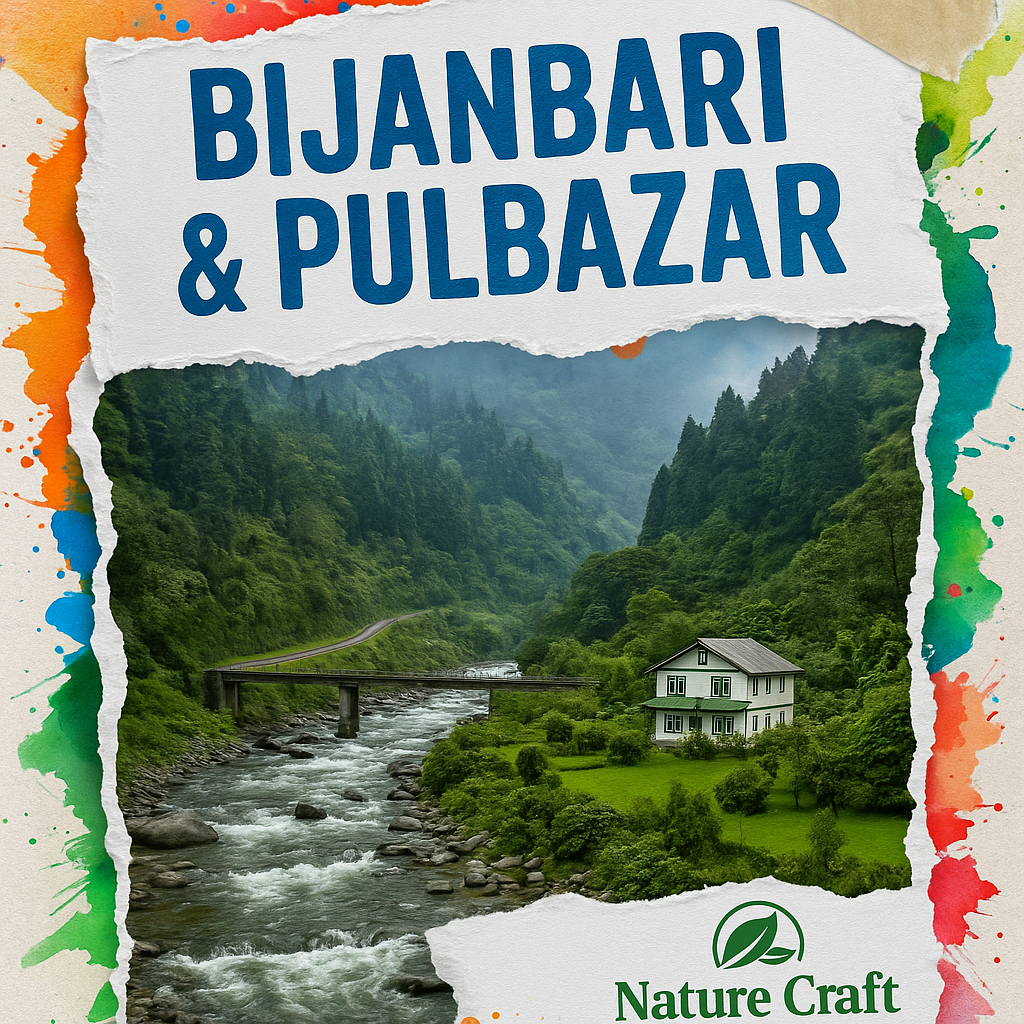
– A Complete Travel Guide to Darjeeling’s Hidden Valleys
The Darjeeling Himalayas are globally renowned for their mist-covered mountains, rolling tea gardens, and colonial charms. Yet, far from the usual tourist circuits lies a quieter world—two of the most picturesque and culturally rich valleys in the region: Bijanbari and Pulbazar. Located deep within the Rangneet river valley, these destinations offer spectacular landscape diversity, traditional village life, refreshing riverbanks, and winding roads carved through lush forests and tea estates.
This comprehensive, research-based travel guide explores the pristine beauty of Bijanbari and Pulbazar, covering essential sightseeing points, natural features, important distances, routes, stay options, local culture, cuisine, and the best time to visit. Designed in a formal yet highly descriptive style, this guide is ideal for travellers seeking an immersive Himalayan experience away from mainstream crowds.
Introduction to Bijanbari and Pulbazar
Situated approximately 35 km from Darjeeling town, Bijanbari is a serene valley destination lying at the base of the Little Rangit River (Rangneet). Pulbazar, a neighbouring settlement, sits just a few kilometres downstream and serves as a significant local market and cultural hub. Both destinations fall within the Darjeeling district of West Bengal and are known for their deep valleys, terraced farming, tea gardens, scenic bridges, and rejuvenating riverside stretches.
The road journey itself is a major highlight—descending from the heights of Darjeeling through dense forests, waterfalls, and rural hamlets before finally arriving at the peaceful valley floor. Bijanbari and Pulbazar are ideal for travellers who prefer slow travel, nature exploration, and authentic village experiences.
Geographical Setting and Landscape Character
Located at a lower elevation than Darjeeling town, Bijanbari sits between 2,500 to 3,500 feet above sea level. This unique altitude creates a pleasant subtropical climate throughout the year, supporting:
- Dense forests of pine, fir, and mixed Himalayan species
- Terraced paddy fields and vegetable gardens
- Riverine landscapes with crystal-clear water
- Tea gardens with gentle slopes
- Rich biodiversity including birds, butterflies, and orchids
Pulbazar, located slightly downhill, is the commercial and administrative heart of the valley, featuring vibrant marketplaces, local eateries, agricultural stalls, and community centres. Together, they form a harmonious blend of nature and culture that defines the valley’s character.
Important Attractions in Bijanbari & Pulbazar
Though peaceful and offbeat, the region offers several impressive natural, cultural, and recreational attractions. Each site highlights the ecological richness and cultural diversity of the valley.
1. Little Rangit River (Rangneet)
The heart of Bijanbari is the stunning Little Rangit River, which flows with remarkable clarity through the valley. The riverbanks are ideal for:
- Picnics
- Nature walks
- Photography
- Meditation
During dry months, the river reveals stony formations and gentle currents, making it a peaceful place for travellers seeking solitude.
2. Bijanbari Forest Trails
The dense forests surrounding Bijanbari are full of biodiversity. Walking trails lead through:
- Bamboo groves
- Mountain orchids
- Bird habitats
- Pine-covered slopes
These trails are ideal for nature enthusiasts who enjoy quiet paths and fresh mountain air.
3. Tea Estates Around Bijanbari
Several renowned tea gardens lie close to the Bijanbari–Pulbazar belt, including:
- Runglee Rungliot Tea Estate
- Vah-Tukvar Tea Estate
- Lopchu Tea Garden
- Balsun Valley Tea Garden
These estates provide picturesque views and gentle walking routes through beautifully sculpted slopes.
4. Pulbazar Local Market
Pulbazar’s bustling marketplace showcases the region’s agricultural produce, handcrafted goods, and local textiles. Visitors may explore:
- Organic vegetables and fruits
- Traditional Nepali snacks
- Local handicrafts
- Cultural interactions with villagers
The market is a vibrant place to observe daily life in the valley.
5. Kainjalia Viewpoint
A scenic viewpoint located slightly above the valley, Kainjalia offers sweeping views of terraced fields, rolling forests, and the distant mountain ranges. Sunrise and sunset from this location are particularly enchanting.
6. Waterfalls on the Darjeeling–Bijanbari Route
The road from Darjeeling to Bijanbari passes several seasonal waterfalls, streams, and steep cliffs, making the journey itself a memorable part of the travel experience.
7. Buddhist Monasteries Near the Valley
Several monasteries lie within a short drive or trek from Bijanbari, reflecting the region’s spiritual traditions. Prayer flags, chanting rituals, and peaceful courtyards characterize these sacred spaces.
Local Culture and Communities
Bijanbari and Pulbazar are home to a harmonious blend of Nepali, Lepcha, Limbu, Tamang, and other Himalayan communities. Their daily life revolves around:
- Agriculture
- Tea cultivation
- Local craftsmanship
- Cultural festivals
Visitors can experience warm hospitality, traditional dances, ethnic food, and village lifestyles that still retain their authenticity.
Distances From Major Locations
Approximate distances to help plan your journey:
- Darjeeling to Bijanbari: 35–38 km
- Darjeeling to Pulbazar: 37–40 km
- Bijanbari to Pulbazar: 3–4 km
- NJP to Bijanbari: 75–80 km
- Bagdogra to Bijanbari: 70–75 km
Travel times can range from 1.5 to 3 hours depending on weather and road conditions.
How to Reach Bijanbari & Pulbazar
These destinations are accessible through scenic routes connecting Darjeeling and Siliguri.
By Air
The nearest airport is Bagdogra Airport. Private vehicles are available to reach Bijanbari via:
- Siliguri → Jorebungalow → Bijanbari
- Siliguri → Teesta Valley → Pulbazar
The journey takes approximately 2 to 2.5 hours.
By Train
The closest railway station is New Jalpaiguri (NJP). From NJP, direct vehicles can be hired to Bijanbari or Pulbazar.
By Road
The most popular driving route is:
- Darjeeling → Ghoom → Jorebungalow → Bijanbari
This route is visually striking with forest stretches and tea garden viewpoints.
Another option from Siliguri is:
- Siliguri → Kurseong → Naya Bazar → Pulbazar
Roads are steep and winding, adding to the sense of adventure.
Staying Options in Bijanbari & Pulbazar
Accommodation in this region is simple yet charming, designed to immerse visitors in nature. While hotel contact numbers are not included, several categories of stays exist.
1. Riverside Homestays
These properties offer rooms facing the river, with the calming sound of flowing water enhancing the experience.
2. Tea Garden Homestays
Located close to tea estates, these stays offer scenic hill views, fresh mountain air, and traditional hospitality.
3. Mountain Lodges
Ideal for families, these lodges provide modern facilities while retaining a Himalayan ambience.
4. Eco-Resorts in Forest Zones
These accommodations are built with eco-friendly materials and focus on sustainability, offering quiet retreats away from populated areas.
Local Cuisine
The cuisine of Bijanbari and Pulbazar reflects the region’s agricultural richness. Dishes often include:
- Local chicken curry
- Fresh vegetables from terrace farms
- Gundruk soup
- Momos and thukpa
- Dalle chilli chutney
Tea lovers will appreciate fresh brews sourced from nearby estates.
Best Time to Visit Bijanbari & Pulbazar
The region enjoys pleasant weather most of the year, but the experience varies by season.
Spring (March–April)
Blooming flowers, mild temperatures, and clear skies make spring ideal for sightseeing.
Summer (May–June)
Comfortable weather and greenery make summer favourable for forest walks and river visits.
Monsoon (July–September)
The valley becomes lush and mist-covered. Though scenic, occasional roadblocks may occur.
Autumn (October)
Crisp air, clear visibility, and festive surroundings make autumn the best time for photography.
Winter (November–February)
Cold mornings and excellent visibility provide stunning views of Himalayan ranges.
Why Visit Bijanbari & Pulbazar?
Travellers choose these destinations for their:
- Calm atmosphere and scenic beauty
- Organic village lifestyle
- Refreshing river valleys
- Forest trails and biodiversity
- Proximity to Darjeeling yet far from crowds
The combination of nature, culture, and tranquillity makes this region perfect for families, couples, trekkers, photographers, and offbeat explorers.
Conclusion
Bijanbari and Pulbazar represent the tranquil soul of the Darjeeling Himalayas. Surrounded by forests, tea estates, rivers, and traditional villages, these destinations offer travellers a rejuvenating escape into nature. Whether you walk along terraced fields, listen to the soothing river, or explore hillside paths filled with birdsong, the experience remains unforgettable.
Ideal for those who appreciate slow travel and authentic Himalayan life, the Bijanbari–Pulbazar valley continues to remain one of Darjeeling’s most beautiful and meaningful offbeat destinations.