Buddhistic Triangle of Odisha
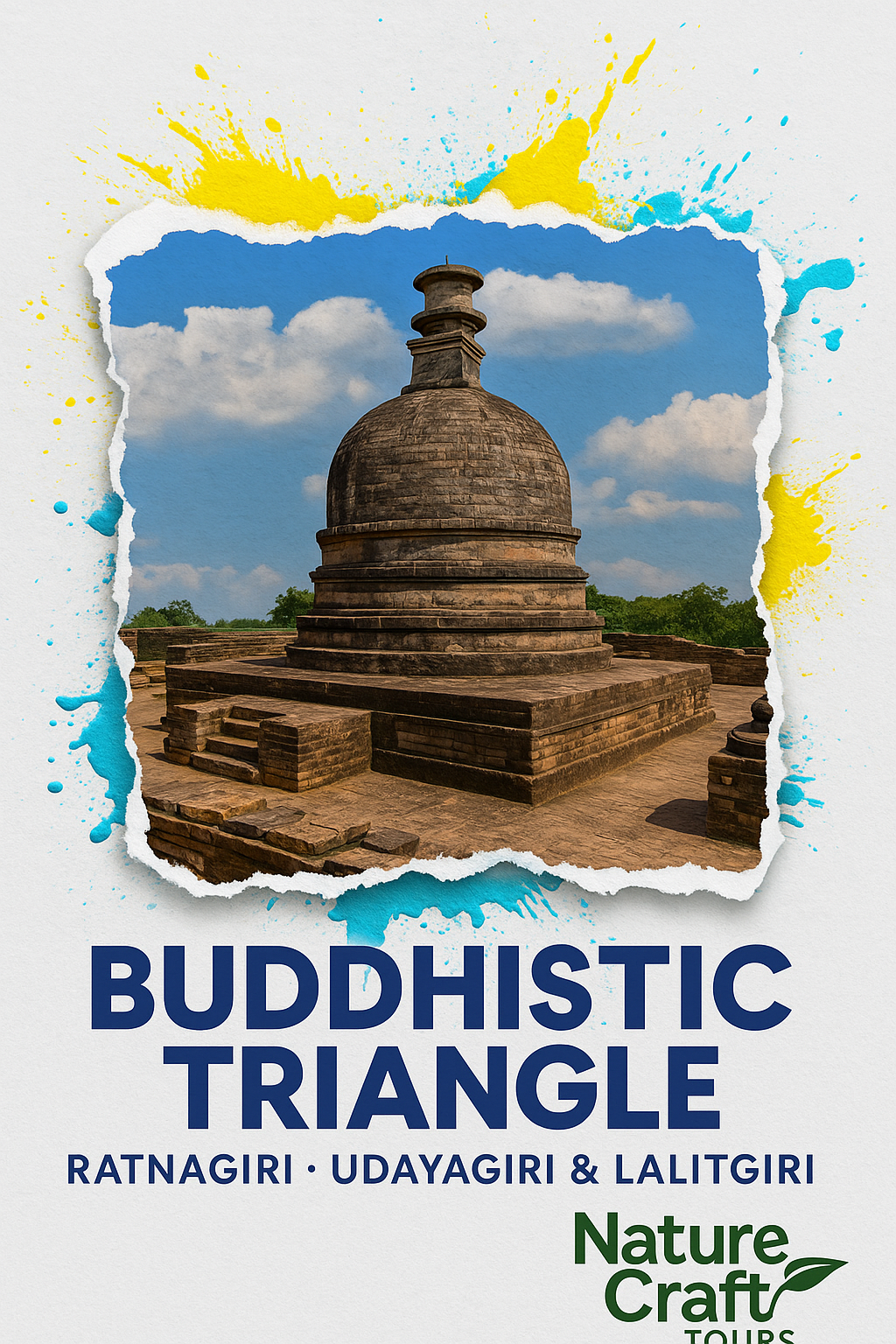
– A Comprehensive Travel Guide to Ratnagiri, Udayagiri & Lalitgiri
The Buddhistic Triangle of Odisha—comprising Ratnagiri, Udayagiri, and Lalitgiri—stands today as one of the most extraordinary archaeological and spiritual landscapes of ancient India. Nestled amidst the serene Brahmani and Birupa river valleys in Jajpur district, these three monumental sites chronicle nearly 1,500 years of Buddhist history, representing the evolution of Tantra Buddhism, Mahayana traditions, monastic learning, and ancient sculptural excellence. The region, often called “The Diamond Triangle,” is an indispensable destination for historians, researchers, scholars of Buddhism, architecture enthusiasts, and travellers seeking a profound cultural experience.
Excavations conducted by the Archaeological Survey of India reveal that Ratnagiri, Udayagiri, and Lalitgiri formed a single interconnected monastic complex with advanced spiritual universities, meditation chambers, stupas, viharas, and intricate stone artworks. The sanctity of the region is further strengthened by its tranquil rural landscape, making it a place where history breathes silently from every corner.
As documented by the Odisha Tourism Department (.gov), these sites are among the most treasured cultural assets of eastern India, representing a flourishing civilisation that influenced trade, philosophy, and spiritual practices across Southeast Asia.
Historical Significance of the Buddhistic Triangle
The history of the Buddhistic Triangle dates back to the 1st–2nd century CE, with continued development until the 12th century. Scholars believe that this region served as a major centre of Mahayana and Vajrayana Buddhism, attracting monks, scholars, and students from Nepal, Tibet, China, and Sri Lanka. The discovery of seals, terracotta objects, stone tablets, and monastic ruins indicates the presence of an organised educational system similar to Nalanda and Vikramshila.
These sites were deeply connected to the maritime trade routes of ancient Kalinga. Ports such as Palur and Tamralipta facilitated the movement of monks, texts, and goods across Southeast Asia. The Buddhistic Triangle thus stood as a vibrant intellectual and spiritual corridor between India and the rest of the Buddhist world.
Ratnagiri – The Gem Among Buddhist Monasteries
Overview
Ratnagiri is the most celebrated site among the three, known for its stunning monastery complexes, sculptural richness, and evidence of advanced Tantric Buddhist practices. The site flourished between the 5th and 13th centuries and is considered one of the most sacred Vajrayana centres of ancient India.
Major Attractions in Ratnagiri
1. Massive Stupa Complex
The central stupa at Ratnagiri is surrounded by dozens of votive stupas, each carrying inscriptions or carvings depicting Buddhist deities. The layout reflects advanced architectural planning.
2. Monastery Complexes (Monastery No. 1 & Monastery No. 2)
Monastery No. 1 is the largest excavated structure in the entire Buddhistic Triangle. Its central courtyard, stone pillars, and carved doorways depict the zenith of Buddhist architectural artistry.
3. Seated Buddha Sculptures
The intricate sculptures found at Ratnagiri represent exceptional craftsmanship. The images depict Buddha in Bhumisparsha, Dharmachakra, and Dhyana mudras. Researchers place Ratnagiri’s iconography alongside the finest works of the Gupta and Pala eras.
4. Vajrayana Deity Carvings
Carvings of Tara, Avalokiteshvara, Heruka, and other tantric deities indicate the monastery’s prominence as a Vajrayana centre.
Udayagiri – The Majestic Twin Hills of Buddhist Heritage
Overview
Udayagiri is the largest among the three sites and consists of two adjacent hills—Udayagiri Hill and Khandagiri Hill (not to be confused with the Jain caves near Bhubaneswar). The site contains stupas, viharas, meditation chambers, and monastic platforms dating from the 3rd–12th century CE.
Important Attractions in Udayagiri
1. Monastery Ruins on Udayagiri Hill
The remains of monastic halls with exposed brickwork provide insight into the structural practices of early Buddhist architects.
2. Votive Stupas and Stone Sculptures
Numerous small stupas made from both stone and brick appear across Udayagiri’s slopes. Each represents the devotion of monks who once lived and meditated here.
3. Meditation Cells
Carved into the rock face, these meditation cells served as spaces for isolated contemplation. The silence here is deeply immersive, giving travellers a glimpse of ancient monastic life.
Lalitgiri – The Oldest Seat of Buddhism in Odisha
Overview
Lalitgiri is believed to be the oldest of the three sites, dating back to the 1st century CE. Many historians consider it one of India’s earliest Buddhist establishments. The discovery of a massive stupa, stone relic caskets, and a golden relic chamber indicates the site’s supreme religious significance.
Key Attractions in Lalitgiri
1. Chaitya Hall and Stupa
The central stupa at Lalitgiri stands tall, with relic caskets discovered deep within its structure. These relics, preserved in multiple stone containers, reflect highly advanced monastic craftsmanship.
2. Museum Complex
The site museum houses ancient terracotta figurines, stone sculptures, inscriptions, and the sacred relics found during excavation.
3. Rock-Cut Monastic Cells
These ancient caves were used as residential and meditation spaces for monks.
To understand how important riverine culture shaped ancient Buddhism in eastern India, travellers can explore further through reliable references such as Wikipedia – Lalitgiri.
Distances Between Major Locations
- Bhubaneswar to Ratnagiri: 90–95 km approx.
- Bhubaneswar to Udayagiri: 85–90 km approx.
- Bhubaneswar to Lalitgiri: 55–60 km approx.
- Ratnagiri to Udayagiri: 7–8 km approx.
- Udayagiri to Lalitgiri: 10–12 km approx.
- Cuttack to Ratnagiri: 75 km approx.
How to Reach the Buddhistic Triangle
1. By Air
The nearest airport is Bhubaneswar Biju Patnaik International Airport, well-connected with major Indian cities. From the airport, travellers can hire cabs to reach the individual sites.
2. By Rail
Cuttack and Jajpur-Keonjhar Road Railway Station are the nearest major railheads. Both stations provide easy access to the Buddhistic Triangle.
3. By Road
All three sites are well-connected through state highways. Scenic rural landscapes enhance the drive, especially during early morning hours.
Staying Options (Properties) Near the Buddhistic Triangle
Travellers can choose from:
- Eco-stays in rural Jajpur
- Guest houses near the hill ranges
- Mid-range accommodations around Chandikhol and Duburi
- Resort-style properties on the Bhubaneswar–Kalinga Nagar route
Accommodations generally offer traditional Odia cuisine, guided tours, meditation-friendly environments, and easy access to all three archaeological sites.
Best Time to Visit The Buddhistic Triangle
Winter (November to February)
The most pleasant and recommended season. Clear skies, cool temperatures, and excellent visibility enhance the archaeological experience.
Post-Monsoon (September to October)
The hills and fields around the sites appear fresh and vibrant, making photography exceptionally rewarding.
Summer (March to June)
Mornings and evenings are pleasant, though afternoons can be warm.
Monsoon (June to August)
The region becomes lush green, but ruins may become slippery in heavy rains.
Things to Do Across Ratnagiri, Udayagiri & Lalitgiri
1. Heritage Walks
Walk through the monastic ruins, exploring stupas, sculptures, staircases, and prayer halls at each site.
2. Photography Expeditions
The ruins blend beautifully with natural landscapes, making them ideal for academic, professional, and travel photography.
3. Museum Study Tours
Lalitgiri’s museum offers rare insights into early Buddhist relics and artefacts.
4. Spiritual Meditation
The serene surroundings of these ancient monastic establishments make them ideal for meditation practices.
5. Combine with Other Historic Tours
Travellers often combine the Buddhistic Triangle with nature reserves, wildlife tours, and river-based journeys. For comparative travel inspiration, curated ecological trips such as Sundarban Travel offer additional perspectives on ancient river-based civilisations and their evolution.
Travel Tips for Visitors
- Wear comfortable clothing and walking shoes.
- Carry water during summer months.
- Avoid climbing fragile ruins.
- Respect archaeological regulations.
- Morning visits offer the best lighting for photography.
Conclusion
The Buddhistic Triangle of Ratnagiri, Udayagiri, and Lalitgiri is a rare archaeological and spiritual treasure. These ancient centres of learning present an extraordinary combination of architecture, philosophy, art, meditation, and heritage. Standing amidst these ruins, travellers feel a profound connection to India’s intellectual past—a civilisation that shaped Buddhist thought across the world. For researchers, pilgrims, and explorers, the Triangle offers a journey into the very soul of ancient Buddhism, preserving the timeless legacy of Odisha’s sacred history.