Cape Verde Travel Guide
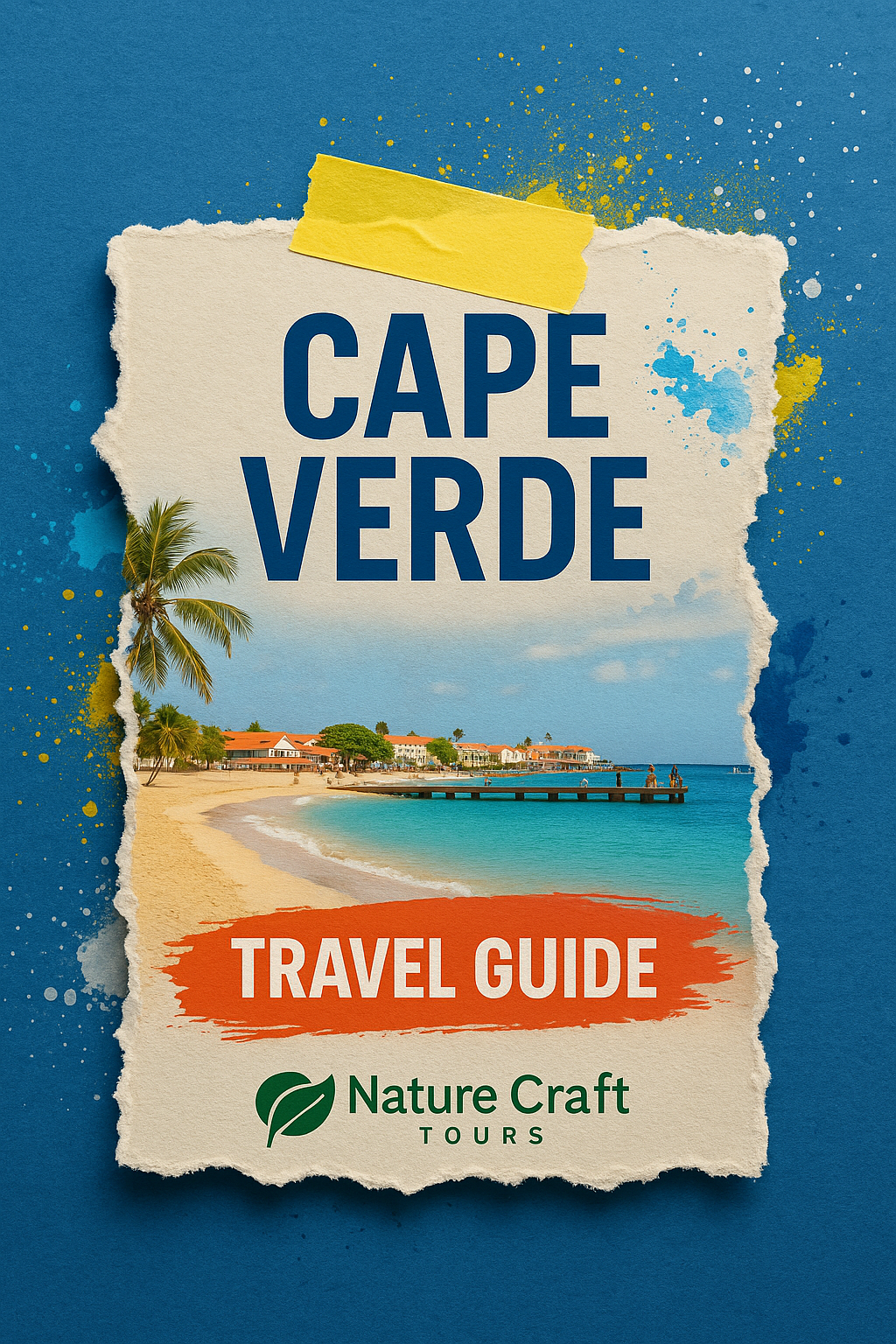
– A Comprehensive, Research-Based Handbook for Indian Travellers
Introduction to Cape Verde
Cape Verde, officially known as Cabo Verde, is a spectacular archipelago of ten volcanic islands scattered across the Atlantic Ocean, approximately 570 km off the west coast of Africa. Renowned for its enchanting blend of Creole–Portuguese–African culture, pristine beaches, world-class marine biodiversity, and dramatic volcanic landscapes, Cape Verde has emerged as one of the most unique island destinations for international travellers.
Geographical Overview of Cape Verde
The archipelago is divided into two distinct island groups:
- Barlavento (Windward Islands): Santo Antão, São Vicente, Santa Luzia, São Nicolau, Sal, Boa Vista
- Sotavento (Leeward Islands): Maio, Santiago, Fogo, Brava
Each island possesses its own personality—Sal and Boa Vista are famed for sandy beaches and water sports, while Santo Antão offers mountain trekking. Santiago is the cultural and political heart of the nation, Fogo boasts an active stratovolcano, and São Vicente features the cosmopolitan port city of Mindelo.
Top Tourist Attractions Across Cape Verde
1. Sal Island – The Tourism Capital
Sal is the most visited island in Cape Verde, celebrated for its golden beaches, turquoise waters, and charming towns.
Key Highlights:
- Santa Maria Beach: A long, pearly-white beachfront ideal for swimming, sunbathing, and water sports.
- Pedra de Lume Salt Crater: An extinct volcano containing saline waters where visitors float effortlessly.
- Shark Bay: A natural habitat for lemon sharks; visitors can safely watch them in shallow clear waters.
2. Boa Vista – Dunes, Deserts & Untouched Coastlines
Boa Vista is known for Sahara-like desert landscapes blended with vast beaches and quiet nature reserves.
- Viana Desert: Stunning white-sand dunes shaped by Atlantic winds.
- Praia de Chaves: A breathtakingly long, peaceful beach stretching over pristine coastline.
- Marine Turtle Sites: One of the world’s key nesting grounds for loggerhead turtles.
3. Santiago Island – Cultural & Historical Fusion
Santiago is the largest and most diverse island, home to the capital Praia and historic Cidade Velha, a UNESCO-listed heritage site.
- Cidade Velha: The oldest European settlement in the tropics, featuring the Pelourinho, fortress ruins, and early architecture.
- Praia Plateau: Cultural hubs, markets, museums, and colonial-era squares.
- Serra Malagueta National Park: Hiking trails, rare flora, and panoramic viewpoints.
4. Fogo Island – Home of Pico do Fogo Volcano
Fogo offers a dramatic volcanic landscape with fertile soil supporting agriculture, vineyards, and picturesque hillside villages.
- Pico do Fogo: The nation’s highest peak (2,829 m) and one of the most active volcanoes in the Atlantic.
- Cha das Caldeiras: A high-altitude volcanic valley inhabited by resilient local communities.
- São Filipe: The island’s colourful seaside town with Portuguese-influenced architecture.
5. Santo Antão – Trekking Paradise
Santo Antão is world-famous for its hiking trails, sharp peaks, terraced fields, lush valleys, and rugged coastal pathways.
- Paul Valley: Green, fertile canyon-like scenery ideal for multi-hour treks.
- Cova Crater: A massive volcanic caldera now used for agriculture.
- Ribeira Grande: A scenic town providing access routes to hiking circuits.
6. São Vicente – Music, Culture & Nightlife
The island’s cultural capital, Mindelo, is the birthplace of Cape Verde’s world-famous music tradition, including Morna.
- Mindelo Marina: A lively waterfront known for nightlife and restaurants.
- Laginha Beach: Clean city beach with calm waters.
- Monte Verde: The highest peak on the island, offering sweeping views.
Important Distances Between Major Islands
Distances are calculated in kilometres (km) and nautical miles due to inter-island ferry operations:
- Sal to Boa Vista: ≈ 50 km
- Sal to Santiago: ≈ 215 km
- Santiago to Fogo: ≈ 55 km
- Fogo to Brava: ≈ 20 km
- Santo Antão to São Vicente: ≈ 15 km
- Santiago to Maio: ≈ 40 km
How to Reach Cape Verde from India
From Kolkata
There are no direct flights from India to Cape Verde. Travellers typically connect via major international hubs such as Lisbon, Paris, Dubai, Doha, or Addis Ababa. Preferred routes include:
- Kolkata → Dubai/Doha → Lisbon → Sal/Praia
- Kolkata → Addis Ababa → Sal
- Kolkata → Paris → Praia
From Delhi
Delhi offers stronger connectivity through European airports. Recommended flight routes:
- Delhi → Lisbon → Praia/Sal
- Delhi → Paris → Praia
- Delhi → Istanbul → Sal
Main International Airports in Cape Verde
- Amílcar Cabral International Airport (Sal Island)
- Nélson Mandela International Airport (Santiago Island)
- Aristides Pereira International Airport (Boa Vista)
Cape Verde Visa Guide for Indian Travellers
Visa Policy
Indian travellers require a visa to enter Cape Verde. The visa can be obtained through the Cape Verde Embassy in New Delhi or on arrival at selected international airports (subject to latest policy updates).
Required Documents
- Original passport (valid for minimum 6 months)
- Completed visa application form
- Recent colour photographs
- Return flight ticket copies
- Hotel reservation confirmation
- Bank statements or proof of financial stability
- Travel insurance documents
Visa Office Address (New Delhi)
Embassy of the Republic of Cabo Verde
Vasant Vihar Area,
New Delhi, India
Operating hours may vary; travellers should verify timings before visiting the embassy.
Arrival Visa Procedure
Eligible travellers can obtain visa-on-arrival at airports in Praia, Sal, and Boa Vista, subject to presenting:
- Valid passport
- Return ticket
- Accommodation proof
- Travel insurance
Inter-Island Transportation
1. Domestic Flights
Cape Verde’s islands are well-connected through regular domestic flights, enabling travellers to visit multiple destinations during their stay.
2. Ferries
Ferries operate between major islands, including Santiago–Fogo–Brava and São Vicente–Santo Antão routes. Ferry schedules may vary due to weather conditions.
3. Local Transport
Taxis, shared minibuses (aluguer), and rental cars are common on larger islands such as Santiago, São Vicente, and Sal.
Accommodation Options Across Cape Verde
Sal Island
- Seafront resorts with swimming pools and private beach access.
- Boutique hotels in Santa Maria.
- Budget-friendly guesthouses near town centres.
Boa Vista
- Luxury beachfront resorts.
- Ecolodges near protected natural areas.
Santiago
- Urban business-class hotels in Praia.
- Cultural stays near Cidade Velha.
- Guesthouses in local neighbourhoods.
Fogo
- Homestay-style lodges in Cha das Caldeiras.
- Comfortable hotels in São Filipe.
Santo Antão
- Mountain lodges surrounded by hiking trails.
- Rustic eco-farms and valley guesthouses.
Cape Verdean Cuisine
Cape Verde’s culinary tradition merges African, Portuguese, and Creole flair. Key dishes include:
- Cachupa: A slow-cooked stew of corn, beans, meat, and vegetables.
- Grilled Tuna & Seafood: Fresh fish prepared with local spices.
- Percebes (Goose Barnacles): A rare delicacy along the coasts.
- Grogue: A local sugarcane-based spirit.
Cultural Etiquette & Travel Tips
Cultural Behaviour
- Greeting people with warmth and politeness is appreciated.
- Modest dressing is recommended in rural and historic areas.
- Photography of locals should be done with permission.
Safety Tips
- Avoid remote areas during late hours.
- Keep passports and valuables safely secured.
- Check ferry schedules in advance, especially during rough sea conditions.
Best Time to Visit Cape Verde
The best time to visit Cape Verde is during the dry season from November to June.
- November–June: Pleasant weather, ideal for beach stays, hiking, and water sports.
- July–October: Warmer temperatures with occasional rainfall; good for cultural festivals.
Recommended 8-Day Itinerary
Day 1 – Arrival at Sal Island
Relax on Santa Maria Beach and explore the town.
Day 2 – Sal Tour
Visit Pedra de Lume Salt Crater and Shark Bay.
Day 3 – Fly to Santiago
Explore Praia and its cultural districts.
Day 4 – Cidade Velha Excursion
Visit the UNESCO site and surrounding villages.
Day 5 – Travel to Fogo Island
Explore São Filipe markets and seaside walkways.
Day 6 – Pico do Fogo Volcano
Guided tour to Cha das Caldeiras and vineyards.
Day 7 – Fly to São Vicente
Discover Mindelo, nightlife, and Laginha Beach.
Day 8 – Day Trip to Santo Antão
Hiking in Paul Valley and exploring scenic landscapes.
Conclusion
Cape Verde stands as one of the world’s most captivating Atlantic archipelagos—where volcanic peaks, sandy deserts, and sunlit beaches coexist harmoniously. Its cultural diversity, musical heritage, and eco-friendly lifestyle add unmatched charm for international travellers.
For travellers from Kolkata or Delhi, reaching Cape Verde is entirely manageable with well-planned flight connections and visa procedures. Whether one desires relaxation, adventure, cultural immersion, or island-hopping discovery, Cape Verde offers an experience that stays alive in memory long after the journey ends.