Zuluk and the Old Silk Route Belt (East Sikkim): A Living Corridor of History, Altitude, and Himalayan Memory Where Roads Remember Empires Zuluk is not a destination that announces itself loudly. It reveals itself gradually, through winding mountain roads, disciplined settlements, and landscapes shaped as much by history as by geology. Located in East Sikkim […]

Category: Blog
Gurudongmar Lake (North Sikkim)
Gurudongmar Lake (North Sikkim): A High-Altitude Testament of Geography, Faith, and Silence Where Altitude Becomes Experience At an elevation where the air thins, sound dissolves, and thought slows into contemplation, Gurudongmar Lake stands as one of the most profound high-altitude landscapes of the Eastern Himalaya. Located in the remote northern reaches of Sikkim, this glacial […]
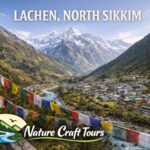
Lachen (North Sikkim)
Lachen (North Sikkim): A Himalayan Settlement at the Edge of Altitude, Culture, and Time Perched high above the confluence of rivers and trade routes, Lachen is not merely a mountain village of North Sikkim; it is a strategic, cultural, and ecological threshold between inhabited Himalayan valleys and the vast, sparsely populated trans-Himalayan landscape beyond. Often […]
Shingba Rhododendron Sanctuary
Shingba Rhododendron Sanctuary: A Living Alpine Archive near Yumthang Valley Hidden within the upper reaches of North Sikkim, where altitude governs ecology and seasons dictate access, the Shingba Rhododendron Sanctuary stands as one of the Eastern Himalaya’s most botanically significant protected landscapes. Often visited briefly in transit to Yumthang Valley, Shingba is rarely understood in […]
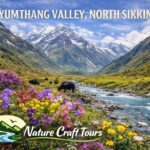
Yumthang Valley, North Sikkim
Yumthang Valley, North Sikkim — The Living Alpine Theatre of the Eastern Himalaya Far beyond the last permanent settlements of North Sikkim, where roads narrow, air thins, and mountains dictate the rhythm of life, lies Yumthang Valley — a high-altitude basin sculpted by glaciers, rivers, and centuries of seasonal migration. Often introduced superficially as the […]
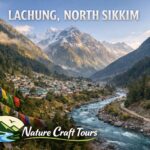
Lachung, North Sikkim
Lachung, North Sikkim — A High-Altitude Valley Where Landscape, Culture, and Silence Coexist Entering the Inner Himalaya Far beyond the last commercial bustle of Sikkim’s capital, where roads narrow and mountains rise into layered walls of stone, lies Lachung—an isolated Himalayan settlement positioned at the confluence of high-altitude geography and living tradition. Lachung is not […]
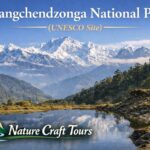
Khangchendzonga National Park (UNESCO Site)
Khangchendzonga National Park (UNESCO Site): Where Sacred Mountains, Living Traditions, and Untamed Wilderness Converge Rising beyond human scale and imagination, Khangchendzonga National Park is not merely a protected landscape—it is a complete cultural, ecological, and spiritual universe. Located in the heart of Sikkim, this vast Himalayan expanse surrounds Mount Khangchendzonga, the third-highest peak on Earth, […]
Yuksom (West Sikkim)
Yuksom (West Sikkim): Birthplace of a Himalayan Kingdom and Gateway to Sacred Landscapes Nestled deep within the forested folds of West Sikkim, Yuksom is not merely a village—it is the spiritual, political, and historical genesis of the Sikkimese identity. Quiet, contemplative, and profoundly rooted in tradition, Yuksom stands apart from the more frequented Himalayan hill […]
Rabdentse Ruins (West Sikkim)
Rabdentse Ruins (West Sikkim): Walking Through the Lost Capital of a Himalayan Kingdom Hidden beneath dense Himalayan forests and veiled in an almost monastic silence, the Rabdentse Ruins stand as one of the most evocative historical landscapes in Eastern India. Perched on a forested ridge near Pelling in West Sikkim, Rabdentse was once the proud […]
Pemayangtse Monastery (West Sikkim)
Pemayangtse Monastery (West Sikkim): A Sacred Chronicle of Faith, History, and Himalayan Silence High on a forested ridge above the gentle valley of Pelling, where clouds drift slowly across cedar and magnolia canopies, stands Pemayangtse Monastery—one of the oldest, most revered, and spiritually influential monastic institutions in Sikkim. More than a religious monument, Pemayangtse represents […]