Chapramari Offbeat Trails
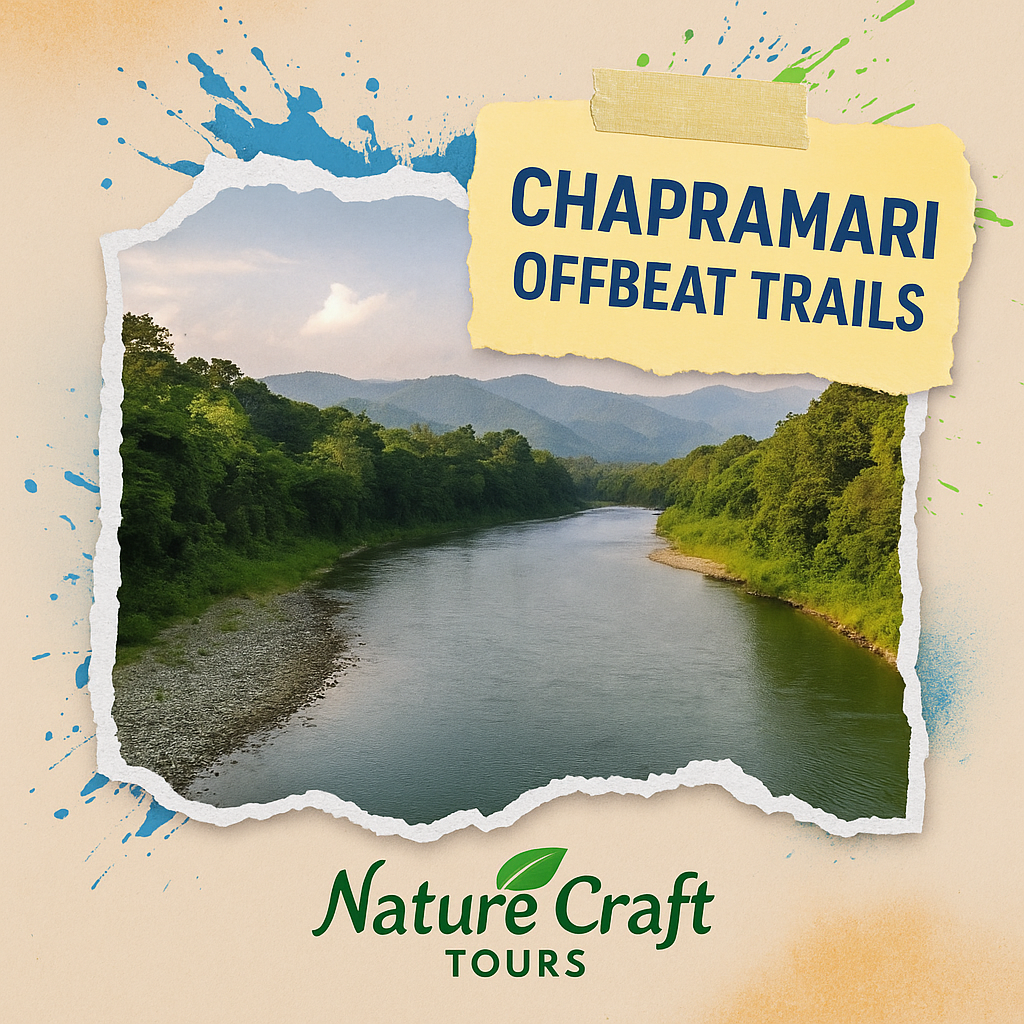
– A Silent Wilderness Beyond the Dooars Forest Belt
Chapramari, one of the oldest forest reserves in West Bengal, extends across the emerald landscape of the Dooars region, sharing its borders with the famous Gorumara National Park. But beyond the well-known safari routes and designated viewing towers lies a world of untouched wilderness—an offbeat territory that unfolds through hidden forest trails, tribal villages, pristine streams, and quiet stretches where wildlife still roams freely. This unexplored region is what we call the Chapramari Offbeat Trails.
These offbeat trails introduce travellers to the raw, unfiltered side of the Dooars jungle ecosystem. With its towering sal trees, elephant corridors, tropical grasslands, wetlands, and riparian zones, Chapramari is a biological tapestry where nature thrives abundantly. The calmness of the forest, the rhythmic sound of cicadas, and the soft movement of wind through dense foliage together create an atmosphere that blends adventure with serenity. It is here that travellers discover the essence of a true wilderness retreat.
Understanding the Ecological Importance of Chapramari
Chapramari Wildlife Sanctuary is a part of the Terai–Dooars eco-zone of the Eastern Himalayas. It plays a crucial role in maintaining the ecological balance of the Gorumara–Chapramari–Neora Valley forest network. The sanctuary acts as a natural corridor for elephants migrating between India and Bhutan. Its rich vegetation supports a large variety of species, from large mammals like Indian elephants, gaurs, and leopards to diverse birdlife including hornbills and kingfishers.
The offbeat trails lie primarily along the outer eastern and northern stretches of the sanctuary, touching remote villages, tea gardens, and riverine belts. These areas have remained untouched because they fall outside traditional tourist circuits. For nature researchers, birdwatchers, photographers, and travellers who enjoy silent exploration, these trails offer an extraordinary experience.
Major Attractions Along Chapramari Offbeat Trails
The offbeat region of Chapramari is rich in forests, rivers, tribal culture, wildlife habitats, and scenic landscapes. The following are the most important attractions to explore:
1. Jaldhaka River Belt
The offbeat trails often follow segments of the Jaldhaka River, which flows gracefully through the Dooars plains. Though the main river is known for its scenic valleys near Jhalong and Bindu, its lower stretches near Chapramari hold quiet and peaceful viewpoints. The riverbanks lined with pebbles and tropical shrubs allow travellers to enjoy solitude in nature.
2. Upper and Lower Chapramari Forest Zones
Unlike the designated safari areas, these offbeat forest belts include deep sal forests, bamboo groves, wet grasslands, and small streams. The density of the vegetation makes these zones home to elephants, barking deer, and smaller mammals. Walking along forest edges with an experienced guide offers a rare chance to observe wildlife behaviour in near-original conditions.
3. Tea Garden Trails
Chapramari shares boundaries with several lush green tea gardens. Offbeat trails often pass through these gardens, offering beautiful views of rolling plantations. Early mornings are especially scenic, with mist rising gently above the tea bushes and workers starting their day with traditional leaf-plucking techniques.
4. Murti River and Riverside Paths
The Murti River is one of the most popular rivers in the Dooars, but its lesser-known stretches near Chapramari are serene, quiet, and ideal for nature photography. The riverbank is often dotted with footprints of elephants, deer, and even leopards that visit the water source during night hours.
5. Tribal Villages and Cultural Interaction
Various indigenous communities, especially the Rabha and Oraon tribes, inhabit the areas around Chapramari. These villages reflect traditional architecture, local crafts, agricultural lifestyles, and a spiritual connection with the forest. Interacting with local people provides a deeper understanding of the coexistence between humans and wildlife in the region.
6. Birdwatching Hotspots
Chapramari and its offbeat extensions are home to more than 200 bird species, including:
- Great Hornbill
- Red Junglefowl
- Indian Peafowl
- Scarlet Minivet
- White-throated Kingfisher
- Asian Paradise Flycatcher
- Black Eagle
- Green Magpie
- Drongos and Barbets
The dense mixed habitat of sal, teak, shrubs, and wetlands attracts a wide range of birds, making this area a birdwatcher’s paradise.
7. Forest Watchtower Belt (Outer Region)
While core watchtowers are inside the official safari routes, the peripheral watchpoints around the offbeat areas offer wide panoramic views of grasslands and forest clearings. These are excellent spots during early morning hours, when animals are most active.
8. Neora Valley Forest Edge
Some offbeat trails extend toward the fringes of Neora Valley. Here, the vegetation becomes more moist and alpine, creating a transition zone between tropical Dooars forests and the higher Himalayan belt. This biodiversity junction is both visually stunning and scientifically significant.
Unique Experiences Along Chapramari Offbeat Trails
Exploring these trails offers immersive nature-based experiences rarely found in conventional wildlife tourism circuits:
- Silent Jungle Walks: Listening to natural forest sounds without vehicular noise.
- Elephant Corridor Observation: Watching movement patterns from safe viewpoints.
- Riverside Meditation: Enjoying the peaceful ambience of quiet riverbanks.
- Tribal Cultural Visits: Learning about indigenous customs and forest traditions.
- Tea Garden Photography: Capturing mist-laden landscapes during sunrise.
- Night Sky Exploration: Admiring clear skies unobstructed by urban lights.
Distances from Chapramari Offbeat Trails to Major Locations
| Location | Distance | Travel Time |
|---|---|---|
| New Jalpaiguri (NJP) | 65 km | 1.5 – 2 hours |
| Bagdogra Airport | 70 km | 2 hours |
| Lataguri | 12 km | 25 minutes |
| Chalsa | 15 km | 30 minutes |
| Gorumara National Park | 10 km | 20 minutes |
| Murti Riverside | 8 km | 15 minutes |
How to Reach Chapramari Offbeat Trails
By Air
Bagdogra Airport is the nearest airport. Travellers can hire private vehicles to reach the offbeat trails via Lataguri, Malbazar, or Chalsa. The roads offer scenic views of the Himalayan foothills and tea gardens.
By Train
New Jalpaiguri (NJP) Railway Station is the primary railhead. From NJP, reserved vehicles are widely available. The journey through the Terai plains and the lush greenery of Dooars forests is refreshing and picturesque.
By Road
Chapramari is well connected by motorable roads from Siliguri, Malbazar, Lataguri, and Chalsa. The most popular route is:
Siliguri → Sevoke → Malbazar → Chalsa → Chapramari Offbeat Trails
Road conditions are generally good, with scenic forest stretches along the way.
Local Transport and Accessibility
Local transport includes small cars arranged by nearby resorts or homestays. For exploring offbeat trails on foot, forest guides are highly recommended. This ensures both safety and a richer understanding of flora and fauna.
Accommodation Options Near Chapramari Offbeat Trails
The offbeat zones do not have commercial hotels inside the forest, but several scenic lodges, eco-resorts, and homestays are available nearby. These properties are surrounded by greenery, providing peaceful stays close to nature.
Types of Stays Available
- Forest-edge eco-resorts
- Riverside cottages near Murti or Jaldhaka stretches
- Homestays offering traditional meals
- Tea garden view cottages
- Budget-friendly lodges near Lataguri and Chalsa
Most stays offer local cuisine, sightseeing arrangements, and nature walks led by knowledgeable guides.
Local Cuisine Around Chapramari
Food in the Chapramari region reflects traditional Dooars flavours blended with tribal influences. Fresh ingredients from nearby farms, forest herbs, and local spices create wholesome meals.
- Rice with local lentils and vegetables
- Chicken curry cooked with forest herbs
- Fish preparations from local rivers
- Dooars-style bamboo shoot pickles
- Momos and thukpa influenced by Himalayan cuisine
- Fresh fruits such as oranges and pineapples
Dinners near riversides or forest edges create memorable culinary experiences.
Best Time to Visit Chapramari Offbeat Trails
The region has pleasant weather throughout the year, but different seasons offer different visual experiences.
Winter (November to February)
The best season for forest walks, birdwatching, and wildlife sightings. Cool days and misty mornings add a mystical feeling to jungle exploration.
Spring (March to April)
Forests become vibrant with new leaves, wildflowers bloom, and the weather remains comfortable.
Monsoon (June to September)
The landscape turns lush and green, with dramatic clouds and rain-washed vegetation. However, some trails may be restricted due to heavy rain.
Autumn (October to November)
Clear skies, golden sunlight, and refreshing weather make this an excellent season for photography.
Suggested 3-Day Itinerary for Chapramari Offbeat Trails
Day 1
- Arrival from NJP/Bagdogra
- Visit Murti Riverside
- Sunset viewpoints near Chapramari forest edge
Day 2
- Tea garden trails near Chalsa
- Visit tribal villages
- Explore offbeat sections of Jaldhaka belt
- Evening nature walk
Day 3
- Birdwatching in early morning
- Explore forest buffer zones
- Departure to NJP/Bagdogra
Travel Tips for Visitors
- Always take a forest guide for deeper offbeat trails.
- Carry binoculars for birdwatching.
- Wear sturdy shoes suitable for jungle terrain.
- Carry essential medicines and insect repellent.
- Respect wildlife and maintain silence during forest walks.
- Avoid plastic waste inside the forest.
Conclusion
Chapramari Offbeat Trails represent the soul of the Dooars wilderness—a world of pristine forests, tribal harmony, river valleys, and rich biodiversity. Away from mainstream safaris, these lesser-explored trails offer a deeper, more intimate connection with nature. Travellers seeking silence, raw beauty, and authentic forest experiences find this region to be a timeless treasure. Whether you explore riverbanks at sunrise, walk through misty sal forests, or learn from tribal communities, Chapramari’s offbeat charm stays with you long after the journey ends.