Assam Tour Plan:
Explorer’s Long List of Popular & Offbeat Destinations
(Best Timing + Special Attractions)
Assam is not a single destination; it is a layered landscape shaped by the Brahmaputra and Barak river systems, tea-covered foothills, wildlife-rich floodplains, living temple traditions, and heritage towns built by the Ahoms. A successful Assam itinerary must be designed as circuits, because distances are wide and experiences are best enjoyed at specific hours—sunrise for safaris and wetlands, afternoons for museums and heritage, and evenings for riverfront light and cultural performances.
A. Popular Destinations in Assam (Long List with Timing & Special Attractions)
1) Guwahati: The Brahmaputra Gateway City

- Best timing: Afternoon arrival; evenings for riverfront ambience; mornings for temples and museums.
- Special attractions: Assam’s primary gateway where city energy meets a vast river horizon. Ideal for cultural orientation, temple heritage, and a first introduction to Brahmaputra-scale geography.
2) Kamakhya Temple (Nilachal Hill, Guwahati): Sacred Power-Spot of the Northeast

- Best timing: Early morning for calmer darshan flow; late afternoon for hill views and a quieter temple mood.
- Special attractions: One of India’s most revered Shakti shrines, culturally significant for Assam and the entire eastern region, and central to the spiritual identity of Guwahati.
3) Umananda Island (Peacock Island): Temple on the River

- Best timing: Morning to midday, when crossings are comfortable and light is clear.
- Special attractions: A small river island experience that feels symbolic—water, skyline, and a compact shrine setting, offering a short but memorable Brahmaputra perspective.
4) Assam State Museum & Heritage Stops (Guwahati Core)

- Best timing: Late morning to afternoon.
- Special attractions: Useful for travellers who want context—Assam’s art, textiles, historical layers, and cultural continuity beyond “just sightseeing.”
5) Srimanta Sankaradeva Kalakshetra (Guwahati): Cultural Complex for Art & Identity

- Best timing: Afternoon (comfortable walking hours).
- Special attractions: A curated window into Assamese culture—architecture, performing traditions, and a sense of how Assam expresses itself through art and community life.
6) Brahmaputra Riverfront Evening Experience (Guwahati)
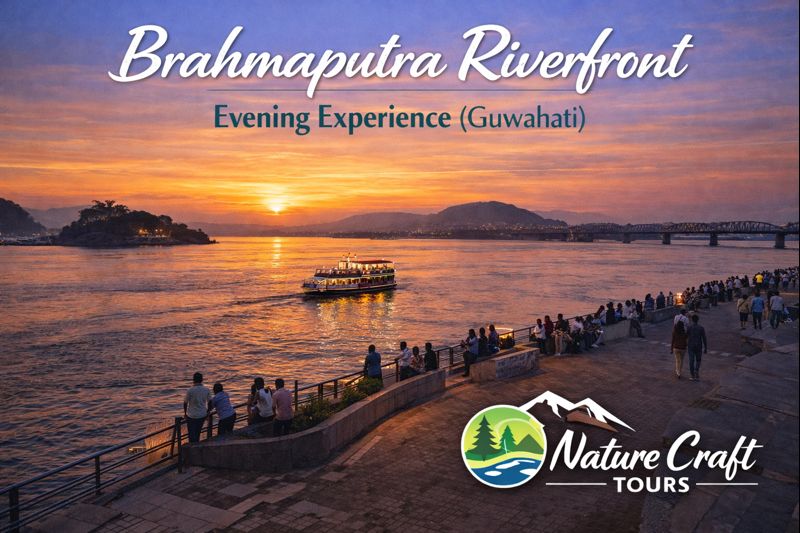
- Best timing: Sunset to early night.
- Special attractions: The river becomes the “main monument” at dusk—wide water, moving lights, and a calm end-of-day rhythm that belongs uniquely to Assam.
7) Sualkuchi: Assam’s Silk-Weaving Town

- Best timing: Morning to early afternoon (workshops are most active in daylight).
- Special attractions: A living craft destination where Assamese silk traditions become visible in real time—excellent for cultural travellers and shoppers who value authenticity.
8) Hajo: Pilgrimage Confluence Town near Guwahati

- Best timing: Morning.
- Special attractions: A compact spiritual circuit that adds depth to a Guwahati stay, suitable for travellers who want a broader religious-cultural experience.
9) Kaziranga National Park: Assam’s Flagship Wildlife Landscape

- Best timing: Early morning and late afternoon safari windows; plan 2 nights for proper wildlife pacing.
- Special attractions: A world-famous floodplain ecosystem known for the Indian one-horned rhinoceros and strong birdlife; the “classic Assam wildlife” experience where grasslands, wetlands, and forest edges intersect.
10) Kakochang Waterfall (Kaziranga Region): Scenic Break from Safari Rhythm
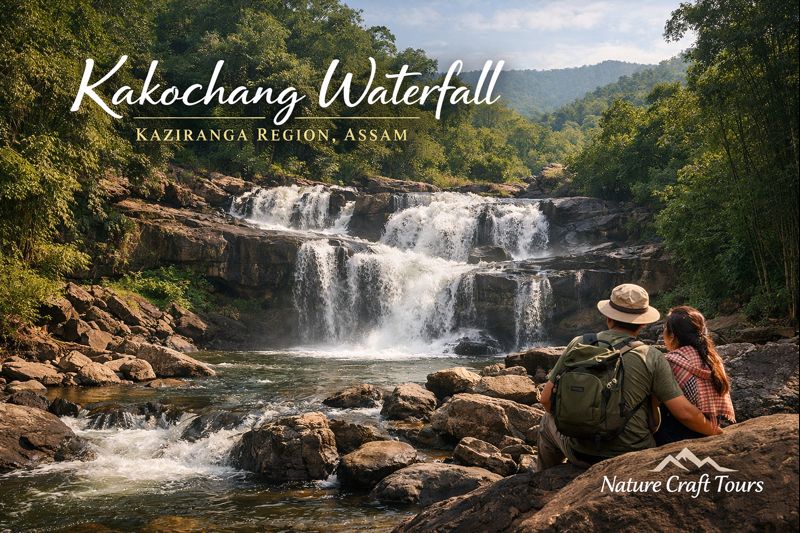
- Best timing: Late morning to afternoon (daylight improves safety and photography).
- Special attractions: A refreshing nature stop that adds variety—waterfall sound, green slopes, and a slower pace between safari drives.
11) Tea Garden Experience (Kaziranga / Jorhat Belt): Assam’s Iconic Plantation Story

- Best timing: Morning or late afternoon for soft light and comfortable walking.
- Special attractions: Tea landscapes define Assam visually and economically—plantation roads, processing narratives, and the calm geometry of green fields.
12) Pobitora Wildlife Sanctuary (Near Guwahati): Short-Trip Rhino & Wetland Mood

- Best timing: Morning safari hours.
- Special attractions: A compact wildlife stop that suits time-limited travellers who still want a strong “rhino-and-wetland” experience close to Guwahati.
13) Majuli: The River-Island Culture of Satras

- Best timing: Arrive by afternoon; keep next morning for satra visits and village lanes.
- Special attractions: A culturally distinct river-island experience known for Neo-Vaishnavite satras, slow rural life, and the feeling of living on the river’s edge rather than beside it.
14) Satra Circuit (Majuli): Monastic Culture, Mask Traditions, and Performing Arts

- Best timing: Morning to midday (best hours for calm visits and interaction).
- Special attractions: A rare cultural environment where devotional art, music, and community life remain central—excellent for travellers seeking depth rather than speed.
15) Jorhat: Practical Base for Majuli + Tea Heritage

- Best timing: Afternoon arrival; mornings for local museums/heritage and onward ferry planning.
- Special attractions: A useful hub that connects tea-country identity with Majuli’s river-island logistics.
16) Sivasagar: Ahom-Era Heritage Town
- Best timing: Morning and late afternoon (best for temple-tank light and heritage photography).
- Special attractions: The heart of Assam’s Ahom legacy—monuments, sacred tanks, and the atmosphere of a historic capital region.
17) Charaideo Maidams (Charaideo): UNESCO-Recognized Heritage Landscape
- Best timing: Morning for cooler walking and clearer photographs of the mounds.
- Special attractions: A unique mound-burial system of the Ahom dynasty—an essential stop for heritage-focused travellers and an important cultural identity site for Assam.
18) Manas National Park (Bodoland Foothills): Wilderness at the Bhutan-Himalaya Edge
- Best timing: Morning and evening safari windows; minimum 2 nights recommended.
- Special attractions: A dramatic wildlife setting at the Himalayan foothills, known for biodiversity richness and a strong “untouched habitat” feel compared to more urban-proximate parks.
19) Nameri National Park (Sonitpur Belt): Forest-River Ecosystem Experience
- Best timing: Early morning for bird activity and forest movement; afternoons for river-edge scenery.
- Special attractions: A nature-focused destination valued by birders and slow travellers who want forest-river calm rather than only big-mammal spotlighting.
20) Dibru–Saikhowa Region: Wetland Wilderness and Riverine Silence
- Best timing: Early morning for birdlife and wetland light; keep extra buffer time for local logistics.
- Special attractions: A strong “river-world” experience—wide skies, reed beds, water channels, and the deep quiet that serious nature travellers often seek.
21) Haflong (Dima Hasao): Assam’s Hill Station Mood
- Best timing: Afternoon arrival; mornings for lake walks and viewpoints.
- Special attractions: A cool-climate break from the plains—gentle hill scenery, relaxed pace, and an ideal “pause chapter” inside an otherwise river-and-forest itinerary.
22) Silchar & Barak Valley Gateway (Southern Assam)
- Best timing: Afternoon arrival; mornings for local culture and onward journeys.
- Special attractions: A culturally distinct part of Assam with its own river-valley identity—best included on longer trips that want a fuller state-wide understanding.
B. Offbeat Destinations in Assam (Separate Explorer List)
These destinations are “offbeat” because they are quieter, farther from mainstream tourist flow, or require extra planning. They reward travellers who value ecology, photography, community life, and slow movement.
1) Chandubi Lake (Rabak / Guwahati Belt): Quiet Wetland Escape
- Best timing: Early morning for reflections and bird activity; late afternoon for soft light.
- Special attractions: A calm water landscape that feels far from the city despite being within reach—ideal for nature photography and unhurried picnics.
2) Garbhanga Reserve Forest (Near Guwahati): Forest Walks and Elephant-Corridor Mood
- Best timing: Morning (cooler hours).
- Special attractions: A forest escape near the city that suits travellers who want “green time” without a multi-day park schedule.
3) Bogamati (Bodoland Foothills): River, Forest, and Open-Sky Landscapes
- Best timing: Morning to afternoon (daylight is important for safe movement).
- Special attractions: A scenic foothill destination where rivers and forest edges create a wide, airy landscape—excellent for day trips and soft adventure.
4) Panimur Falls (Dima Hasao): Waterfall Day with Hill-District Character
- Best timing: Late morning to afternoon.
- Special attractions: A dramatic waterfall setting that shows a different Assam—hill districts, stronger rock formations, and a more rugged terrain mood.
5) Umrangso & Kopili Belt (Dima Hasao): Quiet Lakes, Reservoir Views, and Remote Roads
- Best timing: Afternoon arrival; next morning for viewpoints and lake-side calm.
- Special attractions: A low-crowd landscape ideal for travellers who enjoy long drives, open water views, and “away-from-everything” silence.
6) Dehing Patkai Belt (Upper Assam): Rainforest Atmosphere
- Best timing: Early morning for forest ambience; avoid rushed schedules.
- Special attractions: A humid, green rainforest mood that contrasts sharply with Kaziranga-style grasslands—best for nature lovers and birders.
7) River-Island Micro-Exploration (Beyond Majuli): Sandbars and Seasonal Char Landscapes
- Best timing: Morning to midday (river conditions are generally calmer).
- Special attractions: A true “Brahmaputra geography lesson” where landforms shift and the river’s power becomes tangible.
8) Small Tea-Garden Trails (Upper Assam): Photography-First Plantation Roads
- Best timing: Golden hours—early morning and late afternoon.
- Special attractions: Quiet lanes through tea estates often feel more authentic than crowded “show stops,” especially for photographers.
9) Rural Craft & Folk Culture Pockets (Silk, Bamboo, Mask Traditions)
- Best timing: Daytime, when artisans are actively working.
- Special attractions: Offbeat cultural experiences that reveal how Assam lives—craft is not a souvenir here; it is a working identity.
C. Complete Assam Tour Plan (10 Days / 9 Nights – Explorer Circuit)
This itinerary is designed for first-time travellers who want Assam’s strongest highlights—city culture, rhino safaris, river-island heritage, Ahom history, and one major alternative park (Manas). It is paced to match realistic travel hours.
| Day | Route & Timing of Travel | Key Destinations | Special Attraction Focus |
|---|---|---|---|
| Day 1 | Arrive Guwahati by afternoon. Evening riverfront time. | Brahmaputra riverfront / sunset ambience | Soft landing: the river’s scale introduces Assam immediately. |
| Day 2 | Morning temples; Afternoon culture-museum; Evening relaxed city. | Kamakhya + cultural complex / museum zone | Spiritual depth + cultural orientation for the rest of the journey. |
| Day 3 | Morning short craft trip; Afternoon drive towards Kaziranga. | Sualkuchi (optional) + onward to Kaziranga | Craft identity + transition into the wildlife floodplain landscape. |
| Day 4 | Early morning safari; Afternoon rest + nature stop. | Kaziranga safari window + Kakochang (optional) | Rhino-and-wetland signature day with a scenic break for variety. |
| Day 5 | Morning second safari or birding; Afternoon drive to Jorhat region. | Kaziranga + tea landscape drive | Complete the wildlife chapter and prepare for river-island culture. |
| Day 6 | Morning transfer and river crossing; Afternoon island exploration. | Majuli arrival + village lanes | Assam’s slow cultural landscape—river life, villages, and satra atmosphere. |
| Day 7 | Morning satra circuit; Afternoon depart towards Sivasagar. | Majuli satras + Sivasagar arrival | Living culture followed by a shift into Ahom-era heritage. |
| Day 8 | Morning heritage; Afternoon Charaideo visit. | Sivasagar heritage zone + Charaideo Maidams | Assam’s historical core: monuments and the UNESCO-recognised burial landscape. |
| Day 9 | Morning long drive to Manas region; Evening settle and rest. | Transit to Manas foothills | Transition from upper Assam heritage into Himalayan-foothill wilderness. |
| Day 10 | Early morning safari; Afternoon return towards Guwahati for departure. | Manas safari window + Guwahati departure | Wilderness finale: forest, foothills, and a distinct biodiversity chapter to close the tour. |
D. Optional Add-On Modules (Choose by Interest)
Module 1: Short Wildlife Add-On near Guwahati (1 Day)
- Best timing: Morning.
- Where: Pobitora (quick rhino-and-wetland experience).
- Why add it: Perfect for travellers who cannot spend two nights at Kaziranga but still want a wildlife chapter.
Module 2: Hill-District Extension (2–3 Days)
- Best timing: Afternoon arrivals; mornings for lake walks and viewpoints.
- Where: Haflong + Panimur Falls / Umrangso belt.
- Why add it: Adds cool-climate hill mood and waterfall scenery—Assam beyond the floodplains.
Module 3: Deep Nature Extension (3–5 Days)
- Best timing: Early mornings for forest ambience.
- Where: Dehing Patkai / Dibru–Saikhowa belt.
- Why add it: For birders and rainforest lovers who want quiet wilderness rather than only headline parks.
E. Field Notes for Planning (Professional, Practical Guidance)
- Wildlife timing matters: In Assam, the best sightings and the most beautiful light usually come at sunrise and late afternoon. Keep mid-day for rest, local culture, and short nature stops.
- Do not rush Majuli: The island is not a checklist stop; it is an atmosphere. One night is possible, but two nights produces a far superior experience.
- Balance nature + heritage: Assam becomes most memorable when you pair one major wildlife landscape (Kaziranga/Manas) with one cultural-heritage core (Majuli/Sivasagar/Charaideo).
- Keep buffer time: River crossings, highway traffic near cities, and weather can all reshape daily pace.