Meghalaya Explorer’s Grand Circuit:
Shillong Highlands, Sohra’s Waterfall Kingdom, Living Root Bridges, Dawki’s Crystal River, and the Deep Garo Wilderness
Meghalaya—“the Abode of Clouds”—is best experienced as a sequence of landscapes rather than a single destination. The state’s magic lies in transitions: from pine-fringed highlands around Shillong to the rain-sculpted limestone world of Sohra (Cherrapunji), from sacred groves and caves to transparent rivers at Dawki, and onward to the wilder Garo Hills where biodiversity remains the headline. A well-planned Meghalaya itinerary balances three elements: viewpoints (big sky and canyon horizons), water (falls, rivers, lakes), and living culture (village traditions, community conservation, and iconic living root bridges).
Best Time to Visit Meghalaya (Season Logic for Explorers)
October to April: The Most Reliable Window
This period offers clearer skies, comfortable temperatures for day-long exploration, and better driving conditions. It is ideal for Shillong walks, Sohra viewpoints, Dawki boating, and long-distance circuits that include Garo Hills.
May to September: Monsoon Drama (Spectacular, Yet Slower)
Meghalaya becomes an epic “water landscape” in monsoon—waterfalls surge, mist settles into valleys, and the terrain looks intensely alive. However, heavy rainfall can reduce visibility at viewpoints and slow road travel. If you travel in monsoon, treat travel days as longer and keep buffers.
December to February: Crisp Air, Clear Views (But Drier Waterfalls)
Winter is excellent for panoramic visibility and comfortable movement. Some waterfalls reduce in volume, so plan your “big waterfall” photography earlier in the season if that is a priority.
Popular Destinations in Meghalaya (Long Explorer List with Timing + Signature Attraction)
The following destinations are widely regarded as Meghalaya’s most popular, high-value stops. Each is included because it delivers a distinct experience—heritage cityscape, canyon viewpoints, waterfalls, caves, river transparency, village culture, or biodiversity.
1) Shillong — “Highland Capital with Colonial-Era Mood and Viewpoint Drives”
- Ideal Duration: 2–3 nights
- Best Timing: Oct–Apr
- Special Attraction: Shillong is the best base for day trips: lakes, viewpoints, forests, and routes toward Sohra and Dawki begin here.
2) Umiam Lake — “The Gateway Lake Before Shillong”
- Ideal Duration: 2–3 hours (or sunset stop)
- Best Timing: Oct–Apr for clear skies
- Special Attraction: A broad water panorama framed by hills—ideal as the “first Meghalaya view” and an atmospheric start to the journey.
3) Laitlum Canyon — “Cliff-Edge Horizons and a Grand ‘Sky Valley’ Feel”
- Ideal Duration: Half day
- Best Timing: Oct–Apr; early morning for cloud theatre
- Special Attraction: One of the state’s most dramatic canyon viewpoints, best enjoyed slowly with careful movement near edges.
4) Mawphlang Sacred Grove — “Living Forest Spirituality”
- Ideal Duration: 2–3 hours
- Best Timing: Year-round (best in drier months)
- Special Attraction: An important cultural-nature site where community beliefs and conservation create a rare “protected by tradition” forest experience.
5) Sohra (Cherrapunji) — “The Limestone Rain-Kingdom”
- Ideal Duration: 2–3 nights
- Best Timing: Oct–Apr for visibility; monsoon for waterfall force
- Special Attraction: Sohra’s cliffs, caves, and plunging waterfalls define Meghalaya’s iconic imagery.
6) Nohkalikai Falls — “India’s Tallest Plunge Waterfall (Iconic Viewpoint Stop)”
- Ideal Duration: 1–2 hours
- Best Timing: Monsoon/post-monsoon for volume; winter for clearer viewing
- Special Attraction: A powerful single-drop plunge with a striking pool below; one of the most photographed sites in the state.
7) Seven Sisters Falls (Nohsngithiang) — “Segmented Curtain Waterfall View”
- Ideal Duration: 1 hour
- Best Timing: Monsoon for full segmentation
- Special Attraction: A broad multi-stream waterfall wall, best seen when rainfall feeds every channel.
8) Mawsmai Cave — “Accessible Limestone Cave Near Sohra”
- Ideal Duration: 1–2 hours
- Best Timing: Oct–Apr
- Special Attraction: A beginner-friendly cave experience that introduces Meghalaya’s limestone geology without demanding a strenuous approach.
9) Arwah Cave — “Fossil Impressions and Cathedral-Like Caverns”
- Ideal Duration: 2 hours
- Best Timing: Dry season for easier movement
- Special Attraction: A cave experience valued for geological features and the sense of space that feels more expansive than quick “walk-through” caves.
10) Nongriat (Double Decker Living Root Bridge) — “The State’s Most Legendary Trek Reward”
- Ideal Duration: Full-day trek (best as overnight)
- Best Timing: Oct–Apr (safer steps and stable weather)
- Special Attraction: A living, engineered bridge formed by trained roots—considered one of Meghalaya’s most extraordinary nature-culture creations.
11) Mawlynnong — “Clean Village Image and Garden-Like Settlement Character”
- Ideal Duration: 1 night
- Best Timing: Oct–Apr
- Special Attraction: A village often highlighted for cleanliness and community aesthetics, offering a gentle rural pace and short nature walks.
12) Dawki & Umngot River — “Crystal Water Boating and Borderland Scenery”
- Ideal Duration: 1 night (or long day trip)
- Best Timing: Oct–Apr for the clearest water impression
- Special Attraction: The Umngot’s clarity creates a “boat floating on air” illusion in good conditions—one of Meghalaya’s most sought-after visuals.
13) Jowai (Jaintia Hills) — “Waterfall Country and River-Valley Culture”
- Ideal Duration: 1–2 nights
- Best Timing: Oct–Apr
- Special Attraction: A strong base for discovering less-crowded waterfalls and valley viewpoints in the Jaintia region.
14) Krang Suri Falls — “Turquoise Pool Waterfall Experience (Jaintia Hills)”
- Ideal Duration: Half day
- Best Timing: Post-monsoon for volume; winter for calmer movement
- Special Attraction: A visually striking fall and pool combination that rewards slow time for photography and light changes.
15) Nartiang Monoliths — “Megalithic Heritage Landscape”
- Ideal Duration: 1–2 hours
- Best Timing: Oct–Apr
- Special Attraction: A historic megalithic field that adds an archaeological dimension to the Jaintia Hills route.
16) Mawsynram — “Wettest-Place Identity and Cloud-Heavy Landscapes”
- Ideal Duration: Half day to 1 night
- Best Timing: Monsoon for rainfall experience; winter for easier driving
- Special Attraction: A place famed for extreme rainfall and monsoon mood—best approached for atmosphere, not speed sightseeing.
17) Tura — “Gateway to the Garo Hills”
- Ideal Duration: 1–2 nights (as a base)
- Best Timing: Oct–Apr
- Special Attraction: A strategic base to explore biodiversity zones and cultural landscapes of the Garo Hills.
18) Nokrek Biosphere Reserve (Garo Hills) — “UNESCO Biosphere Wilderness and Biodiversity Focus”
- Ideal Duration: 2 nights (nature-focused)
- Best Timing: Oct–Apr
- Special Attraction: A globally recognized biosphere landscape where Meghalaya’s ecological depth becomes the main story.
Complete Meghalaya Tour Plan (9 Nights / 10 Days — Best First-Time Explorer Circuit)
This route is designed to feel coherent: Shillong base for highland orientation, Sohra for waterfalls/caves, Nongriat for the living root bridge trek, Dawki–Mawlynnong for the crystal river and village rhythm, and an optional Garo Hills extension for biodiversity depth.
| Day | Route & Timing of Travel | Explorer Highlights (Special Attraction Focus) |
|---|---|---|
| Day 1 | Arrive Guwahati → Umiam Lake → Shillong (day transfer) | Umiam lake panorama stop; evening Shillong orientation walk. |
| Day 2 | Shillong Outskirts Circuit (easy driving) | Laitlum Canyon + Mawphlang Sacred Grove; keep time for slow viewpoints. |
| Day 3 | Shillong → Sohra (Cherrapunji) (day transfer) | First limestone cliff views; sunset at a major viewpoint if skies are clear. |
| Day 4 | Sohra Waterfalls + Caves Day | Nohkalikai Falls + Seven Sisters viewpoint + one accessible cave (Mawsmai/Arwah). |
| Day 5 | Nongriat Trek Day (start very early) | Double Decker Living Root Bridge trek; best as overnight if you prefer unhurried pace. |
| Day 6 | Sohra → Mawlynnong (transfer) | Village atmosphere and slow rural walks; evening calm. |
| Day 7 | Mawlynnong → Dawki (Umngot) → Shillong (long day) | Umngot boating in clear water conditions; return to Shillong for overnight buffer. |
| Day 8 | Shillong → Jowai (Jaintia Hills move) | Enter Jaintia landscape; local viewpoints and valley mood. |
| Day 9 | Jowai Nature + Heritage Day | Krang Suri Falls + Nartiang Monoliths; keep time for photography and slower exploration. |
| Day 10 | Return toward Guwahati (departure) | Buffer-driven travel planning; avoid tight flight/train connections if possible. |
Optional Extension (Add 2–3 Nights): Garo Hills Wilderness Module
- Extension Day A: Shillong/Guwa side → Tura (positioning day)
- Extension Day B: Nokrek Biosphere Reserve (nature and biodiversity focus)
- Extension Day C: Return and buffer day (long drives need time discipline)
Offbeat Destinations in Meghalaya (Separate List for Deeper, Less-Crowded Exploration)
These places are selected for explorers who want the “quiet Meghalaya”—living culture, remote trails, hidden viewpoints, and nature experiences that require patience. Many are best visited with local guidance and extra time buffers.
1) Kongthong — “The Whistling Village (Cultural Special-Interest)”

- Ideal Duration: 1 night
- Why It’s Special: A distinctive cultural identity that feels meaningful when approached respectfully, with time for conversation and local context.
2) Mawphanlur — “Highland Lake Cluster and Open Sky Views”
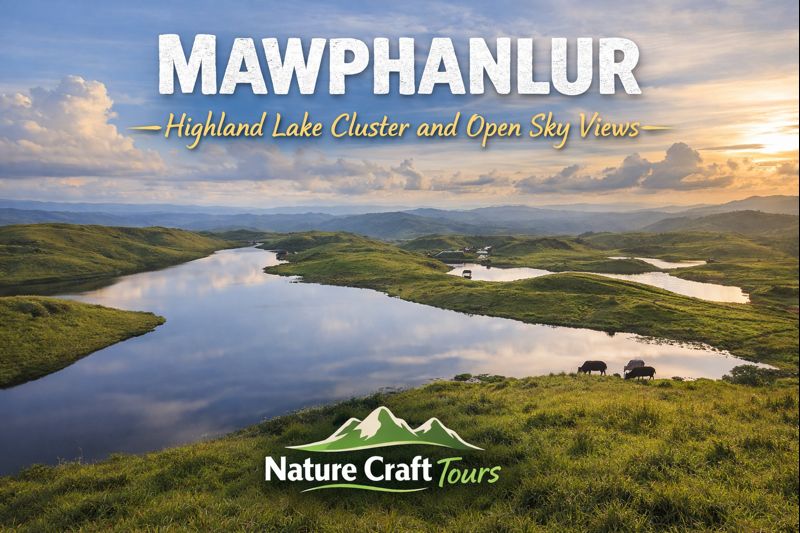
- Ideal Duration: 1–2 nights
- Why It’s Special: A quieter alternative to mainstream lake stops, suited to slow travellers and photographers who value wide horizons.
3) David Scott Trail — “Historic Trek Corridor Through Khasi Hills”
- Ideal Duration: 1 day (trek-based)
- Why It’s Special: A walking route that turns Meghalaya into a “landscape read by foot,” rather than by car windows.
4) Nowhet Living Root Bridge — “Root Bridge Experience Without the Nongriat Crowd”
- Ideal Duration: Half day to full day
- Why It’s Special: Offers the living-root-bridge theme in a quieter, less-hyped setting—excellent for travellers who prefer calm over fame.
5) Mawlyngbna — “Crevice Walk, Caves, and Geology-Led Adventure”
- Ideal Duration: 1 night
- Why It’s Special: A destination for explorers who enjoy limestone terrain, narrow passages, and the thrill of discovering a landscape from inside it.
6) Nongstoin–Ranikor Trek Belt — “Deep Trails and River-Canyon Quiet”
- Ideal Duration: 2–3 nights (serious trekking module)
- Why It’s Special: Best for travellers who want remoteness, long walks, and low-tourism corridors.
7) Kyllang Rock — “Monolith Landscape and 360° Plateau Views”
- Ideal Duration: Half day
- Why It’s Special: A geology-driven viewpoint experience—best in clear weather for full horizon effect.
8) Umden (Eri Silk / Ahimsa Silk Village) — “Craft Heritage with Slow Village Rhythm”
- Ideal Duration: Half day to 1 night
- Why It’s Special: A craft-focused stop that adds economic and cultural depth to a nature-heavy itinerary.
Explorer Notes for Meghalaya (Practical Planning Discipline)
Do Not Underestimate Road Time
In Meghalaya, short distances can take longer because the terrain is ridge-and-valley. Plan fewer stops per day, and you will experience each place more fully.
Treat Living Root Bridges as Living Infrastructure
Root bridges are not “objects”; they are living systems that take decades to form. Walk gently, avoid overcrowding the same point, and respect community rules—this preserves both safety and heritage.
Monsoon Requires a Different Itinerary Style
If you travel in peak rains, select fewer far-away districts, prioritize safe viewpoints and easily accessible caves, and keep buffer days. In return, you gain Meghalaya’s most dramatic atmosphere.