Cuttack – The Millennium City of Odisha:
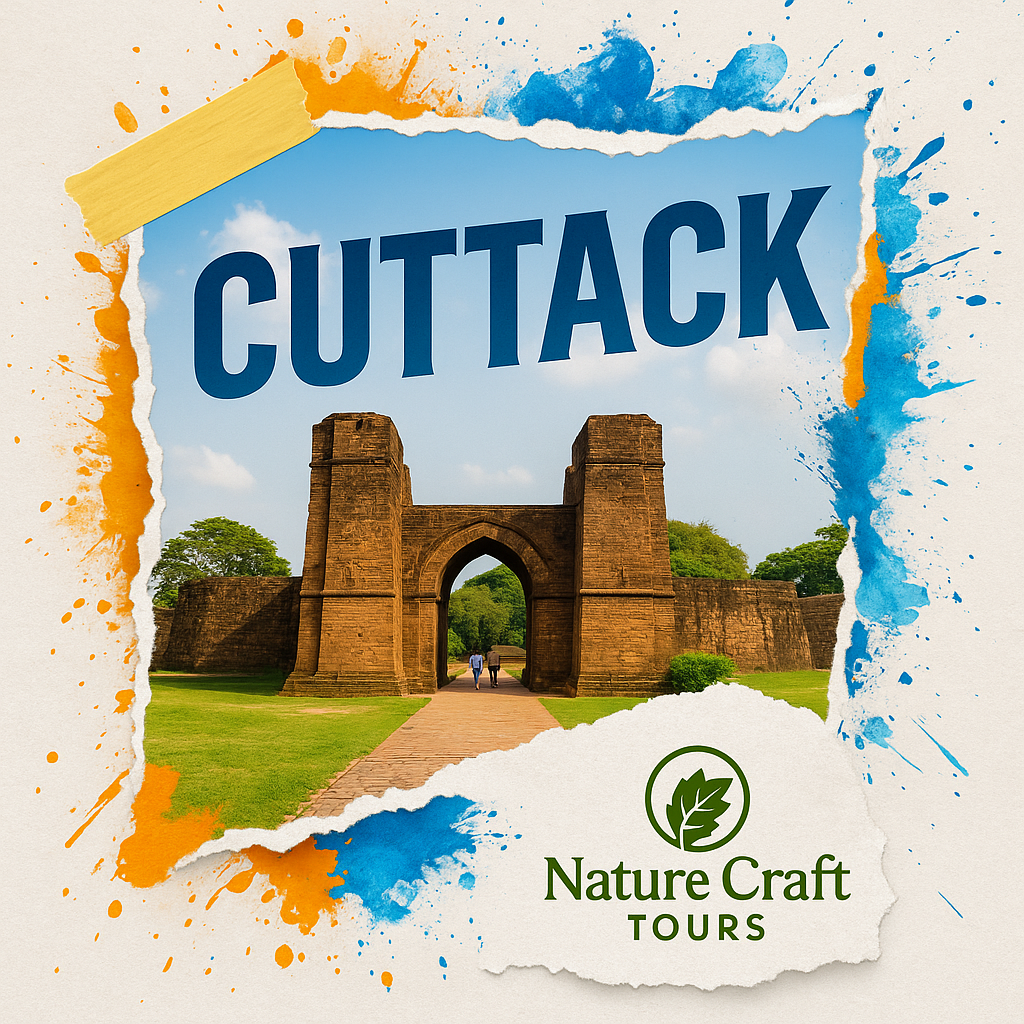
A Cultural, Historical and Commercial Jewel
Cuttack, one of the oldest living cities in eastern India, stands as a magnificent confluence of history, culture, craftsmanship and modern commerce. Often called the “Millennium City,” Cuttack has existed for over a thousand years and served as the ancient capital of Odisha for centuries. The city is uniquely positioned between two mighty rivers—the Mahanadi and the Kathajodi—which embrace it like protective arms, giving rise to its poetic description as “The Silver City Floating on Water.”
Renowned for its exquisite silver filigree (Tarakasi), vibrant festivals, ancient forts, timeless temples, judicial institutions, educational centres, bustling markets and an enduring maritime past, Cuttack offers travellers a rare blend of antiquity and urban dynamism. Whether one seeks heritage, cuisine, shopping, pilgrim sites, or natural landscapes, Cuttack emerges as an unforgettable destination filled with stories, craftsmanship and cultural pride.
Historical Background of Cuttack
Cuttack’s history dates back to 989 CE when it was founded by King Marakata Keshari of the Somavamsi dynasty. For many centuries, Cuttack served as the political and administrative heart of the region. Later, it became the capital under the Eastern Ganga dynasty and continued to flourish during various regimes, evolving into a strategic military and trade settlement due to its riverine location.
Throughout its journey, Cuttack has witnessed the growth of maritime trade, the spread of Odia culture, resistance movements, colonial influences and modern urban development. The city played a critical role in the Indian freedom struggle, nurturing leaders, reformers, and scholars who shaped Odisha’s identity.
Major Attractions and Points to See in Cuttack
Cuttack’s charm lies in its harmonious blend of historical sites, sacred temples, riverside viewpoints, markets and cultural centres. Each corner of the city contributes to its rich narrative.
Barabati Fort
Barabati Fort stands as one of Cuttack’s most iconic historical structures. Built in the 14th century by the Ganga dynasty, the fort once had nine imposing storeys and served as a royal residence and military bastion.
Today, visitors explore:
- The monumental arched gateway
- Moats surrounding the fort grounds
- Ruins that narrate ancient defensive architecture
- Spacious lawns ideal for walks and photography
Adjacent to the fort is the Barabati Stadium, a premier venue for cricket and major sporting events.
Odisha State Maritime Museum
This exceptional museum captures Odisha’s maritime glory. Situated in Jobra on the banks of the Mahanadi, it occupies a beautifully renovated colonial-era workshop.
Highlights include:
- Traditional boat models
- Exhibits on ancient trade routes to Southeast Asia
- Navigation instruments and rare marine artefacts
- Boat-building workshops and heritage displays
The museum serves as a testament to Odisha’s seafaring legacy, once celebrated in the famous Bali Jatra festival.
Netaji Birthplace Museum
Cuttack is the birthplace of Netaji Subhas Chandra Bose, one of India’s greatest freedom fighters. His ancestral house, now a museum, preserves:
- Netaji’s childhood belongings
- Photographs, documents and personal artefacts
- Rooms showcasing his life and ideals
For history enthusiasts, this museum is a deeply inspiring experience.
Mahanadi Barrage and River Fronts
The Mahanadi and Kathajodi rivers bestow Cuttack with scenic waterfronts. The Mahanadi Barrage, with its long stretch of bridge, is a popular place for evening drives, walks and enjoying the river’s vast expanse.
The riverbanks come alive during festivals, immersing visitors in vibrant rituals and cultural activities.
Chandi Temple (Cuttack Chandi)
Dedicated to Goddess Katak Chandi, this revered temple is deeply connected to Cuttack’s spiritual identity. The deity is regarded as the city’s guardian, and the temple attracts devotees throughout the year, especially during Durga Puja and special festive rituals.
Baliyatra Ground
Held on the Mahanadi riverbank, the Baliyatra is one of Asia’s largest open-air festivals celebrating Odisha’s ancient maritime trade with Java, Bali, Sumatra and Sri Lanka. Massive crowds gather to enjoy cultural shows, stalls, food courts and traditional crafts.
Silver Filigree (Tarakasi) Workshops
Cuttack’s world-famous silver filigree is a craft of exceptional delicacy. Visiting artisan workshops allows travellers to witness:
- Hand-twisted silver wires
- Intricate motifs shaped with microscopic precision
- Traditional jewellery and decorative artworks
These creations make exceptional souvenirs, reflecting centuries of craftsmanship.
Dhabaleswar Island and Temple
About 25 km from the city, the scenic Dhabaleswar Temple sits on an island in the Mahanadi River. The temple dedicated to Lord Shiva is accessible via a suspension bridge and offers stunning views of the river and surrounding forests.
Cuttack’s Famous Durga Puja
Durga Puja in Cuttack is a grand spectacle. The city is renowned for its silver and gold “Medha”—ornate backdrops adorning the deity’s idol. Entire streets illuminate with decorative lights, music, colourful arches and thematic installations.
Exploring Cuttack’s Culture and Lifestyle
Cuttack’s culture is enriched by centuries of trade, scholarship, festivals and craftsmanship. Its residents maintain a balance between heritage and modernity.
Cuisine
Cuttack’s culinary scene celebrates Odisha’s traditional flavours. Popular items include:
- Dahi Bara Aloo Dum – a signature street food
- Chhena Poda – Odisha’s famed baked dessert
- Mutton Curry and Pitha varieties
- Freshwater fish dishes inspired by regional rivers
Festivals
- Baliyatra – commemorating ancient maritime voyages
- Durga Puja – known for silver filigree embellishments
- Kartik Purnima – riverbank celebrations with floating lamps
Markets of Cuttack
- Choudhary Bazaar – textiles, handicrafts, jewellery
- Ring Road Market – modern shops and eateries
- Booth Patii – traditional silver filigree shops
Major Distances from Cuttack
- Bhubaneswar Airport: 28–30 km
- Bhubaneswar Railway Station: 25 km
- Puri: Approximately 90 km
- Konark Sun Temple: Around 95–100 km
- Dhauli Hills: 30 km
- Nandankanan Zoo: 20–22 km
- Dhabaleswar Island: 25 km
How to Reach Cuttack
Cuttack enjoys excellent connectivity via road, rail and air, making it accessible for travellers across India.
By Air
The nearest airport is Biju Patnaik International Airport in Bhubaneswar. From there, travellers can reach Cuttack in 45–60 minutes via taxis, private cabs or app-based transport.
By Rail
Cuttack Railway Station is a major junction on the East Coast Railway, connected to cities like Kolkata, Chennai, Delhi, Visakhapatnam and Hyderabad. The station is centrally located, ensuring quick access to all parts of the city.
By Road
Cuttack is well-connected via:
- National Highway 16 (Kolkata–Chennai corridor)
- State Highways connecting Bhubaneswar, Puri, Kendrapara and Jajpur
Regular buses, auto-rickshaws and private taxis make intra-city and inter-city travel easy.
Staying Options in Cuttack
Cuttack offers a wide range of accommodation options across various categories. While no contact numbers are provided, travellers can expect:
- Premium hotels with modern comforts
- Mid-range properties close to markets and cultural sites
- Boutique stays offering local design and architecture
- Budget hotels providing value for travellers
Most properties lie within convenient distance of Barabati Fort, Chandi Temple, and major commercial hubs.
Best Time to Visit Cuttack
Winter (November to February)
This is the ideal time to visit due to cool temperatures and vibrant festivals. Baliyatra and Durga Puja draw enormous crowds and offer immersive cultural experiences.
Monsoon (June to September)
The city becomes lush and rivers swell beautifully. Although occasional showers occur, this season highlights Cuttack’s natural charm.
Summer (March to May)
Summer can be warm, but river breezes and evening outings make travel manageable for those prepared for heat.
Suggested Itinerary for Cuttack
Day 1 – Heritage and Culture
- Visit Barabati Fort in the morning
- Explore Netaji Birthplace Museum
- Walk through maritime galleries at Odisha Maritime Museum
- Evening stroll at Mahanadi Barrage
Day 2 – Temples, Crafts and Shopping
- Start at Cuttack Chandi Temple
- Visit silver filigree workshops
- Enjoy street food in Choudhary Bazaar
- Evening drive to Dhabaleswar Island
Responsible Tourism Practices
- Support local artisans by buying authentic filigree craft
- Maintain cleanliness at riverfronts and temples
- Respect cultural festivals and local customs
- Prefer eco-friendly travel methods where possible
Conclusion – Cuttack, A City That Breathes Heritage and Modernity
Cuttack stands as a timeless guardian of Odisha’s cultural heritage. Its enduring traditions, historical monuments, silver filigree artistry, river landscapes and dynamic festivals make it a destination that enriches both the mind and the heart. Whether one walks through its ancient fort walls, shops in its bustling markets, savours its cuisine or witnesses its spectacular Durga Puja, the city leaves an unforgettable impression.
A journey to Cuttack is not just travel—it is an immersion into the soul of Odisha.