Darjeeling Himalayan Railway (Toy Train) Experience:
A Journey Through Time, Terrain, and the Eastern Himalayas
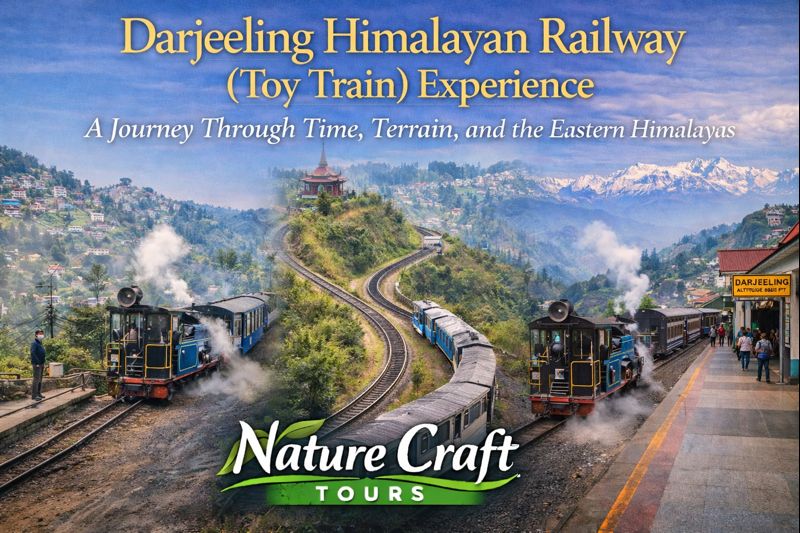
The Darjeeling Himalayan Railway, affectionately known as the Toy Train, is not merely a mode of transport—it is a moving heritage corridor that climbs from the tropical plains of North Bengal into the cool, mist-laden ridges of the eastern Himalayas. Every whistle, curve, and halt along its route carries stories of engineering brilliance, colonial ambition, mountain communities, and a slower philosophy of travel that modern journeys often forget.
To experience the Darjeeling Himalayan Railway is to step into a rhythm dictated not by speed but by gradient, weather, landscape, and patience. The train does not rush. Instead, it winds deliberately through tea gardens, bazaars, forests, and cloud-wrapped hills, offering an immersive perspective that roads and modern vehicles simply cannot replicate. This explorer-style guide presents the Toy Train experience in depth—its history, route, stations, engineering logic, sensory appeal, and a complete, realistic tour plan that allows travelers to engage with this living heritage meaningfully.
Understanding the Darjeeling Himalayan Railway
The Darjeeling Himalayan Railway was conceived as a solution to a geographical challenge: how to connect the plains with a hill town perched high in the Himalayas. Rather than carving tunnels or building large bridges, engineers adopted a narrow-gauge railway that could adapt to steep gradients through ingenious design. The result was a railway that climbs gradually, almost conversationally, with the landscape.
What makes this railway extraordinary is not only its age or heritage status, but its continued relevance. It remains operational, functional, and deeply integrated into local life. Schoolchildren wave at passing engines, shopkeepers pause as tracks cross markets, and tea estate workers hear the whistle echo through the slopes. The Toy Train is not frozen in history; it breathes with the hills.
Why the Toy Train experience is unique
Unlike conventional train journeys where scenery flashes past, the Darjeeling Himalayan Railway invites observation. The slow pace allows travelers to notice details—the texture of tea bushes, the changing architecture of houses, the way mist rolls in and out of valleys. This intimacy with the terrain transforms the journey into an exploration rather than transit.
Engineering Genius on a Narrow Gauge
One of the most fascinating aspects of the Toy Train is how it conquers altitude without modern heavy infrastructure. The railway rises from the plains to the hills using loops and zigzags—simple yet effective solutions that allow the train to gain height gradually. These features are not hidden; they are part of the experience, visible and often dramatic.
Loops: Gaining height through curvature
At certain points, the track loops over itself, allowing the train to climb while staying within manageable gradients. Passengers can often see earlier sections of the track below, creating a visual sense of ascent and progress.
Zigzags: Directional climbing
Zigzags involve the train moving forward and backward along alternating track sections. This method may feel unusual to first-time riders, but it demonstrates how engineering adapted to terrain rather than forcing the terrain to adapt to engineering.
Human-scale infrastructure
Stations, bridges, and track alignments are built at a scale that feels personal rather than monumental. This reinforces the Toy Train’s charm and explains why it blends so seamlessly into towns and landscapes.
The Route: From Plains to Peaks
The Toy Train route unfolds like a geographic lesson in motion. Starting in warmer lowlands, it gradually enters cooler zones, passing through varied ecosystems and settlements. Each stretch of the journey has its own character.
Lower sections: Transition from plains
In the lower stretches, the landscape is broader and warmer. Vegetation is denser, and settlements feel closer to the plains culture. The train here introduces travelers gently to the idea of ascent.
Mid-hill sections: Tea and towns
As altitude increases, tea gardens begin to dominate the scenery. Rolling slopes, orderly rows of tea bushes, and small hill towns define this zone. The air becomes cooler, and the rhythm of life shifts noticeably.
Upper sections: Mist, forests, and Darjeeling
Near Darjeeling, forests thicken, clouds appear more frequently, and the railway winds through narrow streets and ridges. The final approach feels intimate, as if the train is being welcomed into the town rather than arriving at it.
Key Stations and What Makes Them Special
Small-town stations
Many intermediate stations are modest—simple platforms, small shelters, and close interaction with local life. These stops reveal how deeply the railway is woven into everyday routines.
Darjeeling station
The arrival at Darjeeling station is symbolic. The train pulls in slowly, often to the sound of cameras clicking and passengers applauding. The station itself reflects heritage aesthetics and serves as a gateway to the hill town.
The Toy Train as a Sensory Experience
The Toy Train engages all senses. The sound of the whistle echoing across valleys, the smell of steam and oil, the feel of cool air brushing past open windows, and the visual drama of shifting landscapes combine into a deeply immersive journey.
Soundscape of the hills
The whistle is not merely a signal; it is part of the hills’ soundscape. It announces the train’s presence and connects settlements along the route.
Visual storytelling
Every bend reveals a new frame—tea gardens, markets, forests, or mountain vistas. The slow pace ensures nothing feels rushed or missed.
A Complete Toy Train–Focused Tour Plan
This itinerary is designed for travelers who want the Toy Train to be the centerpiece of their Darjeeling journey, not an afterthought.
Day 1: Arrival and Orientation
Morning to afternoon | Arrival in the Darjeeling region
Arrive by early afternoon. Rest and acclimatize to the altitude. Avoid strenuous activity on the first day.
Late afternoon | Visit Darjeeling station area
Spend time around the station to observe arriving and departing Toy Train services. This helps contextualize the experience before riding.
Day 2: The Toy Train Experience Day
Early morning | Preparation and arrival at the station
Reach the station early to avoid crowds and enjoy the calm atmosphere. Early services often coincide with clearer weather.
Morning | Toy Train joy ride or heritage section journey
Experience a heritage or joy ride section, focusing on scenery and atmosphere rather than distance. Sit by open windows if possible and remain attentive to surroundings.
Late morning | Leisure and reflection
After the ride, spend time revisiting points seen from the train, such as nearby tea gardens or viewpoints.
Evening | Rest and early night
Allow the sensory richness of the day to settle. Avoid over-planning the evening.
Day 3: Heritage, Hills, and Departure
Morning | Short walks and cultural exploration
Explore hill paths or markets connected historically to the railway. Notice how the town developed along the rail line.
Late morning to afternoon | Departure
Plan departure with buffer time, as mountain travel can be unpredictable.
Best Time to Experience the Toy Train
Seasonal considerations
October to April offers the most stable weather and clearer views. Winter mornings are crisp and ideal for photography. Monsoon months create lush scenery but may affect schedules.
Time-of-day strategy
Morning rides are preferable for visibility and comfort. Afternoons may bring cloud cover.
Connecting the Toy Train Journey with Broader Bengal Travel
Travelers often combine the Himalayan railway experience with journeys into Bengal’s riverine landscapes to appreciate the state’s full geographic diversity. After the slow ascent through mountains, a contrasting journey into mangrove waterways offers a different perspective on movement and nature. A thoughtfully planned Sundarban Tour allows travelers to shift from rails to rivers, enriching the overall travel narrative.
Similarly, curated itineraries such as a Sundarban Tour Package help travelers experience Bengal as a continuum—from Himalayan slopes to tidal forests—rather than isolated destinations.
Responsible Travel on the Darjeeling Himalayan Railway
Respect heritage infrastructure
Avoid leaning excessively from windows or touching mechanical parts. The railway survives through careful use and maintenance.
Respect local life
Tracks pass through active communities. Observe respectfully and avoid disrupting daily routines.
Adopt a slow travel mindset
Delays and pauses are part of the experience. Accept them as moments to observe rather than inconveniences.
More Than a Train Journey
The Darjeeling Himalayan Railway is not about reaching a destination quickly. It is about understanding how humans once approached mountains—with patience, ingenuity, and humility. Each curve and climb tells a story of adaptation rather than domination.
For the explorer, the Toy Train offers a lesson in travel philosophy. It teaches that the journey itself can be the destination, that slowness can deepen perception, and that heritage lives not in museums alone but in everyday movement. To ride the Darjeeling Himalayan Railway is to travel not just through hills, but through time.