Dharamshala: Upper and Lower Town Perspectives in the Dhauladhar Shadow
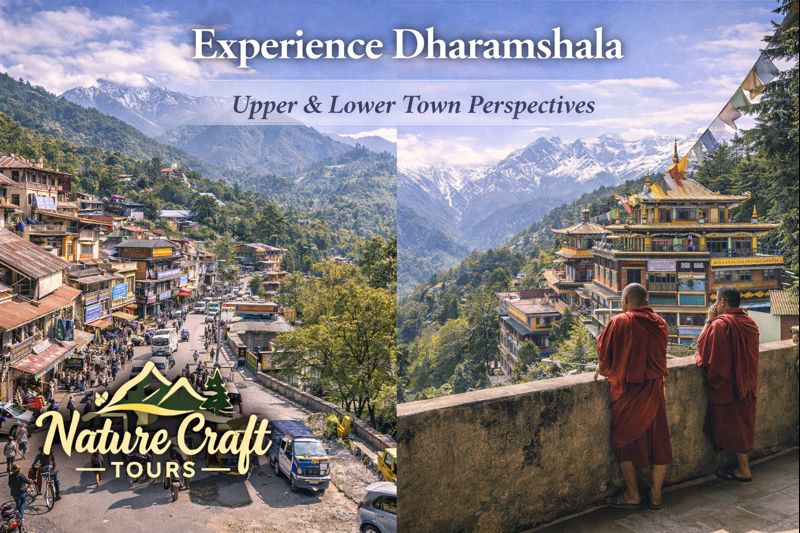
Dharamshala is not a single town experienced uniformly from one point of view. It is a vertical settlement, stretched across altitude, climate, culture, and history. What one encounters in Lower Dharamshala differs fundamentally from what unfolds in Upper Dharamshala, yet both are inseparable parts of the same mountain narrative. Together, they form a layered Himalayan town where plains meet peaks, colonial legacies intersect with Tibetan exile culture, and everyday Indian hill life coexists with global spiritual currents.
To understand Dharamshala meaningfully, one must resist the urge to treat it as a checklist destination. Instead, it must be read spatially—from the warmer, busier lower town rising gradually into cooler air, quieter slopes, and contemplative spaces of the upper reaches. This article approaches Dharamshala through this vertical lens, examining how geography shapes culture, how altitude influences rhythm, and how two distinct urban characters coexist within one mountain settlement.
Written from a field-based, observational perspective, this guide explores Dharamshala as a place of transitions: between plains and Himalaya, between administration and spirituality, between movement and stillness.
Destination Overview: The Geography of a Vertical Hill Town
Dharamshala is located in the Kangra district of Himachal Pradesh, set against the dramatic southern face of the Dhauladhar mountain range. The town is broadly divided into Lower Dharamshala and Upper Dharamshala (often associated with areas like McLeod Ganj and surrounding settlements), with an altitude difference of several hundred meters between them.
Lower Dharamshala sits closer to the plains, acting as the administrative and commercial core. Upper Dharamshala rises sharply above it, transitioning into cooler temperatures, denser forests, and more expansive views of the mountains. Roads connecting the two wind upward through pine and deodar forests, making the ascent as much a psychological shift as a physical one.
This vertical arrangement defines Dharamshala’s identity. Unlike linear hill towns, Dharamshala is experienced in layers, each with its own pace, population, and purpose.
The Dhauladhar Presence
The Dhauladhar range dominates Dharamshala’s skyline, appearing almost abruptly from the foothills. Its steep rise creates dramatic weather patterns, sharp ecological transitions, and a constant visual reminder of altitude. The mountains are not a distant backdrop here; they are immediate and commanding.
Lower Dharamshala: Administrative Core and Everyday Life
Lower Dharamshala functions as the town’s practical heart. It is where administrative offices, markets, transport hubs, and residential neighborhoods are concentrated. Life here moves at a faster pace, shaped by work schedules, commerce, and connectivity with the Kangra plains.
Urban Character and Movement
Streets in Lower Dharamshala are active and utilitarian. Shops cater to daily needs, buses arrive and depart regularly, and public spaces are shaped by necessity rather than leisure. This is where Dharamshala connects outward—to Kangra, Palampur, and beyond.
For travelers, Lower Dharamshala often serves as an entry point rather than a destination in itself. Yet observing daily routines here provides insight into how the hill town functions beyond its more contemplative upper areas.
Climate and Environment
At a lower altitude, temperatures are warmer, especially during summer months. Vegetation is less alpine and more transitional, blending foothill forests with cultivated land. The air feels denser, and the sense of altitude is less pronounced.
Upper Dharamshala: Altitude, Reflection, and Global Culture
Upper Dharamshala marks a noticeable shift in atmosphere. As roads climb upward, traffic thins, air cools, and the town’s rhythm slows. Forests close in, views open outward, and human activity becomes more contemplative.
McLeod Ganj and Surroundings
Upper Dharamshala is often associated with McLeod Ganj and nearby settlements, which collectively form the cultural and spiritual nucleus of the region. This area is known internationally as the center of the Tibetan exile community and as a place of study, reflection, and retreat.
The streets here host a mix of local residents, Tibetan monks, students, and travelers from across the world. Languages, cuisines, and cultural references blend seamlessly, giving the area a distinctly global yet grounded character.
Urban Form and Walkability
Upper Dharamshala is best explored on foot. Narrow lanes, stepped paths, and forest trails encourage walking rather than driving. The scale is intimate, and destinations are often reached through short but steep climbs.
Cultural Significance: Tibetan Exile and Local Traditions
Dharamshala occupies a unique cultural position in India due to its role as the center of the Tibetan government-in-exile. This has shaped the town’s identity profoundly, particularly in its upper reaches.
Tibetan Cultural Landscape
Monasteries, schools, libraries, and cultural centers form an integral part of Upper Dharamshala’s fabric. These are not isolated attractions but active institutions supporting education, governance, and spiritual practice.
Daily life here includes prayer cycles, study sessions, and community gatherings, giving the town a rhythm distinct from typical hill stations.
Indigenous Kangra Heritage
Alongside Tibetan influence, Dharamshala remains rooted in Kangra Valley traditions. Local festivals, dialects, and agricultural practices continue in surrounding villages, particularly in lower elevations.
Ecological Context: Forests, Slopes, and Mountain Climate
Dharamshala lies within a rich ecological zone where subtropical forests transition into temperate and alpine environments over short distances. This diversity shapes both daily life and travel experience.
Forest Cover and Biodiversity
Deodar, pine, oak, and rhododendron forests surround Upper Dharamshala, regulating temperature and water flow. These forests also provide natural corridors for walking and reflection.
Rainfall and Weather Patterns
Dharamshala receives some of the highest rainfall in Himachal Pradesh. Monsoon clouds frequently gather around the Dhauladhar slopes, creating misty conditions and lush vegetation.
Key Attractions and Highlights Across Both Zones
Viewpoints and Ridge Walks
Upper Dharamshala offers expansive views across the Kangra Valley and toward snow-clad peaks. Ridge paths provide quiet walking routes that emphasize altitude and openness.
Markets and Street Life
Lower Dharamshala’s markets reflect everyday hill-town commerce, while upper-town streets host cafés, bookshops, and spaces for conversation and study.
Cultural Institutions
Libraries, monasteries, and cultural centers in Upper Dharamshala form the intellectual and spiritual core of the town.
Best Time and Season to Visit Dharamshala
Spring (March to May)
Spring brings moderate temperatures and clear views. Forests are active, and walking between upper and lower zones is especially rewarding.
Summer (June to September)
Summer offers respite from plains heat. Monsoon rains peak during July and August, enhancing greenery but limiting long walks on some days.
Autumn (October to November)
Autumn is one of the best periods for clarity, stable weather, and mountain views.
Winter (December to February)
Winters are cold in upper areas, with occasional snowfall. Lower Dharamshala remains more accessible, highlighting the town’s vertical adaptability.
Ideal Travel Duration
Dharamshala benefits from unhurried exploration. A minimum of three to four days allows engagement with both upper and lower perspectives.
Suggested Duration
- Day 1: Lower Dharamshala orientation and markets
- Day 2: Transition to Upper Dharamshala, cultural exploration
- Day 3: Ridge walks and forest trails
- Day 4: Reflection and slow observation
Route and Accessibility
Dharamshala is accessible by road from major towns in Himachal Pradesh and neighboring states. The final ascent into upper areas involves steep, winding roads that gradually reveal mountain scenery.
Internal Movement
Movement between lower and upper zones can be done by road or on foot via connecting paths, offering varied perspectives of the town.
Dharamshala in a Broader Geographic Perspective
Dharamshala’s vertical structure contrasts with landscapes shaped by flat expanses and water networks. While Dharamshala’s identity is defined by slope and altitude, other regions are defined by tides, deltas, and mangroves.
Travelers who complement Himalayan journeys with experiences in riverine ecosystems—such as those explored through Sundarban Tourism—gain a deeper appreciation of how geography dictates lifestyle and culture.
Practical Insights for Travelers
Altitude Awareness
Although Dharamshala is not extremely high, movement between zones involves altitude change. Gradual pacing aids comfort.
Walking Preparedness
Good footwear is essential. Many of Dharamshala’s most rewarding spaces are accessed on foot.
Cultural Sensitivity
Upper Dharamshala hosts active religious and educational institutions. Quiet behavior and respectful observation are important.
Integrating Dharamshala into Wider Travel Plans
Dharamshala pairs well with journeys that explore contrasting ecological systems. Structured itineraries such as a Best Sundarban Tour Package highlight how human settlements adapt differently across mountains and deltas.
A Thoughtful Four-Day Plan
Day One: Lower Town Immersion
Explore markets and daily life in Lower Dharamshala.
Day Two: Ascent and Cultural Core
Move into Upper Dharamshala, focusing on cultural institutions and walking paths.
Day Three: Forest and Ridge Perspectives
Spend time on forest trails and elevated viewpoints.
Day Four: Reflection and Departure
Revisit meaningful spaces before descending.
Dharamshala as a Town of Layers and Transitions
Dharamshala is best understood not as a single destination, but as a dialogue between elevations. Lower Dharamshala grounds the town in everyday life, while Upper Dharamshala opens it to contemplation, culture, and global connection.
For travelers willing to move slowly and vertically, Dharamshala offers a rare opportunity to experience how geography shapes identity—how altitude alters pace, how mountains influence belief, and how a town can hold multiple worlds within one slope.