Elephant Beach (Swaraj Dweep):
Snorkelling-First Half Day
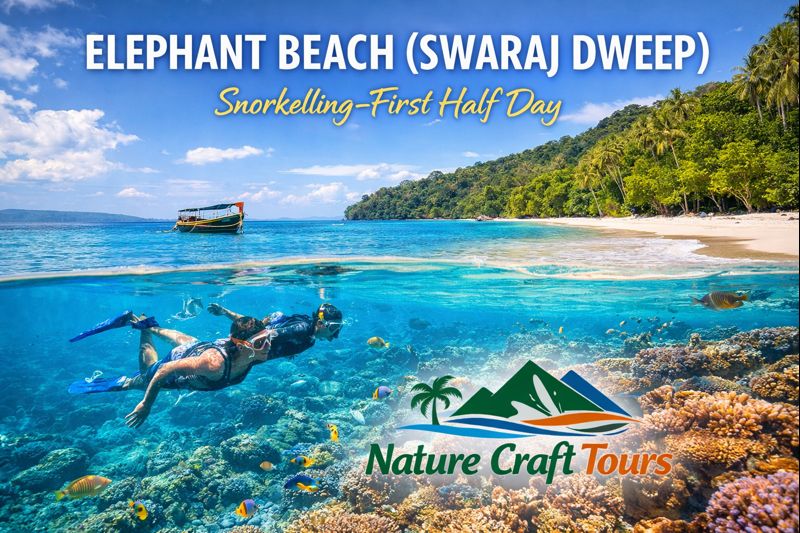
Elephant Beach, located on Swaraj Dweep (formerly Havelock Island), is widely acknowledged as the most accessible and rewarding snorkelling destination in the Andaman Islands. Designed naturally for half-day exploration, this beach offers a rare opportunity to experience coral reefs, shallow marine ecosystems, and crystal-clear waters without the need for advanced swimming or diving skills. For explorers and first-time marine enthusiasts alike, Elephant Beach represents the perfect introduction to Andaman’s underwater world.
This detailed, research-based guide presents Elephant Beach not merely as a leisure spot, but as a carefully structured snorkelling-first destination. The content integrates geography, marine science, travel logistics, safety considerations, and a complete half-day tour plan—making it an essential resource for responsible and informed travelers.
Geographical Location and Coastal Character
Elephant Beach is situated on the northern coastline of Swaraj Dweep, sheltered within a naturally protected bay. Unlike open-sea beaches, its geography minimizes wave impact, creating calm, shallow waters ideal for surface-level marine observation. The beach is backed by dense tropical forest, while its nearshore zone transitions quickly into coral-rich reef shelves.
The seabed gradient at Elephant Beach is gradual, allowing snorkellers to move from ankle-deep water into coral zones without abrupt depth changes. This makes the location exceptionally suitable for beginners and families while still offering biodiversity that appeals to experienced nature observers.
Why Elephant Beach Is a Snorkelling-First Destination
Elephant Beach has earned its reputation not through marketing, but through consistency of marine visibility and reef accessibility. Unlike deeper dive sites that require specialized equipment and certifications, Elephant Beach allows visitors to encounter live corals, reef fish, and marine flora within a few meters of the shoreline.
The term “snorkelling-first” reflects the destination’s design logic: the primary activity here is underwater exploration, while all other experiences remain secondary. The absence of long sandy expanses discourages passive lounging, instead encouraging active engagement with the marine environment.
Best Time to Visit Elephant Beach
Ideal Season: November to April
This period offers optimal sea conditions with minimal surface turbulence and high underwater visibility. Coral colors appear most vibrant during these months, and marine activity is easily observable even for novice snorkellers.
Transitional Months: October and May
Snorkelling remains possible, though occasional surface ripples may affect visibility slightly. These months often experience fewer visitors, allowing a more immersive and less crowded experience.
Monsoon Months: June to September
Access to Elephant Beach is frequently restricted during the monsoon due to rough seas and safety regulations. Even when access is permitted, snorkelling activities may be limited or suspended.
How to Reach Elephant Beach
Elephant Beach can be accessed via two routes: a short boat transfer from designated jetties on Swaraj Dweep, or a guided forest trail trek for those seeking a land-based approach. The boat route is the most commonly used, allowing visitors to reach the snorkelling zone quickly and safely.
The forest trail, while scenic, requires moderate physical fitness and is usually undertaken with a guide. Both approaches highlight the island’s ecological diversity, transitioning from terrestrial forest systems to marine habitats.
Marine Ecology and Reef Structure
Coral Composition
The reef system at Elephant Beach consists primarily of hard corals interspersed with patches of soft corals and sea anemones. These formations create complex microhabitats that support a wide range of marine species.
Reef Fish and Marine Life
Snorkellers frequently encounter reef fish such as parrotfish, butterflyfish, damselfish, and surgeonfish. Occasional sightings of rays and sea cucumbers are also reported. The shallow depth allows prolonged observation without disturbing marine life.
The Half-Day Snorkelling Experience
Elephant Beach is ideally suited for a half-day itinerary, typically spanning four to five hours including travel time. This duration balances physical exertion with safety, ensuring snorkellers remain alert and engaged without fatigue.
Morning Session Advantage
Morning hours offer the calmest sea conditions and highest water clarity. Sunlight penetration during this period enhances coral visibility and marine color contrast, making it the preferred time for snorkelling.
Safety and Supervision
Snorkelling zones are clearly marked, and activity is monitored by trained personnel. Life jackets are commonly used to ensure buoyancy, allowing participants to focus entirely on observation rather than swimming effort.
Suggested Half-Day Explorer Tour Plan
08:00 – Departure from Resort Area
Early departure ensures minimal crowd presence and optimal marine conditions. A short transfer brings visitors to the designated embarkation point.
09:00 – Arrival and Orientation
Upon arrival at Elephant Beach, visitors receive a safety briefing covering snorkelling techniques, reef etiquette, and environmental responsibility.
09:30 to 11:30 – Guided Snorkelling Session
Participants enter the water in small groups, allowing controlled movement and reduced reef impact. The guided format ensures both safety and educational value.
11:30 to 12:30 – Shore Rest and Observation
After snorkelling, time is allocated for rest, hydration, and shoreline observation. This period allows reflection on marine encounters and physical recovery.
13:00 – Return Transfer
Return journey marks the completion of the half-day experience, leaving the afternoon free for leisure or additional island exploration.
Environmental Responsibility at Elephant Beach
Elephant Beach operates under strict environmental guidelines. Visitors are advised not to touch corals, collect shells, or disturb marine organisms. Sunscreens with harmful chemicals are discouraged due to their impact on coral health.
The success of Elephant Beach as a snorkelling destination depends heavily on visitor awareness and compliance with conservation protocols.
Integrating Elephant Beach with Broader Nature Travel
Travelers who appreciate the ecological focus and structured exploration at Elephant Beach often seek similar depth-driven experiences elsewhere in India. A guided Sundarban Tour or a professionally curated Sundarban Travel extends this nature-first philosophy into mangrove forests and riverine ecosystems, offering a complementary inland perspective.
Why Elephant Beach Defines Half-Day Marine Exploration
Elephant Beach is not designed for excess time or overstimulation. Its strength lies in precision—a focused half-day experience that introduces visitors to the complexity and beauty of coral ecosystems without overwhelming them. The beach serves as a gateway, transforming casual travelers into informed observers of marine life.
For explorers seeking meaningful engagement within a limited timeframe, Elephant Beach on Swaraj Dweep remains one of the finest snorkelling-first destinations in the Indian Ocean region.