Gorubathan
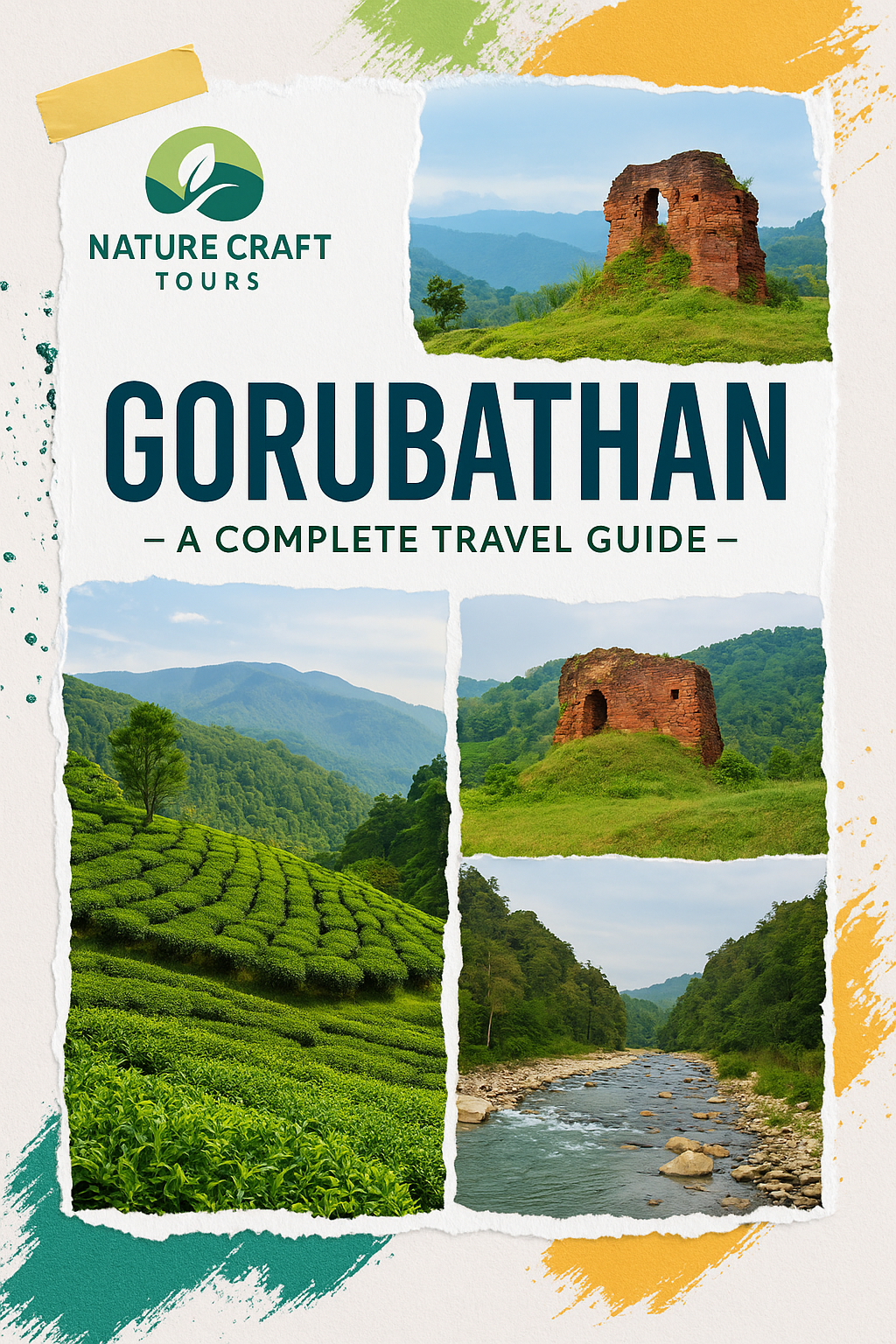
– A Complete Travel Guide to the Eastern Himalayan Green Corridor
Located in the serene Dooars–Kalimpong Himalayan foothills of West Bengal, Gorubathan is a tranquil, emerald-green valley known for its ancient ruins, rolling tea gardens, orange orchards, pine forests, mountain rivers and a remarkably calm rural atmosphere. Unlike heavily commercialised hill destinations, Gorubathan has preserved its rustic charm and cultural heritage, offering an immersive Himalayan experience for travellers seeking silence, nature, and authenticity.
This research-based guide presents a comprehensive overview of Gorubathan’s major attractions, distances, ecological landscape, culture, stay options, climate conditions and access routes. It is designed to serve as a complete reference for visitors planning a peaceful retreat into the eastern Himalayan hills.
Introduction to Gorubathan
Gorubathan is a small town located in the Kalimpong district along the banks of the Neora River, near the Bhutan border. Historically, the region formed an important transit point for Indo-Bhutan trade. Today, it stands as a rural gateway to Kalimpong’s eastern hills and the Neora Valley National Park region. The area is surrounded by:
- Dense mixed forests of sal, teak, pine and chestnut
- Expansive tea gardens such as Gorubathan Tea Estate
- Historical ruins like Damsang Fort
- Quiet riverbeds and pristine countryside
Gorubathan is ideal for nature lovers, birdwatchers, slow travellers, heritage explorers and families looking for an offbeat Himalayan retreat with fresh mountain air and scenic landscapes.
Geography and Landscape
Sitting at an altitude of approximately 450 to 800 metres, Gorubathan lies at the confluence of the Himalayan foothills and the Dooars plains. This transitional geography creates an unusual blend of lowland warmth and hillside coolness. The region is framed by green hills, river valleys and terraced agricultural fields producing cardamom, oranges, ginger, millet and seasonal vegetables.
The Neora River flows gently through the region, joining several tributaries originating from the Neora Valley National Park—one of the richest biodiversity zones in India. The surroundings are dominated by tall pine forests, bamboo groves, and plantation gardens that make Gorubathan appear like a lush green amphitheatre throughout the year.
How to Reach Gorubathan
Nearest Major Transport Hubs
- NJP Railway Station → 55–60 km (2–2.5 hours)
- Bagdogra Airport → 60–65 km (2.5–3 hours)
- Siliguri → 50–55 km (2 hours)
- Kalimpong Town → 40–45 km (1.5–2 hours)
- Malbazar → 25 km (50 minutes)
Main Access Routes
Route 1 (Most Common):
NJP / Bagdogra → Sevoke → Coronation Bridge → Damdim → Gorubathan
A smooth and very scenic route dominated by forest corridors and river valleys.
Route 2:
Siliguri → Odlabari → Gorubathan
This route approaches from the western side of the Dooars.
Route 3:
Kalimpong → Algarah → Lava Road → Gorubathan
Popular among travellers coming from Kalimpong or Lava-Loleygaon.
Local Transport
Regular shared jeeps are available from Damdim, Malbazar and Kalimpong. For deeper exploration and sightseeing, a private vehicle is recommended due to limited frequency of public transport in interior villages.
Major Distances (Regional Overview)
- Gorubathan → Kalimpong: 42 km
- Gorubathan → Lava: 32 km
- Gorubathan → Loleygaon: 38 km
- Gorubathan → Rishyap: 44 km
- Gorubathan → Damdim: 15 km
- Gorubathan → Malbazar: 25 km
- Gorubathan → Pedong: 25 km
History and Cultural Background
The region has historically been influenced by Lepcha tribes, who were among the earliest settlers in the eastern Himalayan belt. Over centuries, Nepali communities, including Tamang, Rai, Sherpa and Chhetri populations, settled here and shaped its cultural diversity.
During the British colonial period, Gorubathan emerged as a plantation region, and several tea gardens came into existence. Damsang Fort, now a key attraction, was once a powerful seat of Lepcha kings and later became a battleground during Anglo-Bhutanese conflicts in the 19th century.
The local lifestyle revolves around agriculture, tea cultivation, forest-based livelihoods, community festivals and traditional crafts. Festivals such as Losar, Diwali, Dasain and local harvest celebrations are enthusiastically observed.
Important Places to See in Gorubathan
1. Damdim Coronation Bridge (En Route)
Although not exactly inside Gorubathan, the historic yellow-hued Coronation Bridge over the Teesta River lies directly on the way. Its extraordinary British-era architecture and majestic river backdrop make it a favourite photography point.
2. Lava and Loleygaon Circuit
Gorubathan serves as an excellent base for day trips to Lava (famous for Neora Valley National Park) and Loleygaon (well-known for its canopy walk and Himalayan sunrise views).
3. Damsang Fort
The ancient Lepcha fort ruins surrounded by dense forests offer a powerful sense of mystery and historical depth. The 17th-century structure, though partly collapsed, remains a heritage treasure.
4. Sombarey Village
A beautiful countryside settlement with traditional Lepcha homes, pine forests and panoramic mountain views. Ideal for slow walkers and cultural explorers.
5. Faforkheti
A picturesque village known for sprawling greenery, cardamom plantations and views of distant Kalimpong hills. A perfect location for sunrise photography.
6. Neora Riverbank
The peaceful stretch of the Neora River provides serene picnic spots, quiet nature walks and opportunities for photography around rocky beds and sparkling water currents.
7. Tea Gardens
Gorubathan has several heritage tea estates with rolling green slopes. Walks inside the tea gardens offer a therapeutic experience, especially during early morning hours.
Nearby Attractions Accessible from Gorubathan
Lava
Located around 30–32 km away, Lava is known for its picturesque monastery, cool climate and entry gate to Neora Valley National Park.
Loleygaon
A peaceful forest village famous for the 180-metre hanging canopy bridge and clear sunrise views of Mt. Kanchenjunga.
Rishyap
Offers a bird’s-eye view of the Kanchenjunga range. Misty forests, sunrise points and tranquil homestays make it a perfect day trip from Gorubathan.
Pedong
Known for heritage sites such as Crosshill, Sillery Gaon and military history spots. Just around 20–25 km from Gorubathan.
Flora & Fauna – Ecological Overview
Due to proximity to Neora Valley National Park, the region hosts rare and endemic species. The forest belt near Gorubathan transitions from tropical evergreen to sub-temperate zones, creating multidimensional biodiversity.
Common Mammals
- Barking Deer
- Himalayan Civet
- Goral
- Yellow-throated Marten
- Wild Boar
Birds
- Scarlet Minivet
- Rufous Sibia
- Blue Whistling Thrush
- Himalayan Bulbul
- Great Barbet
Floral Wealth
- Rhododendron (higher altitudes)
- Orchids
- Pine and Fir clusters
- Bamboo groves
- Medicinal plants of Himalayan origin
Things to Do in Gorubathan
Village Walks
Guided rural walks introduce travellers to farming cultures, traditional practices and local architecture.
Riverbank Picnics
The Neora River offers peaceful riverside locations ideal for family picnics.
Tea Estate Tours
Travellers can walk through heritage plantations and experience tea-making processes.
Soft Trekking
Short trails to nearby forests, villages and viewpoints provide excellent opportunities for photography and exploration.
Birdwatching
Early morning birding tours can be arranged as the region hosts several Himalayan species.
Cultural Experiences
Visitors can enjoy local cuisines, handicrafts, Lepcha traditions and seasonal festivals.
Where to Stay (Properties Only, No Contact Numbers)
Gorubathan offers several categories of accommodations:
- Forest-view homestays near Sombarey and Faforkheti
- Tea garden cottages inside or around plantation belts
- Riverbank eco-stays near the Neora River
- Village lodges providing traditional meals and cultural experiences
These properties generally offer basic to mid-range amenities, serving organic local food, warm hospitality and peaceful surroundings.
Food & Local Cuisine
The food in Gorubathan is simple, wholesome and derived from locally grown produce. Common dishes include:
- Steamed rice and lentils
- Fresh leafy vegetables
- Country chicken curry
- Local pork preparations
- Fried bamboo shoots
- Homemade pickles
- Authentic Nepali thali
- Traditional millet-based drinks (served during winter on request)
Climate & Best Time to Visit
Spring (March–April)
Comfortable weather, blooming flowers, ideal for sightseeing and photography.
Summer (May–June)
Pleasant and cooler than the plains. Perfect for family trips.
Autumn (October–November)
The best time to visit. Clear sky, golden landscapes, excellent mountain views.
Winter (December–February)
Cool and misty, great for nature lovers and photographers.
Avoid peak monsoon (July–September) due to heavy rainfall and slippery roads.
Suggested 3-Day Itinerary
Day 1: Arrival & Local Village Exploration
- Arrive via Damdim–Gorubathan road
- Check-in and enjoy valley views
- Visit tea gardens and Neora riverbank
- Evening walk around Faforkheti
Day 2: Lava – Loleygaon Tour
- Visit Lava Monastery
- Explore Neora Valley entry region
- Drive to Loleygaon’s canopy walk
- Return to Gorubathan by evening
Day 3: Heritage & Local Life
- Morning hike to Damsang Fort
- Cultural village interactions
- Departure after lunch
Travel Tips
- Carry light woollens even in summer; evenings can be cool.
- Roads in higher areas may become foggy; drive cautiously.
- Avoid single-use plastic to protect local ecology.
- Respect local customs while visiting rural settlements.
- Plan early morning departures for day trips to Lava and Loleygaon.
Conclusion
Gorubathan remains one of the most untouched and enchanting Himalayan foothill destinations of Bengal. With its lush valleys, gentle rivers, historical sites and authentic rural culture, it offers a serene escape from the noise of modern life. Whether one seeks forest trails, cultural immersion, plantation walks or scenic mountain drives, Gorubathan promises a rejuvenating journey into the heart of nature.
This green corridor continues to charm travellers who value silence, simplicity and purity—making Gorubathan a perfect choice for families, couples, photographers and peace-seeking wanderers.