Guwahati: The Brahmaputra Gateway City
— Where Ancient Faith, River Civilisation, and Modern Northeast Converge
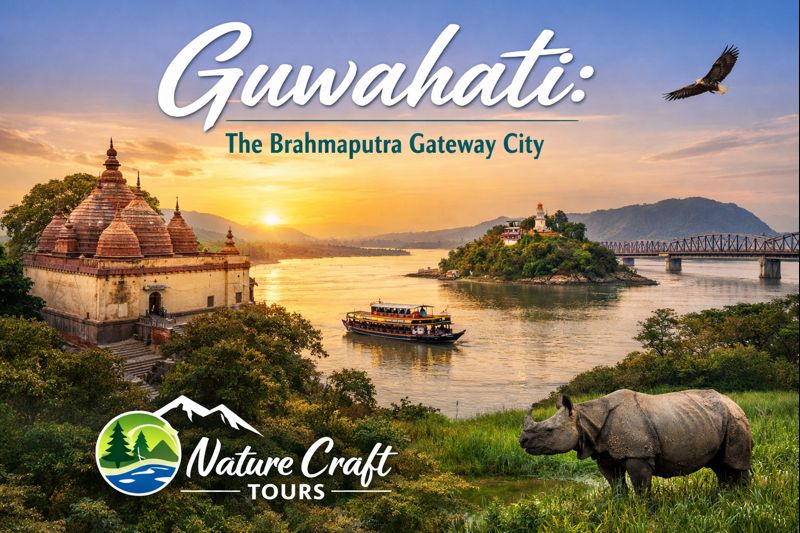
Standing at the threshold of Northeast India, Guwahati is not merely a city—it is a living corridor between the Indian plains and the mystical highlands beyond. As an explorer approaching Assam for the first time, one realises that Guwahati is both a beginning and an anchor. Cradled by the mighty Brahmaputra River and framed by low forested hills, this city has for centuries served as a gateway, a spiritual nucleus, a trading node, and today, the urban heartbeat of the Northeast.
This detailed, research-based exploration presents Guwahati not as a hurried transit point, but as a destination worthy of deep immersion—historically layered, spiritually charged, ecologically rich, and culturally vibrant.
Understanding Guwahati’s Geographic and Cultural Position
Guwahati lies on the southern bank of the Brahmaputra River, one of Asia’s greatest river systems. The city forms a natural funnel where ancient routes from Bengal, Bhutan, Tibet, and Upper Assam once converged. Historically known as Pragjyotishpura and later Kamrup, this region was a prominent seat of power, learning, and Tantra-based spiritual practice.
The Brahmaputra here is not just a river; it is a civilisational force. Its wide braided channels, shifting sandbars, and seasonal moods have shaped settlement patterns, trade rhythms, and religious beliefs. Guwahati evolved precisely because of this river—serving as a port, a pilgrimage halt, and a defensive stronghold.
Why Guwahati Is Called the Gateway City
All major road, rail, and air routes entering Northeast India converge in Guwahati. The city connects Assam’s riverine heartland with hill states such as Meghalaya, Arunachal Pradesh, Nagaland, and beyond. From an explorer’s perspective, Guwahati is the staging ground—a place to understand the Northeast before venturing deeper.
Best Time to Visit Guwahati
The climatic rhythm of Guwahati is governed by the Brahmaputra and the monsoon system.
October to March: Ideal Exploration Season
This period offers pleasant temperatures, clear skies, and navigable river conditions. Cultural festivals, temple visits, wildlife excursions, and river cruises are at their best.
April to June: Cultural and Natural Intensity
Pre-monsoon months bring Bihu celebrations and dramatic skies. While temperatures rise, this season provides insight into Assamese agricultural and festive life.
July to September: Monsoon Caution
Heavy rainfall can cause flooding and disrupt travel. However, the landscape turns lush, and the Brahmaputra displays its full power—an awe-inspiring sight for seasoned explorers.
Major Destinations and Attractions in Guwahati
Kamakhya Temple: Spiritual Core of the City
Perched atop Nilachal Hill, Kamakhya Temple is among the most significant Shakti Peethas in the Indian subcontinent. Unlike classical temples, its sanctum houses no idol—only a natural rock fissure symbolising feminine creative power. The temple’s association with ancient Tantric practices makes it a focal point for spiritual anthropology.
Brahmaputra Riverfront and River Cruises
The riverfront reveals Guwahati’s living relationship with the Brahmaputra. Sunset cruises offer panoramic views of the city skyline merging with riverine silence. The river also serves as a narrative medium—connecting ancient kingdoms, colonial trade, and modern commerce.
Umananda Island: The World’s Smallest Inhabited River Island
Located midstream, this island hosts a serene Shaivite temple and provides a rare opportunity to experience isolation within an urban environment. The ferry journey itself becomes a contemplative passage.
Assam State Museum and Cultural Institutions
For researchers and culturally inclined travellers, Guwahati’s museums preserve artefacts related to Ahom rule, tribal heritage, textiles, and archaeological remains, offering academic context to the journey.
Pobitora and Deepor Beel (Nearby Excursions)
Short journeys from Guwahati lead to wetlands and wildlife zones, highlighting the city’s ecological hinterland. These landscapes reinforce Guwahati’s role as a transitional zone between urbanity and wilderness.
Suggested 4-Day Explorer-Style Tour Plan
Day 1: Arrival and River Orientation
Arrive in Guwahati by air or rail. After settling in, spend the afternoon along the Brahmaputra riverfront. Evening river cruise followed by a quiet walk through heritage zones offers the first sensory introduction.
Day 2: Spiritual and Historical Immersion
Early morning visit to Kamakhya Temple. Explore Nilachal Hill viewpoints. Afternoon dedicated to museums and archival spaces. Evening free for local cuisine exploration.
Day 3: River Island and Cultural Landscapes
Boat ride to Umananda Island. Later, visit cultural institutions and markets specialising in Assamese handloom and crafts. Evening leisure by the river.
Day 4: Ecological Excursion and Departure
Optional morning trip to nearby wetlands or wildlife zones. Return for departure with a deeper understanding of Guwahati’s layered identity.
Cultural Texture and Local Life
Guwahati is a mosaic of ethnic communities—Assamese, Bodo, Karbi, Mishing, and others—each contributing language, cuisine, ritual, and art forms. Markets display handwoven textiles, river fish varieties, and agricultural produce shaped by floodplain ecology.
The city’s rhythm balances spirituality with pragmatism, tradition with rapid urban expansion. This tension defines Guwahati’s contemporary character.
Why Guwahati Matters in a Broader Indian Travel Narrative
Unlike heritage cities frozen in time, Guwahati is dynamic and evolving. It represents India’s eastern frontier—where rivers replace roads, myths coexist with modern infrastructure, and cultural diversity is lived rather than curated.
For travellers who appreciate layered destinations, Guwahati provides context not only to Assam but to the entire Northeast corridor.
Those who have explored river-based ecosystems such as the Sundarban Tour will find a thematic continuity here—the relationship between water, people, and survival unfolding in a different geographical register.
Similarly, travellers planning immersive nature-cultural journeys like the Sundarban Tour Package from Kolkata may view Guwahati as a complementary destination where river civilisation takes a broader continental form.
Guwahati as a Threshold Experience
Guwahati is not a city to be rushed through. It demands patience, observation, and reflection. As the Brahmaputra flows endlessly past its ghats, the city reminds travellers that journeys are not merely about destinations—but about gateways that reshape understanding.
To stand in Guwahati is to stand at a threshold—between plains and hills, past and present, myth and movement. For the mindful explorer, this gateway opens not only to the Northeast, but to a deeper comprehension of India’s river-bound soul.