Henry’s Island
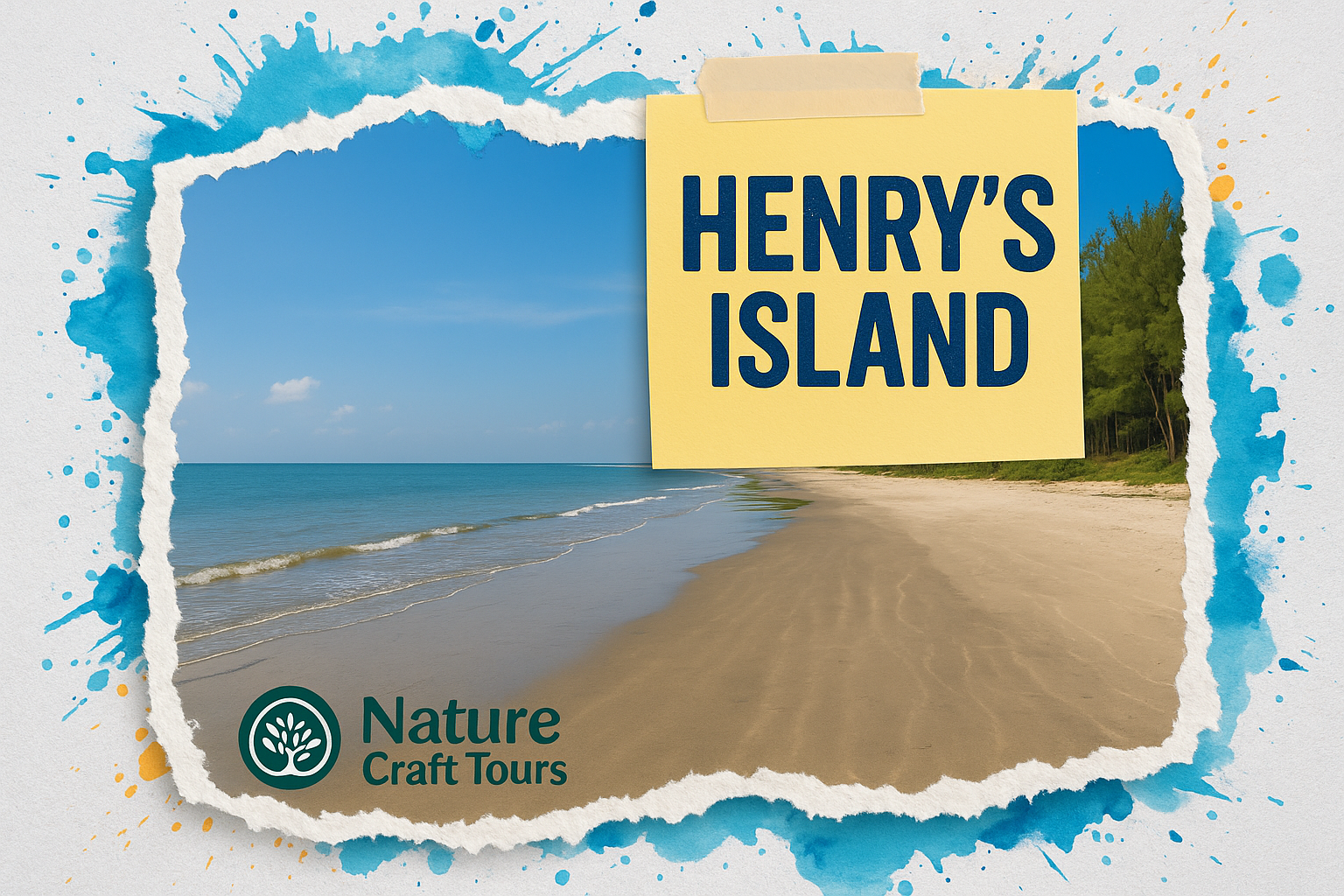
– A Complete Travel Guide to West Bengal’s Serene Mangrove-Beach Paradise
Henry’s Island, located near Bakkhali in the South 24 Parganas district of West Bengal, is one of the state’s most tranquil and less-commercialized coastal retreats. Surrounded by mangrove vegetation, dotted with small freshwater ponds, lined with pristine beaches and enriched with rich biodiversity, the island presents an extraordinary combination of marine beauty, forested landscapes and absolute peace.
Geographical Overview and Natural Setting
Henry’s Island lies within the extended coastal belt of the Sundarbans region. It is named after a British surveyor from the East India Company—likely Henry or Henrie—who mapped the region during colonial times. The island is part of a cluster of forested lands between Fraserganj and the Bay of Bengal.
The landscape consists of:
- Sandy beaches with soft golden textures
- Dense mangrove forests
- Mudflats created by tidal receding
- Saltwater lagoons and freshwater ponds
- Grasslands and casuarina plantations
The ecosystem supports a variety of flora and fauna—ranging from avian species and crustaceans to small mammals, reptiles and marine biodiversity. The presence of tidal creeks and mangrove clusters make Henry’s Island an ecological treasure that stands at the intersection of coastal serenity and rich estuarine biology.
Historical Context
Although relatively less documented than other parts of the Sundarban region, Henry’s Island carries traces of both natural and colonial history. The region was once frequented by local fishermen, honey collectors and wood gatherers. With the development of embankments, fisheries, and eco-friendly tourism initiatives, the island evolved into a peaceful travel destination cherished by nature lovers.
The establishment of controlled fisheries introduced freshwater and brackish water ponds that later became habitats for birds and aquatic organisms. Over the years, the island has continued to balance between conservation and sustainable tourism, offering a rare escape from commercial beach crowds.
Important Places to See on Henry’s Island
1. Main Sea Beach (Mangrove-Lined Coast)
The primary attraction is the long, clean, and tranquil beach accessible through a wooden watchtower and narrow nature trail. The approach is scenic, with mangrove roots, crabs scuttling underfoot, and gentle sea breeze through the casuarina trees. The beach is usually silent except for the rhythmic sound of waves, making it ideal for sunrise and sunset photography.
During low tide, vast stretches of wet sand glisten under the sun, and tiny marine creatures can be seen emerging from the mudflats. This beach remains one of the most peaceful coastal stretches in Bengal.
2. Mangrove Trails and Forest Walks
Henry’s Island contains rich mangrove vegetation including species like sundari, gewa, goran and hetal. Travellers can take short guided or self-paced walks through these mangrove alleyways, observing various birds, insects, crabs and natural patterns created by the tidal water.
3. Watchtower Viewpoint
A wooden watchtower gives panoramic views of the island—showcasing the forests, ponds, creeks, and distant horizon where the Bay of Bengal meets the sky. From this elevated point, one can see a mixture of greenery and sandy landscape stretching seamlessly across the island.
Early mornings and late evenings are ideal for photography from this spot.
4. Fisheries and Local Ponds
Henry’s Island contains a number of freshwater and brackish-water ponds used for controlled pisciculture. These water bodies attract numerous birds including egrets, kingfishers, herons, cormorants and migratory winter guests. The calm water, surrounding greenery and occasional fishermen working around the ponds add a rustic charm to the area.
5. Bakkhali and Fraserganj (Nearby Attractions)
Travellers often combine Henry’s Island with nearby Bakkhali and Fraserganj:
- Bakkhali Beach – A more commercial seaside destination with a long motorable beach road and wide open shore.
- Fraserganj Fishing Harbour – A fascinating place to watch fishermen repairing nets, large boats returning with fresh catch, and groups of birds hovering around the harbour.
6. Mangrove-Edge Creeks
Several creeks run along the island’s edges, connecting the inland mangroves with the open sea. These tidal water channels are peaceful and scenic, especially during high tide when the water reflects the forest canopy.
7. Wildlife and Birdwatching Zones
The island is home to:
- Red fiddler crabs
- Mudskippers
- Coastal birds
- Small reptiles
- Occasional otter sightings
Birdwatching is particularly rewarding during winters when migratory birds visit the region.
Major Distances from Key Locations
Approximate distances to Henry’s Island from major transit points:
- Kolkata to Henry’s Island – approx. 130–140 km
- Bakkhali to Henry’s Island – approx. 6 km
- Fraserganj to Henry’s Island – approx. 4 km
- Diamond Harbour to Bakkhali Road – approx. 80 km
- Namkhana to Henry’s Island – approx. 30–35 km including ferry crossing
Travel time varies based on ferry schedules and road conditions.
How to Reach Henry’s Island
By Road + Ferry (Most Common Route)
The most popular approach from Kolkata involves the following sequence:
- Kolkata → Diamond Harbour Road → Kakdwip → Namkhana
- Ferry crossing at Namkhana (short channel crossing)
- Post-ferry drive via Bakkhali Road → Henry’s Island
This route is scenic, well-connected and suitable for both private and hired vehicles.
By Local Trains
Local trains run from Sealdah to Namkhana. After arriving at Namkhana, travellers can take an auto or small vehicle to the ferry ghat, cross the channel, and continue towards Henry’s Island using connecting road transport.
By Buses
Regular government and private buses operate between Kolkata and Bakkhali. From Bakkhali, travellers can hire e-rickshaws, autos or local vans to reach Henry’s Island.
By Private Car
Private cars can be driven all the way to the island, except for the small ferry crossing, after which driving resumes. Parking is available near the beach-access areas and accommodation clusters.
Staying Options at Henry’s Island
As per your instructions, no contact numbers are included. Only categories and descriptive details of available stay options are provided.
1. Eco-Friendly Beach Resorts
Henry’s Island has several eco-resorts that balance comfort with nature. These properties typically feature:
- Cottage-style rooms
- Open lawns
- Direct beach path access
- Scenic watchtower views
2. Forest-Side Lodges
Lodges surrounded by mangroves and natural ponds offer a peaceful atmosphere ideal for families, couples and nature enthusiasts. These stays are simple yet comfortable, with greenery dominating the surroundings.
3. Budget Guest Houses
Several affordable guest houses near Bakkhali and Fraserganj serve visitors to Henry’s Island. They offer basic amenities and easy access to the main beaches and watchtower.
4. Small Homestays
Locals host guests in homestay-style rooms, providing homemade food and a rural ambience. These stays give travellers a direct glimpse into the lifestyle of coastal Bengal.
Best Time to Visit Henry’s Island
Winter (November to February)
This is the most pleasant season to visit. Cool weather, migratory birds, and comfortable sea breeze make sightseeing extremely enjoyable. Sunrise and sunset photography is also excellent during this period.
Spring (February to April)
Warm, breezy afternoons and clear evenings attract travellers who prefer mild heat and fewer crowds.
Monsoon (June to September)
Monsoon transforms Henry’s Island into a lush green region. However, heavy rain and high tide may limit beach access. Travellers must check ferry timings and weather updates beforehand.
Summer (May to June)
Summer can be warm and humid, but early mornings and late evenings remain refreshing near the beach.
Top Activities and Experiences
1. Beach Walks and Shell Collecting
Henry’s Island is perfect for long walks along quiet beachfront where shells, driftwood and natural patterns appear frequently during low tide.
2. Birdwatching
The ponds and mangroves host a variety of birds, especially during winter migration season.
3. Photography
From forest paths and mudflats to harbour views and sunsets, the island provides exceptional photography opportunities across different times of the day.
4. Nature Walks Through Mangroves
Mangrove trails give travellers an up-close perspective of coastal ecology and the life forms sustained by tidal rhythms.
5. Visit Bakkhali & Fraserganj
Nearby beaches and the fishing harbour add diversity to the travel experience.
6. Stargazing
Due to extremely low light pollution, stargazing on clear nights becomes an unforgettable experience.
Travel Tips for Henry’s Island Visitors
- Carry sunscreen, hats and comfortable footwear.
- Avoid venturing deep into water during high tide.
- Respect local ecology by not disturbing mangroves or crabs.
- Keep power banks handy as some stays depend on limited electricity.
- Stay updated on ferry timings during monsoon.
- Carry binoculars for birdwatching.
- Avoid littering; the island’s ecology is fragile.
Conclusion
Henry’s Island stands as a pristine coastal sanctuary where nature thrives in its purest form. The gentle sound of waves, the silent rhythm of mangroves, the vivid hues of sunset and the peaceful ambience collectively create an atmosphere ideal for rejuvenation. Whether one seeks a weekend of tranquillity, eco-friendly exploration, photography opportunities or a meaningful escape surrounded by coastal forests, Henry’s Island offers an experience that stays long after the trip.
With minimal commercialization, sustainable staying options and exceptional natural beauty, Henry’s Island continues to remain one of West Bengal’s most serene destinations. A well-planned journey to this coastal paradise promises harmony, relaxation and a renewed connection with nature.