Howrah Bridge, Prinsep Ghat, and the Hooghly River Experience:
Where Kolkata Meets Its Flowing Soul
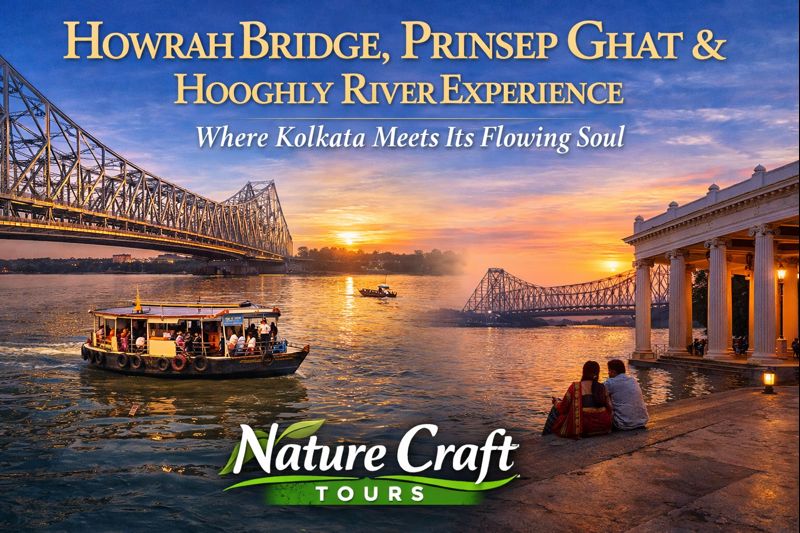
In Kolkata, the river is not a backdrop—it is the beginning of the story. The Hooghly River, a major distributary of the Ganga, has shaped the city’s geography, economy, culture, and daily rhythm for centuries. Along its banks rise three of Kolkata’s most emotionally resonant landmarks: the mighty Howrah Bridge, the elegant riverfront of Prinsep Ghat, and the ever-moving, ever-observing Hooghly itself. Together, they form a living corridor where engineering brilliance, colonial-era aesthetics, spiritual traditions, and everyday human movement converge.
This explorer-style guide offers a deeply researched and immersive understanding of the Howrah Bridge–Prinsep Ghat–Hooghly River belt. It presents not only historical and cultural context, but also a complete, time-structured tour plan designed to help travelers experience the riverfront in its many moods—sunrise, midday calm, golden-hour glow, and night-time energy.
The Hooghly River: Lifeline, Highway, and Cultural Axis
The Hooghly River has always been more than water flowing past Kolkata. It functioned as a commercial highway during pre-colonial and colonial times, enabling trade, migration, and cultural exchange. Ports, ghats, warehouses, temples, and markets grew along its banks, shaping Kolkata into one of South Asia’s most important riverine cities.
Even today, the Hooghly remains deeply woven into everyday life. Ferries cross constantly, rituals unfold at dawn and dusk, and the river reflects the changing light of the city. To understand Kolkata without understanding the Hooghly is to read only half the narrative.
Why the Hooghly experience is unique
Unlike manicured waterfronts in newer cities, the Hooghly riverfront remains authentic and layered. Here, history is not polished away; it is visible in working ghats, aging steps, iron railings, ferry jetties, and crowds that use the river as they have for generations. This authenticity makes the experience deeply immersive.
Howrah Bridge: Engineering, Movement, and Urban Drama
An icon of engineering and resilience
Howrah Bridge stands as one of the world’s most recognizable cantilever bridges. Built entirely without nuts and bolts, it represents a remarkable feat of engineering that continues to support enormous daily traffic. The bridge does not merely connect two banks; it binds together livelihoods, markets, commuters, and cultural identities.
Every day, hundreds of thousands of pedestrians, vehicles, and cyclists cross the bridge. Watching this movement is to witness the pulse of Kolkata in real time—unfiltered, relentless, and alive.
The bridge as a human experience
Walking across Howrah Bridge is not a passive act. The sounds of traffic, the rush of footsteps, the sight of ferries below, and the skyline unfolding on both sides create a sensory experience unlike any other. Early morning crossings reveal mist and soft light over the river, while evenings bring dramatic silhouettes and glowing reflections.
Best viewpoints for observation
While the bridge itself is powerful, some of the most compelling perspectives come from nearby riverbanks and ghats. From these points, you can observe the bridge as a structure in motion—traffic flowing like a continuous current above the water.
Prinsep Ghat: Elegance, Reflection, and the Art of Pause
Prinsep Ghat offers a contrasting riverfront experience. Where Howrah Bridge is defined by movement and scale, Prinsep Ghat is defined by symmetry, leisure, and atmosphere. Built during the colonial period, its classical pavilion, river-facing steps, and landscaped promenade create one of Kolkata’s most refined public spaces.
Architectural and spatial charm
The structure at Prinsep Ghat is intentionally restrained. Its clean lines, white columns, and open design frame the river rather than dominate it. This architectural humility allows the Hooghly to remain the main subject, turning the ghat into a stage for light, water, and human presence.
Prinsep Ghat through the day
In the morning, Prinsep Ghat feels contemplative—walkers, photographers, and river watchers occupy the steps. By late afternoon, the space fills with families, couples, and visitors seeking the river breeze. At sunset, the ghat becomes cinematic, with golden light reflecting off the water and nearby structures.
Evening illumination and night mood
As night falls, soft lighting enhances the pavilion and promenade. The river darkens, reflections sharpen, and the city’s noise recedes into a distant hum. This is one of Kolkata’s most peaceful urban nightscapes.
A Complete One-Day Riverfront Tour Plan
This itinerary is designed to reveal the Hooghly River experience gradually, allowing travelers to observe how light, activity, and atmosphere change through the day.
6:00 AM – 8:00 AM | Sunrise at the Hooghly River (Howrah side)
Begin early near the riverbank close to Howrah Bridge. Morning mist, ferry movements, and the first light of day create a quiet, almost meditative environment. This is the best time for photography and observation without crowds.
8:00 AM – 9:00 AM | Walk across Howrah Bridge
Cross the bridge on foot to fully experience its scale and energy. Observe the river below, the markets beginning their day, and the city waking up around you.
9:30 AM – 11:00 AM | Riverbank exploration and short rest
Spend time near the ghats observing ferry traffic and daily rituals. This slower pace helps contextualize the bridge within the broader river system.
12:00 PM – 1:30 PM | Lunch and rest
Take a midday break to avoid fatigue. The afternoon is best kept lighter due to heat and humidity.
3:00 PM – 5:30 PM | Prinsep Ghat promenade and river observation
Arrive at Prinsep Ghat in the late afternoon. Walk the promenade, sit by the steps, and watch the river traffic unfold at a gentler pace than near the bridge.
5:30 PM – 7:00 PM | Sunset experience at Prinsep Ghat
As the sun sets, the Hooghly transforms visually. This is the emotional high point of the day—light, architecture, and water aligning perfectly.
7:00 PM onwards | Night-time riverfront leisure
Remain at the ghat to experience the illuminated pavilion and reflections on the water. The atmosphere becomes calm, ideal for reflection and conversation.
Special Attractions Along the Hooghly Belt
Ferry crossings and river movement
Short ferry rides across the Hooghly offer a rare mid-river perspective. Watching the city from the water reveals how the river organizes urban life on both banks.
Ghats as living heritage
The ghats along the Hooghly are functional, not ornamental. People bathe, pray, commute, and work here. This everyday use is what keeps the heritage alive.
Urban-river contrasts
The juxtaposition of heavy infrastructure, delicate architecture, and open water defines this belt. Few cities offer such a clear dialogue between engineering, aesthetics, and nature.
Best Time to Visit the Hooghly Riverfront
Seasonal guidance
October to March provides the most comfortable climate for extended riverfront exploration. Winter mornings and evenings are especially atmospheric. Monsoon months offer dramatic skies but require flexible planning.
Daily timing strategy
Early morning and late afternoon are ideal. Avoid long outdoor stays during peak midday heat, especially in summer.
Extending the River Journey Beyond Kolkata
For travelers inspired by water-based landscapes, the Hooghly experience often becomes a gateway to deeper riverine exploration. Many visitors extend their journey from Kolkata’s urban riverfront into the tidal delta, where rivers multiply and mangroves dominate the horizon. A thoughtfully planned Sundarban Tour offers a natural continuation—moving from city-scale rivers to wilderness-shaped waterways.
For those seeking a structured transition from heritage riverfronts to ecological exploration, curated itineraries such as a Sundarban Travel plan allow travelers to experience Bengal’s relationship with water in its fullest form.
Responsible Riverfront Exploration
Respect living spaces
Ghats and ferries are essential to daily life. Observe quietly, avoid obstructing movement, and seek permission before photographing people.
Maintain cleanliness
The Hooghly is both sacred and functional. Carry back waste and avoid contributing to river pollution.
Slow travel mindset
The river reveals itself slowly. Sitting, watching, and listening are as important as walking and photographing.
Where the River Defines the City
Howrah Bridge, Prinsep Ghat, and the Hooghly River together form Kolkata’s most expressive narrative. Here, the city does not hide behind monuments alone; it exposes its movement, rituals, and rhythms openly. The bridge teaches scale and endurance, the ghat teaches grace and pause, and the river teaches continuity.
For the explorer, this experience is unforgettable not because of a single landmark, but because of how infrastructure, heritage, and daily life merge into one flowing story. To walk this riverfront attentively is to understand Kolkata not as a static destination, but as a living city shaped by water, light, and human presence.